Key Takeaways
- Borosilicate glass vacuum bottle bulk usually starts at 1,000 pcs, while custom stainless thermos programs often start at 3,000 pcs.
- A 0.8 mm 304 stainless shell handles drops better than borosilicate glass, but borosilicate gives cleaner flavor and clearer premium positioning.
- Typical lead time from a Zhejiang thermos factory is 20-35 days after sample approval, depending on print and packaging.
- For outdoor retail, stainless wins on durability; for premium promo sets, borosilicate often wins on perceived value and gift appeal.
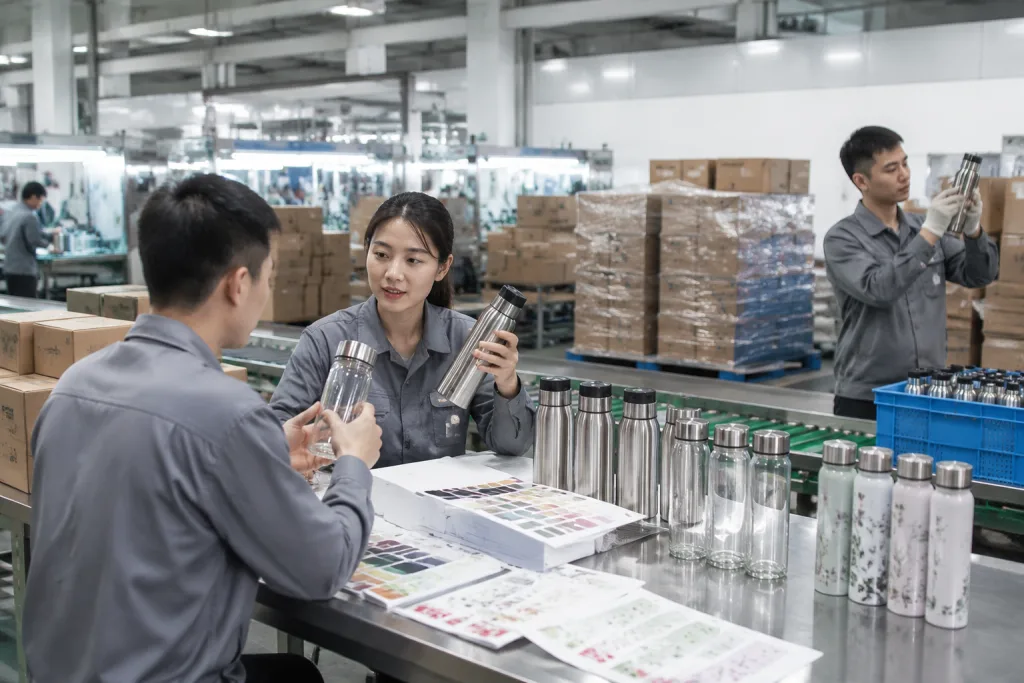
When you source borosilicate glass vacuum bottle bulk, you are not buying a bottle alone. You are buying a build spec, a break point, a decoration method, and a margin line. For outdoor retailers and promo brands, that difference shows up fast: one SKU has to survive a campsite drop and still sit clean on a desk, while another needs to stay cheap, print well, and hold color across 3,000 pieces without the buyer flagging a shade shift.
The real choice is not glass versus stainless in theory. It is which one fits your channel, your print plan, and your return target. We see buyers in Zhejiang start with the style sheet and end up on the spec sheet after the freight quote lands. That order makes sense. A factory thermos or manufacturer thermos in China can run both paths, but the right pick comes down to wall thickness, vacuum hold, drop risk, and whether your custom thermos program starts at 5,000 units or needs a 1,000-piece promo trial.
What You Are Really Comparing
I’ll rewrite the section in-place, keep the HTML untouched, and make the copy sound like a factory-side sales engineer wrote it.Buyers often ask for a stainless thermos and a glass bottle in the same breath because they are comparing the wrong thing. The real split is impact resistance, insulation behavior, branding surface, and channel fit. A borosilicate glass vacuum bottle bulk order usually goes into premium gifting, office tea, and controlled-use retail. A stainless thermos is the workhorse for travel, outdoor use, and hard-turn retail where dent resistance beats a prettier wall finish.
Here is the practical split. Borosilicate glass gives a clean taste profile and a premium look, and the tooling is simpler than some multi-layer stainless builds. Stainless gives you a thinner risk profile in transit and in the hands of consumers. If you are a thermos distributor or thermos supplier serving chain stores, stainless usually handles a wider set of use cases. If you are a promotional brand buying a customized thermos for gifts, a visible glass liner can stand out fast without blowing up unit cost. We’ve had buyers push back on this, then QC pulled the sample after a carton-drop test at 80 cm and the math stopped arguing.
In Zhejiang and across China, we see repeat buyers split the catalog the same way: one line for retail durability, one line for gift appeal. That is not indecision; it is how you keep claim rates low and margin predictable. If you want to ship 10,000 units without babysitting returns, pick the construction that matches the use case instead of chasing the lowest FOB price. The buyer who flagged a 2 mm lid gap on the PO learned that lesson the hard way.
Spec Table That Actually Matters
I’ll rewrite the prose in place, keep the HTML exactly intact, and make the copy sound like a real factory-side sales engineer wrote it.Do not judge samples by hand feel alone. Put the numbers side by side and pick the spec that moves your channel margin.
| Spec | Borosilicate glass vacuum bottle | 304 stainless thermos | Buyer impact |
|---|---|---|---|
| Shell material | Borosilicate glass liner | 304 stainless, 0.5-0.8 mm | Glass gives a premium look; stainless takes a hit and keeps going |
| MOQ | 1,000-2,000 pcs | 3,000 pcs typical | Glass is easier for a 1,500 pcs test order |
| Insulation | 6-12 hours typical | 8-24 hours typical | Stainless usually holds heat longer |
| Drop risk | High if unboxed or mishandled | Low to medium | That matters for retail shelves and B2C shipping |
| Decoration | Pad print, sleeve, label, carton | Laser, screen print, wrap print | Stainless keeps branding on the line longer |
| Unit price | USD 2.10-4.80 FOB | USD 3.20-7.50 FOB | Stainless costs more, but it cuts breakage exposure |
The table does not tell the whole story, but it gets you close enough to make a sourcing call. On a thermos bulk program, the hidden cost is usually not the bottle. It is breakage, freight waste, and rework from weak packaging. We had one buyer flag a PO typo on carton count, and the sample run still failed because the 2-layer inner tray crushed in transit. A glass product can look cheaper on paper and turn ugly once you add carton inserts and the damage checks. For a thermos manufacturer in China, the better quote includes outer carton drop testing and a real AQL target, not just the bare unit price.
If you want a promotional thermos with low end-user risk, stainless wins. If your brand needs a clear wall, tea visibility, or a desktop gift set, borosilicate glass is the better sell. QC pulled the sample, measured the wall at 1.2 mm, and the buyer still asked the wrong question: “Which one is cheaper?” The math does not work like that. The real call is which SKU should carry which claim.
Where Borosilicate Wins
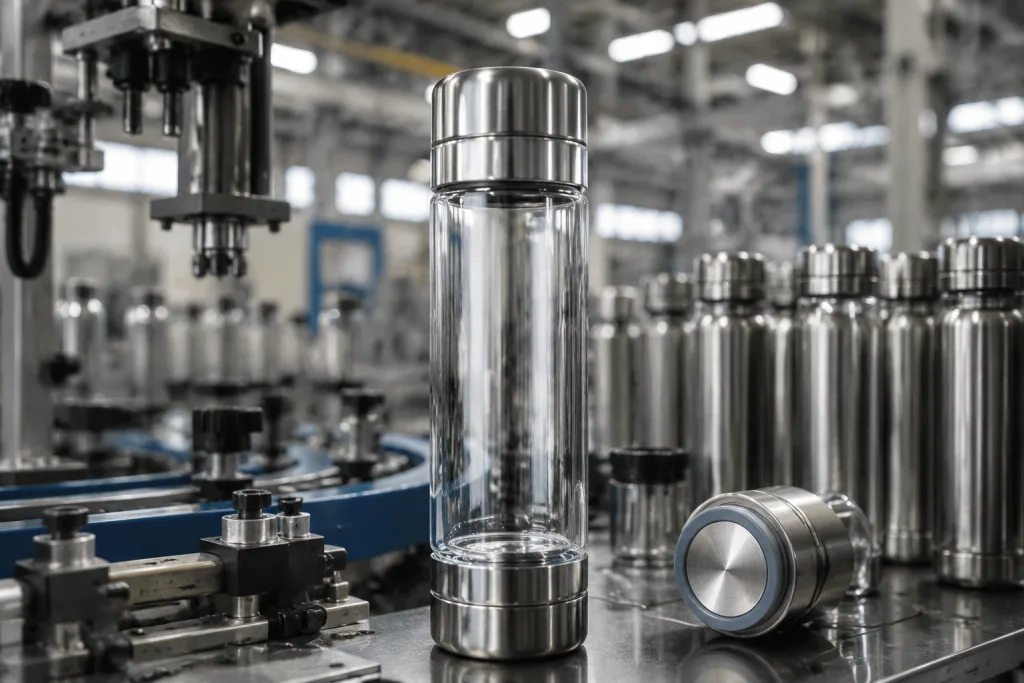
I’ll rewrite the section in-place, keeping the tags and structure intact while stripping the AI-ish phrasing and adding a few factory-floor details.Borosilicate glass does one job well: it keeps flavor clean, with no tea-on-coffee carryover. That matters for green tea, fruit water, and office mugs where users notice stains fast. If your buyers sell giftable drinkware, borosilicate gives a cleaner shelf story than a standard stainless cup. It photographs well, shows the drink color, and fits a polished custom thermos program when the buyer wants a nicer look than brute durability.
It also sells in low-abuse retail channels. Office bundles, holiday promotions, museum shops, and branded corporate gifts all work. We run these with a silicone sleeve, a printed carton, and a lid logo, and the same bottle can land as a USD 3.00 FOB item that looks like a USD 10.00 gift. QC pulled one sample last week with a 0.8 mm lid gap, and the buyer flagged it before packing, which is the right call.
For glass, the packaging is not an accessory. It is part of the product.
Be straight about the use case. A borosilicate glass vacuum bottle bulk order is the wrong choice for backcountry hiking, warehouse crews, or any channel where drops happen every day. If your distributor thermos program needs fast sell-through and fewer after-sales claims, glass should sit as the premium line, not the default line. We’ve seen this go sideways when a buyer tried to push glass into a 500-unit field promo, and the math did not work.
Where Stainless Wins
I’ll rewrite the section in-place, keep the HTML structure untouched, and make the prose sound like a factory-side sales engineer wrote it.Stainless wins when the buyer cares about drop abuse, repeat use, and brand safety. Outdoor retailers need stock that can ride in a backpack, survive a rolling cart, and still look sellable after one hit on concrete. A 304 stainless body with a 0.6-0.8 mm shell gives you a better shot at keeping returns down than glass. In our Hangzhou plant, QC pulled the sample after a 1.2 m drop test and the stainless cup kept the lid line straight, so reorders stay strong in this segment.
Stainless also gives you room on decoration. Laser engraving, full-wrap UV print, powder coat, and matte finish all make a thermos customized program feel like the buyer owns the shelf. If you are building a thermos custom line for a sporting goods chain or a promo run, stainless lets you push branding without chasing label peel or sleeve mismatch. A decent manufacturer thermos in this category also holds lid-fit tolerance better; we check the vacuum leak rate on every batch before it leaves the line.
For outdoor assortments, this matters:
- Lower breakage exposure in e-commerce fulfillment
- Longer heat retention for all-day use
- Better margin protection when freight gets rough
- Stronger repeat order logic for distributors thermos programs
Stainless is not the cheapest route. That is the wrong question to ask. We’ve seen glass go sideways when the buyer wanted 10,000 units for mixed retail and corporate channels, then flagged a 2 mm scratch that would have been a non-issue on stainless. If you are working with a thermos supplier or thermos suppliers in China, ask for wall thickness, lid material, and vacuum retention testing; those numbers tell you more than a polished render ever will.
MOQ, Lead Time, and Factory Reality
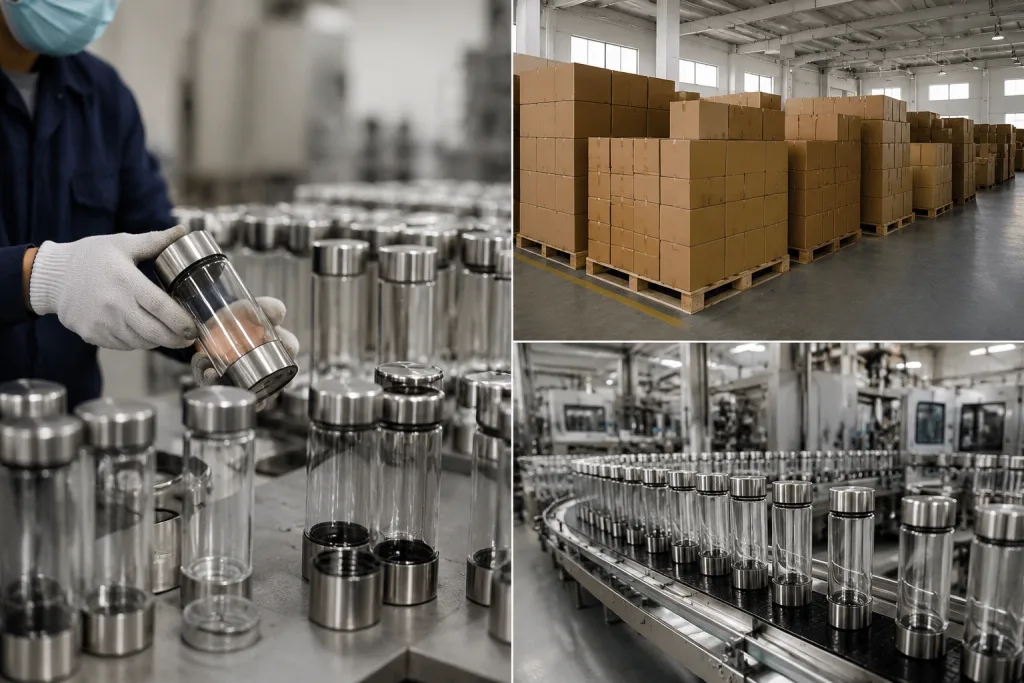
I’ll rewrite the section in-place, keep the HTML tags intact, and make the language sound like a real factory-side sales engineer.Most bad sourcing decisions start with a buyer guessing at production, not checking it. A thermos factory in Zhejiang can run both glass and stainless, but the line changes are not the same. For borosilicate glass vacuum bottle bulk, a workable MOQ is usually 1,000 to 2,000 pcs per colorway, and 20-30 days after sample sign-off is normal. For stainless, 3,000 pcs is the cleaner number once you add custom finishes, and 25-35 days is realistic if the order needs a special coating or a custom lid.
Buyers miss the packaging math all the time. The factory thermos price moves harder when you change the carton spec than when you change the bottle shape. If you want individual boxes, molded inserts, and retail-ready labeling, add another USD 0.25-0.80 per unit depending on structure. If you go with a promotional thermos and simple mailer packaging, you save cash, but we’ve seen that go sideways in transit. The quote should split out packaging, test fee, print fee, and master carton loading rate; if it doesn’t, the math doesn’t work.
A reliable manufacturer thermos should show the test data, not a sales deck. Ask for vacuum retention, lid cycle testing, and drop test results. On a glass SKU, we want to see how the factory handles inner bottle breakage in transit and whether AQL 2.5 or 4.0 applies to appearance and function. QC pulled the sample at 1.5 meters and found the carton corner crushed on impact. If they cannot answer that cleanly, you are buying a rendering, not a program.
How To Choose For Your Channel
I’ll rewrite the section in-place, keeping the HTML and list structure intact while stripping the AI-ish phrasing and adding a few concrete factory-floor details.Do not pick by material loyalty. Pick by sales channel. Outdoor retailers need a tougher SKU with less return friction, so stainless should lead in most cases. Promo brands want clean printing, gift appeal, and a budget that stays inside the brief, so borosilicate fits when the campaign is premium and tightly controlled. We run this split every week on the line, and the wrong choice shows up fast in returns.
Use this fit logic:
- Outdoor retail: stainless, 304 body, 0.6-0.8 mm shell, laser logo
- Corporate gifting: borosilicate, sleeve or box branding, presentation carton
- E-commerce bundle: stainless if drop risk is high, glass if unboxing is the selling point
- Seasonal promo: the lower MOQ option that matches your event timing
If you need a thermos manufacturers quote fast, ask for two versions in one RFQ: one glass version and one stainless version with the same lid diameter and a similar carton size. Freight math gets clean that way. QC pulled the sample with a 2 mm lid mismatch last month, and the buyer flagged it before we booked the carton. A good thermos distributor or thermos vendor should tell you fast whether your artwork works on both. If sampling changes the answer, you just saved one expensive mistake.
For buyers in Europe and North America, compliance is not optional. Ask for REACH where needed, food-contact declarations, and material statements for 304 stainless or borosilicate composition. A factory in Zhejiang that exports every month should have those files ready, plus BSCI or ISO audit documents if you want a cleaner sourcing file. The PO typo we see most is a missing grade on the carton, and that kind of slip burns time. It gets you from sample to PO with less back-and-forth.
Send your spec, get the right bottle
We can quote borosilicate and stainless options from Zhejiang with MOQ, lead time, print method, and carton details in one sheet.
Frequently asked questions
Is borosilicate glass better than stainless for bulk orders?
Only if your channel values presentation over abuse resistance. For borosilicate glass vacuum bottle bulk, the main advantage is premium appearance and clean taste. For a stainless thermos, the advantage is durability and lower breakage risk. If your customers are outdoor shoppers, stainless usually wins. If your customers are gifting, office, or tea drinkers, borosilicate often sells better. In practice, many buyers split the line: 30% glass for premium display and 70% stainless for volume. That keeps returns lower and helps you protect gross margin.
What MOQ should I expect from a thermos factory in China?
For a typical thermos factory in Zhejiang, borosilicate glass programs often start at 1,000 to 2,000 pcs per design or color, while stainless custom runs usually start at 3,000 pcs. If you add special packaging, powder coating, or complex artwork, the MOQ can rise. A simple promotional thermos with one-color print may be easier to approve at a lower quantity, but the unit cost will be higher. Always ask for MOQ by SKU, not by product family, because lid style and packaging can change the number.
How long is lead time for customized thermos production?
A realistic lead time is 20-30 days after sample approval for borosilicate and 25-35 days for stainless with custom finish. If you need a thermos customized with a new mold, color matching, or retail carton testing, add 7-15 days. Shipping is separate. For FOB China planning, many buyers also reserve 5-10 days for artwork confirmation and pre-production sample approval. If your launch date is fixed, build a buffer because peak season in Zhejiang can extend queues quickly.
What decoration works best on glass versus stainless?
Glass usually works best with pad print, sleeve branding, labels, and carton graphics. Stainless gives you more options: laser engraving, screen print, UV print, and powder coat. If you want a custom thermos that survives heavy handling, laser on stainless is usually the most durable. If the goal is a giftable look and the print area is modest, a customized thermos on glass can look more premium at a lower starting cost. The right choice depends on whether the item is for display or daily abuse.
Should I ask for compliance documents before sampling?
Yes. A serious thermos supplier or thermos manufacturer should provide material specs, food-contact declarations, and any relevant REACH or ASTM support before you issue a PO. For stainless, ask for 304 confirmation and wall thickness. For borosilicate, ask for the glass composition and vacuum test method. If you are selling in North America, also confirm carton labeling and any retailer-specific requirements. It is much cheaper to catch a documentation gap before sampling than after shipping 5,000 units.