Key Takeaways
- Borosilicate bodies are usually 1.8-2.2 mm; thinner than 1.5 mm increases breakage risk in export cartons.
- A practical MOQ for custom drinkware is often 3,000-5,000 units, with lead times around 25-35 days after sample approval.
- Tritan lids and sleeves add value only if they pass LFGB, REACH, and odor checks; resin grade matters more than the word Tritan.
- For retail and distributor drinkware, ask for AQL 2.5 inspection, drop-test data, and carton compression specs before you approve production.
If you are sourcing a borosilicate glass tritan water bottle supplier, the hard part is not finding a factory. It is sorting a clean spec sheet from sales fluff. On paper, every canteen supplier says the same thing: safe material, custom logo, fast lead time. On the line, one factory runs 1.8 mm glass, another ships thin walls that crack in transit, and a third cannot hold lid tolerance across 10,000 units.
For B2B drinkware, buyers need to read the sheet line by line: glass grade, Tritan resin, lid gasket, temperature range, test standard, carton strength, and whether the canteen manufacturer can hold a repeatable MOQ of 3,000 or 5,000 pieces. QC pulled the sample, and the caliper told the story. This is where Europe and North America avoid returns, chargebacks, and margin loss. Zhejiang has plenty of canteen factories, but the good ones can explain the spec without hiding behind vague claims.
Read the spec, not the slogan
I’ll rewrite this section in place, keep the HTML exactly as-is, and tighten the prose so it reads like a factory-side sales engineer wrote it.When you source a borosilicate glass tritan water bottle supplier, start with numbers, not slogans. Ask for wall thickness, lid material, gasket hardness, test standard, and packing method. If the reply is only “high quality” or “eco-friendly,” move on. A real canteen factory in Zhejiang should state a glass body at 1.8 mm or 2.0 mm, a Tritan lid made from FDA-compliant copolyester, and an O-ring in silicone or TPE with a defined durometer.
The buyer impact shows up fast. A 0.3 mm change in glass wall thickness shifts weight, breakage rate, and freight cost. On a 500 ml bottle, moving from 220 g to 260 g can add real ocean and air freight cost across a 20,000-unit order. We’ve seen buyers miss that math, then the margin disappears in the canteen distributor channel. Ask the supplier to list the full build: body material, lid type, sealing ring, coating, print process, and carton count. QC pulled a sample at 1.9 mm last week; that is the level of control you want.
Good sourcing starts with measurable specs. If the supplier cannot quote them, they probably cannot control them.
What to ask first
- Glass type: borosilicate 3.3 or equivalent
- Wall thickness: 1.8-2.2 mm target
- Lid material: Tritan, PP, or stainless steel insert
- Seal: food-grade silicone, usually 50-70 Shore A
- Packing: individual box plus outer carton drop protection
Glass body: strength, weight, clarity
I’ll keep the HTML intact and rewrite the prose with a more experienced factory-sales voice, adding concrete production detail and trimming the AI-ish phrasing.Borosilicate is not a fancy word; it is why the bottle handles thermal shock better than ordinary soda-lime glass. For a custom canteen or customized growler-style bottle, that matters when the end customer pours hot tea, cold brew, or ice water straight from the kitchen. We usually ask for the real test condition, not a marketing line—120°C to 20°C is common, but the exact result depends on wall thickness and neck shape.
The buyer should look at the mouth and rim first. A polished rim feels premium, packs cleaner, and cuts down on chipping at the line; a rough cut edge is a red flag. QC pulled a sample with a tiny shoulder chip last month, and that is the kind of defect that shows up in export claims later. Clear glass photographs better for Amazon-style listings, while frosted glass hides fingerprints but can pick up scratches if the coating is weak.
One practical point: if the factory says it can produce 500,000 units per month, that does not tell you whether your bottle is stable at that pace. Ask how many units per month the exact borosilicate line runs, and whether the same tunnel kiln handles canteen promotional orders and retail SKUs. We had a buyer flag a PO typo on a 3,000-piece MOQ order, and the real issue was not the typo—it was that the vendor had three different specs mixed on one run. The math does not work if the process is loose.
For distributor drinkware, this is where returns begin or end. You are buying consistency across cartons, pallets, and repeat replenishment, not just a piece of glass.
Tritan lid details that matter
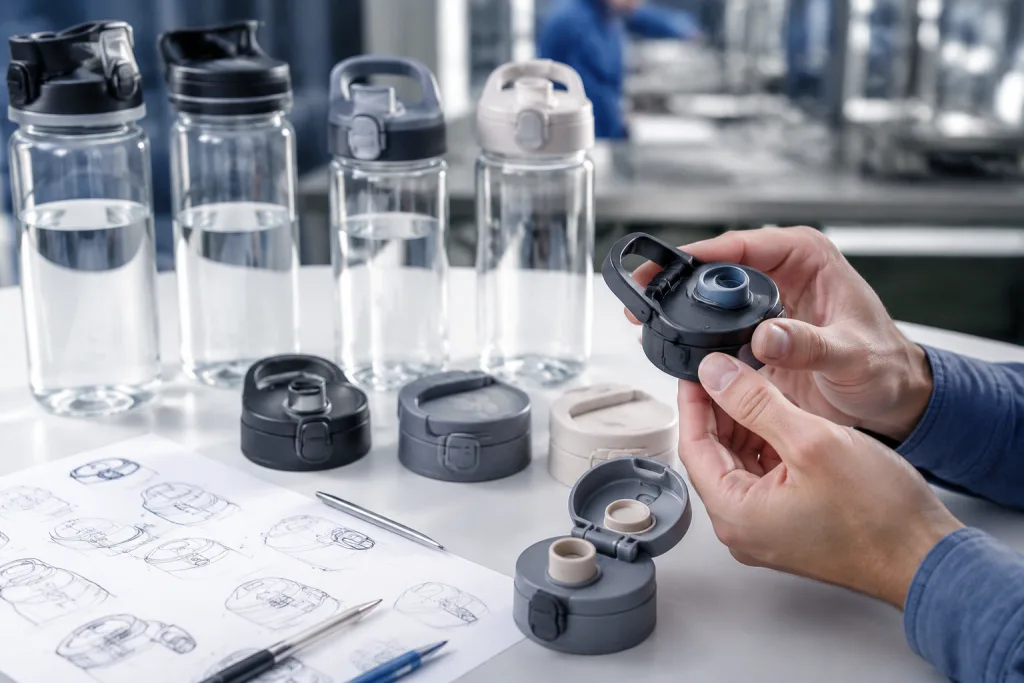
I’ll rewrite the section in place, keep the exact HTML tags, and sharpen the wording with factory-floor specifics and cleaner sales-engineer tone.Tritan is where buyers often under-spec. The resin should be sold as a high-clarity copolyester with low odor and solid impact resistance, but that is only the starting point. Ask whether the lid is single-shot injection, whether it uses a stainless steel spring, and whether the hinge has passed a 10,000-cycle test. On a canteen customizable model, one weak lid can turn into a return case fast.
Ask the supplier for migration and compliance documents. For Europe, you want LFGB and REACH support; for North America, the material declarations need to match FDA expectations. If the lid has a drinking spout, check the internal channel diameter and how it cleans out. We’ve seen a 2.5 mm channel hold residue and trigger odor complaints, so this is the wrong place to guess. A borosilicate glass tritan water bottle supplier should send CAD drawings and section views, not just product photos.
For canteen distributors and brand owners, lid torque matters more than most people think. Too loose, and the cartons leak in transit; too tight, and the buyer stops using the bottle. We target a repeatable closing force and run a 50-piece sample lot before mass production. QC pulled the sample on one job and found the thread pitch off by 0.15 mm. Better suppliers in Zhejiang will adjust the mold gate, change the gasket cross-section, or revise the thread profile instead of claiming the first version is good enough.
Logo, finish, and decoration choices
Decoration has to fit the channel. A promo canteen order usually needs low cost and a fast turn, so we run silkscreen or a one-color pad print. For a retail piece, the buyer may want laser engraving on a stainless detail, UV print on the lid, or frosted etching on the glass body. Fancy is the wrong question. Ask what survives washing, abrasion, and the carton ride from Hangzhou to the customer.
Ask the canteen factory for the decoration tolerance, not a sales pitch. A 1-color logo held within ±1.5 mm registration works for most mass orders, and QC pulled the sample at that mark before release. If the logo wraps a curved bottle, you need a jig-and-fixture answer and a real test run. Lead time moves too. A simple one-color print can add 3-5 days. Full custom color-matched packaging can add 7-10 days. For a distributor running seasonal drops, that math is the whole game.
Buyers often ask whether to choose a custom growler style or a slimmer drink bottle profile. Channel decides it. A custom growler shape reads stronger in craft beverage and gift programs, while a slimmer customized drinkware shape ships cleaner for e-commerce and lowers carton waste. If you sell through distributor canteen programs, keep the finish durable and the SKU count tight. We’ve seen variant creep go sideways fast when a PO typo turns one lid color into three, and a Zhejiang factory with good tooling still needs discipline from the buyer.
Compliance, testing, and failure control
Compliance needs to be settled before the PO, not after the sample lands on your desk. For Europe, ask for REACH, LFGB where relevant, and food-contact declarations for every wetted part. For North America, ask how the supplier documents FDA-related material compliance and whether they can support retailer requests for third-party testing. If the bottle has a sleeve, confirm the sleeve material and the odor or phthalate risk. We had a buyer flag a PU sleeve for smell on the first carton open. A serious canteen supplier will not dodge that paperwork.
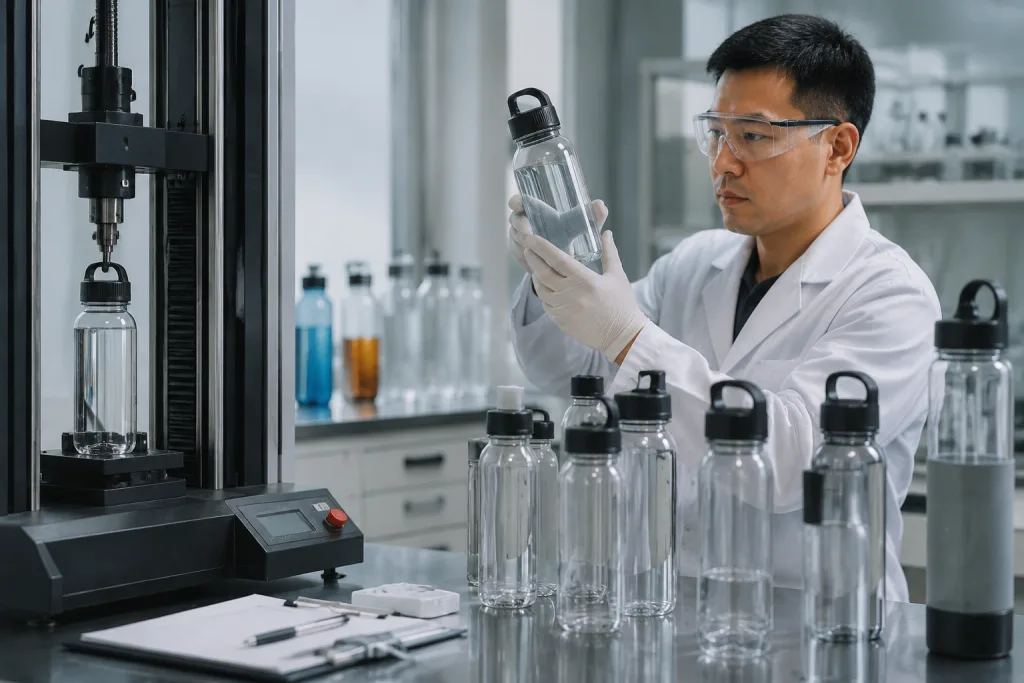
Testing has to be named in the spec. For export orders, we run AQL 2.5 for major defects and 4.0 for minor defects as a baseline, unless your buyer spec is tighter. Then add drop testing, leak testing, and dishwasher cycles. If you are buying customized growler or customizable growler formats with larger volumes, the impact test matters more because tall bottles tip faster and chip at the rim. Ask for carton drop testing at 1.0 meter, 6 faces, and ask the factory to show the fail rate, not a polished screenshot from QC. A line can look clean and still crack on corner hits.
One thing I tell new buyers: if the factory cannot say which defects are cosmetic and which are functional, you will pay for it later. A 2 mm bubble in glass may pass; a lid thread mismatch does not. That is the wrong question to ask if you only want a pretty sample. Experienced canteen manufacturers in China keep appearance standards separate from functional acceptance criteria, and they write it down. We have seen this go sideways when a PO said “same as sample” and the lid torque never got specified. Zhejiang factories that export often know this language already.
MOQ, lead time, and export math
For custom drinkware, MOQ is where the first hard numbers show up. A straight borosilicate glass tritan water bottle supplier will usually quote 3,000 pieces on an existing mold and 5,000-10,000 pieces for a new mold or a lid with extra tooling. That looks steep until you run the landed-cost math. On a 5,000-piece order at FOB USD 2.10-3.80 per set, the margin still works if your channel can carry it.
Lead time usually runs 25-35 days after sample approval and deposit. Mold changes, packaging development, and compliance testing push it to 40-50 days fast. We once had a buyer flag an FNSKU typo on the PO, and QC pulled the sample because the label landed on a seam; that kind of miss burns a week. If you ship to a canteen distributor program, build in time for carton sizing and barcode checks. The wrong master carton spec can fail warehouse receiving on day one.
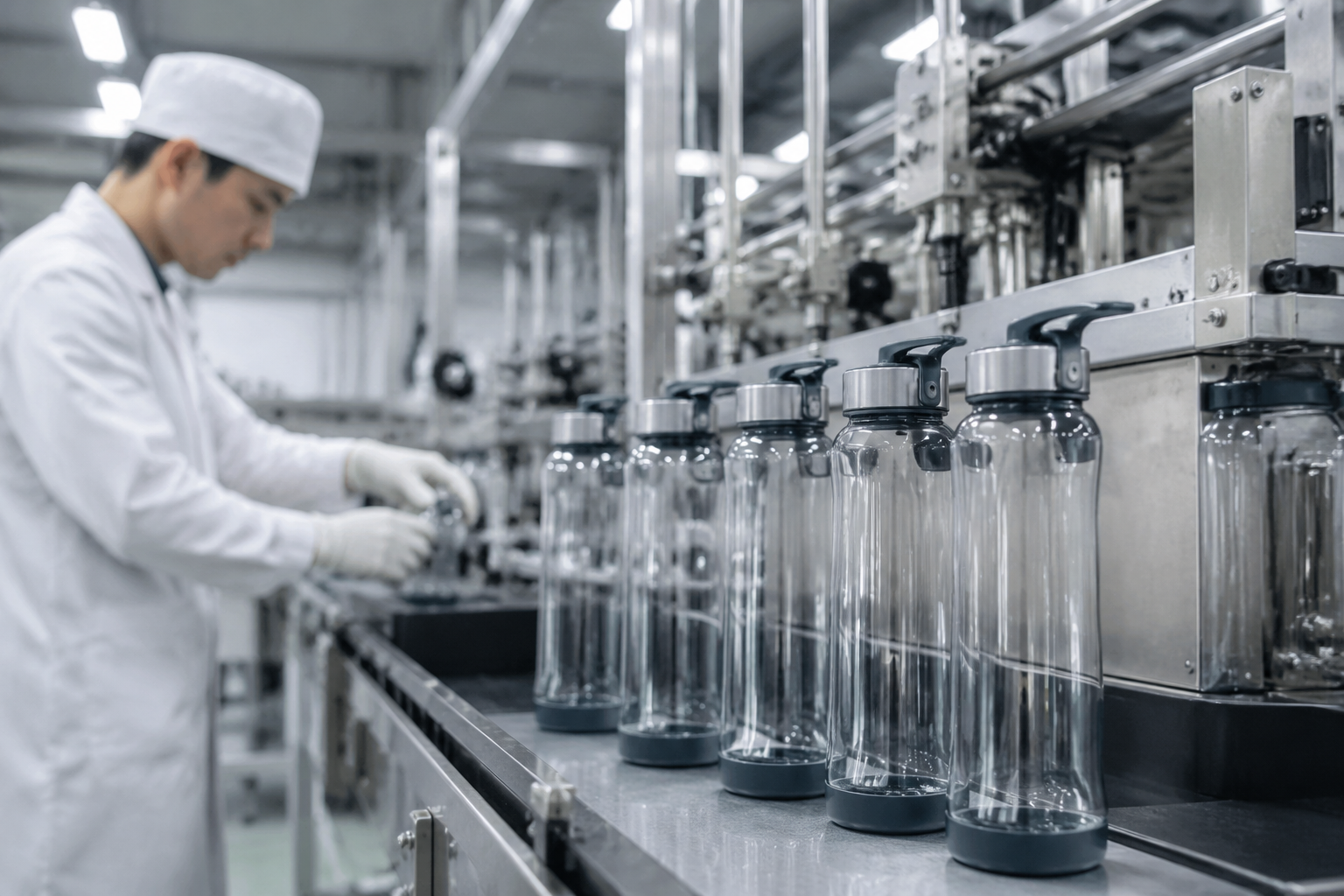
Good factories in China and Zhejiang can quote 200,000-300,000 units a month across several drinkware lines, but ask for line-by-line capacity, not a headline number. A canteen manufacturer that runs glass and Tritan on the same floor needs clear process separation, 304 stainless fixtures, and a QC gate at each changeover. If they say yes to every variant without talking tooling or inspection, the math does not work. We have seen that go sideways on a 12 mm lid change alone. Controlled growth beats loud promises.
Send your spec sheet for a factory quote
We can review your bottle, lid, decoration, and carton requirements and return a practical FOB quote with MOQ, lead time, and compliance notes.
Frequently asked questions
What MOQ should I expect for a custom borosilicate glass Tritan bottle?
For a standard custom order, expect 3,000 pieces if you use an existing mold and 5,000-10,000 pieces if you need a new mold, new lid, or special packaging. Some canteen suppliers in China will quote lower, but the unit price usually jumps sharply. For a 500 ml bottle, FOB pricing often lands around USD 2.10-3.80 depending on decoration, lid complexity, and carton setup. If you are a distributor canteen buyer, ask the factory to quote both MOQ and repeat-order pricing so you can compare the first run against replenishment.
Can borosilicate glass and Tritan pass EU and US compliance requirements?
Yes, if the supplier uses the right raw materials and documents them properly. For Europe, ask for REACH support and food-contact declarations; LFGB is often requested by retailers. For the U.S., ask for FDA-related material statements for all food-contact parts. Do not assume the lid, gasket, and body are covered equally. A borosilicate glass tritan water bottle supplier should provide separate declarations for glass, Tritan, silicone, and any printed coatings. If one component lacks paperwork, treat the whole item as risky.
What is a reasonable lead time for custom drinkware from Zhejiang?
For an existing design, 25-35 days after sample approval and deposit is normal. If you need a new mold, new logo tooling, or special packaging, plan for 40-50 days. Zhejiang has many canteen factories, but factory capacity is not the bottleneck as much as sample sign-off and decoration approval. If you are launching through a canteen distributor network, add time for carton review, barcode checks, and retailer compliance. Fast is possible, but only if you freeze the spec early.
How do I judge if the bottle is durable enough for retail?
Ask for wall thickness, drop-test results, and packaging details. A borosilicate body around 1.8-2.2 mm is a common target; thinner glass increases breakage risk in handling and shipping. You should also request AQL inspection levels, leak tests, and carton compression data. If the lid is Tritan, ask about hinge cycle testing and gasket retention. For customized drinkware sold through retail or e-commerce, durability is as much about the box and pallet setup as the bottle itself.
Can I order canteen custom branding with different lids for one base body?
Yes, and that is often the smartest way to manage SKU count. A single glass body can support several lid options: screw cap, flip-top, carry loop, or straw lid, as long as thread compatibility is confirmed. This helps canteen distributors and brand owners sell one base form across multiple channels. The supplier should give you a technical drawing and confirm tolerance stack-up. If they are a proper canteen manufacturer, they will quote tooling impact, decoration cost, and MOQ for each lid version separately.