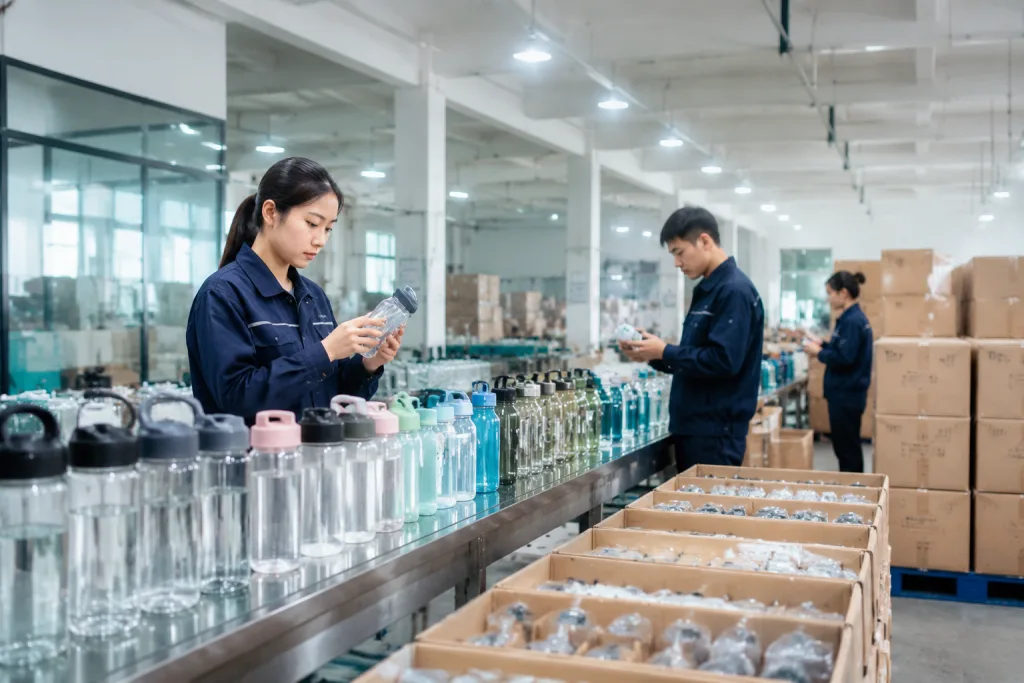
Key Takeaways
- Borosilicate glass is usually the better fit for premium retail, while Tritan wins on drop resistance and lower chargebacks.
- Typical MOQ starts at 1,000 pcs for customized canteen programs, with private label lead time around 25-35 days after sample approval.
- For private label, keep wall thickness around 1.2-1.8 mm on Tritan and 1.5-2.2 mm equivalent glass structures for stable handling.
- A compliant factory in China should support REACH, LFGB, and AQL 2.5 inspection, plus carton testing for distributor drinkware channels.
If you are sourcing a borosilicate glass tritan water bottle private label program, the first question is not “glass or plastic.” It is whether the first carton survives retail handling, e-commerce shipping, dishwasher cycles, and the margin your distributor actually needs. We see this in Zhejiang all the time. Buyers spend 2 weeks debating finish samples while the cap torque spec is still off by 0.3 N·m.
Glass reads premium and saves tooling cost, while Tritan cuts breakage and makes fulfillment easier. Pick based on channel, target price, and how much damage you can absorb on the shelf. A proper canteen manufacturer in China should quote both with the same closure, the same decoration method, and the same QC file—then you can compare the numbers, not the mood board. QC pulled the sample on our line last month because the lid gasket was 1.2 mm short, and that is the kind of miss that turns into a buyer complaint later.
Glass vs Tritan in the real world
Most buyers start with material preference and end up shocked by landed cost. Wrong order. First decide how the bottle will be sold and handled. If you are building a customized drinkware line for specialty retail or corporate gifting, borosilicate glass gives you stronger shelf appeal and a cleaner premium story for water, tea, or wellness SKUs. If you are selling through Amazon, club, or school-adjacent channels, Tritan usually wins because one cracked carton can wipe out the margin on 500 units in a week.
Here is the real split from the line:
- Borosilicate glass: better heat resistance, clearer walls, and a premium handfeel; we have run it through hot-fill checks above 100°C, while standard soda-lime glass shows stress sooner.
- Tritan: better impact resistance, lower carton weight, and fewer replacement claims once the buyer starts stacking cases in transit.
- Hybrid builds: glass inner body with a Tritan outer shell or sleeve, a good move when you want premium optics without fragile handling.
For private label, the math is straightforward. Glass helps you support a $6.80-$11.50 FOB retail-ready bottle depending on decoration and lid system. Tritan usually sits lower, around $4.20-$8.30 FOB at similar volumes, but the final number moves with the canteen custom spec, the lid, and whether you need silicone, straw, or infusion parts. QC pulled a sample last week with a 0.3 mm lid gap, and the buyer flagged it immediately. A reliable canteen supplier in Zhejiang should quote both on the same drawing. That is the only clean comparison.
Spec table that buyers can use
Do not approve samples without a line-by-line spec sheet. We run into this all the time: the sample passes, then the carton size, finish, or closure misses the channel spec. A spec table keeps the talk concrete. For a canteen custom program, these are the fields that matter most:
| Spec | Borosilicate Glass | Tritan | Buyer note |
|---|---|---|---|
| Weight | 280-420 g | 140-260 g | Glass feels premium, but freight goes up fast |
| Wall thickness | 1.5-2.2 mm | 1.2-1.8 mm | Thickness drives clarity, strength, and mold cost |
| Drop resistance | Low to medium | High | Tritan fits distributor growler-style programs better |
| Heat tolerance | High | Moderate | Check dishwasher and hot-fill requirements |
| MOQ | 1,000-3,000 pcs | 1,000-5,000 pcs | Decoration method changes the minimums |
| Lead time | 25-35 days | 20-30 days | Starts after sample approval and deposit |
If you compare canteen manufacturers, ask for the same lid seal, same surface finish, and same pack-out before you look at price. QC pulled one sample here with a 0.3 mm gasket mismatch, and the buyer flagged it on the spot. A customizable canteen with laser logo on glass can cost less to decorate than a full-color printed Tritan body, even when the resin is cheaper. This is the wrong question to ask if you only chase unit price. A good canteen factory in China quotes by part: body, lid, gasket, decoration, carton, and test charges. If those lines are hidden, your margin disappears in shipping and rework.
Where each material actually wins
There is no universal winner. There is only the right use case. For premium hydration sold to boutique retailers, borosilicate glass usually wins. It photographs clean, sits steady in the hand, and supports a higher shelf price. We’ve run that line for tea infuser bottles and aroma-led drinkware too, where clarity sells faster than claims. One buyer pushed back on a 280 g empty weight last spring; once they saw the carton drop test and the shelf mockup, the math stopped arguing.
Tritan wins when the channel is rougher. Gyms, road trips, office gifting, school stores, and e-commerce all punish fragile goods. Cartons get tossed. POs get scanned wrong. A customized growler in Tritan ships with far less breakage than glass, and that saves more money than a slightly nicer hand feel ever adds. For distributor drinkware, that is the question that matters.
Use-case fit
- Premium retail: borosilicate glass
- Subscription boxes: Tritan or hybrid build
- Corporate gifts: either, depending on decoration and budget
- Mass distribution: Tritan
If your brand wants a canteen promotional item, do not overspec the package. A promotional bottle has to survive storage, freight, and handout use. QC pulled the sample on a 3 mm wall bottle last month, and the first failure was the outer carton, not the bottle. In that setting, a canteen distributor is usually better off with Tritan and a strong carton than with glass that looks nice but drives claims. For a custom canteen line sold through specialists, glass still works when the retailer can control display and transit. Match the bottle to the channel, not to the mood board.
Private label details that matter
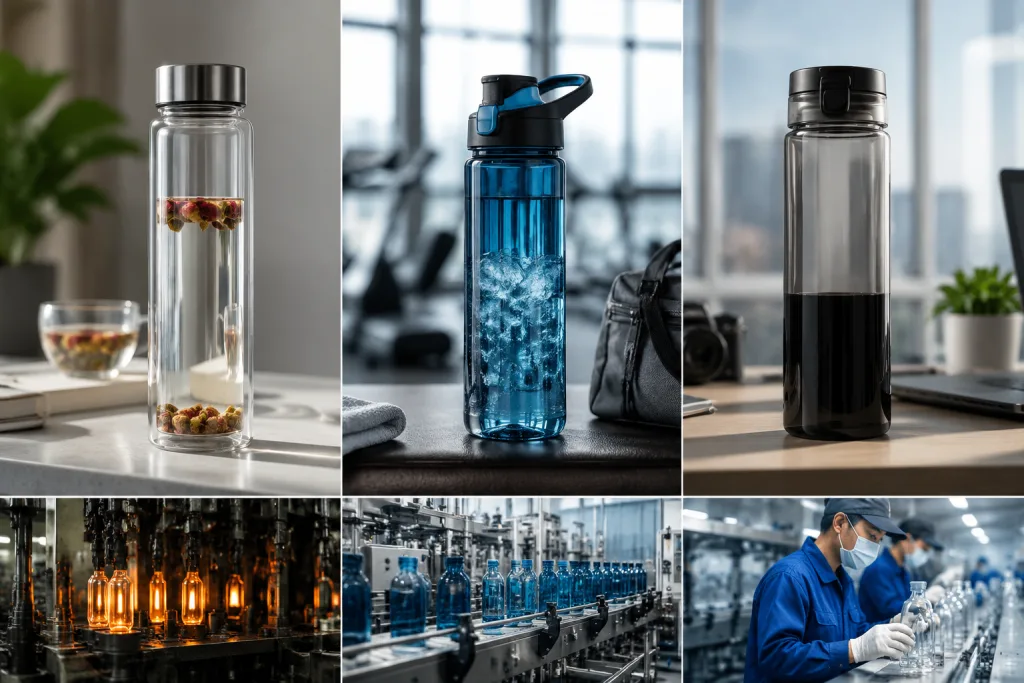
Private label wins or fails on the small stuff buyers approve too fast: logo method, closure fit, gasket material, and pack setup. If you want a borosilicate glass tritan water bottle private label program that can scale, match the decoration to the substrate, not to habit. We run laser engraving on stainless and some coated parts, while screen printing and UV printing are standard for body branding. For glass, silk screen with high-temperature firing holds up well, but it adds cost and 7-14 days to lead time. For Tritan, UV print or pad print is usually the cleaner route.
Your canteen manufacturer should ask how the bottle will be used before recommending decoration. Dishwasher cycles, freezer storage at -18°C, hot-fill, and contact with acidic liquids all change the ink and adhesive spec. We’ve seen buyers skip that question, then the line gets a rework call after the first trial run. If you are building customized drinkware for Europe or North America, ask for REACH documentation, food-contact declarations, and LFGB test reports when needed. The buyer flagged it only after the distributor asked for the file pack, which is the wrong time to start.
In Zhejiang, a capable factory will support BSCI audits, pre-production samples, and AQL 2.5 final inspection. That is the floor, not a premium extra. QC pulled the sample, checked the cap torque, and found one gasket shift at 0.3 mm; that is the kind of detail that saves a claim later. If your supplier cannot show current test reports or will not confirm material traceability, the math does not work. A real canteen supplier should be comfortable with documentation, because serious canteen distributors will ask for it before the second order.
Pricing, MOQ, and lead time reality
Buyers ask for a “sample price,” then the production quote lands and the number looks off. It isn’t off. Sample cost leaves out tooling, test cycles, and carton tuning. For private label, the range is easier to read once the order size is on the table. A Tritan bottle with one-color print often sits around $0.80-$1.50 per sample unit; a glass sample runs $1.20-$2.80 depending on lid and decoration. On the line, we’ve seen a buyer flag a PO typo on print color and spend a week chasing a re-sample. That delay costs more than the sample.
For a Zhejiang factory running 300,000 units a month across multiple drinkware lines, MOQ is often 1,000 pcs for stock-body customization and 3,000 pcs for a new mold or special closure program. Lead time after artwork approval is usually 20-35 days, and repeat orders move faster if QC has the same spec sheet on file. FOB is standard for export, and that changes the landed cost fast: freight to Europe or North America can move by 8%-18% once carton volume and breakage risk are counted. The math does not work if you ignore that.
If you are a canteen distributor, ask for carton cube, pallet count, and master carton drop-test status before you compare unit price. A cheaper bottle in a weak carton is not cheaper. We ship enough to know that. For a customized canteen, the gap between a 6-layer and 5-layer carton looks small on paper, then claims show up. The right canteen vendor quotes the packaging like it matters, because it does.
How to source without getting burned
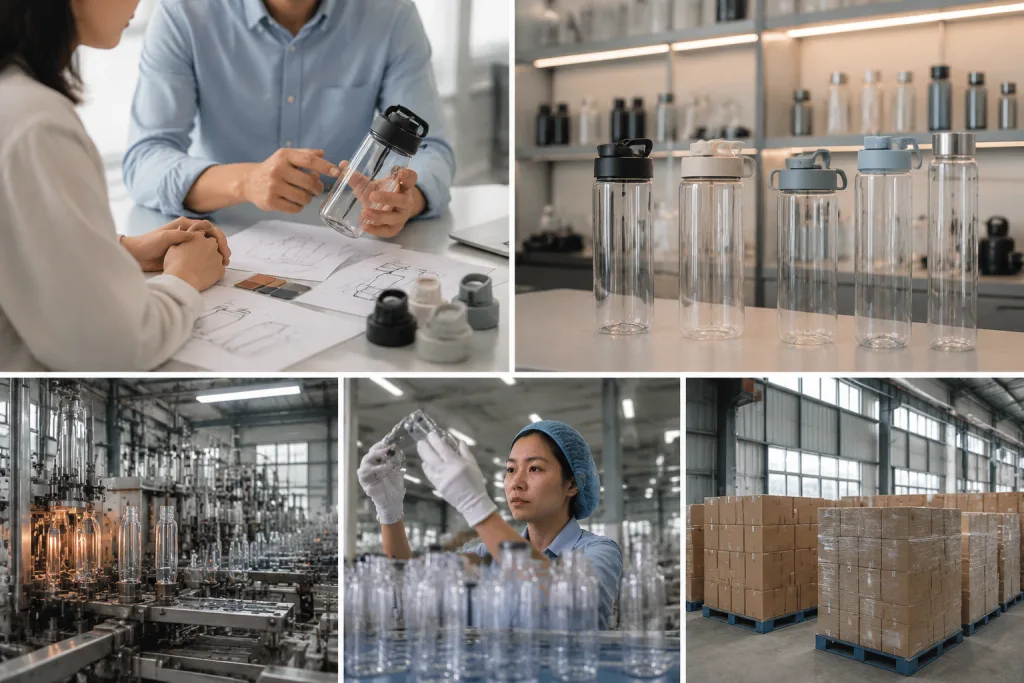
The fastest way to lose money is to approve a sample the line cannot repeat at scale. We see this when the factory is actually a trading desk, or when a canteen factory promises finish consistency it cannot hold. Ask for a pre-production sample, not a showroom piece. Then lock these in writing: material grade, color tolerance, print position, lid torque, gasket hardness, and inspection standard. If the bottle is custom canteen work, the artwork proof should show exact placement in millimeters, not “centered by eye.” We had one PO with “logo on front” and that turned into a 6 mm argument at QC.
For borosilicate glass, check thermal shock claims and edge finish. For Tritan, check scratch resistance, odor stability, and whether the resin is food-grade for your market. If your line includes a custom growler or customizable growler format, confirm handle strength and lid seal under vibration, because those bottles take a rougher ride than a desk bottle. A canteen manufacturer in China should show test data, not talk in slogans. QC pulled a crack test at 120°C to 20°C; that tells you more than a sales pitch.
“If the supplier cannot state MOQ, lead time, and test standard in one message, you are not ready to place a PO.”
That sounds blunt, but it saves time. A serious canteen supplier or canteen manufacturers group in Zhejiang should answer with the same numbers twice, no drift. If they change the price after artwork or add mold costs later, the offer was never solid. We’ve seen this go sideways on a 3,000 pcs order. Good sourcing is boring. Clear spec. Repeatable sample. Same bottle next month, same carton count, no drama.
Request a quote with both material options
Send your size, lid style, logo method, and target market. We will quote borosilicate glass and Tritan side by side from Zhejiang.
Frequently asked questions
Which is better for private label: borosilicate glass or Tritan?
If your channel is premium retail, gifting, or tea-focused, borosilicate glass usually wins on perceived value. If you expect heavy handling, e-commerce shipping, or distributor turnover, Tritan is safer because breakage rates are much lower. For most B2B buyers, the decision comes down to landed cost and claim risk. Glass often sits around 280-420 g finished weight, while Tritan is usually 140-260 g, so freight and carton damage are very different. Ask your supplier to quote both versions with the same lid and print spec before you decide.
What MOQ should I expect for a customized canteen order?
For a standard customized canteen with stock body and logo print, MOQ is commonly 1,000 pcs. If you need a new mold, special cap, or unique packaging, 3,000 pcs is more realistic. Some canteen manufacturers in China will accept 500 pcs for samples or pilot runs, but pricing will be much higher. If you are buying for a distributor drinkware program, do not negotiate MOQ only; negotiate carton count, spare parts, and reorder lead time too.
How long does private label production take in Zhejiang?
For repeatable private label drinkware, typical lead time is 20-35 days after sample approval and deposit. Simple Tritan printing can be closer to 20-25 days, while glass with firing or complex packing usually takes 25-35 days. If tooling is needed, add 7-15 days depending on mold complexity. A capable canteen factory in Zhejiang should give you a schedule with artwork approval, pre-production sample, mass production, inspection, and shipment dates, not one vague promise.
What compliance documents should I request from a canteen supplier?
At minimum, ask for food-contact declarations, REACH for Europe, LFGB if your buyer requires German-market style testing, and current factory audit status such as BSCI if relevant. For export drinkware, request AQL 2.5 inspection terms, material traceability, and carton test records if the packaging will move through Amazon or distributor channels. If the supplier cannot provide these quickly, that is usually a warning sign, especially for customized drinkware and customized growler programs.
Can I use the same decoration method on glass and Tritan?
Not usually. Glass often takes silk screen, fired print, or label-based decoration, while Tritan is more often UV printed or pad printed. The best method depends on wash resistance, branding area, and order size. A canteen vendor should recommend the method based on surface chemistry and your target retail price. For a canteen promotional project, a simpler one-color print may be the most cost-effective. For premium private label, you may need multiple print passes or a better finish to keep the logo durable.