Key Takeaways
- Borosilicate glass plus Tritan is usually built around 2.0-3.0 mm glass and 1.0-1.5 mm Tritan sleeves or components
- A realistic custom MOQ is often 3,000 units, with sample lead time of 7-10 days and bulk lead time of 25-35 days
- For Europe and North America, ask for REACH, LFGB, FDA, and AQL-based inspection records before you approve production
- A good canteen supplier should state monthly capacity in units, decoration options, and failure points before you place a PO
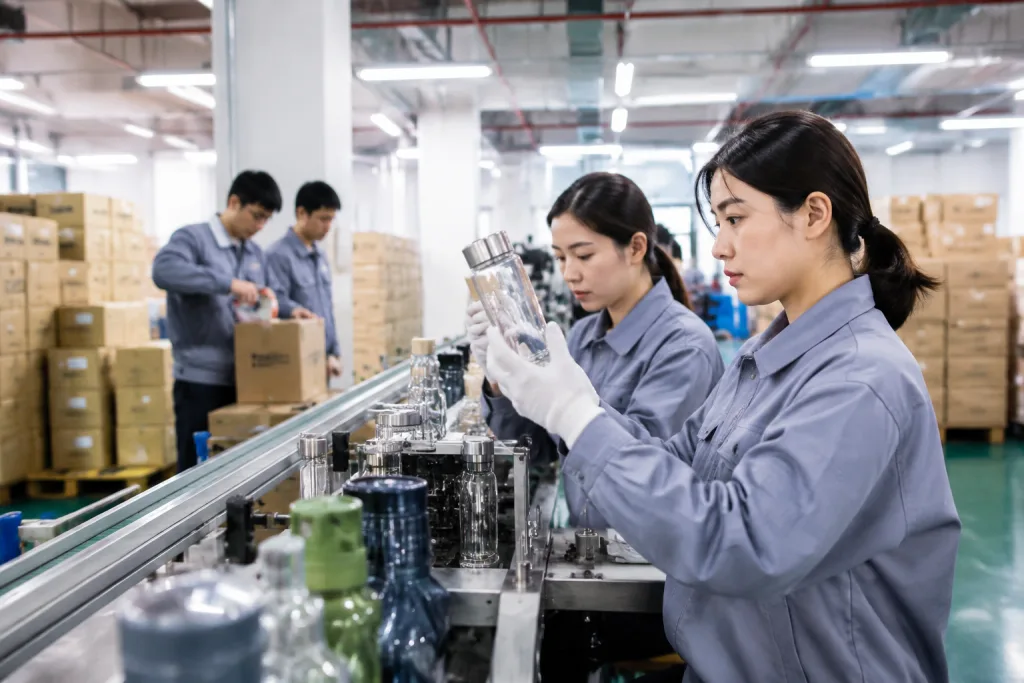
If you are sourcing a borosilicate glass Tritan water bottle manufacturer, do not treat it like a plain bottle buy. It is a material stack, a decoration job, a packaging spec, and a factory’s ability to ship the same quality on schedule. In Zhejiang and across China, the lines that do this well know glass, Tritan, caps, and prints fail in different ways. We’ve seen a cap pass leak test on Monday and fail after 48 hours in transit.
You need a supplier that can talk wall thickness, drop resistance, REACH compliance, and MOQ in straight numbers. A serious canteen factory should tell you if the bottle is true borosilicate, which Tritan grade goes on the sleeve, how the cap seals, and what monthly output the line can hold. At BottleForge in Hangzhou, our standard export lead time is 25-35 days for most custom drinkware orders, with MOQ starting at 3,000 units on many styles. QC pulled one sample at 1.8 mm wall thickness last week; that is the level of detail you should ask for, not soft talk.
What You’re Actually Buying
I’ll keep the tags intact and rewrite the prose with a sharper factory-side voice, adding concrete specs and a few line-floor details without changing the structure.Q: What makes a borosilicate glass Tritan water bottle different from standard custom drinkware?
You are buying two materials that do different jobs. Borosilicate glass takes heat and chemical resistance better than soda-lime glass. Tritan gives impact resistance, a better hand feel, or structural support where a pure glass bottle would fail in retail or promo use. The design has to be right. If the wall is too thin, the bottle looks premium and cracks too fast. If the Tritan parts are off by even 0.3 mm, the cap starts to wobble after 20-30 wash cycles and the buyer flags it fast.
For a procurement manager, the real question is not “Is it borosilicate?” It is “What is the glass spec, what Tritan grade are we running, and where does each part sit in the structure?” A proper canteen manufacturer should tell you if the bottle is full glass body plus Tritan sleeve, glass inner with Tritan outer, or a cap-and-base hybrid. If they cannot say that clearly, move on. We have seen this go sideways when a PO typo changed the sleeve from 2.5 mm to 2.0 mm and the line had to stop for rework. In Zhejiang, the better suppliers lead with process data, not slogans.
- Ask for glass thickness: export orders usually run 2.0 mm, 2.5 mm, or 3.0 mm.
- Ask for the Tritan grade and whether it is BPA-free with food-contact compliance.
- Ask for drop-test data from 1.0 m or 1.2 m, not a vague “strong.”
Checklist Before You Quote
I’ll rewrite the section in place, keep the HTML exactly as-is, and tighten the sales-engineer tone with concrete factory detail and cleaner pricing logic.Q: What should you confirm before asking for a price?
Start with the spec sheet. Pricing without capacity, size, packaging, and decoration is guesswork, and we see buyers lose a week because they ask for “a quote” before they lock the basics. A 500 ml Tritan bottle with a silk-screen logo is a different line setup from a 750 ml borosilicate bottle with laser engraving and gift box packing. One may come out at USD 2.60 ex-works; the other can reach USD 4.20 or more once you add mold work, lid choice, and packing.
Use this checklist:
- Capacity: 350 ml, 500 ml, 750 ml, or 1,000 ml.
- Body material: borosilicate, Tritan, or a hybrid structure.
- Cap style: screw cap, flip lid, bamboo lid, or stainless-steel lid.
- Decoration: silk screen, laser engraving, heat transfer, or full-color wrap.
- Packaging: eggcrate, white box, color box, or retail-ready carton.
- Compliance: FDA, LFGB, REACH, CA Prop 65 if needed.
If you are buying for a canteen distributor program, ask for carton count and pallet load before you approve sampling. QC pulled one order last month where the carton spec was missing by 2 mm, and the buyer flagged it after freight was booked. That small packaging tweak can add 8%-12% to shipping cost, and the math does not work if you are moving from Zhejiang to North America.
How To Judge Factory Capability
I’m rewriting the section directly in HTML, keeping the tags and heading intact while stripping the AI-isms and adding factory-floor specificity.Q: How do you know whether a canteen factory can support your order?
Forget the polished website. Ask for output numbers, line count, and the test gear on the floor. A real canteen factory will tell you monthly capacity, how many lines are live, and whether they run a hydrostatic tester, torque meter, or drop-test rig. For a mid-size export factory in Zhejiang, 300,000 to 500,000 units per month across several customizable drinkware categories is normal, with one line kept for borosilicate glass assembly. If they cannot give you a capacity range, they are probably a trading company with a generic catalog.
Then check how they run the job. Do they do incoming inspection on glass tubes, Tritan pellets, and cap parts? Do they use AQL 1.5 for critical defects and AQL 2.5 for major defects? Do they trace breakage by lot number? That is the real question, not whether the brochure says “premium.” We have seen this go sideways when a buyer skipped the lot trace and the crack rate jumped after 12,000 pcs. A good canteen manufacturer should also show how they protect glass parts during assembly and carton drop testing.
“If a supplier cannot explain how they control breakage, they are not ready for scale.”
When we quote from Hangzhou, we give buyers the exact line allocation, target inspection level, and a production calendar that matches the MOQ. Last week a buyer flagged a PO typo on the Tritan lid color code, and QC pulled the sample before the line ran. That is the standard to ask for from any manufacturer in China.
Branding That Survives Use
Q: What branding method works best on this product?
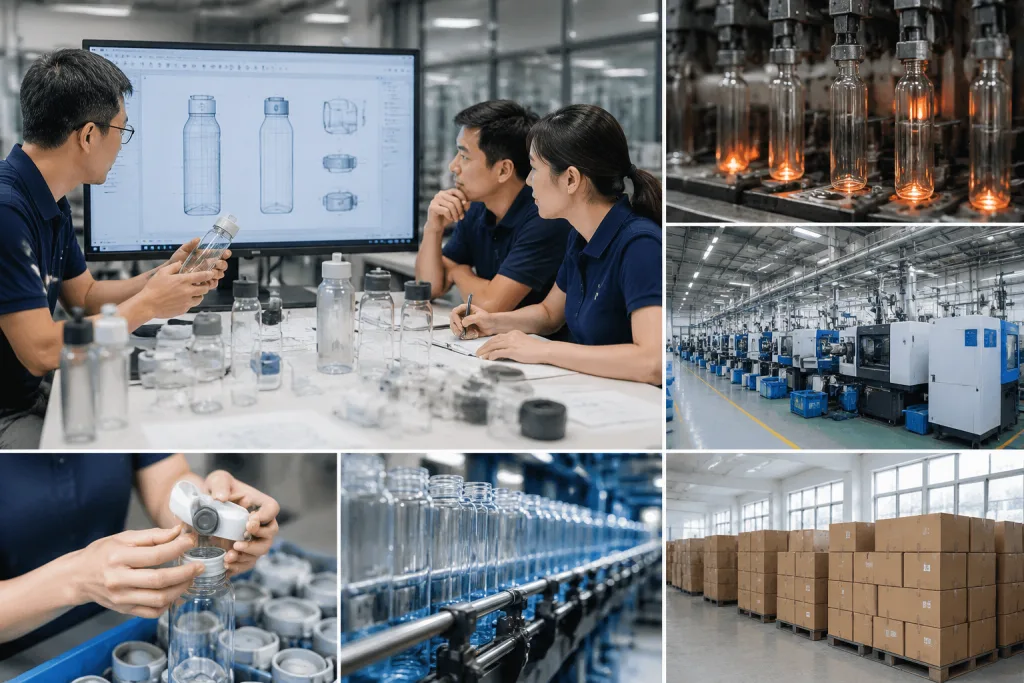
For a borosilicate glass Tritan water bottle, the logo has to hold up through washing, rubbing on a crate, and heat swings from hot fill to a cold rinse. Silk screen is still the low-cost choice for a plain logo, usually around USD 0.08 to USD 0.20 per color per unit at scale, and we run it daily on the line. The catch is simple: if the print sits in a high-contact area, it can scuff. Laser engraving is tougher on metal caps and stainless parts, but it is not a clean fit for every glass or Tritan surface. UV printing gives stronger shelf impact for promo orders, though the art file needs tighter control and the unit cost can add USD 0.15 to USD 0.40 depending on coverage.
If the order is a custom canteen or a canteen promotional campaign, pick the branding that fits the sales channel, not the cheapest quote. A gym distributor line usually needs a louder logo and fast shelf read. A premium retail canteen custom project often needs a smaller mark and cleaner packaging. We had a buyer flag a PO typo once because the cap logo was centered 3 mm too far left, and QC pulled the sample before packing. Ask the supplier straight whether the decoration passes dishwasher cycles, sweat resistance, and abrasion tests. If they dodge that, you are buying a return.
For larger rollouts, ask for a pre-production sample with the final print file, because a logo that looks fine on screen can shift by 1-2 mm on curved glass. That is not a small miss on a premium SKU. On one trial, the artwork register moved 1.5 mm after curing, and the buyer caught it before the 5,000-piece run left the factory.
Compliance, Safety, And Paperwork
Q: What compliance documents should you request?
For Europe and North America, ask for the paperwork before you pay the balance. Do not wait until the container is on the water. A solid borosilicate glass Tritan water bottle manufacturer should hand over test reports for food-contact materials, including REACH for the EU market, LFGB where it applies, and FDA-related declarations for the U.S. market. If the bottle uses a plastic cap, straw, or Tritan body part, the polymer lot should be traceable. We run into this all the time: the buyer flags one missing lot number, and the file stops there.
You should also request:
- Material specification sheet for glass, Tritan, and lid components.
- Third-party test reports for migration, odor, and heavy metals if relevant.
- Production inspection records using AQL sampling.
- Carton drop-test results and transit packaging details.
If you sell through Amazon or similar channels, barcode and carton labeling matter too. Ask whether the factory can apply FNSKU labels, carton marks, and country-of-origin stickers during packing. That saves handling on your side. We have seen POs with the wrong carton count typo, and the receiving team pays for it later. A Zhejiang supplier that knows export paperwork will usually save more money than the cheapest quote on paper.

Custom MOQ And Pricing Reality
I’ll rewrite the section in the same HTML, keeping the structure and numbers intact while making it read like a factory-side sales engineer.Q: What order size should you expect for custom drinkware?
For most canteen and bottle programs, we run MOQ at 3,000 units per design. If the spec is plain—one color, stock lid, simple print—some jobs can start at 1,000 or 2,000 units. The buyer flagged it when they wanted three body colors, a custom cap insert, and gift boxes on the same PO; that kind of stack pushes the MOQ up fast. A custom growler with special lid tooling usually needs 5,000 units or more before the unit price settles down.
Price comes down to three buckets: material, decoration, and packing. A borosilicate glass Tritan bottle usually sits around USD 2.20 to USD 4.80 ex-works, based on capacity and cap style. Add USD 0.30 to USD 0.90 for retail packing. If you want a new cap, handle, or silicone part, tooling is separate. QC pulled the sample on a 5 mm cap gap once, and that saved a claim later. If a supplier quotes too low, check the fine print for testing, cartons, or print setup; that is where the missing cost hides.
Procurement should compare landed cost, not just factory price. A 10-cent gap on the bottle disappears once you add cartons, palletizing, inspection, and ocean freight. We’ve seen this go sideways on a 12-day vs 18-day ship window, and the math stopped working the moment the buyer ignored freight. For distributor orders, ask for a full cost sheet before you chase the headline unit price.
Sampling, Approval, And Launch
Q: How should you move from sample to production?
Run a strict gate. Sample first, then packaging mock-up, then pre-production sample, then mass production. If the design uses existing tooling, we usually ship the first sample in 7-10 days. New tooling changes the math; plan on 20-35 days before you can hold the final piece in your hand. Don’t let a PO typo push this forward too early.
Your approval checklist should include:
- Capacity check against the drawing, with tolerance on the fill line.
- Logo position and Pantone color sign-off.
- Leak test on each cap style.
- Drop test on master cartons.
- Final inspection standard, usually AQL 1.5/2.5 or your buyer spec.
For custom canteen, customized canteen, or customizable canteen programs, this step protects the brand. We’ve seen this go sideways when a buyer skips one sample round to save 3 days. QC pulled the sample on our bench, then the line caught a 1.2 mm lid gap before mass run; that saved a container of complaints. The better move is simple: sign off only on the exact structure that will ship from the Zhejiang production line. Factories that hold that line usually become repeat canteen suppliers, not one-off vendors.
Send your spec sheet for a fast quote
Get a clear unit price, MOQ, lead time, and compliance checklist from our Hangzhou team in China.
Frequently asked questions
Is borosilicate glass with Tritan safer than plain plastic?
Usually yes, if the structure is designed well. Borosilicate glass handles heat and odor resistance better than ordinary plastic, and Tritan is a tougher BPA-free copolyester than low-cost alternatives. For a proper export product, ask for material declarations, migration testing, and a cap seal test. A good supplier will also tell you whether the bottle is microwave-safe, dishwasher-safe, or only hand-wash recommended. Do not assume the whole product shares one temperature rating just because one component does.
What is a realistic MOQ for custom drinkware?
For most borosilicate glass Tritan water bottle projects, 3,000 units is a practical starting point. Some canteen customizable designs can begin at 1,000-2,000 units if the cap and packaging are standard, but special molds push MOQ upward fast. If you need multiple SKUs, add 500-1,000 units per color or print variant. Ask the factory to separate tooling, sample cost, and unit cost so you can see where the money goes.
How long does production usually take in Zhejiang?
For a standard custom order in Zhejiang, sample lead time is often 7-10 days and bulk production is commonly 25-35 days after approval. If you need a custom cap, special carton, or new tooling, add 10-20 days depending on complexity. A factory that claims everything can ship in 7 days is usually talking about stock goods, not a true customized drinkware program.
Can I order as a canteen distributor with mixed designs?
Yes, but it depends on how the factory batches production. Many canteen distributors split one container across 2-4 designs if the body size and cap family stay the same. Once you mix materials, lids, and packaging, your cost and lead time rise. Ask for a matrix quote that shows each SKU, its MOQ, and whether the carton pack count changes. That is the clean way to manage a distributor drinkware program.
What branding method should I choose for a custom growler or canteen promotional order?
For simple logos and lower cost, silk screen is usually the first choice. For premium retail or repeated washing, laser engraving on metal parts or UV print on stable surfaces can work better. On a canteen promotional run, the right choice is usually the method that balances visibility and durability, not the cheapest unit price. Ask the factory for wash-test results and a pre-production sample with final artwork before approving mass production.