Key Takeaways
- Typical MOQ starts at 3,000 units per design, with lead times around 25-35 days after sample approval.
- A 0.25-0.35 mm wall thickness drift can change breakage rates by 15-20% in transit.
- Insist on AQL 2.5 for major defects and 4.0 for minor defects on first mass production.
- A serious factory in Zhejiang should show 800,000+ units/month capacity and documented REACH/FDA-ready material files.
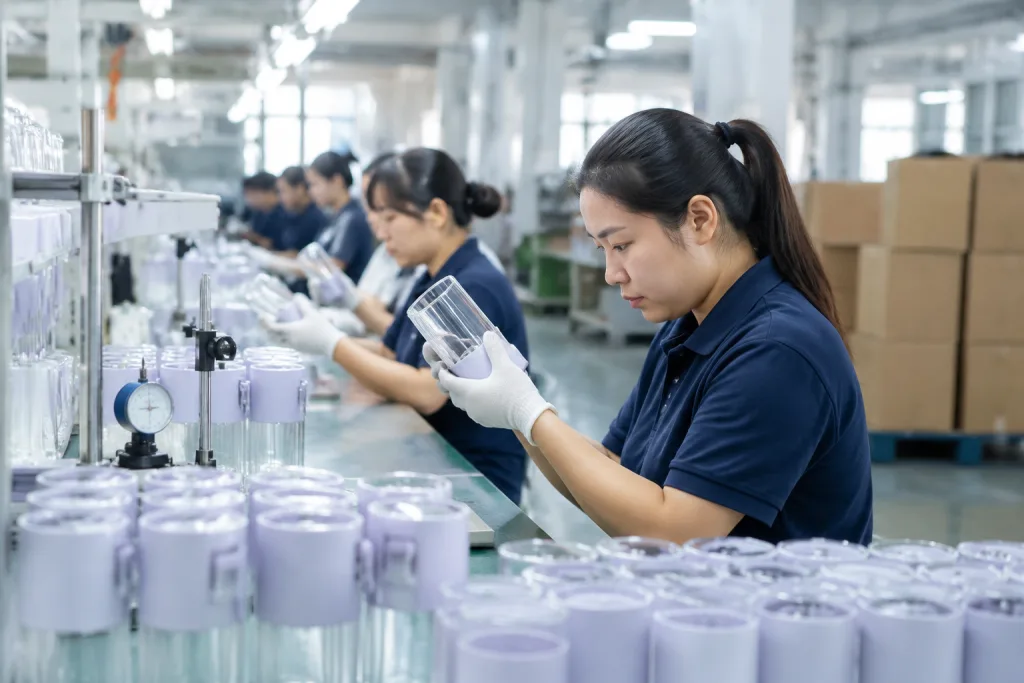
If you are buying from a borosilicate glass tritan water bottle factory for retail, gifting, or private label, the sample is the easy part. The first 5,000 units is where the trouble shows up. That is when glass-to-plastic fit, cap torque, seal compression, print wear, and drop test results start to slip if the spec is loose. We run this on the line in Zhejiang every week: the factories that ship cleanly are the ones that lock wall thickness at 2.0 mm, set annealing properly, and write the inspection points before mass production starts.
Most buyers ask for a canteen custom or customizable drinkware project, then find out “same look” can hide very different risk. A borosilicate glass inner body behaves one way, a tritan outer shell behaves another, and a canteen manufacturer that treats them like one SKU is asking for leaks, cracks, odor claims, or lost print. We had a buyer flag a PO typo on cap size once, and QC pulled the sample because the gasket groove was 0.3 mm off. You want a borosilicate glass tritan water bottle factory that talks in numbers, not nice-sounding words.
Where This Bottle Usually Fails
I’ll keep the HTML intact and rewrite only the prose, with tighter factory-floor language and concrete specs.The first failure is fit. Borosilicate and tritan move differently in heat, and we’ve seen that bite a line after one dishwasher cycle. If the interface gap is too tight, you get stress whitening, microcracks, or a bottle that starts squeaking and binding; too loose, and the shell rattles on the bench and the sample looks cheap. Ask the factory to call out nominal clearance on the drawing, not just “good assembly.” On this build, 0.3-0.6 mm is the working range we usually see, depending on wall profile and where the inner cup sits.
The second failure is sealing. A canteen custom project often uses a cap, a silicone gasket, and sometimes a flip lid, and the leak usually starts at the thread, not the glass. If gasket hardness is off, or the thread form is shallow, thermal cycling will expose it fast. Ask for torque specs in N·cm and a 100% inverted leak test before packing; QC pulled the sample on a 48-hour hot-cold run last month and the weak point was obvious. A canteen supplier that cannot name the test method is guessing, and the math does not work.
The third failure is optical and cosmetic. Borosilicate glass shows bubbles, seeds, and furnace lines when the melt is sloppy. Tritan shows weld lines, sink marks, or haze when molding temperature drifts by just a few degrees. For a canteen customizable line, you need a defect sheet with photos and limits, plus one clear call on what gets scrapped. Do not accept “acceptable by industry standard” without numbers. We run export checks in Zhejiang for North American and European buyers, and they will flag a 0.2 mm scratch faster than the factory floor does.
Spec the Glass and Tritan Separately
I’ll rewrite the three paragraphs in-place, keep the HTML exactly as-is, and tighten the language so it sounds like a factory-side sales engineer.One common mistake is using one generic spec sheet for two materials. Glass and tritan do not share the same control points. For the borosilicate part, spell out thermal shock resistance, wall thickness, rim finish, and annealing requirements. Borosilicate grade 3.3 is the usual baseline for drinkware, but that does not finish the job. Give the canteen factory a target wall thickness, say 1.8 mm ±0.2 mm, and ask for annealing records or a written annealing schedule. Thin glass can pass sample photos and still crack after 5 dishwasher cycles. We have seen that go sideways on the line.
For the tritan shell, specify resin grade, impact target, and clarity. A proper canteen manufacturer will tell you whether the resin is BPA-free and show material traceability. Ask for ISO 9001 process control, and if your channel needs it, request food-contact documents aligned to FDA and REACH expectations. Tritan is not magic; it is a durable copolyester, but bad molding still gives you stress whitening at the shoulder and thread distortion at the neck. QC pulled a sample once with a 0.4 mm gate mark. The buyer flagged it fast.
Practical spec move: separate the glass drawing, the tritan drawing, and the assembled bottle drawing. If you buy customized drinkware at scale, this keeps you from arguing later about whether a defect came from the mold shop, furnace, or assembly line. That is the wrong question to ask after the PO is signed.
Print, Logo, and Decoration Risks
I’ll rewrite the section in-place, keep the HTML tags untouched, and tune the prose to sound like a factory-side sales engineer.Decoration is where a lot of canteen promo jobs go sideways because buyers leave abrasion and heat resistance vague. A logo can look perfect on day one and still fail after 20 dishwasher cycles or one rough carton trip. If you want a custom canteen with screen print, ask for cure temperature, ink type, and the rub-test method. If you want laser marking or pad print, spell out the wear target in plain terms: no visible fade after 50 dry rub passes and 20 wet rub passes.
For distributor drinkware or distributor growler programs, the logo often matters more than the bottle itself. We run Pantone matching against a physical swatch, then QC pulls the sample under D65 lights before sign-off. The factory should prove it can hold color across 3 or 4 SKUs without drift between lots. A canteen vendor who says “close enough” is not set up for export.
For canteen customized runs, decoration can push scrap up fast. On mixed-material bottles, printing on curved tritan surfaces is less forgiving than on flat stainless panels. We’ve seen 3-8% first-run loss when the artwork has thin strokes or tight registration; the math doesn’t work if the quote ignores it. A good canteen supplier puts that in the price and does not recover it later with surprise charges.
Leakage Is Usually a Process Problem
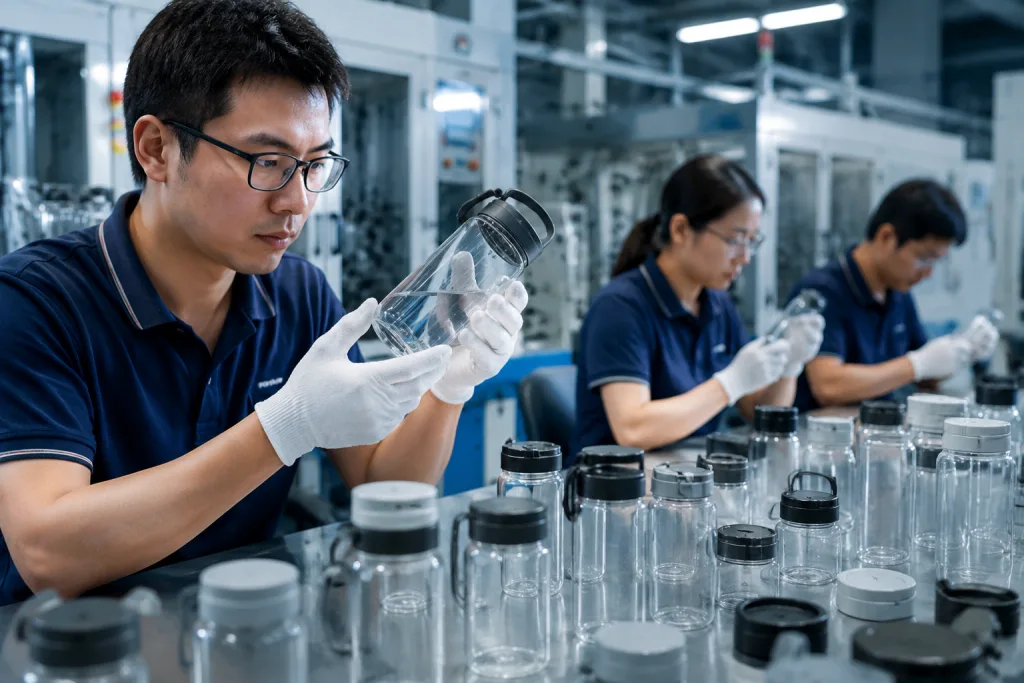
When buyers report leaking bottles, they usually blame the cap design first. We see the line do the opposite: most leaks come from process drift. A gasket can be undersized by 0.2 mm, the cap thread can be over-torqued, or the assembled bottle may not stay under pressure long enough during testing. A borosilicate glass tritan water bottle factory should show the leak test method on paper: inverted for 30 minutes, shaken 10 times, and held at 40-50°C if the bottle is meant for warm beverages.
If you are sourcing a customized growler or custom growler format, pressure changes matter more. Large-volume lids deform the seal faster, especially during altitude shipping or hot-warehouse storage. Ask for a pressure-retention check and a carton-drop test from 80 cm to 100 cm, based on pack-out. Skip carton testing, and you are buying claims later. That math does not work.
Check the cap materials too. If the closure uses PP, ABS, or stainless outer parts, each piece needs its own traceability. QC pulled a sample on one pilot run and found a 0.3 mm gasket mismatch, then the buyer flagged it before mass production. Good canteen manufacturers in Zhejiang will tell you which part failed and what they changed. That is what matters on a 10,000-unit order, not a sample that happened to pass.
MOQ, Cost, and Lead Time Reality
Let’s talk numbers, because this is where buyers lose weeks. For a private-label bottle, MOQ usually starts at 3,000 units per design and color. If the mold is new or the decoration gets tricky, 5,000 is normal. We run the line in Zhejiang, and sample lead time is 7-10 days; production is 25-35 days after sample sign-off. If a supplier says 12 days for everything, they are skipping real QC time. QC pulled the sample on a 2 mm lid gap once, and that kind of miss becomes a claim later.
FOB price depends on the bottle structure and the decoration count. A simple borosilicate-tritan bottle sits around USD 2.40-4.80 FOB at mid-volume, while a custom drinkware model with a multi-part lid and print can climb from there. For retail programs, ask for tiered pricing at 3,000 / 5,000 / 10,000 units. That is the right question. We’ve seen buyers accept one flat quote, then find out the factory padded the margin because the PO typo said “glossy” instead of “matte,” and the math stopped working.
Capacity matters too. A Zhejiang factory with 800,000 units/month can absorb peak season and split orders for multiple distributors. Smaller plants can still be solid, but you need to know whether they are the maker or just a trading layer. Ask for monthly output by SKU family, not a vague “large capacity” claim. We shipped one program that looked fine on paper until the buyer flagged a 60,000-piece gap between claimed output and actual packing records.
How to Audit the Factory Fast
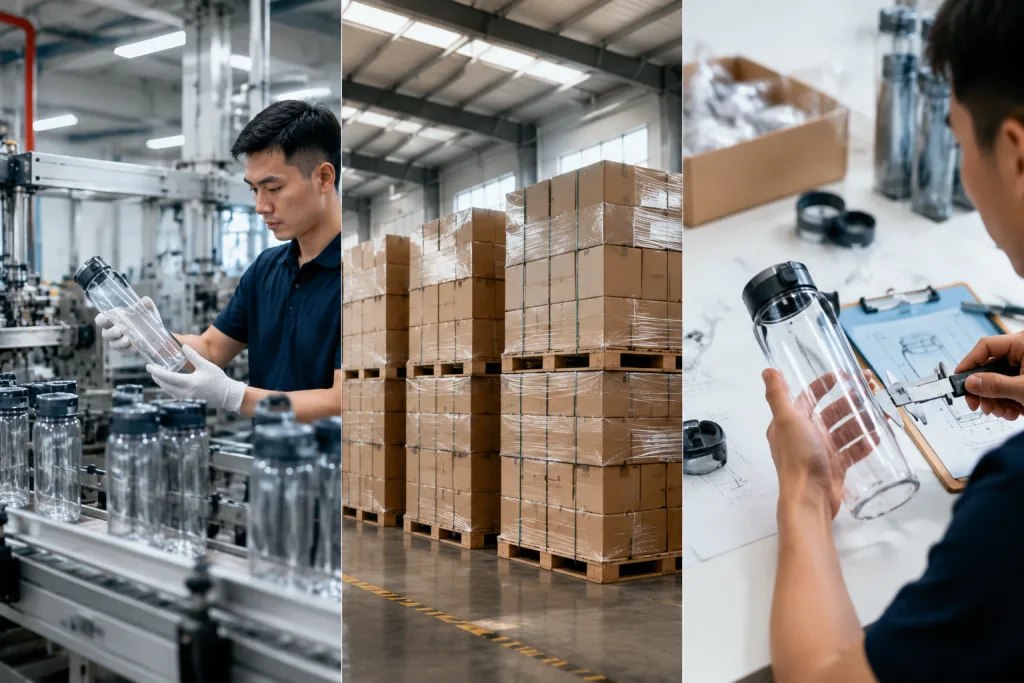
When you visit or audit remotely, skip the glossy showroom first. Walk the line. Start at raw material storage, then injection molding, glass forming, annealing, assembly, and final pack-out. A real canteen factory will show WIP limits, defect bins, and rework segregation. On one audit, QC pulled the sample and found 3 cracked bottles in a 200-piece hold lot; that tells you more than a sales deck ever will.
Ask five questions that expose capability fast: What is your AQL standard? How do you test gasket compression? What is the glass thickness spec in mm? What is your CAPA process after a leak complaint? Can you share BSCI, ISO 9001, and material compliance documents? A competent canteen manufacturer answers cleanly. A weak one gives you vague reassurance and a brochure. We’ve seen this go sideways when a buyer accepted “same as last batch” and later found the cap torque had drifted.
“If the supplier cannot explain why one batch failed, they cannot reliably prevent the next batch from failing.”
For canteen distributors and distributor canteen buyers, the audit should also cover packing. Check carton compression strength, inner tray fit, and barcode accuracy. If you sell on Amazon or through retailers, you need FNSKU-ready labeling or at least a labeling process that can handle it without manual chaos. We once caught a PO typo on carton marks that would have sent 5,000 units to the wrong SKU; the buyer flagged it before the line ran. Zhejiang factories that export regularly know this drill. Some inland plants still don’t.
Spec your bottle before production starts
Send your drawing, target MOQ, and market. We’ll map the weak points, quote the real cost, and build the QC plan with you.
Frequently asked questions
What MOQ should I expect for a borosilicate glass tritan bottle?
For a custom order, expect 3,000 units per design and color as a realistic starting point. If you need a new mold, complex cap, or multiple print positions, 5,000 units is more common. Small sample runs of 100-300 units are possible, but unit pricing can jump 30-60%. A factory in Zhejiang with stable capacity should still give you a clear pilot path: sample in 7-10 days, mass production in 25-35 days after approval.
How do I know if the leak test is serious enough?
Ask for a written test method, not just a promise. A practical standard is inverted leak testing for 30 minutes, plus shake testing, plus a warm-water cycle if the bottle is meant for hot fills. For export programs, many buyers also require carton-drop testing from 80 cm to 100 cm. If the canteen supplier cannot tell you the pass/fail criteria, the test is probably informal and not repeatable.
Can you support custom logo and color matching?
Yes, but you should define the standard. Give Pantone references for the color, submit vector artwork for the logo, and require a golden sample signed by both sides. On curved tritan surfaces, complex logos may have a 3-8% first-run defect rate if the artwork is too fine. A good canteen vendor will suggest line thickness, placement, and ink type instead of just accepting the file.
What compliance documents should I ask for?
At minimum, ask for material declarations, food-contact statements, and traceability for the glass, tritan, gasket, and ink. For European and North American sales, REACH and FDA-aligned documentation is usually expected, and an ISO 9001 quality system is a strong signal. If you work with retail chains or corporate gifting, BSCI can help as well. Keep a separate file for each SKU so your canteen distributor customers can audit quickly.
How much should I budget FOB?
For a straightforward borosilicate glass tritan water bottle, FOB pricing often sits around USD 2.40-4.80 at mid-volume. More parts, heavier glass, thicker walls, or premium decoration can push it higher. Ask for three price tiers at 3,000, 5,000, and 10,000 units so you can see the real cost curve. If a canteen factory quotes one flat number without volume breaks, you are not seeing the true economics.