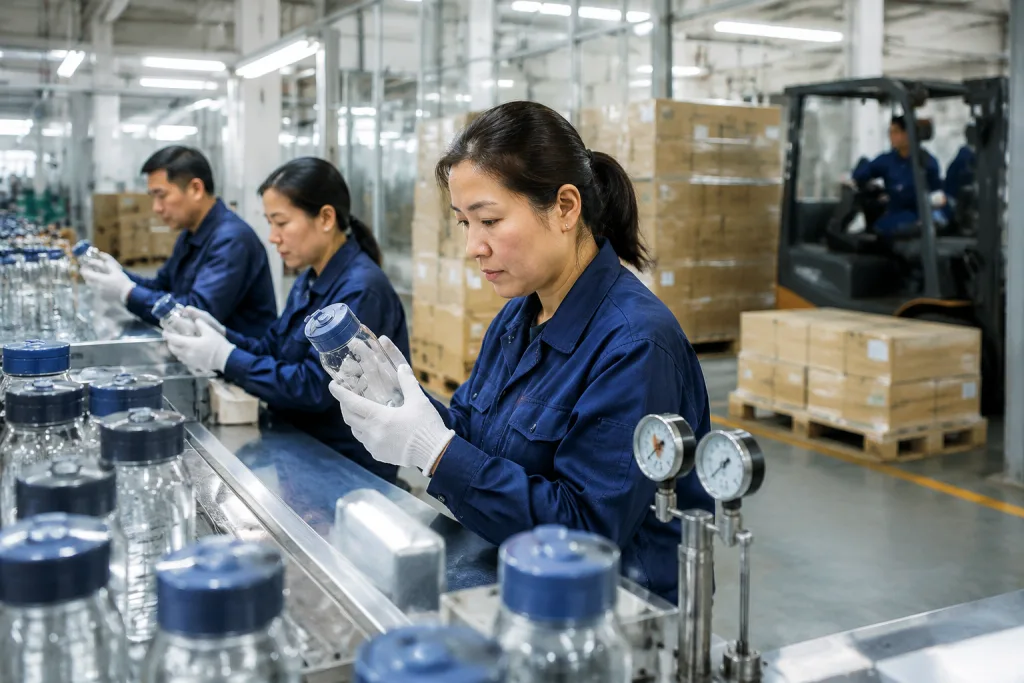
Key Takeaways
- A typical borosilicate-glass + Tritan hybrid starts at 500 ml to 750 ml, with MOQ around 3,000 pcs and lead time 25-35 days.
- Glass wall thickness of 1.8-2.2 mm changes weight and breakage risk more than most buyers expect.
- Tritan lids and sleeves should pass REACH and LFGB checks; leak tests should hold for 24 hours at 1.0 bar equivalent pressure.
- A decent Zhejiang canteen factory often runs 300,000+ units/month across custom drinkware lines, which matters for repeat orders and color consistency.
When you source a borosilicate glass tritan water bottle custom, you are not buying “a bottle.” You are buying a stack of choices: inner liner material, wall thickness, lid seal, drop test result, print method, and whether the freight bill still works after carton size changes. We see buyers in Europe and North America start with the mockup, then get hit by leakage claims, breakage rates, and MOQ math that no one checked on the PO.
That is the wrong order. Read the spec line by line, the same way we do on the production sheet at the line. A 2 mm shift in wall thickness or a loose gasket can change the whole job; QC pulled the sample, and the problem showed up fast. If you want a canteen custom program that holds up in retail, Amazon, or distributor replenishment, you need to know which specs carry the cost and which ones are just sales talk.
Start With the Material Stack
I’ll rewrite just the prose, keep the HTML structure intact, and make it sound like a real factory-side sales engineer wrote it.For a borosilicate glass tritan water bottle custom order, the material stack decides the job. Borosilicate glass brings thermal shock resistance and a cleaner taste; Tritan usually goes into the lid, outer shell, collar, or a guard ring because it takes impact better than the cheap plastics buyers keep rejecting. If the bottle is all glass, the cap and protective parts still work as one set. We run this check on the line before sampling. Too many suppliers blur that point, and it comes back as a claim later.
Ask for the exact Tritan resin grade and get it in writing. We ask whether it is Eastman Tritan copolyester or an equivalent food-contact copolyester, because that answer changes the whole spec sheet. On the glass side, borosilicate 3.3 is the number that matters. A vendor saying “heat-resistant glass” without 3.3 is not giving you a spec; it is dodging the question. QC pulled a sample once at 85°C fill and the crack pattern told the story. Material choice changes unit weight, drop survival, and carton cost more than logo placement ever will.
- Borosilicate 3.3: better for hot-fill and thermal shock than soda-lime glass.
- Tritan parts: good for lids, straps, and protective shells where impact matters.
- Buyer impact: lower odor risk, better shelf appeal, fewer first-use complaints.
For canteen distributors, this is the line between a usable customized drinkware program and a returns headache. We’ve seen the math go sideways on a 10,000-piece MOQ when the cap spec and glass spec did not match the PO.
Read the Dimensions, Not the Photos
I’ll rewrite the section in-place, keep the HTML exactly as-is, and tune the copy to sound like a factory-side sales engineer.Photos hide scale; specs do not. We have seen a 500 ml glass bottle look neat in a catalog and still feel clumsy in a tote when the diameter is 78 mm instead of 68 mm. For retail and distributor programs, the real footprint matters because carton count, shelf facings, and freight density all hang on it. A common build for a custom canteen in this category is 500 ml, 650 ml, or 750 ml with an overall height between 210 mm and 270 mm. Once you go past 750 ml, the math starts to hurt: breakage risk climbs, and parcel shipping gets expensive fast.
Check wall thickness. At 1.8 mm, the bottle is lighter and usually cheaper to ship; at 2.2 mm, it feels more solid but adds grams that stack up across a full container. The right call depends on the channel. If you are buying for gyms, gift shops, or premium retail, that heavier hand feel can support the price. If the line is for a promotion, weight and cost usually beat a luxury feel. We had a buyer flag a 2.4 mm sample once, and QC pulled the sample again because the net weight pushed the carton limit.
Ask your canteen factory for a dimension sheet with height, max diameter, neck finish, wall thickness, and net weight in grams. If they only send a render, they are not ready for volume. We run into PO typos on diameter all the time—68 mm turns into 86 mm, and then everybody wastes a week.
Good canteen manufacturers in Zhejiang will also tell you the packing density per master carton and how many units fit in a 20GP or 40HQ. That number changes your landed cost more than the printed artwork does. We ship by the carton, not by the mockup, and a 12 mm change in bottle diameter can wipe out one extra row in the case pack.
Check the Lid Like an Engineer
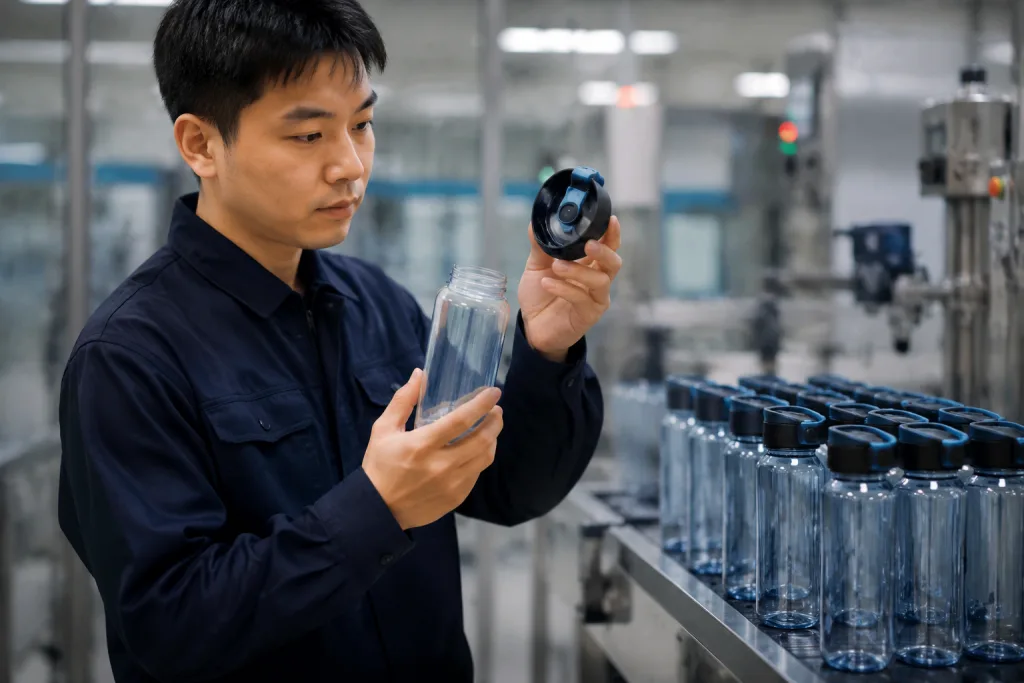
The lid is where a lot of custom drinkware programs blow up. A bottle can look premium and still leak if the sealing land is off by 0.2 mm or the gasket compound is wrong. For a borosilicate glass tritan water bottle custom order, we check the closure line by line: thread pitch, gasket material, vent path, torque window, and how many open-close cycles the hinge survives. If the bottle has a tea infuser or carry loop, that is one more weak point unless the tool steel and cavity polish were done right.
For food-contact parts, ask for the silicone gasket spec and the test standard. LFGB is common for EU buyers; REACH covers chemistry limits; for North America, you still want traceable material declarations and FDA food-contact support where it applies. We had a buyer flag a PO once because the lid color code was right but the gasket compound was not called out. That is the wrong question to ask. The leak test should not be a hand squeeze on the line. It should be repeatable, with sample retention and lot-number records. On a serious canteen manufacturer setup, QC pulled the sample for cycle testing, drop testing, and torque verification before we ship.
- Leak seal: request a 24-hour inversion test and transport simulation.
- Gasket: food-grade silicone, not mystery rubber.
- Cycle life: 3,000 to 5,000 open-close cycles is a practical target for retail.
If you want a customizable canteen program your sales team can stand behind, the lid spec should be boringly complete.
Decoration Changes the Margin
Decoration is not just branding. It changes cost and reject risk. On glass, silkscreen printing gives a clean logo at a lower unit price, and it works best when the artwork stays at one or two colors. We run this on the line with a 120-mesh screen, and QC pulled a sample last week because the white underbase went thin near the shoulder curve. Laser engraving fits better on stainless steel or coated metal, so on this hybrid bottle it belongs on a sleeve, cap ring, or accessory, not the glass body. If you need full-wrap graphics, label systems or decals can do the job, but they add labor and the buyer flagged the scuff resistance after a 72-hour carton rub test.
Decoration cost in China depends on method and color count. A simple one-color silkscreen logo on a 500 ml bottle may add USD 0.15-0.35 per piece at scale, while multi-color or special-effect printing moves up fast. We saw a PO typo last month where the buyer wrote 5,000 pcs but the artwork called for three colors; the math did not work, and we had to re-quote before sampling. This is the wrong question to ask if you only chase the cheapest mark. Match the logo method to the channel. A canteen promotional order for an event may only need a single imprint. A premium distributor drinkware launch often needs tighter finish, cleaner edge control, and a better color match.
Ask the canteen supplier for the ink curing method, scratch test results, and whether the print sits under a protective coating. If the logo chips in transit, the savings vanish on the first complaint. For custom growler and customized growler programs, we ship with the same rule: decoration must survive handling, not just product photos. One factory detail tells you a lot here — if the coated sample still passes a 1-meter drop and the print stays intact, the program is on the right track.
Packaging Is Part of the Product
Packaging changes breakage rates, freight cost, and how the buyer reads your brand. A glass bottle with no proper insert is a return ticket. On B2B drinkware jobs, we treat the inner box and master carton as part of the spec sheet, not an afterthought. A solid pack usually means one bottle, one lid, one protection insert, and a carton that survives a 1.2 m drop test in the right orientation. If the order goes to e-commerce or Amazon FBA, carton size and barcode handling matter as much as the bottle finish. That is where FNSKU labeling, case pack consistency, and carton dimensions turn into real money.
In Zhejiang, a capable canteen factory usually runs molded pulp, EVA, paperboard, or custom tray inserts. Each one changes the trade-off between protection and sustainability. Molded pulp looks clean for eco positioning, but the neck and base still need to stay put after a 12-day sea move, not 18. If you are buying canteen customizable SKUs for several territories, ask whether the carton artwork can be localized without changing the structure. We’ve seen the buyer flag a tiny PO typo on the carton size and the whole lot gets held up, so this is the wrong question to ask at the end.
- Gift box: better for retail margin and premium positioning.
- Inner support: cuts breakage more than thicker outer cartons alone.
- Master carton: confirm gross weight, cube, and pallet pattern before PO.
Packaging is one of the fastest ways to turn a good canteen promotional idea into a profitable custom canteen line. QC pulled the sample, measured the insert at 6 mm, and the line kept the bottle from rattling; that small detail saves the math.
Price, MOQ, and Lead Time
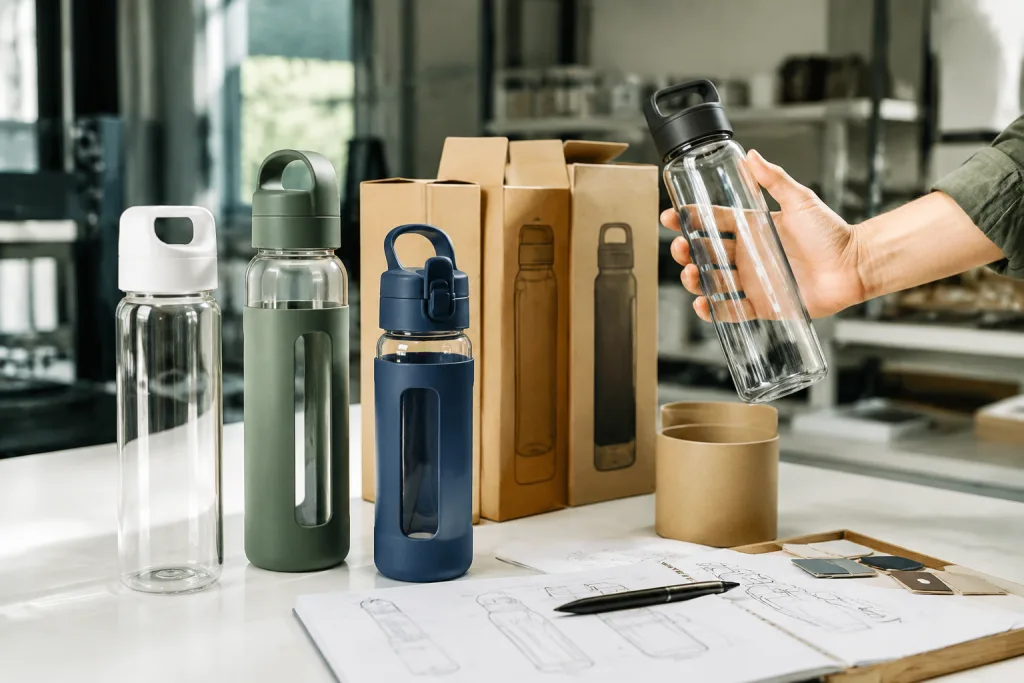
Now the numbers. For a standard borosilicate glass tritan water bottle custom project from China, a realistic MOQ is 3,000 pcs per design, and 5,000 pcs is common if you want multiple color parts or custom tooling. A simple build usually sits around USD 2.20-4.80 per unit ex-works, depending on capacity, printing, lid structure, and packaging. Add a new mold, special coating, or a premium carton and the price jumps fast. We’ve seen buyers ask for a 300-piece trial with full tooling, and that is the wrong question to ask.
Lead time in a normal Zhejiang production window is 25-35 days after sample approval, if the tooling is already signed off and raw materials are on hand. If new molds are needed, add 15-25 days. A factory running 300,000 units per month across drinkware can still move slowly when artwork is not final or the compliance file is missing one page. The line does not care about promises. It cares about clean specs, and QC pulled the sample only after the PO typo on the lid color was fixed.
For buyers comparing canteen manufacturers, ask for FOB Ningbo or FOB Shanghai pricing and make sure the quote breaks out product cost, tooling, packaging, and testing. If they hand you one vague number, the margin math does not work. We ship quotes in that format for a reason: one carton spec off by 5 mm can change the landed cost faster than the sample can cool on the bench.
Ask for Proof, Not Promises
Good sourcing starts with paperwork, not promises. For a custom drinkware order, ask for material declarations, test reports, and a pre-production sample record tied to the same SKU code that will be printed on the carton. Put AQL terms into the PO; AQL 2.5 for major defects and 4.0 for minor ones is a common starting point, but the right level depends on channel risk and unit price. If the supplier cannot talk through inspection terms, they are not running export work.
Ask for REACH, LFGB where relevant, a food-contact declaration, and any customer-specific testing your market requires for Europe or North America. If the bottle has a strap, sleeve, or carry part, that accessory needs the same coverage. We have seen this go sideways: the bottle passes, then the strap fails because nobody told the factory to certify the full assembly. Saving 20 cents there is the wrong math.
Look for a vendor who can show a sample log, batch traceability, and in-line QC checkpoints. QC pulled the sample, checked the neck finish at 31.8 mm, and the whole order stayed clean. Buyers do not need a speech; they want paper, samples, and repeatability. For customized canteen stock sold to multiple distributors, that consistency is the product.
Send your spec sheet and get a quote
We can review material, lid, packaging, MOQ, and compliance details for your China program and turn them into a practical production quote.
Frequently asked questions
What is a realistic MOQ for a custom hybrid glass bottle?
For a borosilicate glass tritan water bottle custom order, 3,000 pcs per design is a practical starting point in China. If you need custom color lids, printed sleeves, or new molds, 5,000 pcs is more common. Some Zhejiang factories will quote 1,000 pcs for existing tooling, but the unit price usually rises 20-35%. If you want a stable program for retail or distributor resale, plan your MOQ around a full carton pattern and a repeatable production lot.
How do I reduce breakage in shipping?
Start with wall thickness, then packaging, then palletization. A 1.8-2.2 mm borosilicate wall is normal, but the insert and master carton do most of the damage control. Ask for a 1.2 m drop test on packed cartons, not just a bare-bottle test. For export shipments from China, molded pulp or EVA support inserts often cut breakage by 30-50% versus loose packing. Also confirm pallet stacking height and corner protection before you approve the PO.
Can I use this as a canteen promotional item?
Yes, but keep the spec simple. A canteen promotional program usually works best at 500 ml or 650 ml with one-color silkscreen, standard lid color, and standard carton. That keeps cost in the USD 2.20-3.20 range at scale. If you try to add multiple logos, metal accents, and premium box packaging, you move out of promotional territory and into retail gift pricing.
What compliance documents should I ask for?
For Europe, ask for REACH and, where applicable, LFGB food-contact support. For North America, ask for material declarations and any relevant food-contact statements. Also request supplier QC records, a pre-production sample sign-off, and AQL terms in the contract. If your bottle includes a straw, gasket, or sleeve, make sure every contact material is listed. A good canteen factory in Zhejiang will provide these without drama.
Is this better than a custom growler for my channel?
It depends on the use case. A custom growler or customized growler usually targets beer, beverage service, or bulk carry programs and often needs larger capacity, heavier construction, and different closures. A borosilicate glass tritan water bottle custom is better for daily hydration, premium retail, and lifestyle distribution. If you sell to gyms, wellness brands, or office channels, the water bottle usually has broader appeal than a growler-style product.