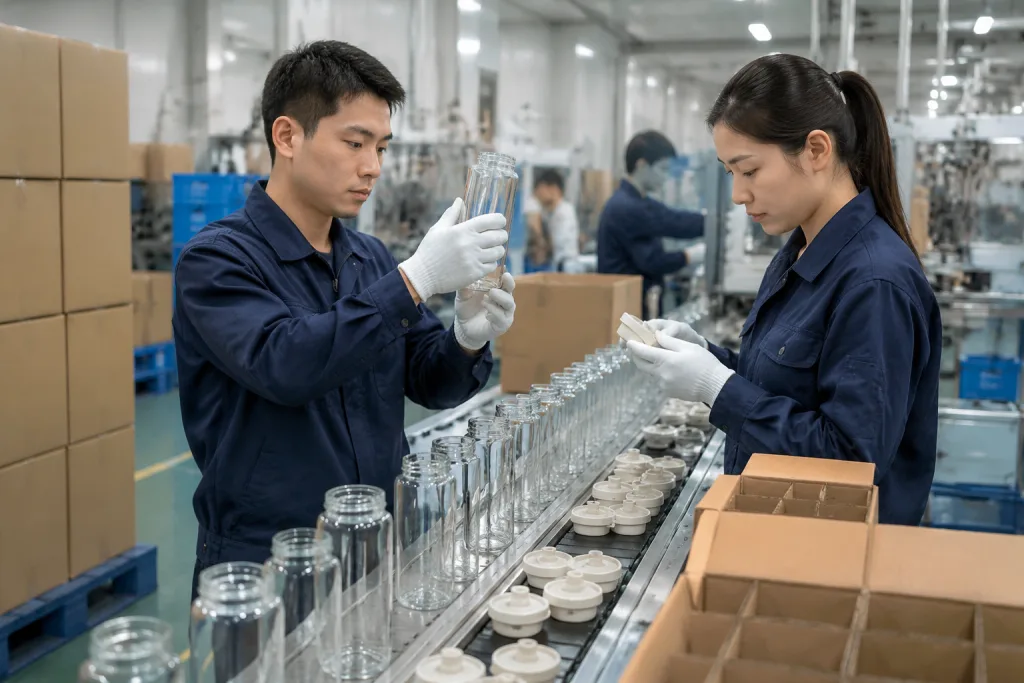
Key Takeaways
- Typical MOQ is 3,000 pcs per SKU; sampled orders can start at 500 pcs with plain decoration.
- Lead time is usually 25-35 days after sample approval and deposit, with 1.2 million units/month capacity in our Hangzhou, Zhejiang plant.
- Borosilicate glass bodies usually handle -20°C to 150°C thermal shock better than soda-lime, while Tritan lids and sleeves reduce breakage risk.
- For EU and North America, ask for REACH, food-contact declarations, AQL 2.5 major / 4.0 minor QC, and carton drop testing before you approve shipment.
You are probably not buying “a nice bottle.” You need one order that ships on time, clears customs, survives a 1-meter drop test, and still looks premium when the customer opens the box. That is the real job in a borosilicate glass tritan bottle private label program, especially for a canteen custom line in retail, corporate gifting, or e-commerce.
In Zhejiang, we get this request every week. One buyer wants the clear look of glass, another wants the impact resistance of Tritan, and the first question is usually MOQ, print method, and whether the carton can pass a 12-piece drop test. If you are comparing canteen suppliers, canteen manufacturers, or a canteen factory in China, this is the wrong place to talk in generalities; the details below are the ones that get a PO approved.
The order starts with use case
I’ll rewrite the prose in place, keep the HTML structure intact, and make it sound like a buyer-facing factory note with concrete spec detail.Before you talk decoration, pin down the use case first. A borosilicate glass tritan bottle private label run behaves one way for office buyers, another for gym chains, and a third for a distributor canteen program tied to seasonal retail. Decide up front whether the bottle is for hot tea, cold brew, infused water, or mixed use. That choice sets wall thickness, lid structure, and whether we add a silicone sleeve.
For a clean commercial brief, we ask buyers to lock five points: capacity, fill temperature, lid style, drop-risk level, and packaging target. A 500 ml bottle with a straight wall and screw lid is easy to quote. A 600 ml canteen customizable model with a tea infuser, bamboo cap, and printed gift box is a different job. If you are a canteen distributor, name the end market. A gym chain promo run and a customized drinkware line for premium retail do not share the same spec sheet. QC pulled the sample, and the buyer flagged the cap height at 3 mm off.
The mistake we see most is mixing “nice looking” with “commercially workable.” A customized canteen that looks sharp but cracks on a 30 cm tumble test will cost more in claims than you save on decoration. That is the wrong question to ask. A canteen manufacturer in China should push function first, finish second. We run that order every day in Zhejiang, and it is usually the difference between a steady program and a one-off PO.
Choose the hybrid construction
I’ll rewrite the section in-place, keep the HTML structure unchanged, and tighten the language so it reads like a factory-side sales engineer.The phrase borosilicate glass tritan bottle private label can cover a few builds, and you should not assume every supplier means the same thing. On the line, we usually mean a borosilicate glass body with a Tritan cap, ring, or outer shell. That gives the bottle heat resistance where the drink sits and impact protection where the hand hits it. For a lot of custom drinkware programs, that is the right split.
Borosilicate glass is usually spec’d at 1.8 mm to 2.2 mm wall thickness for consumer bottles. If you go thinner, you save grams, but the carton test gets less forgiving in export transit. Tritan parts often run 1.5 mm to 2.0 mm, depending on the mold and thread pitch. We’ve seen buyers ask for a “light growler” look, then the sample tipped the scale at 420 g and the math stopped working. If you want that shape, we can adjust the shoulder and keep the profile tight without making the bottle bulky.
- Borosilicate body: better thermal shock resistance and a clearer glass look.
- Tritan cap or sleeve parts: lighter, tougher, and less likely to chip in handling.
- Silicone gasket: the part that keeps a tilt test under 0.5 ml/min from going sideways.
Do not let anyone call it a premium hybrid without material declarations. QC pulled the sample once and the resin batch code on the cap did not match the PO, so the buyer flagged it immediately. For EU orders, REACH and food-contact papers should be ready before mass production starts. For North America, ask for FDA food-contact support documents and the test scope in writing.
Lock the specification before sampling
I’ll rewrite this section in-place, keep the HTML structure intact, and tighten the wording so it sounds like a factory-side sales engineer wrote it.Sampling is not where you discover the product; it is where you confirm the spec you already locked. If your canteen custom brief is still loose, the sample just burns 7 to 10 days and adds back-and-forth. We run this every week. A proper sample pack should show the bottle body, lid closure, gasket, print method, and carton layout. If you are comparing canteen vendors, ask for two lid variants and one packaging variant so you can see the shelf impact, not a polished sales picture.
For a private label order, we freeze these points before we cut the sample: capacity tolerance within ±5%, lid color Pantone match within a realistic production tolerance, logo placement, and carton dimensions. If you want a customized canteen with laser logo, say it early; if you want silk screen or water transfer, the line setup and curing time change. Same story for a customized drinkware launch with retail hangtags or QR codes. The artwork changes tooling, not just decoration. The buyer flagged this on a 2,000 pcs PO once, and the math did not work.
“The sample should prove the factory process, not just the designer’s mockup.”
As a canteen supplier in Zhejiang, we prefer a sample approval sheet with pass/fail checks only. Put leak test, dishwasher cycle count if relevant, and a visual standard for bubbles, scratches, and print misalignment on the sheet. QC pulled the sample under a 0.5 mm gap gauge, and that saved a dispute later. If you do not define acceptable appearance now, you will fight over it in mass production.

Check QC like a distributor
If you are a canteen distributor or a drinkware buyer, QC is where margin gets saved. No need to build a lab in-house. You do need a clean inspection plan. On a 10,000 pcs run, we usually work to AQL 2.5 for major defects and AQL 4.0 for minor defects. That standard is firm enough to catch trouble, but it does not turn every lot into a fight.
Before goods leave the canteen factory, we ask for a leak test, drop test, closure torque test, dishwasher resistance if claimed, and carton compression or drop packing test. A lid can pass and still lose the shipment if the carton fails a drop at 80 cm. We’ve seen that go sideways. For glass parts, QC also checks bubble concentration, neck roundness, and edge finish; one batch looked clean on the table, then failed because the mouth finish was off by 0.3 mm and the cap cross-threaded.
- Leak test: 24 hours inverted, then shake test with 70% fill.
- Drop test: 1 meter, 3 sides, with and without outer carton.
- Visual QC: print register, scratch marks, glass inclusions, and cap fit.
If you buy from canteen manufacturers in China, ask for pre-shipment photos and a random video of cartons being pulled from the line. We run that check on the warehouse floor with a tape measure and a spot check against the PO, because one typo can turn a 350 ml order into a mess. In Zhejiang, the factories that send that material fast usually have their process under control; the ones that stall are the ones the buyer flags later.
Price the real landed cost
I’ll rewrite the section in-place, keep the HTML tags unchanged, and make the copy sound like a factory-side sales engineer with concrete pricing details.Many buyers price only the bottle and stop there. That is the wrong math. For a borosilicate glass tritan bottle private label project, landed cost usually includes the bottle, decoration, inner pack, master carton, freight, duty, and destination handling. On our line, a plain 500 ml model can start around USD 1.35-1.90 FOB China at 3,000 pcs, while a printed, boxed version with Tritan parts often lands around USD 2.10-3.40 FOB, depending on mold work and pack spec. The quote sheet is not the final cost.
If you need a canteen promotional run, check the print method first. One-color silk screen costs less than laser engraving on some shapes, but laser holds up better after washing. We had one buyer flag a full-wrap color print because the artwork left a 3 mm seam gap after shrinking on the sleeve. A custom canteen with that kind of wrap print usually runs slower on the line, and the scrap rate goes up. Ask about the lid color too. Stock black or white is easy; custom-molded color can add 7-15 days and a higher MOQ.
From Zhejiang to the US or Europe, freight can wipe out a “cheap” factory quote fast. Compare FOB with packed carton weight, not just unit price. We shipped a customized growler style bottle in a heavy gift box at 18.6 kg per carton, and the buyer’s forwarder moved it into a higher rate band right away. That is normal. Price it the way it ships, not the way it looks on a screen.
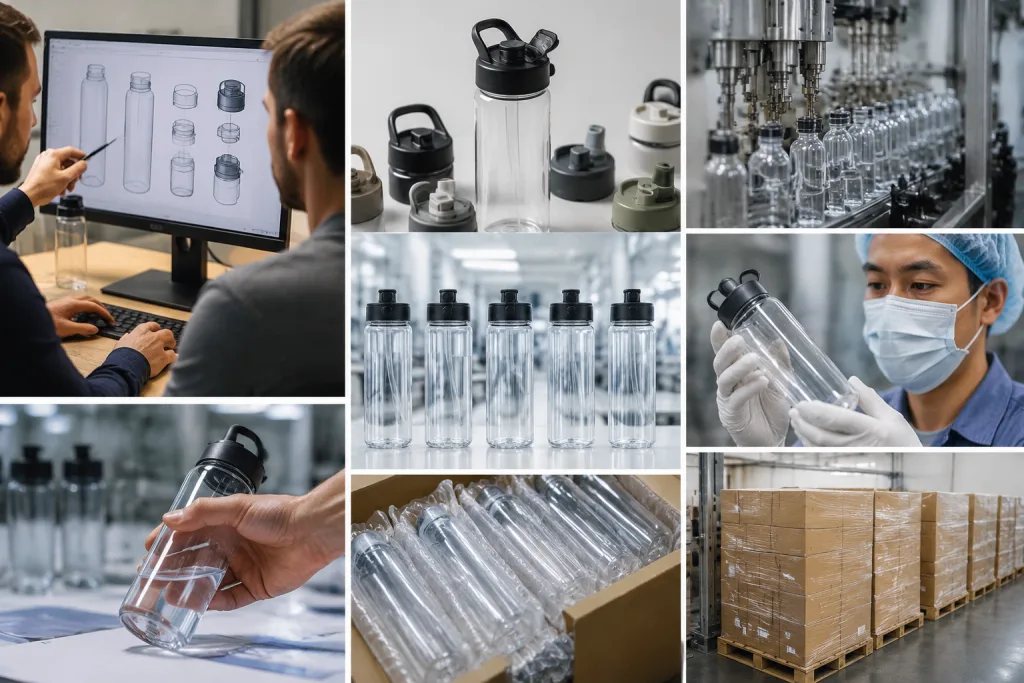
Plan production and export paperwork
I’ll rewrite the section to sound like a factory-side sales engineer, keep the HTML exactly as-is, and preserve the heading/structure.Once the sample is signed off, the line schedule matters more than the render file. Our Hangzhou, Zhejiang plant runs up to 1.2 million units a month across drinkware, but your slot still depends on decoration method, raw material in the warehouse, and how much packing work the order needs. For a private label bottle, plan on 25-35 days after sample approval and deposit. If the buyer flags artwork after proof sign-off, add 5-10 days. We’ve seen that go sideways on a 3-color logo because the PO typo changed the carton mark.
For export paperwork, do not leave it to the end. Your factory should issue the commercial invoice, packing list, HS code guidance, and test reports when the spec calls for them. For Europe, ask for REACH and food-contact support. For Amazon, you may need FNSKU labels, carton marks, and barcode placement that matches the retailer file. QC pulled one batch last quarter because the outer carton label was 5 mm off the agreed position. A supplier that ships distributor programs should catch that before we run the first carton.
The cleanest orders are still the simple ones: one capacity, one lid, one artwork set, one carton spec. Once you mix colors, lid types, and gift sets, sorting time goes up and rework follows. That is fine if the margin supports it, but the math does not work if you treat it like a standard run. We ship these every week, and the safest setup is one approved sample, one signed packing spec, and one checklist at each handoff.
Send your spec for a quote today
Share capacity, lid style, logo file, and target market. We will quote FOB China, suggest QC points, and confirm a realistic lead time.
Frequently asked questions
What is the usual MOQ for a borosilicate glass tritan bottle private label order?
Most private label programs start at 3,000 pcs per SKU for a standard bottle with one logo position. If you want custom molding, special lid tooling, or mixed colors, the MOQ can rise to 5,000-10,000 pcs. For first-time buyers, we sometimes support a 500-piece sample trial with plain packaging, but that is not the same as a full production MOQ. If you are a canteen distributor testing a new market, ask for one SKU, one decoration method, and one carton size first. That keeps the order manageable and makes QC easier to control.
Can I use this bottle for hot and cold drinks?
Yes, if the structure is specified correctly. Borosilicate glass is commonly used for hot and cold applications because it handles thermal shock much better than standard glass. In practice, a good bottle should tolerate cold fill to hot fill transitions within a controlled range, often around -20°C to 150°C for the material itself. The real limit is usually the lid seal, gasket, and how fast the user changes temperature. If you plan to sell it as customizable drinkware for tea and iced water, ask for a heat-and-leak test together. The cap is usually the weak point, not the glass.
What QC tests should I require before shipment?
At minimum, require leak testing, drop testing, closure torque testing, and visual inspection under AQL 2.5 major / 4.0 minor. For a glass bottle, you should also ask for edge finish checks and carton drop validation. If your order includes printed logos, add rub resistance testing so the decoration survives packing and retail handling. A serious canteen supplier in China should be able to show photos, inspection data, and a sample retention plan. If they cannot explain the defect classification, that is a warning sign. Good QC protects your margin more than a slightly lower unit price.
How much does private label decoration add to the price?
It depends on the method and the artwork area. A simple one-color silk screen can add roughly USD 0.12-0.35 per piece on a medium run, while laser engraving may add USD 0.20-0.60 depending on setup and shape. Full-wrap print or multi-color artwork can increase cost further because of slower line speed and higher scrap risk. If you need canteen customized packaging with gift boxes, add another USD 0.18-0.70 per unit depending on insert quality. The cleanest way to quote is to separate bottle, decoration, and packaging so you can see where the money goes.
How do I choose between a glass body and a full Tritan bottle?
Choose glass if you want a premium look, better heat resistance, and a clearer retail story. Choose full Tritan if impact resistance and low breakage matter more than the glass feel. For many buyers, the best compromise is a borosilicate glass body with Tritan cap or protective components. That gives you a stronger value proposition for a customized canteen or custom drinkware line without making the product feel cheap. If you sell through retail or gifting, glass usually wins on perceived value. If you sell in sports or travel channels, Tritan-heavy builds can reduce returns. Your channel should decide the structure, not the trend.