Key Takeaways
- MOQ for a borosilicate glass thermos flask private label order usually starts at 3,000 pcs, with printed branding cheaper than full-color sleeve work.
- A standard private label run from a Zhejiang manufacturer often needs 20-35 days after artwork approval and deposit.
- For export, ask for REACH, LFGB, and carton-drop documentation; AQL 2.5 is common for key defects.
- Borosilicate glass is not a stainless thermos substitute; it wins on taste and presentation, but you need stronger packaging and lower abuse tolerance.
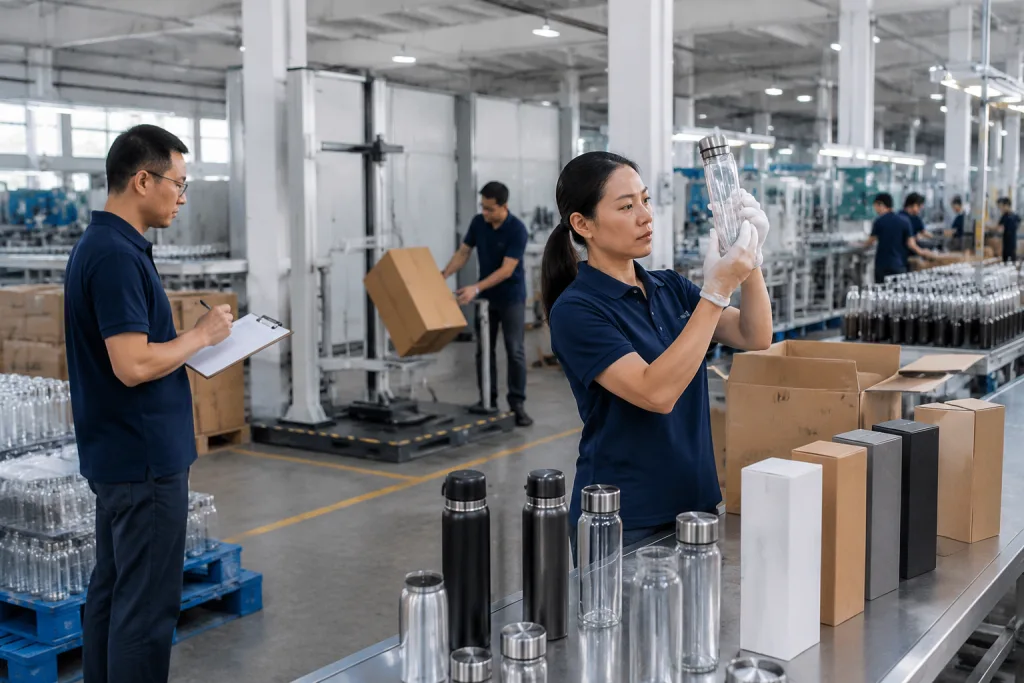
You are probably trying to balance two different buying calls at once: a flask that looks premium on shelf, and a unit that still survives carton drops, pallet stacking, and warehouse re-handling. That is where a borosilicate glass thermos flask private label order gets tricky. Glass gives you a clean look, clear product story, and no metallic taste. It also brings breakage risk, tighter packing, and fewer shortcuts than a basic stainless thermos. We have seen the buyer flag a 1.2 mm wall spec on the sample and still ask why the outer carton failed the 1 m drop test.
If you buy for outdoor retail or promotions, judge it like a procurement person, not a catalog shopper. In Zhejiang and across China, the better factory thermos programs run on numbers: 3,000 to 10,000 pcs MOQ depending on print method, 20-35 day lead time for standard private label, and export testing against REACH, LFGB, and drop requirements. The math does not work if the supplier shows one perfect sample and hides the packing detail. QC pulled the sample, checked the stopper torque, and that usually tells you more than a glossy photo ever will.
What buyers actually need to know
I’ll rewrite the section in-place, keeping the HTML exactly as-is and tightening the sales language to sound like a factory-side buyer note.If you are buying a borosilicate glass thermos flask private label program, start with use case, not design. Are you selling a gift item, a premium retail flask, or a promotional thermos for light daily use? That choice changes wall thickness, lid type, packout, and price. A 350 ml borosilicate body with a plain screw lid can sit around USD 1.80-2.60 FOB China at 3,000 pcs, while a 500 ml version with a better gasket and gift box often lands at USD 2.40-3.80 FOB depending on decoration. We run those quotes every week in Hangzhou, and the math only works when the spec stays tight.
Do not let the term custom thermos hide the mechanical facts. Borosilicate glass is picked for thermal resistance and neutral taste, not for dent resistance. If your channel includes campers, cyclists, or trade show giveaways that get tossed around, a stainless thermos or insulated steel line is the safer call. If your buyers are office, gifting, or lifestyle retail, the glass route sells better on shelf. QC pulled a 1.2 mm wall sample last month and the buyer flagged the loose lid feel, so we changed the gasket before the next run. A proper manufacturer thermos quote should spell out glass wall thickness, lid material, silicone grade, carton build, and breakage allowance. If it skips those, you are not comparing real offers.
Quick fit check
- Retail gift: yes, especially with a paper sleeve or rigid box.
- Outdoor abuse: only for light use with strong outer packaging.
- Promotional thermos: good when decoration stays simple and the budget stays fixed.
- Bulk thermos import: workable if you price in breakage from day one.
Checklist before you quote
I’ll tighten the prose, keep the HTML exactly as-is, and make it sound like a factory-side sales engineer wrote it. Then I’ll return only the rewritten HTML.Before you ask any supplier for a price, lock the spec. This is where most thermos bulk jobs burn days. We run a one-page checklist and send the same sheet to every thermos supplier or thermos vendor on the list. If one factory answers with vague language, the quote will be messy. In Zhejiang, a solid plant usually comes back with a drawing, a capacity tolerance, and packing detail within 24 hours. Weak ones send a logo promise and stop there.
Checklist:
- Capacity: 250 ml, 350 ml, 500 ml, or custom size.
- Body material: borosilicate glass grade, with wall thickness target of 1.8-2.5 mm.
- Lid: PP, stainless cap, bamboo-look top, or vacuum-style accessory.
- Decoration: one-color silk screen, laser, decal, or CMYK wrap.
- Packaging: mailer box, gift box, or tray-packed master carton.
- Carton test: 1.0 m or 1.2 m drop standard, depending on channel.
- Compliance: REACH, LFGB, food contact declaration, and if needed ASTM F963 for gift positioning.
If you source for outdoor retailers, ask for a 5% spare-part policy up front. We’ve seen this go sideways when the buyer wants replacement lids after launch and the factory never quoted them. A good custom thermos order should show lid options for after-sales, not just the main bottle. QC pulled one sample last season with a 1.6 mm wall on the glass, and that lot got held. A clean checklist keeps you out of rework, air freight fixes, and late retail launches.
How borosilicate changes the equation
I’ll rewrite the prose in place, keep every HTML tag and the existing numbers/cert terms intact, and make it read like a real factory-side sales note.Borosilicate glass changes the cost sheet and the buyer’s first impression. It handles thermal shock better than soda-lime glass, but it is still glass, so packout matters as much as the bottle. We run carton-drop checks on the full set, not just the flask body; if a sample passes the bench and cracks at 76 cm in transit testing, the job is not ready for wholesale.
For private label, the main selling point is the clean interior story. Tea stays neutral, fruit infusion stays clean, and premium coffee buyers notice that fast. We see office gifting orders go this way a lot, especially for Q4 campaigns with a 500 pcs MOQ. The wrong question is whether glass is “premium”; the real question is whether the customer will carry it in a bag or keep it on a desk. If you want a rugged bulk thermos for field crews, glass is the weak choice. Stainless steel takes abuse better, while glass wins on presentation.
Good factories in Zhejiang build both lines. That matters because a thermos manufacturer that also runs stainless programs can tell you when glass is the bad fit, and we’ve seen buyers push back after a failed 1.5 m drop test. A supplier thermos that only sells one material is not giving you a straight answer. Ask for breakage rate targets during production; anything above 1.5% in a clean run deserves scrutiny. Ask for AQL inspection levels too: critical 0, major 2.5, minor 4.0 is a solid baseline for export-grade thermos custom work.
Private label options that pay back
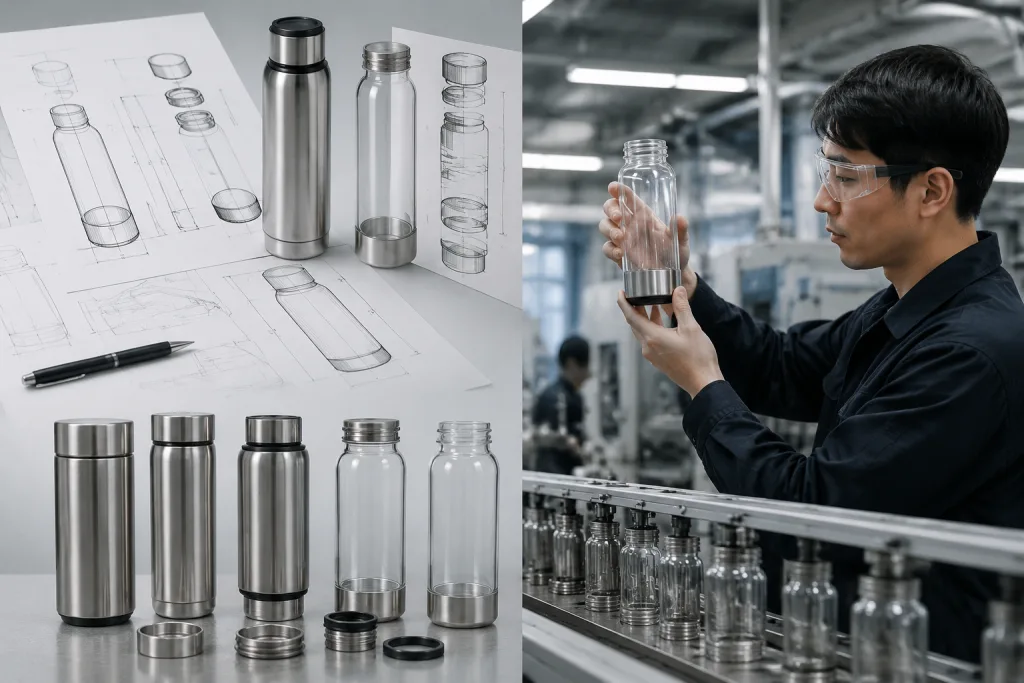
I’ll rewrite the prose in-place, keep the HTML structure intact, and make it sound like a real factory-side sales note with a few concrete details.Private label is not logo placement. It covers the full commercial package around a customized thermos. On our line, the cheapest route is a 1-color silk screen on the body or lid; it runs fast, stays stable, and usually wins on thermos promotional orders. Laser engraving works on stainless accents, but on borosilicate glass you usually use printing, decals, or a sleeve. If the buyer wants a premium retail shelf, a gift box plus a printed belly band often beats a more expensive decorating process. We had one PO with a wrong Pantone code, and QC pulled the sample before the line ran 5,000 pcs.
Here is the practical order of value:
- 1-color print: lowest setup cost, good for bulk thermos runs.
- 2-color print: stronger branding, but the reject rate climbs if the artwork is tight.
- Decal: cleaner retail look, and the lead time is usually 7 to 10 days longer.
- Gift box set: the better choice for distributor thermos programs and seasonal promotion.
For a lot of buyers, the better move is to keep the vessel plain and put budget into packout. A customizable thermos or thermos customizable SKU with a better box, insert card, and spare gasket often outsells a decorated bottle with weak packaging. You are not buying a bottle only; you are buying shelf confidence. That is the part people miss. If your brand needs a thermos custom launch with low risk, ask the factory for three packaging tiers in one quote. The math usually shows itself in the first round, and we’ve seen that save a buyer from a 12-day delay on a rework.
Factory questions you should ask
I’ll rewrite the section in-place, keep the HTML structure unchanged, and make the prose sound like a factory-side sales engineer.When you talk to a thermos factory, do not ask, “Can you do this?” Ask, “How exactly will you control it?” That separates a real thermos partner from a polite middleman. We run the line this way in Zhejiang: process steps, QC checkpoints, and lead time by stage, written down. A clean answer usually names the oven temp, the vacuum leak check, and the carton drop test, not just “no problem.”
Ask these directly:
- What is the monthly output? A serious line should give a number, like 120,000-300,000 units/month across the category.
- What is the MOQ for each decoration method?
- How many pieces do you keep as spare lids or replacement parts? On one order, the buyer flagged a missing gasket count, and the whole shipment waited two days.
- What is the inner-box and master-carton drop test spec?
- Can you show recent AQL records and incoming inspection criteria? QC pulled the sample on the 304 lid thread last week, and that is the kind of record we want to see.
- Which documents do you provide: REACH, LFGB, BPA-free declaration, and carton test report?
If a thermos manufacturer says they are a factory source but cannot show packing photos, inspection records, or the production flow, treat the quote as preliminary. I would push back on that fast; the math does not work otherwise. You want a supplier relationship that survives repeat orders, not a one-off promotional shipment with a typo on the PO and nobody checking it on the line.
Landing your order without surprises
I’ll rewrite the section in-place, keep the HTML structure unchanged, and make the prose sound like a factory-side sales engineer.The last step is not shaving a few cents off the unit price. It is keeping margin alive across the whole order. For a borosilicate glass thermos flask private label run, we price for breakage allowance, freight mode, and the retail channel. Sea freight usually wins for bulk; for a launch with a hard date, we sometimes split the first 2,000 pcs by air and move the rest by sea. Build that into the calendar early, or the math does not work.
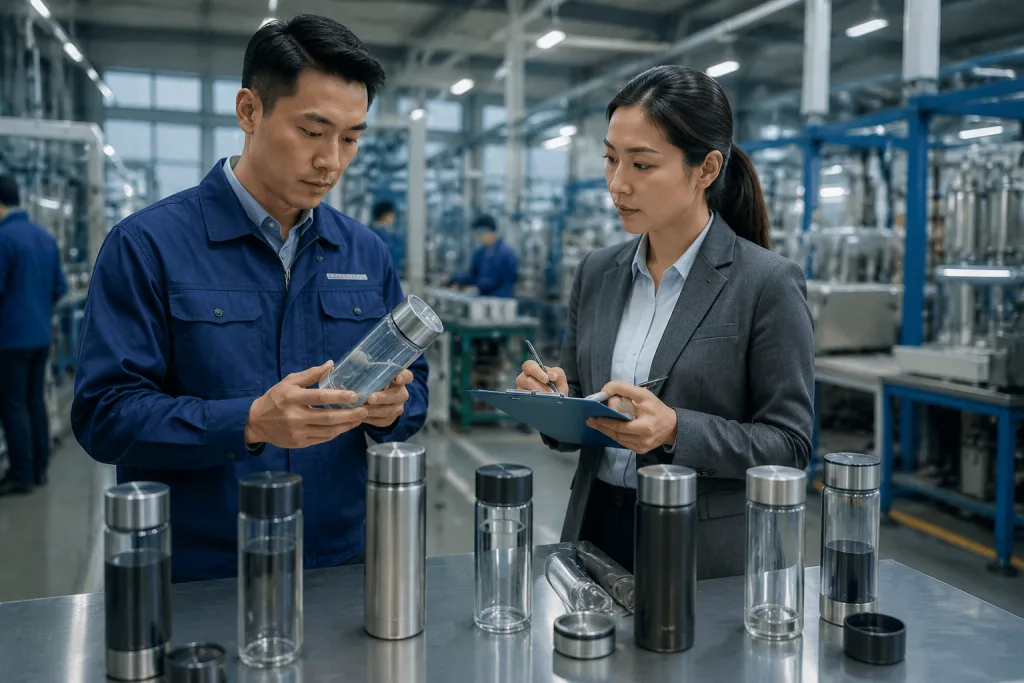
For approval, run three samples: one retail sample, one pre-production sample, and one packed master carton sample. Do not sign off on print from a bare bottle. QC pulled a carton last month and found the box crease was 8 mm off, which shifted the logo on the shelf pack. Ask the supplier for a golden sample with the final box, because the shelf result depends on both. If you sell through distributors thermos channels, lock down master carton marks, FNSKU or barcode placement, and pallet dimensions before the line starts. We’ve seen buyers flag a PO typo on carton count after production, and that turns into re-labeling fast.
One practical rule: if the final landed cost of your customized thermos sits too close to a stainless alternative, ask whether the glass story earns its keep. Sometimes it does. Sometimes you are paying for fragility and a higher breakage rate. A good thermos suppliers partner will say that plainly. That is the kind of pushback you should expect from a manufacturer thermos team in Zhejiang or anywhere else in China.
Send your spec and get a real quote
Share capacity, decoration, packaging, and target market. We will price the order like a factory partner, not a catalog seller.
Frequently asked questions
What MOQ should I expect for borosilicate glass thermos flask private label?
For a standard borosilicate glass thermos flask private label order, MOQ often starts at 3,000 pcs per color or per logo version. If you want a special lid, custom box, or multi-color print, 5,000 pcs is more realistic. In Zhejiang, some factories will quote 2,000 pcs for a simple SKU, but the unit price is usually 8-15% higher. If you need mixed capacities, ask whether the thermos factory can combine a size family under one production run. That can reduce total MOQ pressure, especially for promotional thermos programs.
Is borosilicate glass better than stainless for outdoor retail?
Not for abuse. Stainless is the better choice for drops, dents, and field use. Borosilicate glass is better if your customers care about taste neutrality, tea presentation, or a premium office look. For outdoor retailers, the right decision depends on channel. If the flask will live in backpacks, a stainless thermos is safer. If it will sell as a gift or seasonal display item, a glass body can make more sense. A good supplier thermos will tell you when the material choice hurts your return rate.
What price should I budget FOB China?
For 350 ml to 500 ml borosilicate glass units, budget roughly USD 1.80-3.80 FOB China depending on decoration, lid type, and packaging. A simple one-color custom thermos with standard carton packing sits near the low end. Add a gift box, extra gasket, or fuller sleeve graphics and the number rises quickly. In China, especially Zhejiang, freight and carton quality can change the landed cost more than the vessel itself. Always compare FOB plus packing spec, not FOB alone.
What compliance documents should I request?
At minimum, ask for REACH and LFGB if you sell into Europe, plus a food contact declaration. If the design includes stainless parts, ask for material composition and corrosion confirmation. For promotional thermos or gift programs, carton-drop evidence is also important because damage claims often start with packaging, not the flask. A solid thermos manufacturer should also confirm ink and coating safety for the decoration process. If you sell on marketplaces, barcode and FNSKU placement should be confirmed before mass production.
How long does production take in China?
A standard private label run from a thermos manufacturer in China usually takes 20-35 days after sample approval and deposit. Simple one-color printing can be faster; decal work, custom box inserts, or special lids can add 5-10 days. If you are ordering from a Zhejiang factory during peak season, leave another week for queue time. For thermos bulk launches, confirm whether the factory has enough monthly capacity, because a line that claims 200,000 units/month may already be committed on other programs.