Key Takeaways
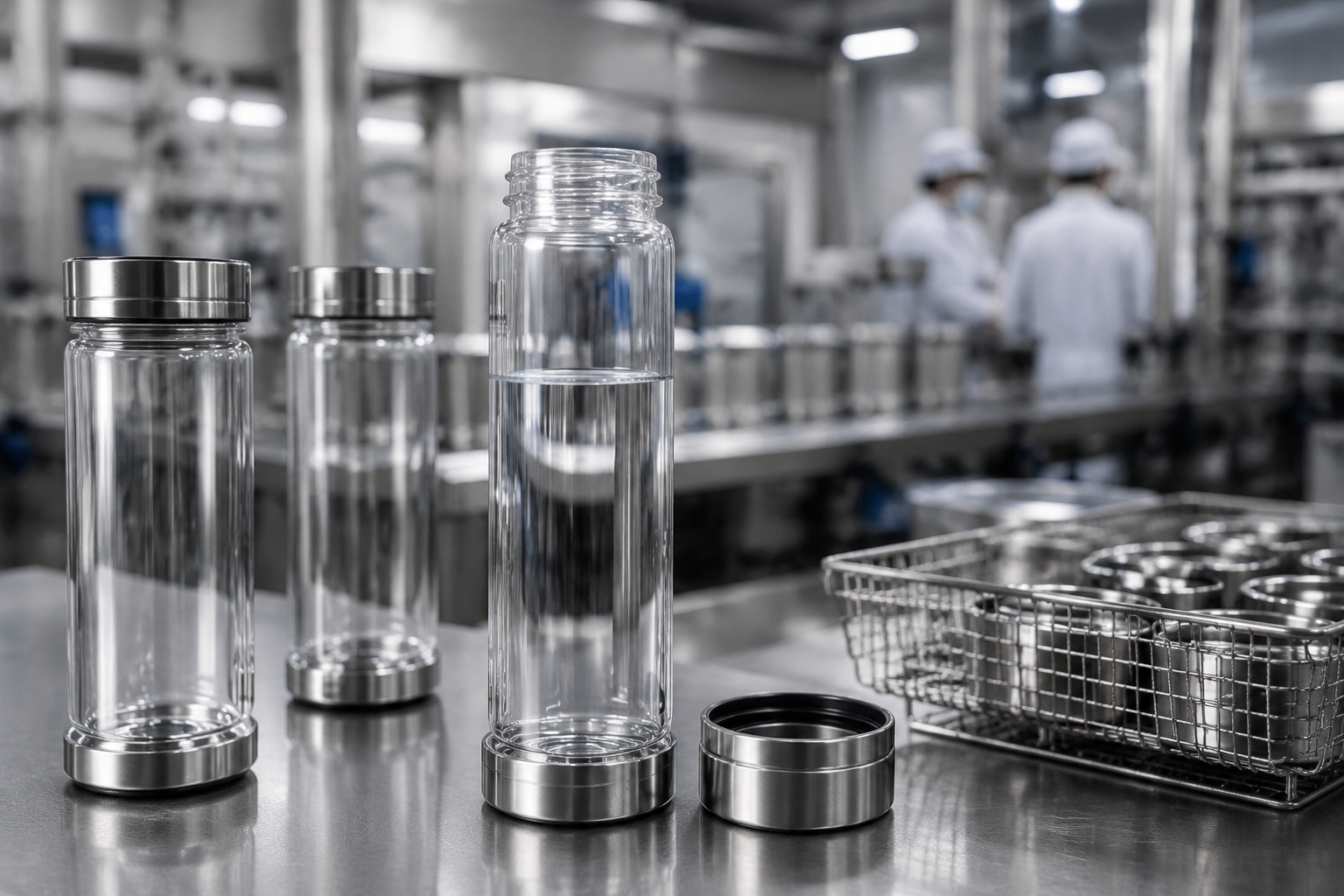
- A realistic MOQ for a borosilicate glass thermos flask custom order is usually 500-1,000 units per SKU, with sample lead time of 7-10 days.
- FOB China pricing for a 500 ml customized thermos typically lands around USD 3.20-5.80 depending on lid type, decoration, and gift box.
- For retail-ready thermos custom projects, ask for vacuum hold, leak, drop, and print adhesion checks before mass production.
- A Zhejiang thermos factory making 200,000 units/month can usually keep a 25-35 day production window if artwork and packaging are approved fast.
You want a borosilicate glass thermos flask custom order that looks clean on shelf, holds up in transit, and does not turn into a claim three months later. That is the job. Outdoor buyers ask about heat retention, lid seepage, and carton crush. Promo buyers ask about print sharpness, unit price, and whether the gift still feels worth keeping after the first week.
The break point is usually not the glass. It is how we choose the borosilicate liner, how the stainless shell gets rolled, and how the factory holds mouth finish, vacuum performance, and drop strength in the outer carton. In Zhejiang, we see the same thing every season: a buyer approves the sample, then QC pulls the production unit and finds the cap thread is off by 0.3 mm or the box fails a 60 cm drop. If you are sourcing bulk thermos or thermos bulk for a campaign, treat it like a production run, not a catalog pick.
Start With the Actual Shelf Job
I’ll keep the HTML structure intact and rewrite the prose with a more field-tested sales tone, tighter numbers, and one factory-floor detail per paragraph.Before you talk decoration, lock down the shelf job. A trade-show giveaway, a retail thermos for hiking, and a commuter bottle all get judged differently. For outdoor retail, we run a tougher shell, a lid that seals hard, and a finish that does not look like a cheap sample next to knives or cookware. For promotion, the math is simpler: a bigger print panel and an MOQ under 1,000 pieces matter more than fancy tooling.
A working borosilicate glass thermos flask custom spec starts with volume, lid style, insulation target, and carton pack-out. We usually quote 350 ml, 500 ml, and 750 ml, and 500 ml moves best in Europe and North America. On glass-lined builds, the outer shell needs enough clearance so the liner does not kiss the wall during thermal cycling. Ask for wall thickness targets, not a render. A typical borosilicate inner wall sits at 1.5-2.0 mm; if the geometry goes thinner, QC pulled the sample and the drop test turned ugly.
Buyer note: do not let the factory quote only on looks. A real thermos manufacturer should spell out the liner grade, shell gauge, lid material, seal ring compound, and whether vacuum assembly stays in-house or gets sent out. We have seen buyers miss a PO typo on the lid code and lose a week, so this is the wrong question to ask if you only want a pretty picture.
Lock the Specification Before Quoting
I’ll keep the HTML structure intact and rewrite the prose so it sounds like a factory-side sales engineer, with tighter pricing logic and a few concrete shop-floor details.This is where a lot of custom thermos projects go off track. Send a logo and say “make it premium,” and you get a fuzzy quote plus a sample that misses the target. Send a spec sheet instead. For a 500 ml borosilicate glass thermos flask custom order, lock the body height, mouth diameter, shell finish, lid type, silicone ring color, print method, and carton count. We had one buyer flag a PO typo on the lid color code last month, and that mistake added 4 days before QC could pull the sample again. If you need a promotional thermos, add PMS colors and state whether the logo is laser, silk-screen, or UV printed.
On price, a stainless outer shell with glass liner, basic PP lid, and one-color print usually sits around USD 3.20-4.10 FOB China at 1,000 units. Move to bamboo accents, double-wall stainless lid parts, or full-wrap printing, and the quote can climb to USD 4.80-5.80. The math is clean. A quote that looks too cheap usually means a weak lid, a thin carton, or no real thermal test on the line. We’ve seen that go sideways fast when a buyer asked for “cheap but premium” and the drop test came back ugly.
- Size: 500 ml is the safest stockable SKU.
- MOQ: 500-1,000 units per design is realistic.
- Artwork: AI or PDF vector, not a screenshot.
- Packaging: test a 5-layer export carton, not just a white box.
If you are building a thermos distributor program, ask for a price ladder at 1,000, 3,000, and 5,000 units. We run these ladders on every new lid tool because setup cost, carton load, and print time change the landed number more than people expect. Good thermos pricing gets clearer once the print setup and packaging spread across volume.
Sample It Like a Buyer, Not a Tourist
When the sample lands, do not stop at the finish. Run it like the buyer who has to sign off the PO. Fill the bottle with 95°C water, close it, then check seepage at 10 minutes, 1 hour, and overnight. We ship a lot of these, and the math is simple: if a glass-liner thermos is supposed to hold heat for 8 hours, ask the factory for the exact test setup, ambient temperature, and fill ratio before you believe the number.
Check lid thread engagement and torque. Three samples should feel the same. If one cap turns loose and another bites hard, that is a tooling issue, not sample luck. Also look at the liner seat inside the shell; a 1 mm gap or a light rattle is how breakage claims start. On export orders, we run a basic drop test too: 1 meter, carton corners and face, then QC pulled the sample for liner cracks and cap deformation.
Good sample QC is not about chasing perfection. It is about proving the product can survive the carton, the warehouse, and the first month in the field without making you explain a bad claim.
This is where a serious thermos supplier saves money. One lid-tool correction or a tighter foam insert now costs less than a 10% claim rate later. We’ve seen that go sideways on a 5,000-piece order because the buyer missed a loose cap on sample day.
Choose Decoration That Survives Use
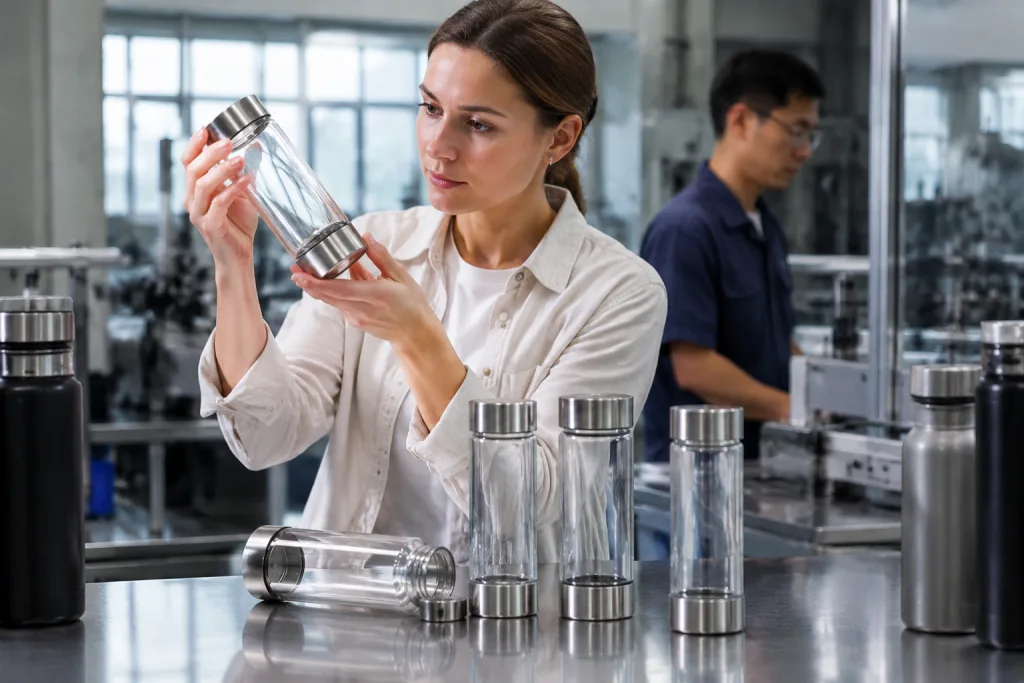
Decoration is where a custom thermos order looks like a retail product or like cheap giveaway stock. For outdoor buyers, we usually push laser engraving on a stainless outer shell. It holds up against keys, bottle cages, and the line’s normal carton rub. For promo runs, silk-screen printing gives stronger color at lower cost, but only if the ink, mesh count, and curing temperature are controlled. UV printing works for full-color branding, yet you still need adhesion tests after dishwasher cycles and surface abrasion.
One-color laser or silk screen is enough for a clean retail look. Two colors are the practical ceiling unless the buyer is paying for tighter setup control. More colors mean more registration risk and slower touch-up on the line. For a borosilicate glass thermos flask custom project, do not print on any surface that can flex or scrape inside a fitted sleeve. If a supplier says a loose insert is enough and skips transit protection, that is the wrong question to ask. We have seen that go sideways in carton drop tests. A custom thermos should land retail-ready, not “factory wrapped.”
Ask the thermos manufacturer to show print registration tolerance and color matching under D65 light. For seasonal campaigns, repeatability beats a one-off pretty sample. QC pulled the sample, checked logo drift, and we target 1.5 mm on position with color drift kept tight across replenishment lots. If the PO typo changes a pantone callout or logo size, the buyer flags it fast, so the math has to work before we run the next batch.
Inspect the Factory, Not Just the Quote
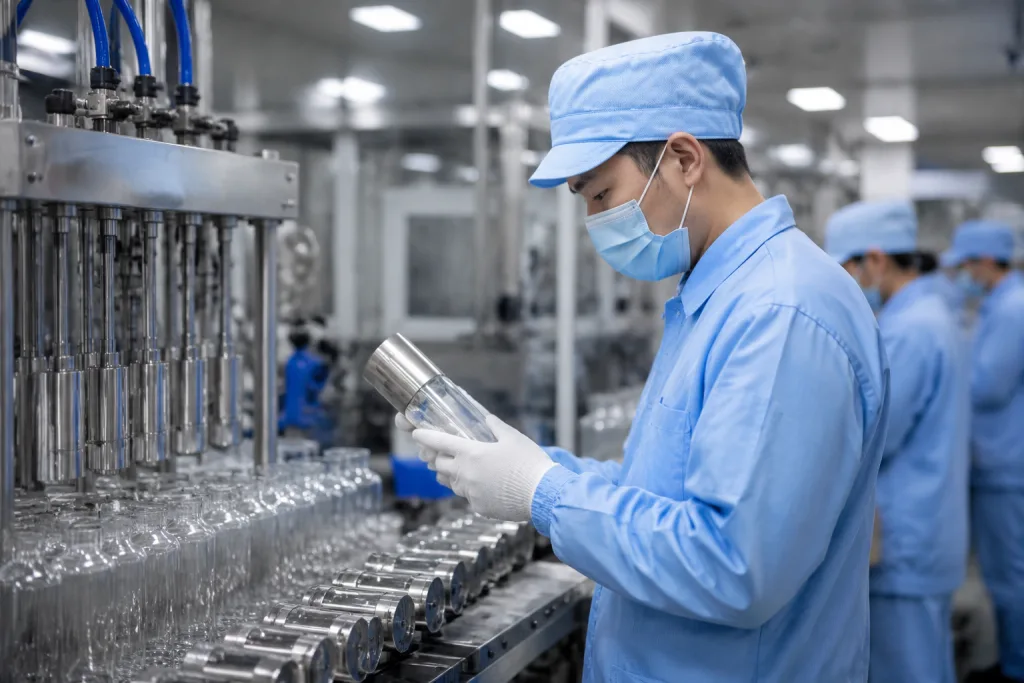
If you are sourcing from Zhejiang or another part of China, a factory audit needs to go past the office and showroom. Check whether the thermos factory handles liner assembly, vacuum sealing, and final leak testing on-site. If those steps are split across subcontractors, lead time stretches and traceability gets messy. A plant claiming 200,000 units/month only matters if the line can hold balance and the rework rack is under control.
Ask for paperwork, not promises. BSCI if you need social compliance, REACH for Europe, and written confirmation on food-contact materials where it applies. For North America, get the buyer’s standard in writing for inks, seals, and plastics, plus any ASTM requirement that actually applies. If the supplier says “same as last year” but cannot show batch records, that is the wrong answer. A real thermos supplier will give you checkpoint counts: incoming liner inspection, in-process vacuum test, final leak test, and carton drop test.
- Typical AQL for appearance: 2.5 major, 4.0 minor.
- Vacuum check: 100 percent on finished bottles.
- Leak check: lid and seam spot checks every batch.
- Carton test: sample by lot before shipment.
That is how distributor thermos programs stay steady once replenishment starts. We’ve seen this go sideways when the buyer only chased the quote and skipped the shop floor. You do not need a perfect plant. You need one that repeats the same result on Monday and Friday.
Pack It for Import Reality
Packaging is part of the product when you sell into outdoor retail or promotional channels. We’ve seen a good bottle turn into a claim because the inner tray split and the liner arrived broken. For a thermos custom order, ask for a fitted insert, not loose dividers. If the bottle uses a glass liner, the carton build matters more than another sticker. A 5-layer master carton with reinforced separators is standard for export, especially when the route includes warehousing and pallet restacking.
For bulk thermos shipments, choose retail box, brown box, or mailer-first packaging based on the channel. Retail box sells better on shelf; brown box cuts cost and works for B2B distribution; mailer-first fits e-commerce, but the unit cost climbs fast. The buyer flagged a PO once because the barcode sat under artwork, and the line had to rework 3,000 cartons by hand. If the customer adds an FNSKU later, leave the label panel clean. On a 10,000-unit program, a poor packaging choice can add USD 0.20-0.45 per unit in hidden labor. The math doesn’t work.
Build the shipment plan around the real lead time. A typical borosilicate glass thermos flask custom order from a Zhejiang factory takes 7-10 days for sample approval, 25-35 days for production, and 5-7 days for export packing and booking. QC pulled the sample on a 2 mm tray tolerance before release, and that saved us from a cracked-corner issue later. If you need peak-season delivery, lock artwork earlier than you think you need to. Delay usually starts with approval lag, not molding.
Get your custom thermos quote today
Send your target size, logo file, packaging need, and annual volume. We’ll spec the order, confirm QC, and quote it as a real production job.
Frequently asked questions
What MOQ should I expect for a borosilicate glass thermos flask custom order?
For most factories in Zhejiang, a realistic MOQ is 500-1,000 units per SKU. If you want special lid tooling, matte coating, or a new packaging insert, expect 2,000 units to make the price competitive. Samples usually take 7-10 days, and a full production run often needs 25-35 days after approval. If you need multiple colors, keep each color at least 500 pieces or your thermos custom pricing will jump fast.
Is borosilicate glass safe enough for outdoor retail thermos products?
Yes, if the product is engineered correctly. Borosilicate glass handles thermal shock better than ordinary soda-lime glass, but it still needs protection from impact. For retail use, specify a fitted shell, stable lid seal, and carton packaging that survives a 1-meter drop test. A good supplier thermos program also checks liner fit and leak performance before shipping. Safety depends less on the glass name and more on the full assembly.
What FOB price should I budget for a 500 ml customized thermos?
For a 500 ml borosilicate glass thermos flask custom order, budget roughly USD 3.20-5.80 FOB China depending on shell finish, lid complexity, print method, and packaging. A simple one-color promotional thermos with basic PP lid sits near the low end. A premium custom thermos with better lid hardware, gift box, and tighter QC lands higher. At 3,000-5,000 units, pricing usually becomes more stable.
Which decoration method lasts longest on a stainless thermos shell?
Laser engraving usually lasts the longest because it is etched into the surface instead of sitting on top of it. If you need color, silk-screen printing is still dependable when the ink and curing are controlled. UV printing gives more graphic flexibility, but you should test rub resistance and dish exposure. For outdoor retailers, laser is often the safest option. For promotional thermos programs, one-color print usually gives the best cost-to-impact ratio.
How do I audit a thermos factory before ordering?
Ask whether liner assembly, vacuum sealing, leak testing, and final packing are done in-house. Request BSCI, REACH, and relevant food-contact documentation if your market requires it. Then ask for QC checkpoints: incoming inspection, 100 percent vacuum test, leak test, and carton drop testing by lot. A thermos factory in China or Zhejiang that can show batch records is easier to manage than one that only sends photos. Good manufacturers thermos programs are built on traceability, not promises.