Key Takeaways
- Typical MOQ starts at 500-1,000 units, with better pricing at 3,000+ units
- Borosilicate glass inserts usually add USD 0.35-1.10 per set versus plain inner liners
- Standard lead time is 25-35 days; custom packaging can push it to 40-50 days
- AQL 2.5/4.0, REACH-ready materials, and drop testing matter more than brochure claims
If you are sourcing a borosilicate glass thermos bottle wholesale, the real question is not whether it looks premium. It is whether the landed cost, breakage rate, and lead time still hold up after logo work, inner packaging, and ocean freight. We have seen quotes look fine on paper and blow up at the buyer’s dock.
In Zhejiang and across China, the factory price can look tempting at first glance, but the gap between a basic thermos and a custom thermos is wide: one lid swap, one logo method, or one retail box upgrade can add 8% to 22% to the unit cost. QC pulled a sample on the line last week and found a 1.2 mm cap mismatch; that is the kind of detail that turns into a claim later. A real supplier thermos quote should break out the glass wall, stainless shell, sealing system, and packing line. If it does not, the math does not work.
What drives the unit price
I’ll rewrite the prose in-place, keep the HTML structure intact, and tighten the sales-engineer tone with concrete factory details and cleaner pricing language.For a borosilicate glass thermos bottle wholesale order, the unit price comes down to four items: material stack, decoration, packaging, and scrap rate. A plain 350-500 ml build with a stainless outer shell and borosilicate inner cup usually lands at USD 2.10-3.40 FOB China at 1,000 units. Add powder coating, laser logo, and a gift box, and the number moves to USD 3.60-5.20 fast.
The glass insert is not the costly part. The process is. Glass needs tighter handling, more separators in the carton, and a bigger scrap allowance than a standard stainless thermos. On our Zhejiang line, QC pulled the sample and flagged chip risk at the neck on the first trial; a 2%-4% breakage allowance is normal on new tooling or a narrow-mouth design. That is why manufacturer thermos quotes for glass-lined models usually run 10%-18% above similar stainless-only builds.
- Material cost: borosilicate insert, 304 stainless shell, PP or stainless lid
- Decoration: silk screen adds USD 0.08-0.18; laser engraving adds USD 0.12-0.30
- Packing: inner box and carton can add USD 0.25-0.65
- Waste factor: higher for glass than standard bulk thermos runs
If you compare supplier thermos offers line by line, the cheapest quote usually hides a thin cap, lighter steel, or weak carton specs. We’ve seen the buyer flag a PO typo on lid color and the supplier still miss the real issue: the math doesn’t work if the box test fails at 1.2 m.
MOQ tiers that make sense
MOQ should fit the channel, not the sales pitch. For a customizable thermos in this category, a workable start is 500 units per SKU for a stock body with a logo change, or 1,000 units if you want custom color, custom packaging, or a special lid. We run this math on the line in Zhejiang every week. A buyer once pushed for 200 pcs, then the packing fee and setup wiped out the margin, so the math just does not work.
Here is the factory-side number set: at 500 units, you may pay USD 3.80-5.80 FOB; at 1,000 units, USD 2.90-4.60; at 3,000 units, USD 2.35-3.90. The exact figure moves with lid type, surface finish, and whether you want a custom thermos with a molded handle or a straight body. QC pulled the sample with a 0.6 mm lid gap on one run, and that kind of detail is what moves the quote. For distributors thermos programs, 3,000 units is where pricing usually stays steady enough to protect margin.
Promotional brands should watch carton economics too. A 500-piece order may fit one pallet pattern, but a 3,000-piece run usually gives better carton efficiency and fewer damage claims. We have seen a PO typo turn 500 into 5,000, and that mistake tied up a whole corner of the warehouse. Chasing 8 cents off the bottle is the wrong question to ask.
Buy for the MOQ your channel can actually replenish, not the MOQ your supplier wants to brag about.
Lead time from sample to shipment
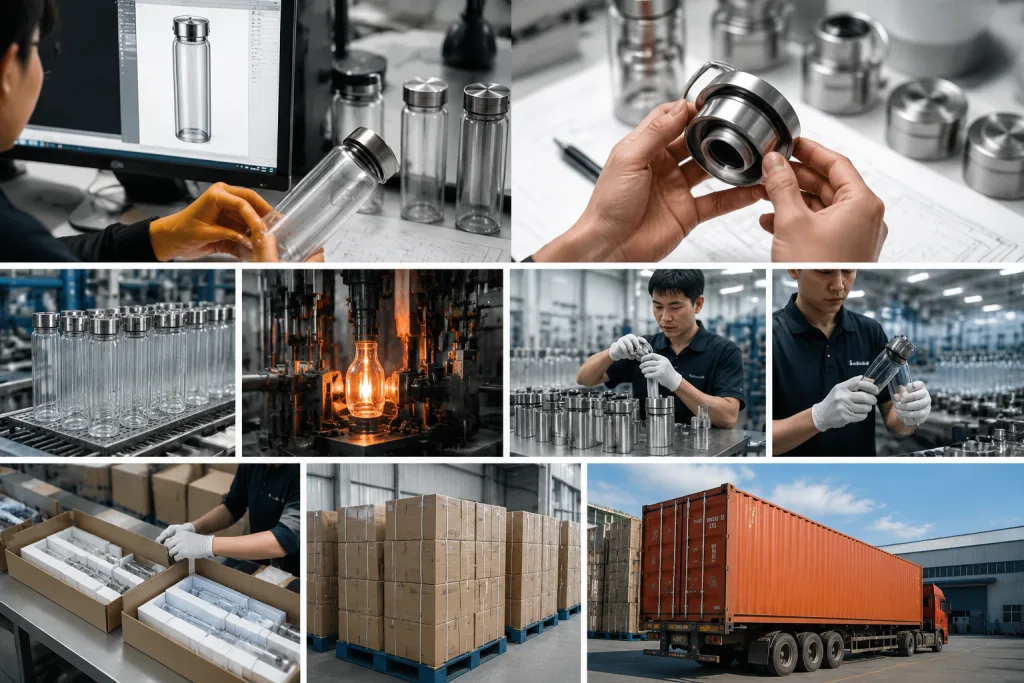
Lead time is where buyers miss the calendar. For borosilicate glass thermos bottle wholesale, a workable schedule is 7-10 days for sample sign-off, 20-30 days for standard production, and 5-7 days for packing plus final inspection. If the order adds custom printing, special box inserts, or a new lid mold, total lead time can move to 40-50 days. QC pulled one sample at 1.5 mm wall thickness last week, and the buyer flagged a logo shift before we even started the line.
For a thermos custom project, approval usually burns the most time. Print proof, carton artwork, barcode placement, and color match can take 3-7 days each if the file keeps changing. That is the wrong question to ask: the bottle is rarely the bottleneck. Outdoor retailers shipping for Q4 should lock artwork at least 60 days before ship date. A PO typo on a carton code can cost a full day; we have seen this go sideways on a 3,000 pcs run.
- Stock body + logo: 25-30 days
- Custom color + logo: 30-40 days
- New packaging + new lid: 40-50 days
- Peak season risk: add 7-12 days in Zhejiang factory schedules
If a supplier quotes 15 days for a full custom thermos order, ask what changed on the line. Most of the time, it is just a logo on stock body and nothing else. We ship those fast; new tooling and fresh artwork are another story.
Cost drivers buyers miss
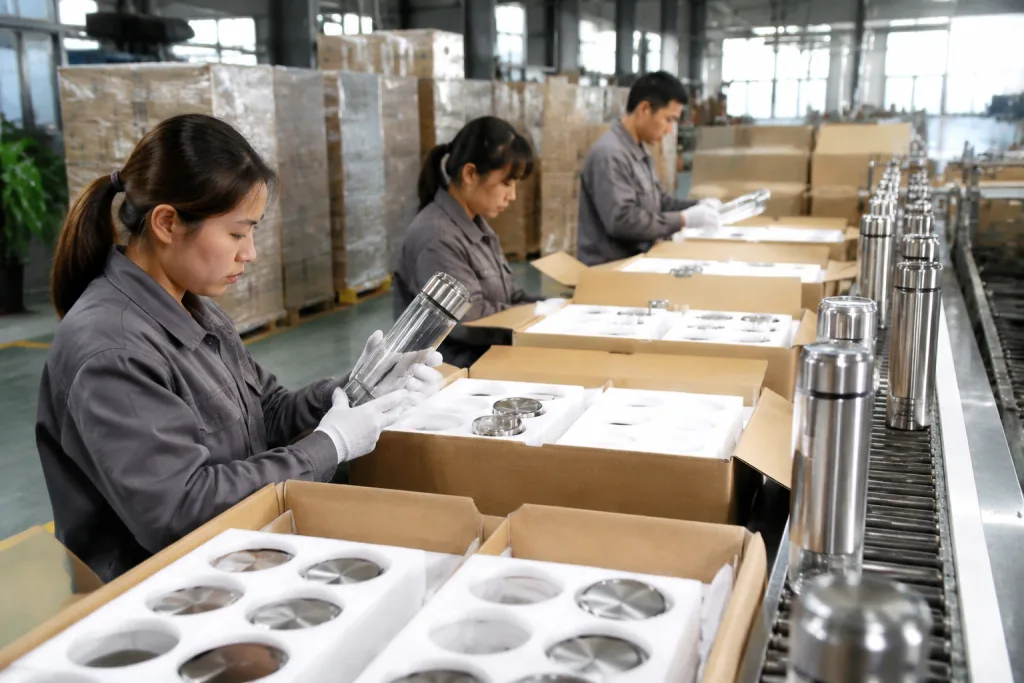
The first line item that catches new buyers is not the glass. It is scrap, pack-out, and the drop test. Borosilicate glass holds heat well, but the bottle still needs a carton that can survive a 60 cm drop. We have seen a 3%-6% damage rate from a loose divider or a carton that was 2 mm too wide. That math hurts fast on thermos bulk orders headed to North America or Europe.
Ask your thermos supplier for wall thickness and steel gauge in writing. A common stainless outer shell runs 0.4-0.5 mm; go thinner and the dent claim shows up before the shipment clears the port. For the glass insert, ask for the exact glass grade, then ask which test report backs it up. Good manufacturers thermos teams can ship REACH-compliant material declarations, migration data, and the carton drop result. If you sell into retail, call for AQL inspection at 2.5 major / 4.0 minor; QC pulled a sample, and that is where the typo on the PO gets caught.
Decoration location also moves cost. A full wrap print on a curved body needs tighter registration than a small one-color logo, so the line slows down and the reject pile grows. Laser mark on stainless is cleaner for a distributor thermos program, but it will not carry the same shelf impact as a big color graphic. We ship both, and the buyer flagged it every time the art choice chased vanity instead of sell-through.
Stainless thermos vs glass-lined options
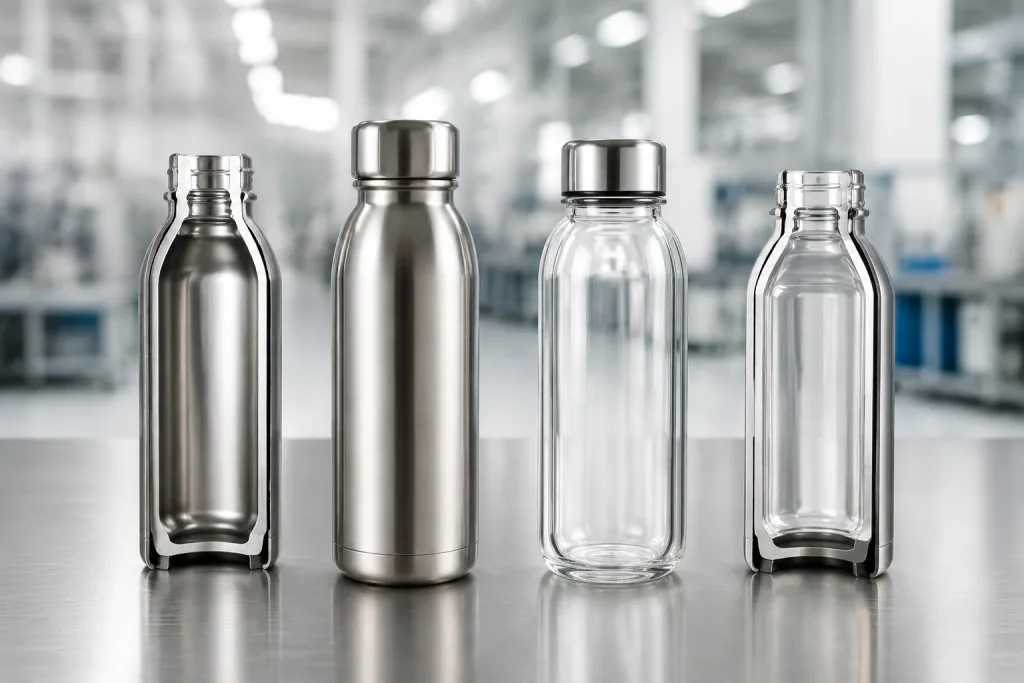
Even if your brief starts with a stainless thermos, buyers still compare it against a borosilicate glass thermos bottle wholesale quote because the end use overlaps. The stainless-only build is lighter, takes impact better, and stacks cleaner in cartons. Glass-lined feels more premium and keeps flavor neutral, but it needs tighter packing and more handling care on the line.
For outdoor retailers, stainless-only is usually the safer shelf choice because returns stay lower. For promo brands, glass-lined thermos custom programs do better when the buyer wants a desk gift, hotel gift, or executive set. In our Zhejiang production line, the stainless version can run 15%-25% cheaper at the same decoration level, while the glass-lined version often carries a higher retail margin. That is the math, and we see the buyer flag it early when the target price is too tight.
Ask three questions: Will the end user carry it in a backpack? Will it ship through e-commerce? Will it survive a 1-meter drop? If the answer is yes to all three, stainless is usually the better call. If not, and the bottle stays on a desk or in a gift box, customized thermos glass-lined options can make commercial sense. QC pulled the sample after a 1-meter drop test and the dent on the stainless body was still usable, which is why we do not treat this as a style choice.
How to quote it properly
I’ll rewrite the section in the requested sales-engineer voice, keep the HTML exactly as-is, and preserve every tag and the original structure.A proper quote from a thermos factory is not a number with a logo bolted on. We need the body material, lid build, capacity, print method, box spec, carton quantity, and test standard. Leave out any of those, and the quote changes once the line starts running. That is where margin gets eaten. We’ve seen a PO typo on carton qty turn into a 12-day delay.
Use this checklist before you approve a custom thermos order:
- Capacity: 350 ml, 500 ml, or 750 ml
- Body: borosilicate insert with stainless shell thickness stated
- Lid: PP, stainless, or bamboo-look trim
- Decoration: silk screen, UV print, pad print, or laser
- Packing: inner box, master carton, drop-test standard
- Compliance: REACH, LFGB if needed, export carton marks
If you source through a thermos distributor or direct from a thermos factory in China, ask for sample photos and measurement reports before mass production. QC pulled the sample on our side with calipers on the shell and a lid torque check, and that catches the cheap problems early. A Zhejiang factory that knows the job will send a pre-production sample, a packaging sample, and one functional test report without making you chase five departments.
One practical point: if you buy for Amazon or retail replenishment, put barcode and FNSKU placement in the first quote. The buyer flagged it late once, and we had to rework labels on 3,000 pcs. Cheap on paper. Expensive on the floor.
Request a quote with real factory numbers
Send capacity, decoration, carton spec, and target market. We’ll price it with MOQ, lead time, and packaging details from our Zhejiang factory.
Frequently asked questions
What is a realistic FOB price for borosilicate glass thermos bottle wholesale orders?
For 350-500 ml models, a realistic FOB China range is USD 2.10-3.40 at 1,000 units for a standard build. Add logo decoration, upgraded packaging, or a premium lid, and you may land at USD 3.60-5.20. At 3,000 units, the same item can fall by 12%-22% depending on the print method and carton spec. Zhejiang factories usually give the best price once the order reaches stable batch size, not at sample-level MOQ.
What MOQ should I expect for a custom thermos order?
Most supplier thermos offers start at 500 units for a logo-on-stock model and 1,000 units for a truly customizable thermos order with color or packaging changes. If you want a fully thermos customized project with new lid tooling or special inserts, 3,000 units is a more realistic commercial MOQ. Below 500 pieces, setup costs and scrap allowance usually make the unit price too high for retail or distributor thermos programs.
How long does production take in China?
For a standard thermos bulk order, plan on 25-35 days after sample approval and deposit. If you add custom printing, special packaging, or a new color, 30-40 days is more realistic. A new mold or new lid structure can push it to 40-50 days. In Zhejiang, peak-season queues can add another 7-12 days, so promotional thermos programs should lock artwork well before the delivery deadline.
Is borosilicate glass safe for retail and promotional use?
Yes, if the structure and packing are designed properly. Borosilicate glass handles thermal shock better than ordinary soda-lime glass, but it still needs a protective shell, a tight lid seal, and transit packaging that can survive a 1-meter drop. Ask for AQL 2.5/4.0 inspection, packaging drop tests, and material declarations. For U.S. and EU sales, request REACH-related documentation and any needed food-contact test files before shipment.
Should I choose a glass-lined or stainless-only bottle?
Choose glass-lined if the product is a gift, desk item, or premium promotional thermos where flavor neutrality and presentation matter. Choose stainless-only if the bottle will be used outdoors, in backpacks, or in e-commerce channels with higher drop risk. Stainless-only is usually 15%-25% cheaper and tougher in transit. For distributors thermos stock, that lower breakage rate often matters more than a premium look.