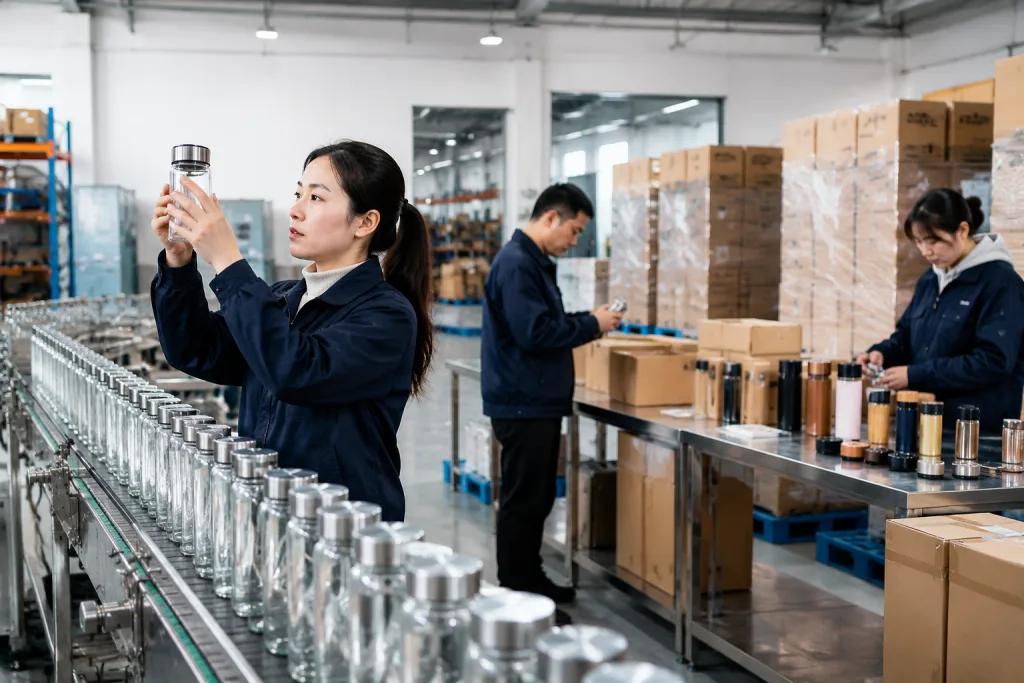
Key Takeaways
- Typical MOQ for borosilicate glass thermal bottle custom runs starts at 1,000-3,000 pcs per design
- A serious canteen factory in Zhejiang can often sample in 7-12 days and mass-produce in 35-50 days
- Borosilicate glass usually targets 1.2-1.8 mm wall thickness for better thermal shock resistance
- For Europe and North America, ask for REACH, food-contact statements, and AQL 2.5 inspection terms
If you are buying borosilicate glass thermal bottle custom for retail, corporate gifting, or distributor programs, do not treat glass like stainless steel. Different line. Wall thickness, thermal shock tolerance, lid fit, and decoration method decide whether you ship a bottle that looks premium or one that comes back in cartons; we have seen 1.8 mm glass pass a sample and fail after a 0°C to 100°C hot-cold test on the line.
In Zhejiang and across China, the better factories run tighter process control than most buyers expect, but they still need clear specs from you. A procurement manager needs the numbers: MOQ, sample timing, carton strength, REACH expectations, and whether the bottle is truly custom or just stock with a logo. The buyer flagged a PO typo on lid color once, and that kind of slip costs a week.
What Are You Really Buying?
When buyers say borosilicate glass thermal bottle custom, they usually mean a glass bottle with a heat-resistant body, an insulated or semi-insulated build, and a lid that survives shipping. That is still too loose for procurement. You need the build named on paper. Is it single-wall borosilicate with a silicone sleeve, double-wall glass, or a hybrid body with stainless cap parts? The answer changes breakage rate, landed price, and pack-out.
Ask the canteen manufacturer to put three items in writing: glass grade, wall thickness, and test method. We run export jobs at 1.2 mm, 1.5 mm, and 1.8 mm, and the gap shows up fast on the line when a buyer asks for hot-fill use. Borosilicate is usually the safer call for export because it handles thermal shock better than soda-lime glass. If the factory cannot state thickness or show a test result, you are not buying customized drinkware. You are buying hope.
- Capacity range: 350 ml, 500 ml, and 650 ml are the common picks for retail sets.
- Body spec: borosilicate glass, not generic heat-resistant glass.
- Packaging: individual box plus master carton, with a 1 m drop-test target.
- Decoration: decal, silk screen, laser on lid, or printed sleeve.
For distributor drinkware programs, this matters even more because a buyer may line it up against a custom growler or customized canteen and expect the same abuse tolerance. That is the wrong question to ask. Glass bottles do not take the same punishment, and we’ve seen this go sideways when the PO says “same as sample” but the sample was packed in a stronger tray. Put the spec in plain language.
Q&A: What Specs Matter Most?
I’ll rewrite the section in place, keep the HTML exactly as-is, and tune the prose to sound like a factory-side sales engineer. Then I’ll do a quick pass to make sure the wording stays tight and the tags remain untouched.Checklist Before You Quote
Buyers waste time when they ask for a price with half the brief missing. A canteen distributor or canteen vendor can quote fast, but only if you send a clean checklist. We ship these jobs every week; when the spec is tight, sampling stays on track and the carton count does not drift.
- Material: borosilicate glass, lid material, silicone grade.
- Decoration: one-color print, multi-color print, frosted effect, or laser mark.
- Performance: thermal shock target, leak test standard, dishwasher tolerance.
- Compliance: REACH, food contact, phthalate-free silicone, BPA-free plastic where relevant.
- Packaging: mailer box, retail box, master carton, drop test requirement.
- Logistics: FOB Ningbo or FOB Shanghai, pallet requirement, FNSKU labeling if you sell through Amazon FBA.
If you sell customizable drinkware, packaging often decides the margin, not the bottle art. A retail-ready box can add 10% to 15% in the buyer’s head; that is the number people pay attention to. We had a buyer flag a 2 mm bottle rattle during carton drop testing, and the whole order paused until we added a paper insert. In Europe, you may need a multilingual carton panel. In North America, the barcode has to scan cleanly the first time, or the math does not work.
For custom canteen programs, ask whether the same line also runs customized canteen and customized growler projects. If yes, the factory usually knows print registration, insulated packaging, and mixed-SKU export. QC pulled the sample on a 304 stainless cap once because the PO typo changed the lid color code, and that is the sort of thing a seasoned team catches early. That is the right question to ask when you need canteen manufacturers who can handle retail and promo orders without hand-holding.

How To Judge A Factory
A solid factory talks in process terms, not sales talk. You want to hear capacity, defect control, and packing discipline. A real Zhejiang plant will usually quote a monthly output number, show the inspection flow, and name the QA step that catches chipped rims at the line. If they dodge that, you are not dealing with a serious export partner.
One useful benchmark: a capable factory may run 200,000 to 500,000 units per month across several drinkware lines, depending on tooling and decoration load. For a new borosilicate glass thermal bottle custom order, the reserved slot is often much smaller. That is normal. The real question is whether they can hold your slot and repeat the same bottle on the second order without drifting on the 1.2 mm neck finish.
Ask for these proof points:
- AQL: 2.5 major, 4.0 minor, or your own agreed standard.
- Inspection: incoming glass check, in-line visual check, final pack check.
- Testing: lid leak test, thermal shock check, drop test on carton.
- Certificates: REACH, FDA food-contact statement where applicable, BSCI if you need social compliance.
We run into this all the time: buyers ask for a lower price before they ask how the QC gate works. That is the wrong question. A good export team knows the factory is managing risk for the distributor, the brand owner, and the retailer. If they can explain why one lid seals at 0.8 N·m and another fails after shipping, you are talking to someone who knows the business.
Branding Choices That Work
Decoration on glass is where a nice sample turns into a loss if the spec is loose. The bottle body is brittle, so the branding has to match the substrate. For borosilicate glass thermal bottle custom, the cleanest results usually come from ceramic decal, high-temperature print, or a small logo on the lid. If you want a full wrap, check the abrasion test and dishwasher cycle first; we have seen 3,000 cycles pass on one ink and fail on the next.
A canteen customizable order looks better when the design is controlled. Buyers ask for full coverage, gradient print, and metallic effects on one bottle. That combo can work, but it pushes rejection risk up and makes reorders harder. We had a buyer flag a PO typo once because the Pantone code on the artwork and the carton label did not match. If you need a canteen promotional run, use one strong brand mark and one clean color palette. The line runs cleaner, and color disputes drop.
For distributor canteen or distributor growler programs, consistency beats novelty. A reorder six months later should match the first batch within a tight color tolerance. Ask the canteen vendor for PMS matching, print tolerance, and whether they keep archived print plates or digital files. QC pulled the sample on one run because the lid logo shifted 1.2 mm, which is the kind of miss that starts arguments. If you want a customized canteen line to stay stable across regions, keep the decoration system simple enough to repeat.
Practical rule: if your custom drinkware design needs more than three decoration steps, you are paying for complexity customers may never notice.
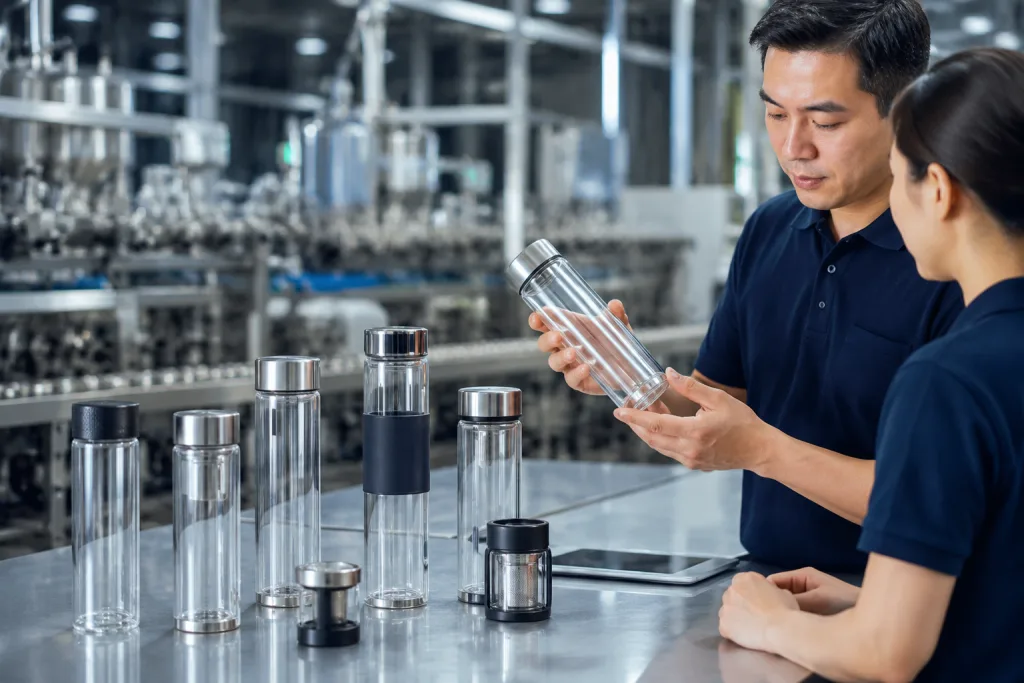
Pricing And Freight Reality
Price for borosilicate glass thermal bottle custom moves in layers. Body cost, lid cost, decoration cost, inner packing, and export carton all show up on the sheet. A plain promo build can start low. Once you add a gift box, sleeve, or extra QC on the line, the number climbs fast. Ask for FOB pricing by tier, not one flat quote.
As a buyer-side pattern, simple custom canteen projects often sit in the USD 1.60 to 2.80 range at volume, while more complex borosilicate glass builds with better lids and packaging can land at USD 2.90 to 5.20 or more. That spread shifts with order size, lid tooling, and special retail packaging. We had a buyer flag a PO typo on MOQ once, and the quote changed by 12% after the tooling line was cleared up. A canteen supplier in Zhejiang should show the cost stack piece by piece.
Do not forget freight. Glass is not forgiving, and air freight can kill margin fast. If the schedule is tight, we use air for samples or urgent replenishment only. For production orders, sea freight and stronger cartons usually make more sense. Confirm pallet height, carton count, and whether the master carton survives stacking. QC pulled the sample after a 1.8 mm corner crush showed up in drop test, and that is the kind of detail that saves claims later. A good canteen distributor knows breakage costs more than a slightly larger carton.
If you are comparing a custom growler program to a borosilicate bottle, use landed cost, not unit price. A cheaper bottle with 3% breakage is not cheaper once you add claims, reshipments, and customer service time. The math does not work. We have seen that go sideways on a 20,000-piece order when the buyer chased the lowest FOB and skipped the freight line.
What To Put In The PO
Your purchase order should read like an operations sheet, not a wish list. We run into trouble when the PO is loose, because the line follows whatever is written on paper. Put the product code, approved sample reference, decoration method, packaging spec, and inspection standard in black and white. Skip that, and one wrong carton mark turns into a 2-week argument.
Use this PO structure:
- Product name: borosilicate glass thermal bottle custom
- Reference sample: signed sample code and date
- Material spec: glass grade, lid material, silicone color
- Print spec: Pantone code, artwork file version, placement size
- QC: AQL level, leak test, carton drop test, visual defect limit
- Compliance: REACH, food-contact declaration, BSCI if required
- Logistics: FOB port, carton quantity, pallet standard, label format
If you sell on Amazon or another marketplace, add FNSKU, master carton labeling, and case pack ratio. We had a buyer flag a PO because the FNSKU format was missing one digit, and that held the booking. If you sell through a canteen distributor network, add regional SKU codes and reorder trigger quantities. The math does not work if the factory has to guess the next run.
For buyers building a wider line, this PO method works just as well for canteen custom, customizable canteen, and customized canteen projects. QC pulled the sample, checked the cap torque, and the typo on the PO still caused a delay until the buyer confirmed the final version. The factory does not need poetry. It needs one version of the truth.
Request your custom glass bottle spec sheet
Send your target capacity, artwork, and packaging needs. We’ll quote the right build, not a vague sample price.
Frequently asked questions
What is a realistic MOQ for borosilicate glass thermal bottle custom?
Most projects start at 1,000 pcs per design if you change only print and packaging. If you need a new lid mold or body shape, 3,000 pcs is more realistic. Some canteen suppliers will quote 500 pcs for decoration-only work, but the unit price usually rises 15% to 30%. Ask for MOQ by color and by SKU, because mixed colors can change the economics fast.
How long does sampling and mass production take in China?
A typical Zhejiang canteen factory can prepare samples in 7-12 days if the artwork is ready and no new mold is needed. Mass production usually takes 35-50 days after sample approval and deposit. If you add a new cap tool, custom box, or complex print, add another 10-15 days. For export orders, build extra time for carton testing and final pre-shipment inspection.
How do I check compliance for Europe and North America?
Ask for a REACH statement, food-contact declaration, and silicone material confirmation. If the bottle uses plastic parts, confirm BPA-free and phthalate-free where applicable. For North America, some buyers also request ASTM-style drop or performance references, though the exact standard depends on the item and your retailer. Keep the approved sample, test report, and PO aligned so the factory does not switch materials later.
What defects should I watch for in glass bottles?
The common issues are rim chips, uneven lid closure, print misalignment, air bubbles in the glass, and silicone smell. In a proper AQL 2.5 inspection, you should also reject bottles with visible stress marks or warped seals. For retail programs, one chipped rim in a carton can become a claim. In glass, cosmetic defects and functional defects often start as the same problem.
Can one factory handle custom canteen, customized drinkware, and custom growler orders?
Yes, if the factory has multiple lines and stable QC. Many canteen manufacturers in Zhejiang can run glass bottles, custom growler projects, and promotional drinkware in parallel, but you still need separate specs for each item. Do not assume a plant that makes a custom canteen can automatically handle a customized growler. Lid systems, packing, and breakage risk are different, so check capacity and reference samples before you combine programs.