Key Takeaways
- A workable MOQ for mixed borosilicate-glass orders is often 3,000-5,000 pcs per SKU, with samples in 7-12 days
- Target unit pricing for a 450-600 ml custom bottle typically starts around USD 2.80-4.80 FOB China depending on lid, print, and packaging
- Ask for AQL 2.5 major and 4.0 minor, plus REACH or FDA food-contact documentation before mass production
- A factory in Zhejiang with 200,000+ units/month capacity can handle distributor drinkware orders without stretching lead times past 35-45 days
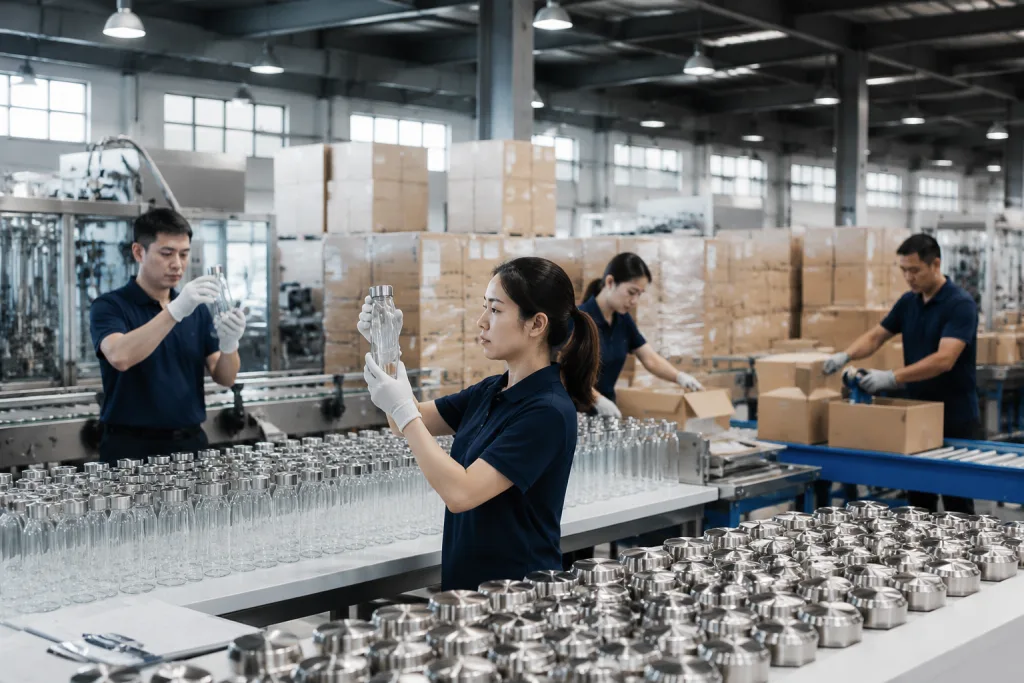
You are not buying a bottle. You are buying a spec sheet, a margin target, and a shipment that has to pass QA twice before it reaches your warehouse. That is why a borosilicate glass stainless steel water bottle manufacturer should be judged like a production partner, not a catalog seller. If the supplier cannot explain wall thickness, food-contact compliance, drop-test limits, and carton compression, you are taking risk you do not need. We run this check on the line with calipers and a 1.8 mm wall spec, and the buyer flags it fast when the numbers do not match the PO.
For buyers in Europe and North America, the job is simple: turn a design idea into a repeat order with controlled defect rates, fixed lead time, and a landed cost that still works after freight and duty. In Zhejiang and across China, the better factory teams quote cleanly, sample in 7 days, and control each step from forming to the final carton drop test. That is the standard. We have seen this go sideways when a 500 ml bottle was packed in the wrong insert and the outer carton failed at 12 drops, so the math has to hold before you place the order.
Start with the actual use case
I’ll rewrite the section in-place, keeping the HTML tags and the existing numbers/codes intact while making the prose sound like a factory-side sales engineer wrote it.Before you ask for a quote, lock the selling scenario first. A borosilicate glass stainless steel water bottle manufacturer will price retail, corporate gifting, and distributor drinkware on different assumptions. If you are running a summer promo for a canteen, a lighter carton and one-color print usually make sense. If you are building a premium retail line, we run thicker glass, tighter lid torque, and cleaner decoration. The cost moves right there.
On a real RFQ, I start with five hard points: volume, lid type, print method, packaging target, and destination market. A 500 ml custom canteen with a 304 stainless steel cap, bamboo sleeve, and one-color logo can sit around USD 3.20-3.90 FOB at 5,000 pcs. Add a dual-wall lid or a custom silicone sleeve, and the math changes fast. Don’t compare suppliers by bottle shape only. Compare the full build: glass grade, metal grade, gasket material, and carton spec. We’ve seen buyers miss a 2 mm wall difference and then fight for margin later.
Compliance gets underpriced all the time. Europe may need REACH-related declarations, and the US side may ask for FDA food-contact support. QC pulled the sample, checked the lid gasket, and the file was still held up once because the PO had the market code typed wrong. A serious canteen manufacturer in China or Zhejiang should know how to prep those documents without stalling the order.
Turn the brief into a manufacturable spec
Good suppliers do not want a vague idea. They want a spec they can turn into tooling, sampling, and inspection. For borosilicate bottles, call out body diameter, overall height, mouth finish, and wall thickness. On a 450-600 ml bottle, we normally see 1.6-2.2 mm wall thickness. Go thinner and breakage risk climbs; go thicker and the bottle gets heavier, which hurts freight and shelf appeal. QC pulled a 12-pack sample and weighed it at 268 g per piece. That number matters.
For the stainless-steel parts, state the grade and gauge. A common lid shell uses 304 stainless steel, with metal thickness around 0.4-0.6 mm depending on the shape. If the design includes a metal base ring or wrap, ask for the exact gauge and finish. “Stainless steel” is not a spec. “Premium lid” is not a spec either. We have seen buyers flag a PO because the gasket hardness was missing, and the line stopped until we got the silicone durometer in writing.
- Glass: borosilicate, not soda-lime
- Lid: 304 stainless steel with food-grade silicone seal
- Decoration: laser engraving, silkscreen, or decal
- Packaging: egg-crate insert, molded pulp, or EVA sleeve
- Carton test: 5-sided drop test plus compression target
If you need canteen customizable options for different channels, lock the base bottle first, then change the decoration and packaging. That is the right order. One mold, one core bottle, and fewer surprises when you ship to different canteen distributors. We run it this way because splitting the bottle spec too early drives up MOQ and creates sampling churn.
Sample before you lock the order
Sampling is where weak factories show up fast. A solid canteen factory in Zhejiang should turn a pre-production sample in 7-12 days if the mold already exists, or 18-25 days if we need a new cap or sleeve tool. Ask for a physical sample, not just photos. Glass looks clean on a screen and still misses on mouth finish, lid thread, or gasket fit when QC pulls it by hand on the line.
During sample approval, I check six points: fit, seal, print accuracy, surface finish, weight, and odor. For a customized canteen for the EU market, run a room-temperature leak test and a hot-fill check around 80°C. For a customized growler style bottle, check carry feel and closure strength; the load path is different, and this is the wrong question to ask if someone says “it should be fine.” A canteen distributor should ask for at least two samples: one golden sample and one packed sample, because carton design can change breakage rate more than the glass itself.
Do not approve a sample until the lid torque feels repeatable and the carton survives a 60 cm drop from all six faces.
If your supplier pushes back on samples or says the first mass run will “match,” stop there. We ship to the approved sample, not the other way around.
What pricing really includes
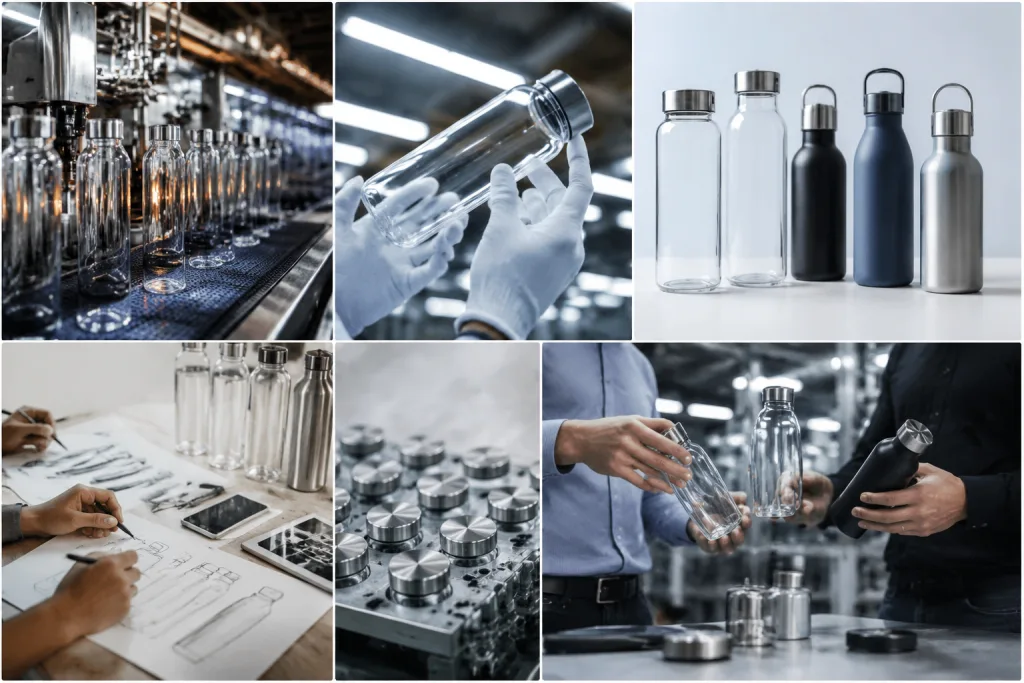
Buyers often ask for the bottle price and stop there. That is where margin disappears. On our line, a borosilicate glass stainless steel water bottle manufacturer should split the quote into bottle body, lid, print, packing, and loading terms. FOB China is the cleanest number to compare. If you need DDP or door delivery, the supplier has to map the destination tax and carton count correctly, or the math will not hold.
For a 500 ml custom drinkware bottle, we usually see plain unit with standard lid at USD 2.20-2.80 FOB at higher volume; custom logo, special cap, and retail box at USD 3.20-4.80 FOB; decorated or sleeve-wrapped builds can move above USD 5.00. QC pulled a sample last week and the buyer flagged a 1.5 mm print shift, which is why decoration cost cannot be treated as a line item afterthought. A canteen promotional order can come in lower, but only if you accept simpler packing and fewer decoration steps. Ask straight: does the price include AQL inspection, third-party testing support, and spare parts like extra silicone rings?
MOQ needs to be clear from the first PO. For a standard custom canteen, 3,000 pcs per color or design is a workable starting point, while mixed-color runs often need 5,000 pcs total. If a canteen manufacturer promises tiny MOQ with heavy customization, the wrong question is the sticker price; check sample fees, tooling, and carton upgrades instead. We have seen a PO typo turn 3,000 into 300, and that kind of miss burns a week on the line.
Build the QC plan into the PO
Quality control should sit inside the purchase order, not in a side email thread. Set the inspection plan before production starts and get the supplier to sign off on it. For drinkware, we run AQL 2.5 for major defects and 4.0 for minor defects, with zero tolerance for sharp glass edges, leaks, or a logo that lands 2 mm off spec. If the design uses a stainless band or metal cap, add checks for scratches, dents, and seam gaps under a fixed lighting setup.
Ask for in-process checks at three points: incoming raw material, forming and assembly, and final packing. A solid canteen factory in China should hand over records for glass thickness, lid fit, print adhesion, and seal compression; QC pulled the sample on the line and found a 0.3 mm lid mismatch before it turned into a shipment issue. If you are ordering customizable drinkware for a distributor network, require carton labels with SKU, quantity, country of origin, and batch code. That keeps the warehouse from sorting pallets by guesswork later.
For a custom growler or large-format bottle, add a pressure and leakage check after closure. If you are buying a customized growler with a metal handle or overmold, test handle pull strength on its own; the buyer flagged a “looks fine” sample, and the 12 kg pull test said otherwise. If you want a canteen customized for retail, do not skip packaging compression and drop tests. We’ve seen that go sideways too many times, and most breakage claims come from transit, not production.
Plan production and freight together
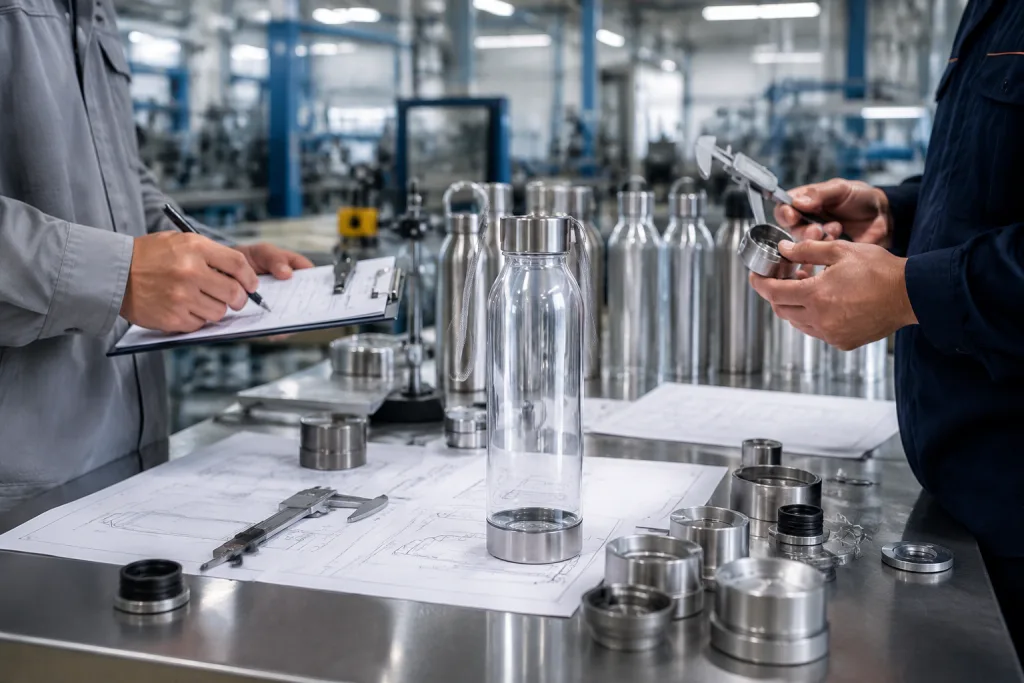
Lead time is a chain, not a promise. Tooling, raw material, decoration, packing, and booking space all hit the schedule. A Zhejiang canteen supplier can usually run a 3,000-10,000 pcs order in 30-45 days after sample approval, depending on print method and pack-out. New mold? Add 20-30 days. We’ve seen a buyer flag a “rush” PO, then the line waited 6 days because the cartons were still being revised.
Plan production with the vessel booking. If your cost target is tight, FOB China is easier to control than blind DDP, because you keep freight and customs in your own forwarder’s hands. For distributor programs, ask the factory to palletize by SKU and carton count; QC pulled the sample and found one mixed carton that would have slowed DC receiving by a full shift. If you are importing from a canteen manufacturer in China for Amazon or retail, check carton dimensions against FBA or shelf rules before the run starts. This is the wrong question to ask after packing.
Spare rate matters more than a lot of buyers think. For glass drinkware, a 1%-3% spare quantity in the carton plan usually pays for itself, especially when we ship 10,000 pcs and a few cartons take a hit in transit. It covers breakage and gives distributors a buffer for sample pulls and replacements. One PO typo on a carton count cost a buyer two extra days at booking; the math does not work if you leave no cushion.
Choose the supplier by proof, not promises
I’ll keep the HTML structure exactly as-is and rewrite the prose to sound like a hands-on sales engineer, with concrete factory details and less boilerplate.When you check canteen manufacturers or canteen vendors, ask for proof you can verify in 10 minutes. Factory videos are fine, but they do not close the gap. Ask for the last 3 QC reports, export references by market, and a monthly output number you can pin down. A real canteen factory in Zhejiang may run 200,000 units a month across several drinkware lines, but the only number that matters is what is open for your SKU next week. Capacity on paper is cheap. The line can still be full.
Check whether the supplier can support private label work across multiple formats: canteen custom for retail, custom drinkware for promotions, and distributor drinkware for regional wholesalers. If they cannot change packaging, barcode labels, and carton loading without a fresh quote every time, walk away. We have seen buyers get burned on this. One PO typo on a carton mark can hold a shipment for 12 days. A strong canteen distributor relationship depends on repeatability. The supplier should hold your logo placement within 1-2 mm, keep color variation inside the agreed limit, and run the same spec again six months later without redesigning the job.
In China, the best sourcing results come from factories that talk in process terms, not slogans. They should tell you what failed, what QC pulled, what got fixed on the line, and what is locked for mass production. If a supplier cannot show you a rejected sample, a corrected spec, and the final inspection sheet, the math does not work. That is the difference between a canteen vendor and a production partner you can scale with.
Send your spec, get a real factory quote
Share volume, lid style, print method, and destination market. We’ll quote the bottle, packing, and QC terms without guessing.
Frequently asked questions
What MOQ should I expect for a borosilicate glass stainless steel water bottle order?
For a standard custom order, expect 3,000-5,000 pcs per SKU and color. If you need multiple decorations or packaging styles, the total order may need to reach 8,000-10,000 pcs to keep pricing sane. Simple reorders can sometimes go lower, but a real borosilicate glass stainless steel water bottle manufacturer will quote based on tooling, print setup, and carton efficiency, not just bottle body cost. Sampling usually takes 7-12 days when the mold exists.
How much does a custom bottle cost FOB China?
A typical 450-600 ml bottle lands around USD 2.20-2.80 FOB for plain builds at volume, and USD 3.20-4.80 FOB when you add logo printing, special lids, or retail packaging. More complex custom drinkware can exceed USD 5.00. The exact price depends on lid grade, decoration method, carton spec, and whether the factory is handling extra QC or spare parts. Zhejiang factories often quote more transparently when you give a full spec sheet.
What compliance documents should I request?
Ask for food-contact support that fits your market: FDA-related documentation for the US side, REACH-related declarations for Europe, and material confirmation for borosilicate glass, 304 stainless steel, and food-grade silicone. If you sell through retail channels, also request carton markings, country-of-origin labeling, and batch traceability. A canteen manufacturer should be able to provide these without delay if they already export to Europe and North America.
How do I inspect quality before shipment?
Use AQL 2.5 for major defects and 4.0 for minor defects, with zero tolerance for leaks, cracks, sharp edges, or wrong artwork. Check lid fit, seal compression, print alignment, and carton drop resistance. For glass items, insist on random sample testing after packing, not only before packing. If your order is a customized canteen or customized growler, add leak testing after closure and a simple hot-fill check around 80°C.
Can one factory handle both distributor and promotional orders?
Yes, if the supplier has enough line capacity and packaging flexibility. A Zhejiang canteen factory with 200,000+ units/month output can usually handle both canteen promotional runs and distributor canteen reorders, but only if you separate SKUs clearly and lock artwork early. For multi-channel buyers, the best approach is one base bottle with different print, box, and barcode setups. That keeps MOQ and lead time under control while serving both custom canteen and custom drinkware programs.