Key Takeaways
- Borosilicate glass handles thermal shock better; stainless steel usually wins on drop resistance and freight tolerance.
- A practical MOQ from a China factory is often 3,000 units, with 30-45 day lead time after sample approval.
- For Europe and North America, ask for REACH, LFGB, FDA or ASTM-aligned testing, plus carton drop-test details.
- The right choice depends on channel: premium retail favors glass, high-traffic promo favors insulated stainless steel.
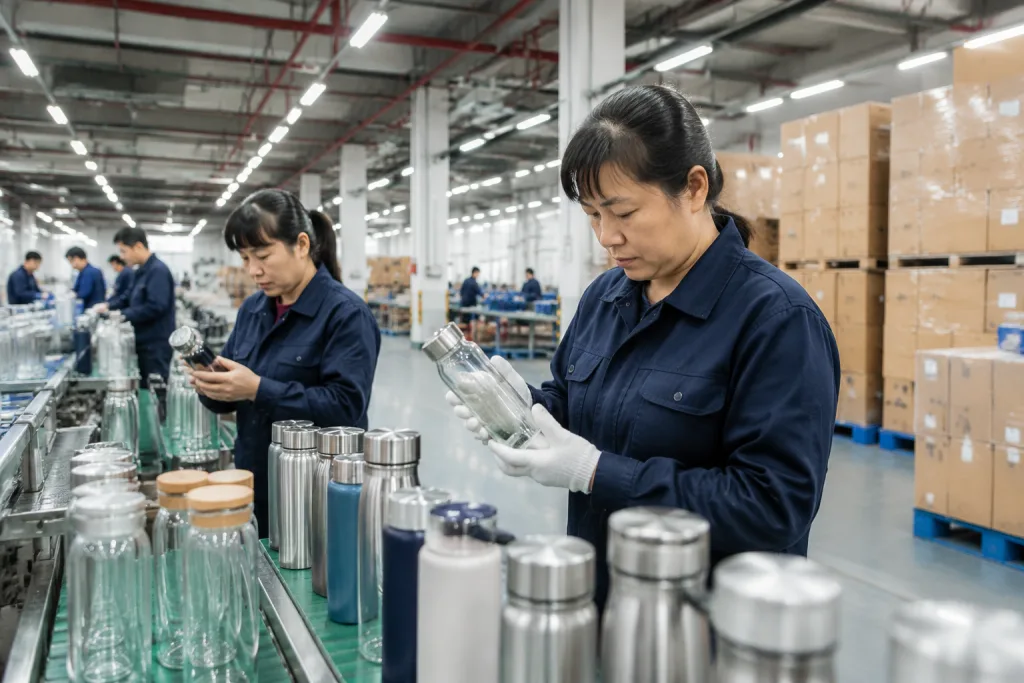
If you are sourcing from a borosilicate glass stainless steel water bottle factory, you are not buying “just a bottle.” You are choosing between two failure points: borosilicate glass that looks clean on shelf but needs tight packing, and stainless steel that takes rough shipping but gives you a harder branding job. We run this split every week in Zhejiang, and the wrong call shows up fast at drop-test and carton audit.
The buyers who get burned usually ask for a quote before they lock the spec sheet. That is the wrong question to ask. Start with wall thickness, closure type, coating, and test standard, then check freight risk and branding method. QC pulled the sample on a 2 mm bottle last month because the logo sat too close to the seam. A real factory in Zhejiang should quote 3,000 to 10,000 units, give you a 30-45 day lead time, and tell you why one build fits retail while another fits promo. That is where the margin stays.
Two materials, two different jobs
Buyers often compare borosilicate glass and stainless steel as if one should replace the other. That is the wrong question to ask. A glass bottle sells clarity, a clean look, and a better story for tea, citrus water, and visible infusers. Stainless steel sells drop resistance, temperature retention, and fewer claims after transit. If you are a canteen distributor or a canteen supplier serving retail, hotel, and event channels, treat them as two SKUs with different margins and different carton specs.
On the line, the build details matter more than the headline material. A borosilicate body usually runs 1.8 mm to 2.2 mm wall thickness, with a silicone boot and a PP or bamboo lid; we have seen a buyer flag a PO typo that mixed up 1.8 mm and 2.8 mm, and the sample from QC caught it before mass run. A stainless body usually uses 304 or 316 inner steel, 0.4 mm to 0.5 mm gauge, with vacuum insulation and a powder coat. Glass works better for custom drinkware in gift sets. Steel fits distributor drinkware, sports programs, and outdoor promotions.
| Spec | Borosilicate Glass | Stainless Steel |
|---|---|---|
| Thermal shock | Good | Very good |
| Drop resistance | Moderate | High |
| Branding | UV print, decal, laser on cap | Laser, screen, powder-coat print |
| Freight loss risk | Higher | Lower |
If you need canteen custom work for retail, borosilicate often wins. If you need canteen promotional stock for a 5,000-piece event order, stainless is the safer buy. We ship both, and we've seen the math break fast when a buyer tries to force one material into every channel.
Read the spec sheet first
The spec sheet is where a real bottle factory shows its hand. Price talk can wait. You want numbers: capacity in ml and oz, finished weight, wall thickness, lid material, and test standard. For glass, ask if the body is soda-lime or borosilicate; they are not the same line spec. For steel, ask whether the inner wall is 304 or 316, whether the weld seam shows, and whether the coating passed a 100-cycle abrasion check. We run these checks on the line, and QC pulled the sample if the seam print looked off by 0.3 mm.
A Zhejiang factory should give you a clean comparison sheet without dragging its feet. If they cannot explain the difference between a 12 oz promo tumbler and a 500 ml insulated bottle, they are not your manufacturing partner. That is the wrong question to dodge. For custom programs, confirm print area too. A wrap print may give you 160 mm to 200 mm of decoration length on steel, while glass usually needs a smaller, cleaner mark so the artwork does not warp. We once saw a buyer flag a PO typo on the print length, and the whole carton sample had to be redone.
- Ask for AQL: common export inspection is AQL 2.5 for major defects and 4.0 for minor defects.
- Ask for packaging: individual box, inner divider, and master carton drop test.
- Ask for compliance: REACH for Europe, FDA or ASTM-aligned testing for the US market.
- Ask for capacity: a real factory in China should state monthly output, often 200,000 to 500,000 units depending on mix.
If the supplier only talks price, you are talking to a trader, not a factory. We've seen that go sideways fast.
Where glass wins the sale
Borosilicate glass wins when the bottle has to sell itself on a shelf. Buyers still leave that money on the table. If your customer sells tea, infused water, wellness kits, or premium office gifts, the clear body shows the liquid and gives the product a cleaner, higher-ticket look. We ship a lot of this for boutique retail, museum shops, and corporate gifting in Europe.
Glass also scores on taste neutrality. A buyer once pushed back with, “Our customers notice any smell,” and he was right. QC pulled the sample after a 72-hour odor check, and the glass kept the flavor clean while a poorly finished plastic sample picked up notes fast. For a canteen customized program built around purity, that is the point. Glass also fits a custom growler-style concept when the drink stays still, not under carbonation pressure. If the channel is bike commuters, school kits, or warehouse staff, the math does not work. Glass loses that fight.
Use glass when shelf appeal and taste perception matter more than abuse resistance.
On procurement, the margin can be decent because the value is visible. A canteen distributor can sell it as customized drinkware with a premium story, and the buyer usually sees why the price sits above a plain steel bottle. We had one PO with a typo on the finish code, 300 pcs off, and the correction still held because the sample looked strong on the line.
Where steel earns its keep
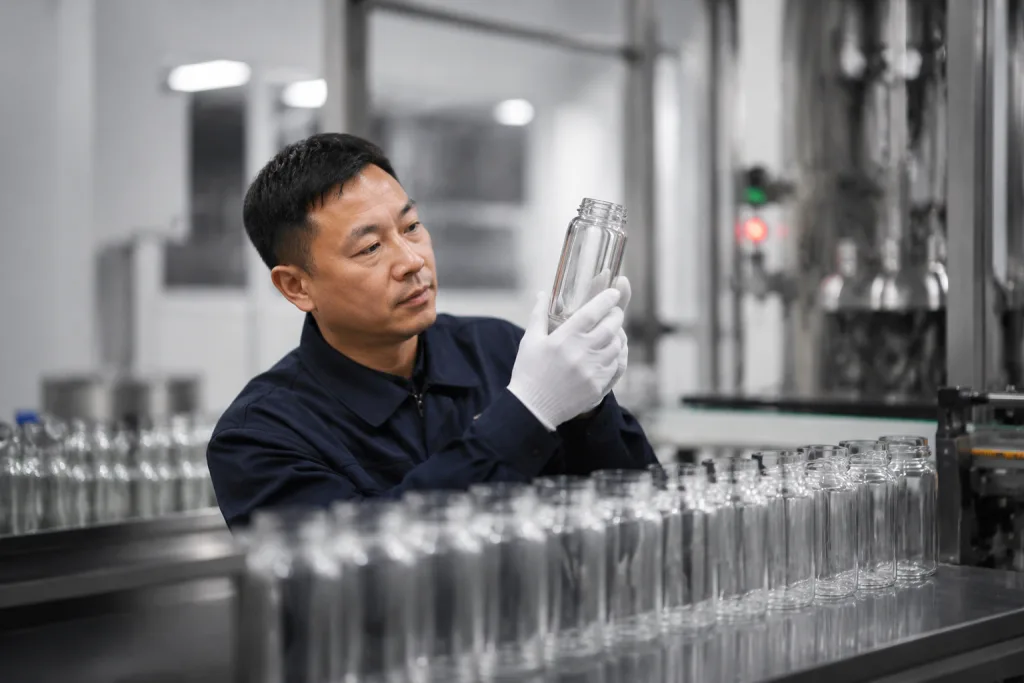
Stainless steel is the workhorse. If the order goes to travel, fitness, field use, or a promo program with 10,000 units, steel usually cuts the landed cost because breakage stays low. A 500 ml double-wall bottle with 304 inner steel and a powder coat can take warehouse drops that would crack glass, and we have seen that on the line with a 1.2 m fall test. Freight often moves through two warehouses and three pickup points before it reaches the end customer. That is where steel earns its keep.
Steel also gives canteen distributors more room on branding. Laser engraving leaves a clean logo that does not rub off. Screen print works for color campaigns. Powder coat gives different finishes without changing the body. If you run regional SKUs for distributor canteen programs, that flexibility saves setup time. QC pulled the sample once and found a lid cap typo on the PO plus a 0.3 mm gasket mismatch; the buyer flagged it before the run. The math does not work if the wall is too thin, the lid gasket is weak, or the vacuum seal leaks.
For a canteen manufacturer, the real question is hot hold or cold hold. If you need 12 hours hot and 24 hours cold, ask for the test method, not the promise. We ask for closure torque, lid leak test, and vacuum retention after aging, because those numbers tell the truth. That is the difference between generic customized canteen supply and a product that can survive North American retail returns. A batch with AQL 2.5 still fails if the lid starts weeping after 48 hours on a hot box.
If you are building a custom drinkware line for outdoor, corporate, or sports channels, steel is usually the safer inventory bet.
MOQ, pricing, and lead time reality
I’ll rewrite the prose in place, keeping the HTML structure and all existing numeric specs intact. Next I’m tightening the wording so it reads like a factory-side sales engineer, not marketing copy.Let’s keep this grounded. A borosilicate glass stainless steel water bottle factory in Zhejiang does not treat every order as a custom project. We run MOQ by SKU and by decoration method. For plain steel bottles, MOQ usually starts around 3,000 units. For multi-color print or mixed lid builds, 5,000 units is the normal ask. For borosilicate glass with custom packaging, 3,000 to 5,000 units makes sense because breakage control and carton design need real attention. QC pulled the sample and checked the corner crush first.
FOB China pricing moves hard by spec, but a basic glass bottle may sit around USD 1.20 to 2.40 per unit, while a vacuum stainless bottle may run USD 2.10 to 4.80 depending on capacity, steel grade, and decoration. Add a gift box, color coating, or silicone sleeve, and the price jumps fast. Stop asking for “best price.” Ask for pricing at 3,000, 5,000, and 10,000 units. That is the right question. It tells you whether the factory is quoting from the line or guessing off a spreadsheet. We’ve seen buyers send a PO with a typo on the lid color and then blame the quote.
Lead time matters just as much. Sample approval usually takes 7 to 12 days. Mass production is often 30 to 45 days. If a canteen supplier says 15 days on a custom build, ask what they left out. In China, fast is possible, but only when tooling is already in place and the packing spec stays standard. The buyer flagged it once when a rush order slipped 4 days because the carton insert was still waiting on die-cut approval.
- Sample fee: often USD 30 to 120, refundable on bulk order.
- Tooling: new lids or molds may add USD 300 to 2,000.
- Inspection: third-party pre-shipment checks reduce claim risk.
Branding and channel fit
Match the bottle to the channel, not the mood board. An expo giveaway, charity walk, or campus run needs fast turnaround, clean print, and fewer broken pieces in transit. Steel usually wins there. A boutique launch, gift set, or wellness subscription can justify borosilicate glass because the unboxing carries weight. If you sell across several channels, keep both in the line. Do not make one material carry every brief.
For logo methods, glass works best with a single-color mark, frosted detail, or a small decal on a 12 oz bottle. Steel takes engraving and tougher color printing. A brewery-style growler order gets a different spec than a hotel chain drinkware program. Same for a corporate gift run versus a sampling order for a distributor. The use case sets the spec. QC pulled the sample on a 1.2 mm logo edge once, and the buyer flagged it right away.
North American buyers often chase shelf appeal and miss the after-sales bill. Europe pushes harder on materials and packaging. That is why a Zhejiang supplier should ask where the bottles will sell before the quote goes out. This is the wrong question to ask if you skip the channel. Channel fit drives returns, and returns kill margin.
For a distributor portfolio, the clean setup is one premium glass line and one rugged stainless line, both from the same factory. That keeps color control, carton size, and reorder timing aligned. We run this with 5,000 MOQ on one line and 3,000 on the other when the buyer needs speed.
How to audit a China factory
When you audit a factory in China, skip the lobby and go straight to the line. For borosilicate glass, check forming consistency, annealing control, lid fit, and carton drop tests. For stainless steel, inspect welding, vacuum leak testing, coating cure, and cap gasket compression. Ask for one bottle pulled from the line and one from a finished carton. That gap tells you more than any brochure.
A serious factory shows BSCI if it serves European buyers, and the team should explain REACH and LFGB without reading notes. We also ask for monthly capacity by product family, not “all products.” If someone says 600,000 units per month, break it down: stainless, glass, and custom drinkware. The math does not work any other way. QC pulled a sample with a 0.8 mm lid gap once; the buyer flagged it before shipment.
For procurement teams, the clean process is simple: request a pre-production sample, a golden sample, and a packing sample. Then lock the carton spec, barcode placement, and FNSKU if you are supplying Amazon. We have seen a PO typo on the carton count turn into a headache at the warehouse. A factory that knows canteen manufacturers, canteen suppliers, and private-label replenishment should not push back on this. It should welcome it because it cuts claims and rework.
The right partner does not just make bottles. It helps you avoid dead stock, broken cases, and specs that look good on paper but fail on the line.
Request factory specs before you price
Send your target volume, logo method, and market. We’ll quote the right build, not a random bottle.
Frequently asked questions
What is the usual MOQ for custom glass and stainless bottles?
For many China factories, MOQ starts around 3,000 units per SKU for standard stainless steel and 3,000 to 5,000 units for borosilicate glass with custom packaging. If you add a new lid mold, gradient coating, or special carton, expect higher minimums. A practical buyer should ask for MOQ at 3,000, 5,000, and 10,000 units so you can see where pricing really moves. A real canteen manufacturer in Zhejiang will quote differently for plain stock items versus canteen customized builds, and that difference matters to your landed cost.
Which material is better for retail resale?
For retail, borosilicate glass usually wins when the buyer wants a premium look, clear liquid visibility, and a cleaner taste story. Stainless steel wins when the retailer needs lower breakage and fewer returns. If your channel is gift shops, wellness, or tea, glass often supports a higher shelf price. If your channel is sports, commuter, or promo, steel is usually safer. A distributor canteen program should not force one material across all channels; you will lose margin somewhere if you do.
Can one factory handle both custom canteen types?
Yes, but not every factory does both well. A strong canteen factory should manage glass forming or sourcing, stainless vacuum production, decoration, and export packaging under one quality system. Ask whether the same team handles sample approval, AQL inspection, and carton testing. If they only act as a trading desk, you may get mixed quality. A proper canteen supplier in China should be able to support custom canteen, customizable canteen, and customized drinkware programs without changing the production logic each time.
What compliance documents should I request for Europe and North America?
For Europe, ask for REACH and, where relevant, LFGB test reports. For North America, ask for FDA-related material declarations and any applicable ASTM-aligned testing for performance or packaging. Also request BSCI if social compliance matters to your retailer. For both regions, get material specs for glass and steel grades, plus carton drop-test results. If you sell on Amazon, ask for FNSKU labeling support and case pack confirmation before mass production starts.
How do I avoid breakage in borosilicate shipments?
Use an inner divider, a tight-fit bottle box, and a master carton that has been drop-tested at least 5 sides and 1 corner. Ask for a silicone sleeve or molded tray if the bottle shape is tall or narrow. Keep the carton weight under the courier-friendly limit your warehouse can handle, usually around 12 to 15 kg per outer carton. A good factory should show a packing sample before production. If the supplier cannot explain carton compression, you are taking unnecessary damage risk.