Key Takeaways
- Typical MOQ for a borosilicate glass stainless steel water bottle bulk order starts at 3,000 to 5,000 pcs per SKU.
- A workable lead time is 25 to 35 days after sample approval, plus 7 to 15 days for ocean freight from China.
- For Europe and North America, ask for REACH, LFGB, FDA support, and an AQL 2.5 major / 4.0 minor inspection plan.
- If you need private label, budget USD 2.10 to 5.80 per unit FOB depending on glass thickness, lid type, and decoration.
A borosilicate glass stainless steel water bottle bulk program looks straightforward on paper. It is not. You are buying two materials, two failure points, and two sets of complaints when the carton gets opened: chipped glass from transit or a steel cap that misses finish, weld, or compliance. We run these jobs in Zhejiang all the time, and the first sample usually tells you more than the price sheet.
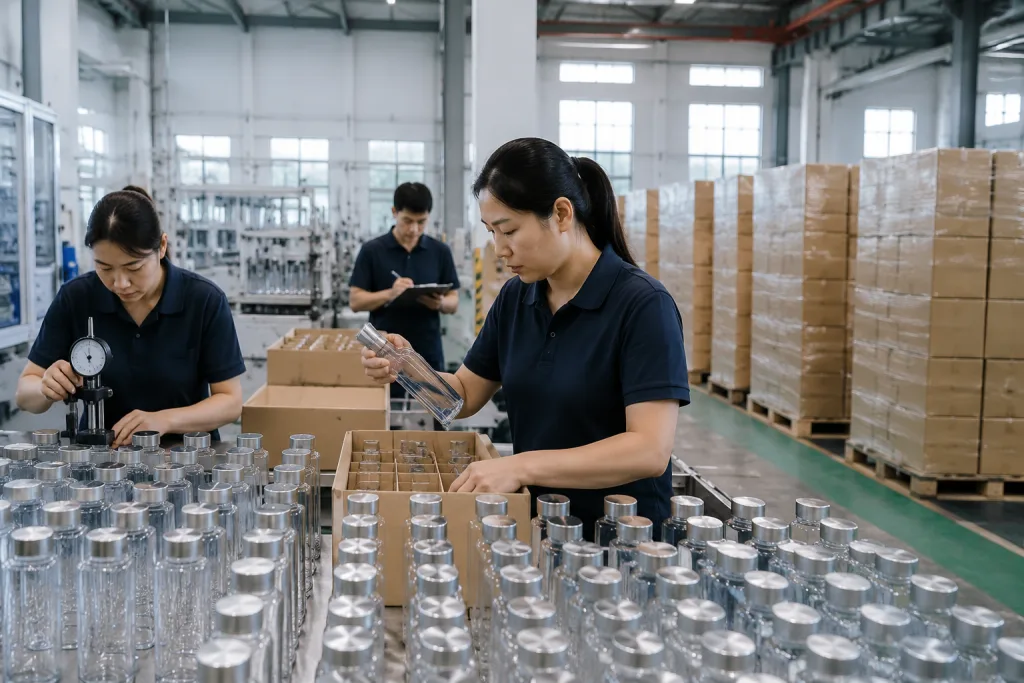
For procurement teams and brand owners, the job is to keep landed cost, defect rate, and launch timing under control. That starts with the ugly details: MOQ, wall thickness, cap fit, REACH or LFGB, AQL targets, and drop-test packaging. I’d push back on any quote that skips those items. A real China supplier should send samples fast and hold output around 50,000 to 120,000 units per month without the line turning into a mess.
What you are really buying
When buyers ask for borosilicate glass stainless steel water bottle bulk, they usually want a glass bottle with a stainless steel lid, sleeve, base, or infuser part. That split matters. Borosilicate glass handles thermal shock and gives a cleaner premium look; stainless steel carries the seal, the structure, and the shelf appeal distributors can price up. If the drawing stays vague, we fill in the gaps, and the line will not guess in your favor.
Lock the product build first. Single-wall or double-wall? 304 or 316 stainless? 1.8 mm, 2.0 mm, or 2.5 mm glass? Stainless cap with a silicone gasket, or a hybrid lid with bamboo or PP insert? In Zhejiang, these choices hit tooling, MOQ, and breakage rates hard. A 2.0 mm body with food-grade silicone and a 304 stainless cap is a common wholesale spec because the math works on cost and drop tests. We’ve seen buyers push for a thinner wall, then QC pulled the sample after a 1.2 m drop crack.
- Common capacities: 350 ml, 500 ml, 750 ml, 1,000 ml
- Typical glass thickness: 1.8 to 2.5 mm
- Common lid material: 304 stainless steel with silicone seal
- Usual factory output: 50,000+ units/month per line set
Ask these sourcing questions first
I’ll rewrite the section in place, keeping the HTML structure and tightening the sales-engineer tone. Then I’ll do a quick pass to make sure the wording has the concrete details and pushback you asked for.Before you compare quotes, ask the factory the same questions every time. If you skip that step, you end up stacking three prices for three different builds. We run this check on the line before we even open a sample carton. For a bulk drinkware program, you need the bottle method, the included parts, and the claim process if the shipment fails inspection. This is where a lot of canteen wholesale and wholesale drinkware RFQs go sideways: the spec reads like a catalog page, not a purchase order.
Checklist for the first RFQ
- What is the MOQ by color, by print, and by carton?
- What is the FOB price at 3,000, 5,000, and 10,000 pcs?
- Can you share material certificates for borosilicate glass and stainless steel?
- Which standards do you support: REACH, LFGB, FDA, ASTM, ISO 9001?
- What is the breakage rate after final packing test and drop test?
For a real China supplier, the answers should be exact. If they send “good quality” or “normal lead time,” push back. QC pulled the sample on a 1.2 m drop test last month, and the buyer flagged a 3 mm chip at the rim; that kind of detail is what you want in the RFQ reply. Give me dates, tolerances, and test references. The math does not work any other way, whether you are sourcing a wholesale canteen, a drinkware wholesale line, or a premium retail bottle. Same rule for beer growler wholesale and bulk canteen orders when stainless and glass sit in the same program.
Buyers do not lose money on the unit price. They lose money on unclear specs, weak packaging, and claims that should have been caught on the first sample.
MOQ, price, and lead time
I’ll keep the HTML structure intact and rewrite the prose to sound like a factory-side sales engineer, with tighter pricing language and a few concrete shop-floor details.For a standard borosilicate glass stainless steel water bottle bulk program, the working MOQ is usually 3,000 to 5,000 pcs per design. If you want custom color sleeves, engraved caps, or printed cartons, it often moves to 5,000 to 10,000 pcs because we have to separate the sleeve line, cap decoration, and outer carton sourcing. On our side in Zhejiang, a clean spec ships faster; one SKU with three add-ons is where the line starts slipping.
FOB pricing sits in a real band. A plain 500 ml bottle with a stainless cap usually comes in around USD 2.10 to 3.20 FOB at 5,000 pcs. Add a branded silicone sleeve, laser logo, and custom gift box, and you are looking at USD 3.60 to 5.80. We had a buyer flag a quote as “too high” until QC pulled the sample and found the carton ECT spec was missing. That is the wrong question to ask. The math only works when you compare landed cost, defect allowance, and carton strength together, especially if you are building a best wholesale drink bottle offer for Amazon, retail, or distributor channels.
- Sample lead time: 7 to 12 days
- Mass production: 25 to 35 days after sample approval
- Ocean transit from China: 18 to 35 days depending on lane
- Inspection target: AQL 2.5 major, 4.0 minor
Glass and steel quality checks
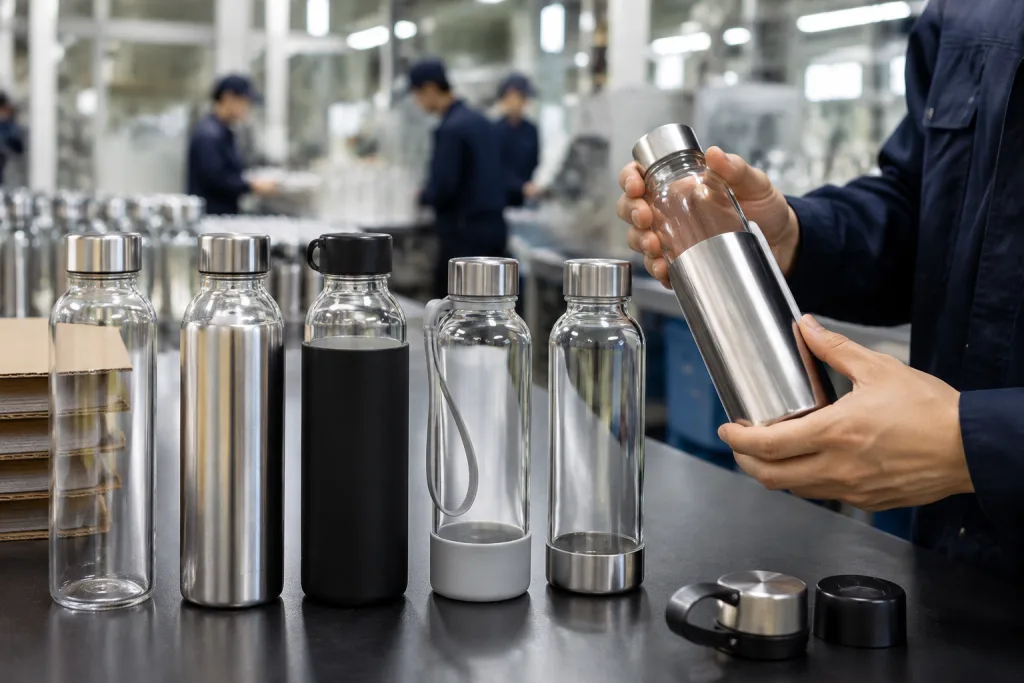
The material mix decides whether this bottle sells as a premium piece or gets written off as a cost-down sample. We check borosilicate glass for thermal shock resistance, wall uniformity, and inclusions under a light box. On the line, a 0.3 mm wall swing is enough to trigger a reject call. Stainless steel gets the same treatment: grade confirmation, weld finish, corrosion resistance, and a hard look at lid threads and seals after repeated opening.
For North America and Europe, compliance is not a late-stage checkbox. We ask for a materials file with the glass composition, stainless certificate, gasket material, and decoration method before we cut tools or confirm packaging. If the bottle has any metal part that touches liquid, confirm 304 or 316 by certificate, not by sales wording. 304 works for most wholesale drinkware runs and keeps the price in line. 316 makes sense when the buyer pushes for harsher use conditions or less corrosion risk, but the math changes fast. We run leak tests after 24 hours, a 1-meter drop test, and hot-cold cycling. QC pulled one sample with a gasket twist, and that one would have failed a warehouse claim.
- Glass: borosilicate, typically 1.8 to 2.5 mm
- Steel: 304 standard, 316 upgrade option
- Seal: food-grade silicone, leak-tested
- Decoration: laser engraving, silk screen, or heat transfer
Packaging and freight realities
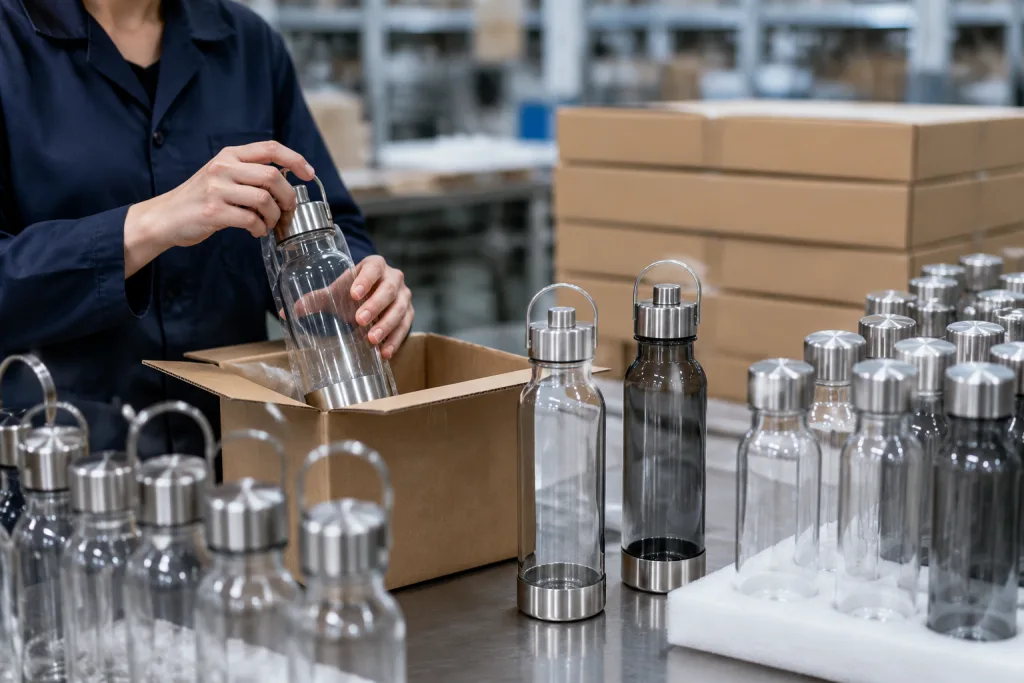
Glass is where a lot of drinkware wholesale plans go sideways after the quote stage. If the factory uses weak inner boxes or thin master cartons, breakage will chew through margin faster than a small unit-price gap. The packaging spec is part of the product. For canteen bulk and canteen wholesale orders with mixed-material construction, ask for carton burst strength, drop test results, and palletization instructions in writing. We run a 12 mm insert on similar lines because one loose cap will rattle the whole box, and QC pulled that sample twice before it passed.
For export, double-wall corrugated cartons are the safe default. If the bottle ships with a stainless cap and glass body packed separately, the insert has to stop movement, not just fill space. If you are shipping beer growler bulk, beer tumbler bulk, or alcohol flask bulk alongside this line, keep carton dimensions close so container loading stays neat. Buyers handling alcohol flask wholesale bulk or beer growler wholesale bulk should check local labeling rules, because those items can trigger different compliance and channel restrictions than a normal water bottle. We’ve seen a PO typo on the carton mark create a 3-day delay at booking.
Freight math is blunt. A 20-foot container can hold about 9,000 to 12,000 units, depending on packaging and capacity. If your order is smaller, calculate carton cubic weight carefully and do not treat the factory’s packed dimensions as final until you see pre-shipment photos. China forwarders in Zhejiang can move fast, but the paperwork has to be clean if you want customs to clear without drama. One missing HS code will slow the line more than a bad pallet wrap.
Use cases by channel
Different channels call for different sourcing logic. Gift buyers want a bottle that lands well on the shelf and survives transit. Sporting goods and outdoor accounts care about impact resistance, tight caps, and repeated dishwasher cycles. Private label buyers usually watch three things: unit cost, packaging, and compliance paperwork. Same factory, different fit. We’ve seen a line that handled a wholesale growler project fail on a polished retail canteen because the print shifted 1.5 mm on the shoulder.
For distributors, a wider assortment can keep reorders simple. You might place one glass bottle SKU, one bulk canteen, and one growler wholesale order with the same supplier, then cut the admin load. The math only works if the factory is actually strong in those formats. A shop that runs growler bulk well may still miss on a high-spec canteen bulk job with tight logo registration. We ask for sample photos, drop-test notes, and export records. A catalog is not proof. QC pulled the sample on one order and found a carton crush rate of 3% after a 1-meter drop test, which changed the packing spec fast.
- Retail/private label: focus on finish, carton quality, and brand consistency
- Promotional: focus on MOQ, print speed, and cost control
- Outdoor and travel: focus on leak resistance and drop testing
- Distributor: focus on stable replenishment and fewer SKUs
Final buyer checklist
Before you sign off on a borosilicate glass stainless steel water bottle bulk order, do one last commercial and technical check. Match the approved sample against the quote, match the carton spec against the packing photos, and put the inspection standard into the PO. If private label is part of the job, check logo position and decoration tolerance against the signed sample. For EU or North America, keep the compliance file clean; customs, buyers, and retailers should all read the same set.
Use this checklist. It saves trouble:
- Signed sample plus dimensional drawing
- FOB price, MOQ, and lead time in writing
- Material declarations for glass, steel, and gasket
- REACH, LFGB, FDA, or market-specific paperwork
- Inspection plan with AQL 2.5 / 4.0
- Drop test, leak test, and packaging confirmation
- Shipment photos before balance payment
If you are comparing a canteen wholesale program, wholesale canteen options, or a mixed drinkware wholesale line, ask the right question: what breaks the deal after the deposit clears? A factory in Zhejiang that keeps process records, leak-test data, and carton photos usually beats a cheaper seller who cannot explain breakage control or seal QC. We have seen this go sideways on a 12 mm logo shift. That is the gap between a reorder and a headache.
Request a factory quote with real specs
Send your target MOQ, artwork, and compliance needs. We will price the bottle clearly and flag the risks before production starts.
Frequently asked questions
What is a realistic MOQ for this bottle?
For a standard borosilicate glass stainless steel water bottle bulk order, many China factories ask for 3,000 to 5,000 pcs per SKU. If you add custom color parts, gift boxes, or special decoration, the MOQ often moves to 5,000 to 10,000 pcs. For very simple stock versions, a few suppliers in Zhejiang may accept lower trial quantities, but price usually rises and lead time becomes less efficient. Always confirm MOQ by color, logo method, and carton spec, because those can each change the minimum order.
What should I budget per unit FOB?
A practical FOB budget is USD 2.10 to 3.20 for a plain 500 ml version at around 5,000 pcs. If you add laser logo, custom sleeve, premium lid, or retail packaging, you may land closer to USD 3.60 to 5.80. The final number depends on glass thickness, stainless grade, and decoration. If a quote is far below that range, check whether the seller left out packaging, testing, or export cartons. In China, low quotes often hide costs elsewhere.
Which compliance documents should I request?
For Europe and North America, ask for REACH, LFGB, and FDA support where applicable, plus material declarations for borosilicate glass, stainless steel, and silicone gasket. If your retailer or marketplace requires it, add ASTM or ISO references and a factory quality system certificate such as ISO 9001. For branded programs, request a signed sample, a test report for leak and drop performance, and an inspection plan using AQL 2.5 major and 4.0 minor. Keep the file complete before shipment, not after arrival.
How long does production usually take?
After sample approval, mass production usually takes 25 to 35 days for a normal borosilicate glass stainless steel water bottle bulk order. Sampling itself often takes 7 to 12 days, depending on decoration and whether tooling is already available. Add 18 to 35 days for ocean transit from China, plus customs and domestic delivery. If you are launching a seasonal program, build in at least 60 days from approval to warehouse arrival so you have room for inspection and freight delays.
Can I source related items from the same supplier?
Often yes, but only if the factory actually makes them well. Some Zhejiang suppliers can handle a mixed range such as bulk canteen, canteen bulk, drinkware bulk, growler bulk, or even alcohol flask wholesale bulk items. That said, a good water bottle factory is not automatically a strong growler wholesale partner. Ask for recent production photos, test records, and export references for each category. If you want fewer suppliers, keep the product family close and verify every SKU separately.