Key Takeaways
- Borosilicate glass usually tolerates thermal shock better than soda-lime, but you still need 2.0-2.8 mm wall thickness and a real drop test.
- For custom sports water bottle orders, MOQ often starts at 1,000-3,000 units and lead time is usually 25-35 days in Zhejiang factories.
- A 500 ml bottle with a stainless cap and silicone sleeve typically lands around USD 1.85-3.20 FOB depending on decoration and packaging.
- For distributor programs, ask for AQL 2.5 inspection, REACH paperwork, and carton drop testing before you place repeat bulk orders.
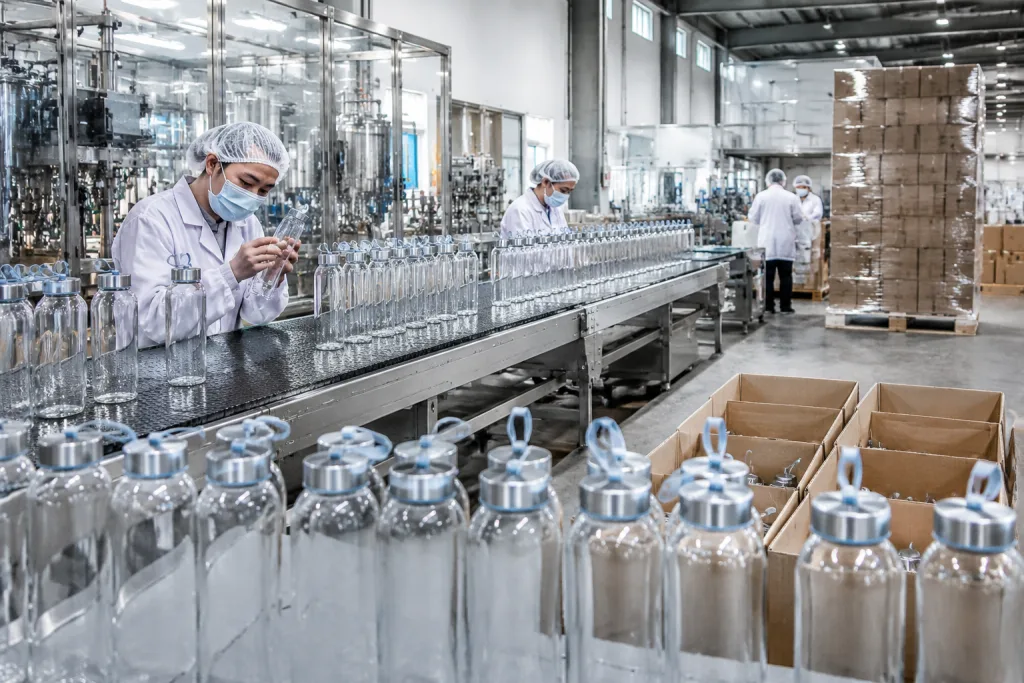
If you are sourcing from a borosilicate glass sports water bottle manufacturer, the hard part is not finding a nice-looking bottle. The hard part is choosing the spec that holds up in gym bags, on retail shelves, and in export cartons without eating your margin in breakage claims. We run this test every week in Zhejiang: buyers ask for “premium glass,” then QC pulls the sample and the real issue shows up in wall thickness, cap torque, drop resistance, and carton compression.
For fitness brands and gym chains, the bottle has to do three jobs at once: look clean on shelf, feel solid in hand, and ship at a cost that still leaves room for print and packing. A good supplier in China should give you numbers, not sales talk: 500 ml or 750 ml capacity, 2.0 mm to 2.8 mm wall thickness, MOQ from 1,000 to 3,000 units, and a 25 to 35 day lead time. We’ve seen buyers push for “faster” on a 3,000-unit order, but the math does not work when the line needs full curing time and carton drop checks.
Read the spec line by line
I’ll rewrite the section in place, keep the HTML structure unchanged, and tighten the wording so it reads like a factory-side sales engineer.Read the spec sheet first. Photos come later. For a borosilicate glass sports water bottle manufacturer, capacity, glass grade, wall thickness, lid material, and decoration method tell you more than any polished render. A 550 ml bottle with 2.2 mm walls is a different product from a 550 ml bottle at 1.6 mm, even if the sample table looks the same. Thin walls cut weight, but they also raise breakage in gym bags, on tiled floors, and in customer returns. We have seen that go sideways fast.
For fitness buyers, treat the spec sheet as the margin sheet. If the bottle goes into a bulk gym water bottle program, the cost gap between 1.8 mm and 2.5 mm wall thickness is often small next to freight and breakage. That extra glass usually pays back in fewer claims. On our Zhejiang line, a stable borosilicate run can hit 80,000 units per month, but one change to cap style, sleeve color, or logo placement adds setup time and can push lead time back 3 to 7 days. QC pulled the sample and found the PO had “2.0mm” typed as “2.0 ml” once; the buyer flagged it before we cut molds.
Check these line items before you approve sampling:
- Capacity tolerance: ±5% is workable; tighter for retail chains that reject fill variance.
- Wall thickness: 2.0 mm minimum for daily gym use; 2.5 mm gives better abuse tolerance for premium sets.
- Neck finish: Must match the cap thread exactly, or you will get leaks.
- Glass surface: Clear, no bubbles, no cords, no visible distortion near the base.
If a supplier cannot explain each line item in plain language, that is the wrong factory to buy from.
Choose the right glass grade
I’ll rewrite just the prose inside the existing HTML, keep every tag intact, and tighten the sales-engineer tone with concrete factory detail and fewer generic phrases.Borosilicate glass is not a marketing add-on; it is the material call. The buyer sees it in the hand: better thermal-shock resistance, steadier chemical stability, and a cleaner print surface for brand logos. On a custom fitness water bottle run, that matters when users rinse with 80°C water or pull the bottle from a 4°C fridge into a 28°C locker room. Soda-lime can work for a low-price retail bottle, but we do not push it for rough handling.
Ask the supplier what the bottle is built to take. A real China factory should talk in degrees Celsius, not toss out “heat resistant” and hope nobody asks again. We run borosilicate specs around 120°C thermal shock or above, depending on wall thickness and the shoulder radius. QC pulled one sample that failed at the neck after a drop test, so the design changed before mass production. The math does not work if the base is thin, the shoulder is sharp, or the carton lets glass knock together in transit.
If a supplier only talks about “eco” and “premium,” you are paying for adjectives. Ask for material grade, wall thickness, and failure mode.
For distributor fitness water bottle programs, the glass grade also shows up in after-wash complaints. Borosilicate holds clarity better through repeated wash cycles and is less likely to haze when the line sees hot-cleaning use every day. We have seen soda-lime go cloudy after a few weeks at a gym refill station, and the buyer flagged it on the next PO. If the bottle is meant to carry a premium shelf price, the material has to earn it the moment someone picks it up.
Lids, seals, and leak control
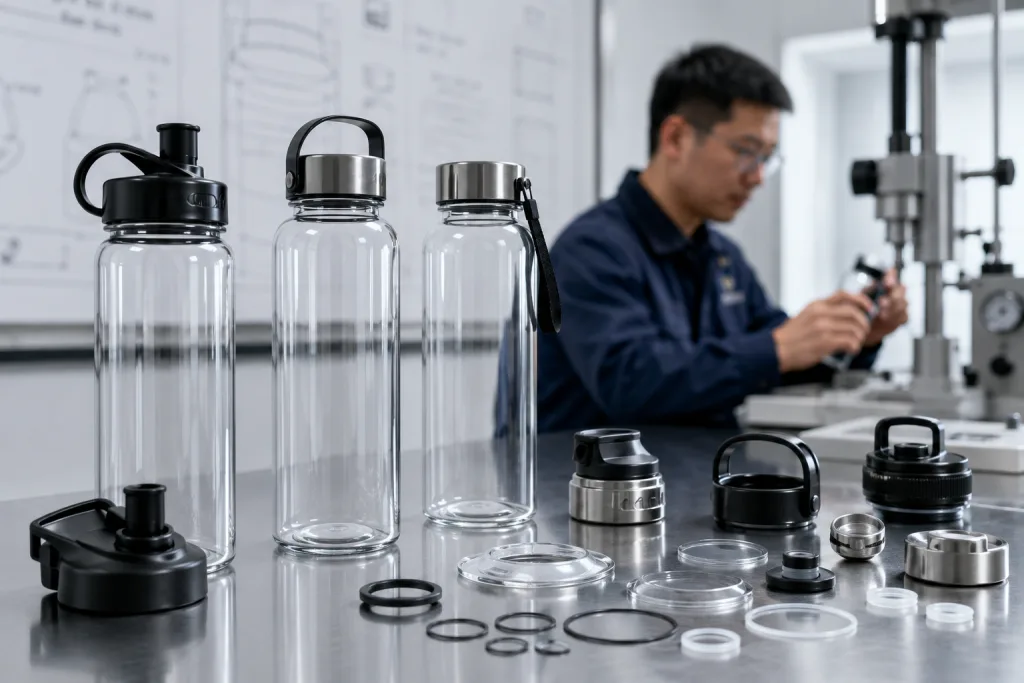
I’ll rewrite just the prose inside the existing HTML, keep every tag and list intact, and make it sound like a factory-side sales engineer wrote it.Most bottle failures start at the lid, not the body. Bulk gym water bottle buyers get burned there first. A borosilicate bottle with a weak cap still leaks in a duffel bag, and the buyer flags the whole product. For sports use, the lid spec should call out closure type, gasket material, and torque range. We run silicone seals on a lot of orders because they stay flexible after wash cycles and are easy to replace on the line. PP lids stay cost-effective; stainless-steel lids look more premium, but they add 18 g or more per bottle and push up landed cost.
When you order a custom shaker bottle or custom logo shaker bottle, do not treat that lid as the same part as a water bottle lid. Shaker closures need a tighter seal stack and usually a wider mouth for mixing. A custom made shaker bottle with a flip cap and whisk ball has a different leak profile than a simple screw cap. We had one buyer send a PO with “shacker” typed three times, and QC still caught the mismatch before tooling. If you are buying a bulk shaker bottle line for gyms, name the use case first: daily hydration, protein mixing, or both. The cap design follows the function.
- Leak test: Invert for 5 minutes, then shake for 30 seconds.
- Torque control: Cap should close consistently without over-tightening.
- Seal life: Gasket should hold after repeated wash cycles.
- Replacement parts: Ask whether seals and lids are available for after-sales support.
For a custom gym water bottle order, a lid that costs USD 0.12 more can save far more in returns. We’ve seen that math work in real locker rooms and fail when buyers try to save on the cap. That is the wrong place to cut.
Decoration that survives handling
Decoration is where buyers lose money fast if they guess. A custom sports water bottle has to stay sharp after 12 days in transit, warehouse stacking, and repeated washing. Screen printing fits bold logos and keeps unit cost down. Laser engraving gives a cleaner premium look on metal lids or sleeves, but on clear glass the mark can disappear under store lighting. If you are building a customizable fitness water bottle program, choose the decoration method by brand distance and sales channel, not by a mockup on a laptop.
On borosilicate glass, the print needs the right cure temp. If the ink is undercured, carton rub will scratch it on the way out. For retail-ready orders, we usually push one-color or two-color print with a hard artwork limit. A full wrap on glass looks strong in photos, yet curved surfaces can throw off registration by 1.5 mm. If you need a customized gym water bottle for chain stores, keep the logo in the same place on every SKU and keep it out of the grip zone. Buyers touch that area all day, and the fingerprints show weak finishes fast.
On the factory side, the decoration line has to hold position within a tight band so the logo stays centered across the batch. A serious supplier in China will show a first article sample and a production control sample, not just a pretty one-off. If the print wanders by more than a few millimeters, the shelf set looks sloppy. We’ve seen buyers approve artwork from a PO with a typo in the Pantone code, and then QC pulled the sample because the line could not hit it. For a distributor shaker bottle program, consistency wins. The math does not work any other way.
Packaging and freight math
Glass is a freight item before it is a drinkware item. If the pack is weak, your FOB price does not matter much. For a bulk sports water bottle shipment, we look at unit protection, carton compression, and how many pieces go into one master carton. We’ve seen one insert change cut breakage from 2% to under 0.5% in normal export handling. That is real money when the boxes go to North America or Europe.
For a 500 ml custom fitness water bottle, the usual pack-out is 24 pieces per carton or 12 pieces per inner carton, depending on bottle shape and sleeve. Carton strength should be 5-ply for lighter products and 7-ply when the bottle carries a heavier lid or accessory set. Ask for a drop test on corners and edges; that is where boxes fail first. QC pulled one sample carton at 80 cm last month and the side seam split cleanly. If the supplier only talks about print and gloss, they are not thinking like an exporter.
Freight changes pricing more than first-time buyers expect. A bottle at 320 g versus 250 g can drag down container efficiency once you scale to a 20-foot or 40-foot load. For a distributor sports water bottle order, that moves landed cost and shelf price. This is the wrong question to ask if you only look at unit cost. We had a buyer flag a PO typo on pack count once, and the math was off by 1,200 units before ship date. If you are buying a customizable gym water bottle in volume, ask for a carton loading plan before final art is approved. The better factories in Zhejiang build the pack-out around the product, and we run that math on the line before the first pallet moves.

Quality checks that protect your margin
Quality control is not a certificate on the wall. It is the step that protects your margin when you sell in bulk. For a borosilicate glass sports water bottle manufacturer, we run incoming material verification, in-process visual checks, closure fit checks, and final random inspection under AQL. AQL 2.5 is common for major defects in consumer drinkware, with tighter control for leakage, cracks, and contamination. If a supplier cannot state the inspection plan in plain terms, you carry the risk.
Ask for REACH-compliant materials if you sell into Europe, and confirm the factory can support food-contact documentation. For North America, buyers often request FDA-oriented declarations and lab reports from accredited labs. If the bottle uses a silicone sleeve or gasket, those parts need coverage too. We once saw a PO typo turn “gasket included” into a bare-glass shipment, and the buyer flagged it before loading. For a distributor fitness water bottle or distributor shaker bottle program, the whole assembly has to be controlled, not only the glass body.
In our Zhejiang line, QC typically includes:
- 100% visual check for cracks, bubbles, and sharp edges
- Leak testing for a sampled lot by lid style
- Carton drop verification after packing approval
- Lot traceability by date code and production batch
That is the difference between a repeat order and a one-time trial. We ship enough cartons to know this: skip QC, and the issue shows up after the first store display sells through.
What a real factory quote should show
A proper quote from a borosilicate glass sports water bottle manufacturer reads like a job sheet, not a sales pitch. It should spell out 500 ml or 750 ml, glass wall thickness in mm, cap material, decoration method, packing count, sample fee, and production lead time. If the factory cannot put those details in one line item, you will spend days chasing revisions and the launch date will move. We see this on the line all the time, and the buyer usually flags the same gap twice. For a custom shaker bottle or custom sports water bottle, a vague quote is where hidden add-ons start.
Typical pricing for a 500 ml borosilicate bottle in a simple retail spec can start around USD 1.85 FOB and move above USD 3.20 FOB once you add stainless cap upgrades, sleeves, multi-color decoration, or gift packaging. MOQ often sits at 1,000 to 3,000 units; if the spec is stable, a distributor order can sometimes push the number down on repeat. Lead time usually runs 25 to 35 days after sample approval and deposit, and custom molds or uncommon cap styles add more days. That is normal in Zhejiang. QC pulled the sample, checked the cap fit twice, and the quote matched the production route.
Use the quote to compare suppliers on total landed cost, not unit price alone. A custom logo shaker bottle with a lower sticker price but weak packaging and no QC plan is not cheaper. It is future waste. We have seen a PO typo on pack count turn a good deal into a mess. If you are building a long-term distributor program, the right factory quote should show how the factory keeps your branded bottle consistent across repeat runs.
Send your spec sheet for a fast quote
We can review your bottle, cap, print, and pack-out spec and turn it into a production quote from Zhejiang with clear MOQ, lead time, and FOB pricing.
Frequently asked questions
What MOQ should I expect for a borosilicate glass sports water bottle order?
For most factory programs in China, expect 1,000 to 3,000 units per design if you want reasonable pricing. A very simple custom sports water bottle may start at 1,000 pieces, while a custom logo shaker bottle with special cap tooling or printed sleeves can move higher. If you want multiple colors, it is smarter to split by one core spec and one print setup rather than six small variants. That keeps sampling cleaner and protects your launch schedule. In Zhejiang, stable repeat orders often get better pricing on the second run.
How do I reduce breakage in shipment?
Start with packaging, not insurance. Use 5-ply or 7-ply cartons, molded inserts or partitions, and confirm a corner drop test before mass production. For a bulk fitness water bottle shipment, keep bottle weight and carton count balanced so the outer carton is not overloaded. A 500 ml borosilicate bottle with a good insert often ships safely at 24 pieces per carton, but the real answer depends on lid weight and sleeve choice. Ask the factory for a full carton loading plan and target breakage rate below 0.5%.
Is borosilicate better than regular glass for gym use?
Usually yes, because borosilicate handles thermal shock better and keeps clarity well through repeated washing. For a custom gym water bottle used in studios or hotel gyms, that matters because users rinse with hot water and expose the bottle to changing temperatures. Still, borosilicate does not make the bottle unbreakable. You still need a suitable wall thickness, a stable base, and packaging that protects against impact. For a premium distributor fitness water bottle program, borosilicate is generally the safer material choice.
What tests should I request before approving production?
At minimum, request leak testing, visual inspection for cracks and bubbles, cap fit verification, and a carton drop test. For Europe, ask for REACH-related compliance support and food-contact documentation. For North America, many buyers also want accredited lab test reports for the glass, gasket, and any plastic parts. If your order is a bulk shaker bottle or custom made shaker bottle, ask for a mixing performance check as well, because the lid structure matters as much as the body. AQL 2.5 is a common inspection baseline for major defects.
What pricing should I expect for a custom bottle program?
A simple 500 ml borosilicate bottle can start around USD 1.85 FOB and go past USD 3.20 FOB depending on cap style, sleeve, decoration, and packaging. A custom fitness water bottle for retail may stay near the lower end if you keep one-color printing and standard packaging. A custom shaker bottle with special lid parts or multi-component packaging will cost more. If a quote looks unusually low, check whether it excludes inserts, testing, or printing setup. In export drinkware, hidden extras are common, especially from suppliers that do not quote line by line.