Key Takeaways
- Borosilicate glass is the safer premium choice when you need thermal shock resistance and a cleaner retail story; 2.0-2.5 mm wall thickness is a practical starting point.
- A serious borosilicate glass sports water bottle custom project usually starts at 1,000-3,000 pcs MOQ and 30-45 days lead time after sample approval.
- For fitness buyers, the real trade-off is not price alone; closure type, breakage rate, and packaging cost can change landed cost by 15-25%.
- Factories in Zhejiang and broader China should give you REACH-ready material declarations, AQL 2.5 inspection, and drop-test packaging specs before you place the first PO.
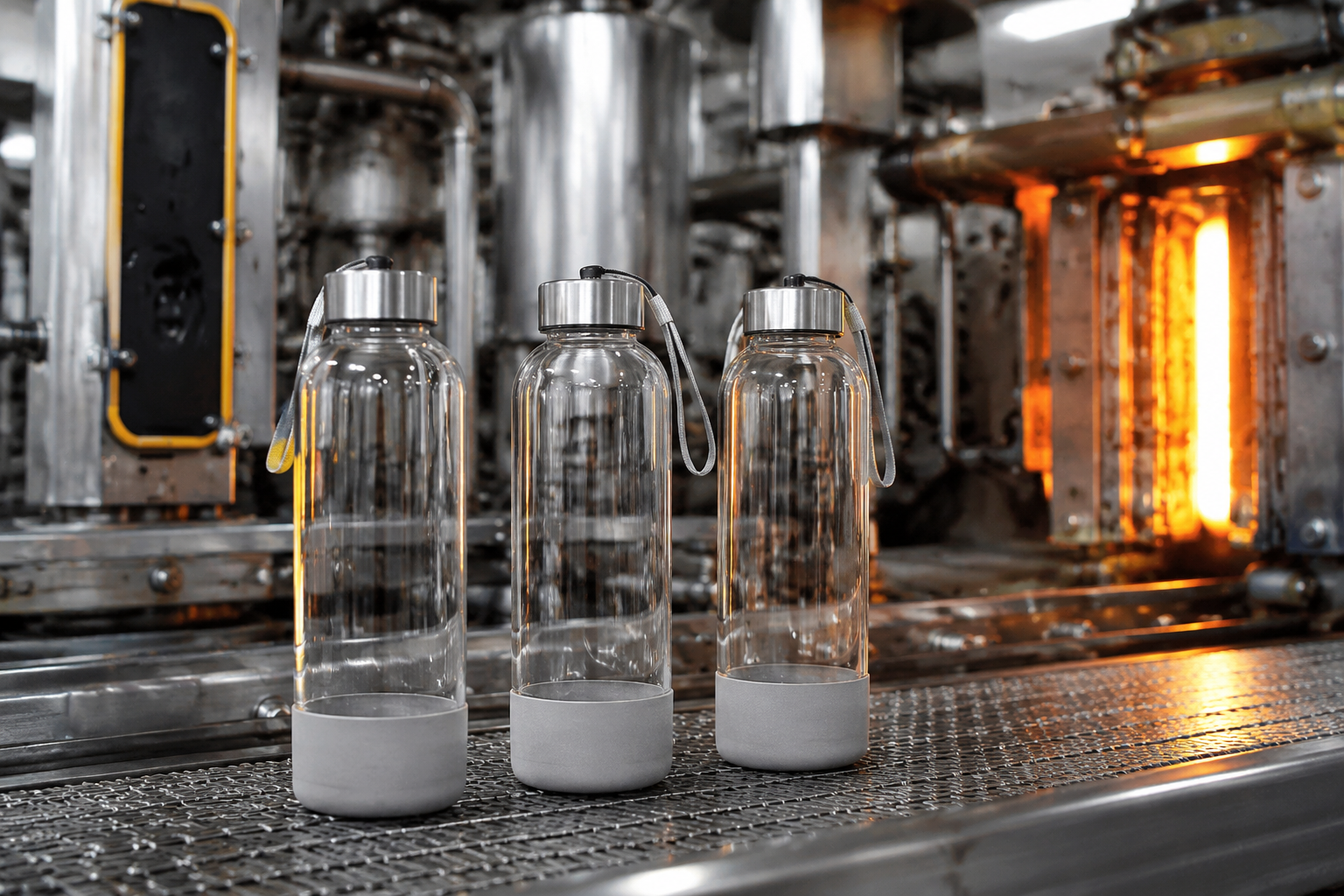
If you are placing a borosilicate glass sports water bottle custom run for a fitness brand or gym chain, do not treat it like a plain bottle buy. It is not. Glass changes the whole spec: 2.5 mm wall thickness, thermal shock tolerance, cap torque, and carton drop performance all matter more than they do on basic plastic drinkware. One weak spec sheet and we see breakage claims, delayed replenishment, and a bottle that looks premium on a listing but causes trouble in the warehouse.
The real choice is not “glass or not glass.” It is whether you want a premium retail bottle, a club merch item, or a distributor-friendly SKU you can reorder every 45-60 days. We run these jobs with the same first questions on the line: capacity, lid system, logo method, and carton protection. QC pulled the sample, checked the neck finish with a caliper, and the buyer flagged a 1 mm print shift before mass production. Get those points locked, and MOQ usually lands at 1,000-3,000 units, with FOB China pricing often around USD 2.40-5.80 depending on lid and decoration.
Start With The Use Case
I’ll rewrite this section in-place, keeping the HTML structure unchanged and tightening the prose to sound like a factory-side sales engineer.Start with use, not decoration. A gym member reaching for water between sets needs a different bottle from an online buyer paying for a premium hydration SKU. A borosilicate glass sports water bottle custom for daily gym use needs a secure grip, a lid that does not leak in a locker, and low breakage risk in bags. A retail SKU needs shelf presence, a clean shape, and packaging that survives FBA drops or pallet shipping.
For a bulk fitness water bottle program, I split the order into three buckets:
- Club merch: 600-750 ml, simple lid, low MOQ, logo on one side.
- Retail premium: better closure, sleeve or printed box, more room for decoration.
- Distributor program: repeat orders, standard mold, tight carton count.
Buyers in Zhejiang and buyers sourcing from China skip this step all the time, and we see the same mistake on the line: they spec a fancy bottle and leave the carton weak. The math does not work. A 3,000-unit order with a bad box loses margin fast once breakage starts. One PO typo we saw last month even listed 320 ml instead of 620 ml, and QC pulled the sample before packing. If the bottle is for a chain, ask the real question: is it a bulk gym water bottle for resale, a giveaway, or staff use? That choice changes print area, lid color count, and even whether we run one carton size or two.
Practical rule: if the bottle will move more than 500 km before the end user opens it, give packaging the same attention as the glass.
Choose The Right Glass Spec
I’ll rewrite the section in-place, keep the tags untouched, and tighten the sales-engineer tone with concrete factory details.Borosilicate handles thermal shock better than ordinary soda-lime glass. That is the point if your buyers pour in warm water, add ice, or bounce between hot car and cold gym bag. For sports use, 2.0 mm to 2.5 mm wall thickness is the range we run most often. Thinner starts to feel flimsy. Thicker just adds grams the buyer can feel.
For a customizable sports water bottle, lock down the neck finish and shoulder shape before sampling. A narrow neck drinks cleaner and seals easier. A wider neck makes ice loading and washing simpler, but the lid stack gets more complicated. We ask for these details up front, because the buyer will flag a PO typo later and the line will eat time fixing it:
- Glass composition declaration for borosilicate grade
- Wall thickness range and tolerance
- Annealing and stress-relief process
- Drop-test target, usually 80-100 cm with packaging
A real factory in China will not stop at “borosilicate.” They should give you the process window, the surface defect limit, and the result of a 42-45°C temperature jump test. We’ve seen this go sideways when a supplier hand-waves the spec and QC pulls the sample after cracking at the shoulder. If they cannot answer cleanly, walk. The stronger Zhejiang plants we work with usually ship above 300,000 units a month across glass and closure lines, which is the scale you want once the trial order turns into a repeat program.
Lock The Lid Before The Logo
Most buyers open with branding. That is the wrong question to ask. The lid decides leakage, hand feel, and whether the bottle survives dishwasher runs. Once we lock the lid, the logo method is straightforward. Before you approve a custom gym water bottle or custom sports water bottle, choose the closure first: screw cap, flip-top, bamboo-accent lid, or silicone sleeve with open-top drinking.
For gym and fitness use, we usually run three paths:
- Screw cap: simple, low cost, sturdy, good fit for a bulk sports water bottle program.
- Sport lid: faster drinking, but it adds parts and raises leak risk.
- Shaker-style lid: works when the bottle also serves as a supplement container, especially for a bulk shaker bottle order.
If your program needs merchandising flexibility, plan for a custom logo shaker bottle or custom shaker bottle only after the seal checks out. We saw a buyer flag a lid that looked fine in photos but leaked in a gym bag; that order never repeated. For brands chasing a premium feel, a custom made shaker bottle with a measured mesh insert, silicone gasket, and printed cup scale can work, but the hardware cost jumps 20-35% over a basic lid. If you want a customizable shaker bottle or customized shaker bottle, ask for lid samples in the exact colorway. Photo renders hide the weak spot.
Price The Order Like A Buyer
I’ll rewrite the section in-place, keep the HTML structure intact, and tune the prose to sound like a factory-side buyer note with concrete pricing and sourcing detail.Build Packaging For Breakage
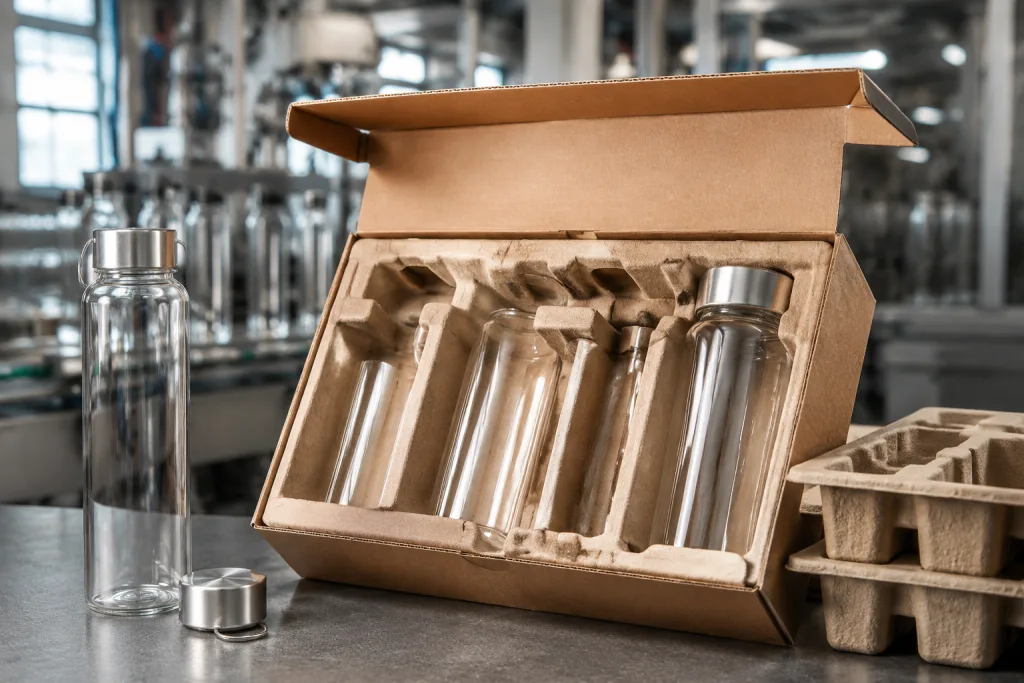
Glass breaks more in transit than in use. Packaging has to earn its place in the spec sheet. For a borosilicate glass sports water bottle custom order, we usually set a drop-test target from 80 cm for retail cartons, then go higher when the master carton goes on export pallets. If the carton fails at 5 layers in a corrugated test, the bottle is fine and the shipment is still a loss.
For gym buyers and retail chains, I treat the carton like a production item. Put these points on the PO:
- Paperboard thickness and ECT rating
- Inner tray or molded pulp protection
- Silica or anti-scratch insert, if needed
- Barcode area for FNSKU or distributor labels
That last line is the one buyers forget. If the goods go to FBA or a warehouse, the outer box has to carry the label cleanly, scan on the first pass, and stack without crushing the neck area. A customized gym water bottle or customizable gym water bottle can pass photo approval and still fail at pack-out if the bottle mouth touches the carton wall. We run this test on the line with a 1.5 mm clearance gauge, and the buyer flagged it once when the print file had the barcode box 8 mm too small. Ask for carton compression data and a packed sample video. That is basic risk control.
Control Quality Before Shipment
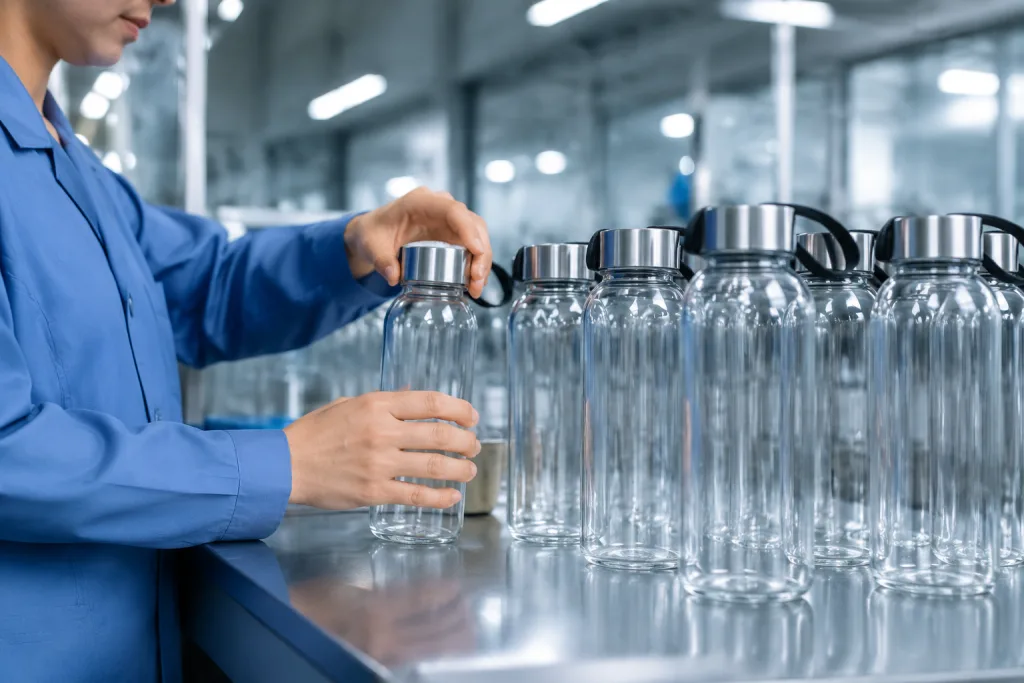
Do not accept “checked before shipment” as a quality plan. For a sports bottle program, spell out the inspection method. Our baseline is AQL 2.5 for major defects and AQL 4.0 for minor defects, with clear calls on glass bubbles, scratches, lid torque, and leakage. On one 5,000 pcs run, QC pulled the sample with a 3 N·m cap issue and the buyer flagged it before loading; that saved a headache.
Your QC checklist should cover:
- Leak test after cap closure
- Glass clarity and surface defects
- Logo adhesion or print rub resistance
- Color consistency for lid and sleeve
- Carton drop or vibration test, when relevant
Ask your supplier whether they hold ISO-based process control, BSCI audit coverage, and REACH-related material documentation. For Europe and North America, those papers are not optional when the buyer asks. We run in-line checks on the line, then final inspection photos before carton sealing; that is how we keep disputes down. If you are building a distributor shaker bottle or distributors shaker bottle program, insist on a golden sample signed by both sides. Without it, the math does not work when tone, print position, or lid fit shifts by 1 mm.
Plan Reorders, Not Just Samples
Sampling is easy. Reordering shows the truth. A borosilicate glass sports water bottle custom program should be built so the second PO moves faster than the first. Keep the mold stable, lock the print file, and leave the carton spec alone unless there is a real change. On our line, a lid-color swap is a 10-minute setup; a carton redraw burns a day. If you expect repeat volume, pick a bottle shape that can carry related SKUs, such as a custom fitness water bottle, custom sports water bottle, and a customizable sports water bottle with only small changes in lid color or logo placement.
For buyers who also run shaker programs, one supplier can support a bulk shaker bottle and a glass hydration line, but only if the factory keeps the process tight. This is the wrong question to ask: “Can you do everything?” Ask how many units each line ships per month, how many QC staff are on the floor, and what the lead time is after sample approval. QC pulled the sample at AQL 2.5 before packing, and that is the kind of detail that matters. A solid China supplier should quote 30-45 days for production and give you a clean replenishment path. If they are in Zhejiang, the closure and carton vendors are close by, which helps, but written specs still win.
For a gym chain or distributor network, build the order as a SKU system, not a pile of one-off bottles. One bottle body, three lid colors, two logo methods, one packaging standard. That keeps a distributor fitness water bottle, distributor gym water bottle, and distributor sports water bottle program under control while still giving the sales team enough room to sell. We’ve seen this go sideways when the buyer flagged a PO typo on carton quantity and the factory had to split the run; one clean spec sheet avoids that mess.
Send Your Bottle Spec For A Fast Quote
Share capacity, lid type, logo method, and target MOQ. We will price the bottle, packaging, and lead time clearly before you commit.
Frequently asked questions
What MOQ should I expect for borosilicate glass sports water bottle custom orders?
For most factories in China, a realistic MOQ is 1,000-3,000 pcs per design and color. If you want a special lid, sleeve, or printed carton, the MOQ can move to 3,000-5,000 pcs because packaging and assembly need to stay efficient. Zhejiang factories with stronger automation may accept mixed-color lids at lower risk, but they will still protect their setup cost. If your order is a true test run, ask for 500 pcs only if you accept a higher unit price, usually 10-20% more than normal.
Is borosilicate glass safe for gym and fitness use?
Yes, if the bottle is properly annealed, packed, and used within its design limits. Borosilicate handles thermal shock better than ordinary glass, which is why it is a better fit for a premium hydration SKU. For sports use, I would still specify 2.0-2.5 mm wall thickness and require a leak test plus drop-test packaging. Safety is not just the glass; it is the closure, the carton, and the handling instructions. A good supplier in China will give you material declarations and a defined QC checklist.
What decoration method works best on glass bottles?
For most buyers, silk screen printing is the most practical for a custom gym water bottle or custom sports water bottle because it is durable and cost-effective at scale. Laser engraving is possible on some cap materials or sleeves, but on glass it is usually more limited and more expensive. If you need a premium retail look, you can also use decal, frosting, or color spray, but each one changes cost and lead time. As a rule, one-color print keeps MOQ and price under control.
How much does a borosilicate glass bottle cost FOB China?
A normal FOB China range is about USD 2.40-5.80 per unit, depending on size, lid, print, and packaging. A simple bottle with basic lid and one-color logo sits near the low end. Once you add a shaker-style cap, silicone sleeve, gift box, or special carton insert, the cost climbs quickly. For distributors, do not compare unit price alone. A slightly higher FOB price with lower breakage and better carton strength often gives you a lower landed cost.
What lead time should I plan for first production?
After sample approval, 30-45 days is a normal lead time for a borosilicate glass sports water bottle custom order. That assumes the mold is ready, the packaging is finalized, and the supplier is not waiting on special components. If you need a new mold, add 10-15 days for tooling and sample correction. For repeat orders, production can be faster, especially if you keep the same bottle body and only change print or lid color. A factory in Zhejiang with stable monthly capacity can usually schedule reorders with less delay.