Key Takeaways
- Borosilicate glass usually ships at 300 ml to 1,000 ml, with 2.0 mm to 3.5 mm wall thickness for commercial refillable bottles.
- Typical MOQ from a canteen manufacturer in Zhejiang is 3,000 to 5,000 pcs, with 30 to 45 days lead time after sample approval.
- For private label, screen print and laser marking are cheaper than full-wrap decoration; expect USD 0.18 to 0.90 per unit depending on method.
- AQL 2.5 for major defects and 4.0 for minor defects is normal for export inspections on customized drinkware.
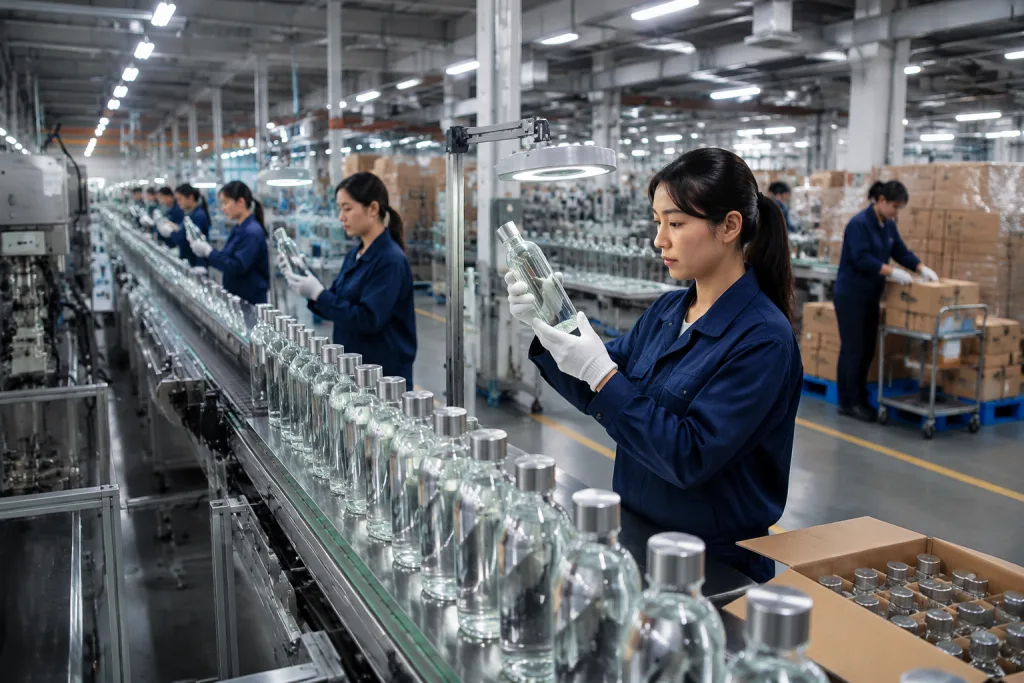
You already know the pitch. Glass looks premium, tastes clean, and moves in retail. The problem is that not every bottle survives real buyer use. A borosilicate glass refillable water bottle private label order can work as a strong line item, but only if you lock the wall thickness, closure, decoration method, and packout. Miss one point and QC will see breakage claims, slow reorder traffic, and margin that vanishes fast.
The right comparison is not “glass or not glass.” It is how borosilicate performs against other refillable formats in your channel, at your target price, and under your freight math. We run these quotes every week in Zhejiang, and the first thing a decent canteen factory sends is the spec sheet, not a sales pitch. That is the right question to ask: match the use case first, then decide whether you need a customized canteen, custom growler, or a straight borosilicate bottle with private label print.
What borosilicate really gives you
Borosilicate is not a marketing word; it is a material choice with a line-item impact. For a borosilicate glass refillable water bottle private label program, the main win is thermal stability. We run hot-fill and cold-fill checks on the same sample, and borosilicate holds up better than soda-lime glass. That matters if your buyers sell office bottles, tea bottles, or premium hydration products. It also gives a cleaner shelf look, which helps when distributors care about retail presentation and sell-through.
The trade-off is plain. Glass weighs more and takes drops worse than steel or Tritan. If your channel is grocery, gym, or travel, this is the wrong question to ask only by unit price. A 550 ml borosilicate bottle usually lands at 180 g to 260 g before closure, and once you add corrugated cartons and inserts, freight math shifts fast. We’ve seen a buyer flag a PO because the carton spec was off by 5 mm, and that kind of miss turns into breakage claims. Experienced canteen distributors watch breakage rate first.
Best fit by channel
- Retail gift sets: premium look, lower return risk when the tuck box and foam insert are built right
- Office and hospitality: clean taste, stable branding, and easy reordering at 500 pcs MOQ
- Subscription or DTC bundles: works if the carton survives a 1 m drop test and the closure stays tight in transit
Use borosilicate when you want the product to support a higher shelf price. If the brief is the lightest bottle on the rack, this is the wrong material.
Spec table buyers should use
If you are comparing a borosilicate glass refillable water bottle private label order against other customizable drinkware, start with a spec table. That is how a real canteen supplier should quote you. We run this check before tooling gets signed off. The table below is the floor, not the ceiling, and the gap between a clean order and a headache can be a 0.5 mm wall shift or a lid that starts weeping after 50 cycles.
Core comparison fields:
- Capacity: 350 ml, 500 ml, 650 ml, 1,000 ml
- Glass spec: borosilicate, 2.0 mm to 3.5 mm wall
- Lid: PP, bamboo, stainless steel, silicone gasket
- Decoration: one-color screen print, laser logo, decal, frosted finish
- Test standard: leak test, thermal shock, drop test, dishwasher cycle test
- Compliance: LFGB, FDA, REACH, food-contact declaration
For export programs out of China, ask the canteen manufacturer to show the test method, not just the result. A thermal shock claim without the actual delta, such as 120°C to 20°C, is just a number on paper. Last month QC pulled the sample on a 2,000 pcs run because the lid torque on the line was 0.3 N·m off the spec. A Zhejiang factory should hand over sample data before mass production, then match it on the approved lot. This is the wrong question to ask if the goal is shelf appeal only; the math works when the spec stays simple and the private label still looks sharp.
Private label options that matter
I’m rewriting the section in-place, keeping the HTML exactly as-is and tightening the sales-engineer tone. I’ll keep the numbers and structure, and swap out the generic phrasing for something more field-tested.
Glass versus other refillable formats
The comparison is easier once glass sits beside the other refillable formats. Borosilicate is premium, but premium does not always win the order. A custom growler for beer often needs thicker walls and a different cap than a hydration bottle. A custom canteen for hiking usually needs lower weight and better drop resistance. We run into this on the line all the time: the buyer wants the same bottle for every channel, then QC pulls the sample and the math says no. The right spec comes from the use case and the return tolerance.
| Format | Strength | Weakness | Best channel |
|---|---|---|---|
| Borosilicate glass | Clean taste, premium shelf appeal | Heavier, breakable | Retail, office, gifting |
| Stainless steel | Durable, high insulation | Higher cost, more parts | Outdoor, sports, travel |
| Tritan / copolyester | Lightweight, impact-resistant | Less premium feel | Family, school, promo |
| Aluminum canteen | Light, low unit cost | Interior lining limits perception | Canteen promotional, bulk campaigns |
For a canteen distributor, this is not a taste debate. It is margin plus damage rate. A retail buyer can take glass because the shelf price covers better packaging and slower freight; we have shipped 12,000 pcs with molded pulp trays and still kept the claim rate down. A mass promo order usually lands on aluminum or Tritan because the landed cost works and the bottles survive the trip. One buyer once flagged a PO typo on the closure color, and the whole carton plan had to be rechecked. Start with the end customer, not the factory MOQ. China and Zhejiang suppliers can make all of these, but each channel needs its own spec.
MOQ, lead time, and factory reality
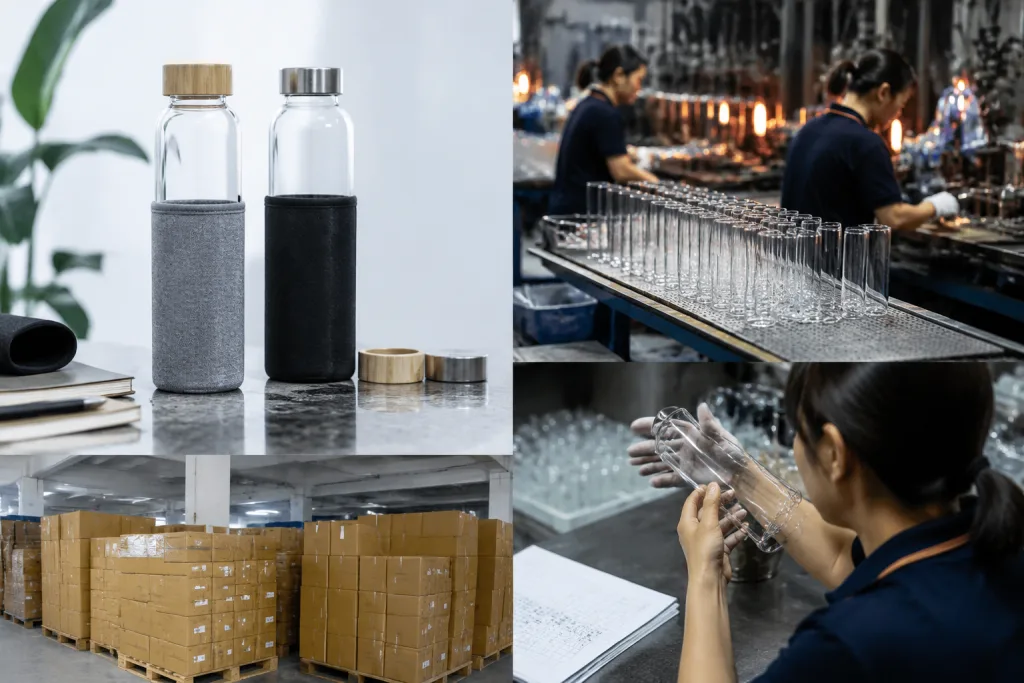
Most buyers underestimate factory discipline. A serious canteen factory in Zhejiang usually runs 2 to 4 lines and can support about 200,000 to 500,000 units per month across different drinkware categories, but your SKU still sits in one production slot. For a borosilicate glass refillable water bottle private label order, the usual MOQ is 3,000 to 5,000 pcs per design, and first lead time is 30 to 45 days after sample approval and deposit. We’ve seen the line slip when a PO typo changed the carton count from 24 to 24.0, so the small stuff matters.
Packaging and decoration move the schedule more than glass forming. A clear bottle with a one-color logo ships faster than a full custom drinkware bundle with gift box, insert card, and barcode label. If you are comparing canteen suppliers, ask three direct questions: what is the minimum for one color, what is the MOQ for a second color, and how many extra days does a new mold add. Good canteen manufacturers in China answer cleanly. Weak ones dodge the question. That is usually the whole story.
What to ask before approval:
- Sample lead time: 5 to 10 days
- Mass production lead time: 30 to 45 days
- Carton drop test height: 70 cm to 100 cm
- Inspection standard: AQL 2.5 major, 4.0 minor
If your business runs on seasonal buy windows, those numbers matter more than a nice render. QC pulled the sample, checked the 70 cm carton drop, and found one loose insert on the first run. A canteen vendor that misses ship week by 14 days can wipe out the margin on an otherwise solid private label program. The math does not work.
How to position it by buyer type
The same bottle can sell in five channels, but the channel decides the story. A borosilicate glass refillable water bottle private label line works best as a premium daily-use item, not as a hard-use sports bottle. We’ve seen this go sideways when a gym buyer asks about drop resistance. A desk buyer usually cares about clean taste, logo space, and whether the bottle looks right next to a laptop.
Here is the use-case fit that usually works:
- Brand owners: use it for premium retail packs and online bundles
- Distributors: use it as a mid-ticket drinkware line with repeat order potential
- Promotional buyers: use it only when the logo story matters more than impact resistance
- Gift and lifestyle accounts: pair it with tea infusers, sleeves, or a rigid box
For canteen customizable programs, the packaging often carries as much weight as the bottle. A fitted insert can cut breakage by 20% to 35% in transit; QC pulled the sample and found the top corners taking the hit in a 5-layer carton. If you are sourcing from Zhejiang, ask for a sample ship test to your warehouse or 3PL, not just the factory’s internal carton test. The buyer flagged it after one PO had a carton typo on the outer case count, and that is where the truth shows up.
In practical terms, the best buyer fit is a company that wants a polished bottle, can live with a higher freight ratio, and wants a clean premium story over brute durability. That is the math. The line still wins when the account is selling customized canteen or customized drinkware programs into retail, office, or gift channels.
Request a private label spec quote
Send your target capacity, logo file, and sales channel. We’ll quote MOQ, lead time, packaging, and landed cost from China.
Frequently asked questions
What MOQ should I expect for borosilicate glass private label bottles?
For a standard borosilicate glass refillable water bottle private label order, expect 3,000 to 5,000 pcs per design and color. If you add a new mold, special lid, or premium box, some canteen manufacturers in China will raise that to 8,000 pcs. Sampling is usually 1 to 3 pcs, with 5 to 10 days for pre-production samples. If your artwork changes often, ask for a revision fee upfront. A clean one-color logo is the easiest way to keep MOQ manageable and protect your margin.
How do I reduce breakage in shipping?
Start with packaging, not insurance. A good canteen factory should offer molded pulp, EVA, or insert trays that hold the bottle tight and keep glass off the carton wall. For export cartons, ask for 5-layer corrugated board and a 70 cm to 100 cm drop test. In many programs, the breakage rate drops by 20% to 35% when the insert is matched to the bottle shape. If you are shipping to Amazon or a distributor warehouse, ask for master carton sizing that fits pallet layers efficiently.
Is borosilicate better than soda-lime glass?
For refillable bottles, yes, usually. Borosilicate handles thermal shock better and is less likely to crack when a customer adds hot liquid or moves between temperature extremes. A useful spec is a 120°C to 20°C thermal shock window, but only if the factory actually tests it. Soda-lime is cheaper, yet it is more likely to fail in daily use. If you are building a premium canteen custom line for retail, borosilicate is the safer private label choice.
What decoration method lasts longest on glass?
Laser marking on a metal lid or cap part lasts very well, and a properly fired screen print on the glass body is also durable. If you need full-color branding, decals work, but they are more sensitive to abrasion and wash cycles. For most customized canteen and customized drinkware programs, one-color screen print is the best balance of cost and longevity, usually around USD 0.18 to 0.35 per unit per color. If the bottle will be dishwashed often, keep the design simple and avoid edge-heavy artwork.
Can I sell this as retail or promotional drinkware?
Yes, but the strategy changes. For retail, you want premium packaging, a clean logo, and a product story that supports a higher shelf price. For canteen promotional orders, you want lower decoration cost, quicker lead time, and straightforward carton labeling. A distributor canteen program often needs both: retail-ready appearance with bulk packing efficiency. Many canteen suppliers in Zhejiang can support both formats if you define the target channel before sampling. That is the difference between a workable line and a slow-moving SKU.