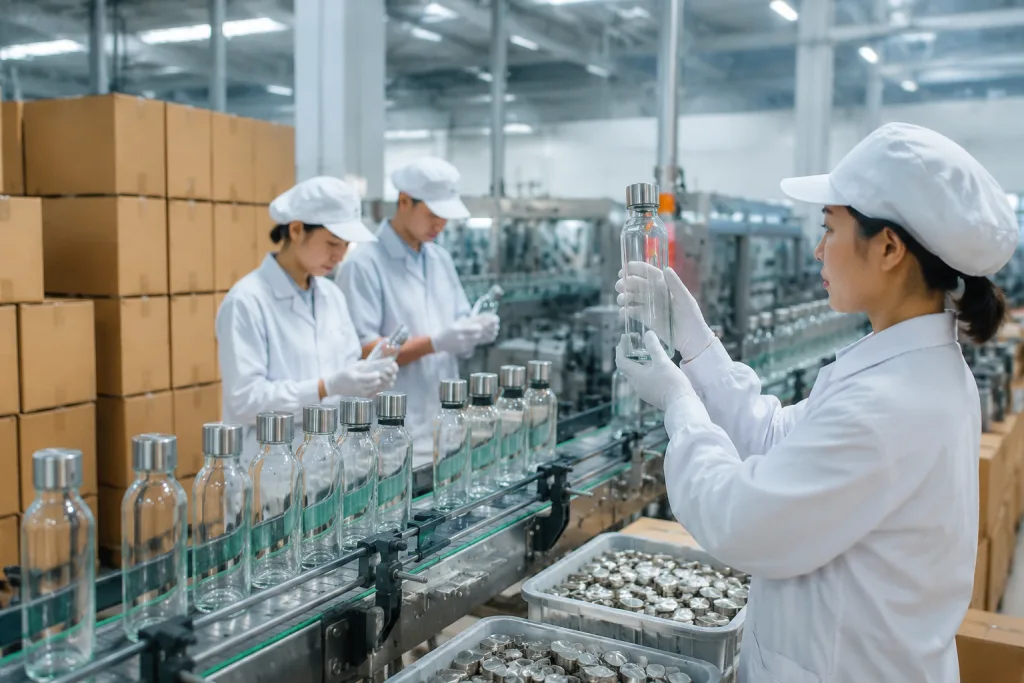
Key Takeaways
- Most borosilicate glass bottle MOQs start at 3,000-5,000 pcs, with 30-45 days lead time after sample approval.
- A practical bottle spec is 2.0-2.5 mm wall thickness, tempered or annealed depending on use, and a cap with a tested leak rate of 0.5% or less.
- For export, ask for REACH, food-contact declarations, and AQL 2.5 / 4.0 inspection terms before you pay the deposit.
- A serious Zhejiang factory should show monthly capacity, decoration methods, and packaging drop-test results, not just a catalog.
If you are buying a borosilicate glass refillable water bottle custom, the hard part is not the design. It is telling premium from a bottle that will crack in freight, on the filling line, or after the first rough customer use. Glass looks easy until you start checking wall thickness, thermal shock, cap sealing, decoration, drop risk, and whether the supplier can repeat a 5,000-unit reorder on batch two. We have seen that number blow up a program.
In China, especially in Zhejiang, you will see plenty of factories calling themselves a canteen factory, canteen manufacturer, or canteen supplier, but not all of them are built for custom drinkware with export control that holds up. If you want a borosilicate bottle that can work as custom canteen, custom growler, or customized drinkware for retail or promo, you need a sourcing checklist, not brochure talk. A real factory will quote MOQ, lead time, and test standards straight away. The buyer flagged it when those answers were missing.
What are you actually buying?
When buyers say they want a borosilicate glass refillable water bottle custom, they are usually talking about three different buys: a 500 ml retail bottle, a branded reusable bottle for corporate programs, or a light custom growler for beverage service. Borosilicate is not soda-lime. It takes thermal shock better, looks cleaner on shelf, and carries a higher ticket. It also weighs more, and a dropped carton on the line tells you fast whether the spec was honest.
Start with the use case. A 500 ml bottle with a stainless cap and silicone seal fits office use. A 750 ml sports bottle with a sleeve fits e-commerce better. A 1 L shape works as a customized growler or customized drinkware item for hospitality. If you need canteen custom programs for distributors, say that plainly. A canteen distributor does not buy “premium bottle” language; they buy dimensions, closure type, carton count, and decoration method. We had one buyer flag a PO that said “large size” and nothing else. That order stalled for 12 days.
Ask the supplier to confirm these basics in writing:
- Capacity: 350 ml, 500 ml, 750 ml, or 1,000 ml
- Wall thickness: usually 2.0 mm to 2.5 mm
- Cap material: PP, bamboo, stainless steel, or aluminum
- Seal: silicone ring, tested for hot-fill and leak resistance
- Packaging: bulk, color box, or mailer ready for distributor drinkware channels
If the factory cannot turn your use case into a spec sheet, keep looking. In Zhejiang and across China, the better plants know the gap between a canteen promotional item and a retail-ready bottle. The weak ones quote low and hope the sample saves them. QC pulled the sample with a 2.3 mm wall and a cap torque issue; that is the kind of detail that decides whether we ship or scrap.
Which spec details matter most?
For borosilicate glass, the spec sheet protects margin. Buyers often spend days on logo placement and miss the numbers that drive breakage and complaints. Start with diameter, height, neck finish, and wall thickness. A 2.0 mm wall works for lighter retail bottles; 2.5 mm feels sturdier but adds weight and freight cost. On a 20,000-unit order into North America, that extra gram count shows up in the carton rate.
Then check closure performance. A screw cap with a silicone gasket should pass an inverted leak test after 24 hours; QC pulled that sample on the line with a 1 L fill, and the bad batch showed seepage at the thread, not the gasket. If the bottle is for cold brew, infused water, or a customized growler concept, ask for pressure tolerance and carbonation rating. Not every canteen customized for water is safe for fizzy use. That is a procurement miss, not a design issue.
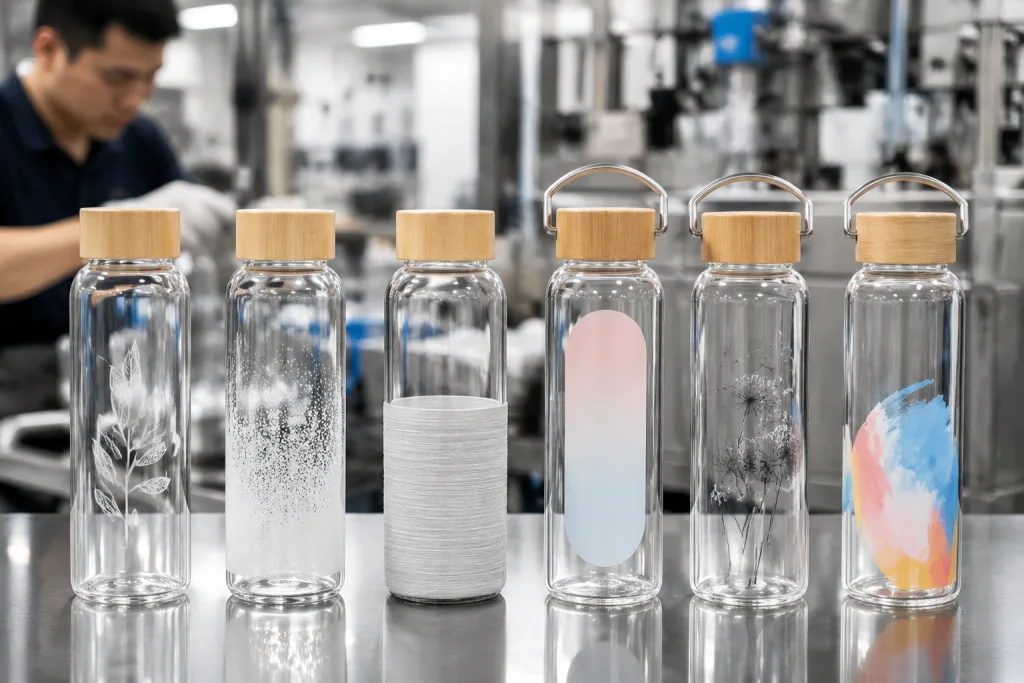
Decoration changes the spec too. Silkscreen is economical for one or two colors; laser engraving fits metal parts; decals and frosting alter the glass surface and can cut yield. If the buyer flagged a PO typo on print area or color count, the quote stops being apples to apples. Compare the same print size, same color count, and same carton method before you sign off on a canteen customizable program or a fully customized drinkware line.
Useful checkpoints for your RFQ:
- Glass composition: borosilicate 3.3 if the factory can document it
- Color: clear, amber, smoke, or tinted custom color
- Logo tolerance: ±1.5 mm on print registration
- Carton strength: 5-ply or 7-ply for export lanes
- Packing drop standard: 80 cm or 100 cm depending on channel
If you need a canteen factory to support multiple SKUs, ask for a shared parts strategy. One cap across three bottle bodies cuts SKU clutter, and we have seen that save a distributor from a 3,000-piece cap MOQ fight later on. That is the right question to ask.
How much should you budget?
Pricing for a borosilicate bottle custom order comes down to capacity, decoration, cap build, and packaging. For a 500 ml clear bottle with a basic PP cap, FOB China usually starts around USD 1.20 to USD 2.20 at 3,000-5,000 pcs. Put on a bamboo cap, stainless steel cap, or custom tooling, and the quote jumps into the USD 2.50 to USD 4.50 range fast. Add a premium retail box and you are looking at another USD 0.30 to USD 0.80 per set. That is normal export math, not luxury pricing.
Buyers often ask a canteen manufacturer for the “best price” and only later find the quote left out test fees, master carton reinforcement, and spare gaskets. We have seen that go sideways on the line. A 2 mm carton wall or a missing gasket bag can turn a clean quote into chargebacks. Ask for a full landed-cost breakdown: bottle, cap, print, packaging, carton, and freight assumptions. If you compare canteen suppliers across Zhejiang and other regions in China, keep the Incoterm, carton count, and sample approval standard identical, or the comparison is junk.
A practical budget rule: if the bottle is going to Amazon FBA, retail shelves, or distributor drinkware channels, keep a 12% to 18% reserve above factory price for compliance, labeling, and damage allowance. For a private label B2B program, you can run tighter if the factory keeps output stable. QC pulled the sample on a 304 stainless cap lot last month and caught a thread issue before shipment; that is the sort of detail that saves margin. A serious plant in Zhejiang should give you monthly capacity, such as 300,000 to 500,000 units/month across glass and accessory lines, so you know whether it can cover the pilot run and the re-order.
Low quote plus vague specs usually means one of two things: the supplier missed something, or you will pay for it later in defects and chargebacks.

What quality checks should you demand?
For custom drinkware, quality is not one test. It is a chain of controls. Start with incoming glass checks, then forming dimensions, then decoration, then assembly, then final packing. If a factory says “we do QC” and stops there, ask for the standard. For export runs, AQL 2.5 for major defects and AQL 4.0 for minor defects is a normal baseline. On one order, the buyer flagged a 1.2 mm mouth deviation, and that kind of miss will show up on the line fast. For premium retail, tighter limits make sense.
Glass should be checked for bubbles, chips, internal stress, and finish consistency. Caps need torque checks, usually with a torque tester set to the target N·cm. Silicone seals need compression stability. Cartons need drop testing. A good canteen factory can show photos or reports from these checks without hesitation. If they cannot, they are probably a trading layer, not a direct canteen manufacturer. That works for some buyers. It is the wrong question to ask if you need repeatable quality on a borosilicate glass refillable water bottle custom project.
Ask for documentation that fits the market:
- REACH and food-contact declarations for Europe
- ASTM-aligned test references where applicable
- ISO-based internal quality system evidence
- Third-party inspection options before shipment
- Batch traceability by production date and carton code
For canteen distributors and canteen vendors, the real question is not whether one sample passed. It is whether the same result will repeat on the next 10,000 units. We have seen that go sideways when a PO typo changed the cap color code on a 5,000-piece run. A Zhejiang exporter with disciplined processes will beat a cheap but unstable source in China every time.
Which customization methods hold up?
Customization has to fit the job. It should not fight the bottle. On clear borosilicate glass, silkscreen gives the best cost-to-impact ratio for a one-color logo, and we run that setup a lot on the line. If the buyer wants a stronger shelf read, frosting, gradient spray, or a two-stage print lifts perceived value fast. Laser engraving works on metal caps or sleeves, but it does not mark bare glass the way some buyers expect. We saw one PO flag this after QC pulled the sample and the logo came back too faint after wash testing.
For canteen custom and customizable canteen programs, keep the artwork simple if yield matters. Fine lines and tiny type on curved glass lose registration, especially on a 40 mm print area. A 40 mm-wide logo often prints cleaner than a full-wrap graphic that looks sharp on a mockup and falls apart in production. If you are building customizable drinkware ranges for distributors, standardize the body and change only the cap color, print color, or sleeve. That keeps the SKU count under control. The math does not work any other way.
When buyers ask for custom canteen, custom growler, or customized growler options, I push sample-first development. Approve one blank sample, one printed sample, then one packed sample. That sequence catches most mistakes before mass production. We had a buyer flag a 2 mm typo shift on a pack label only because they checked the packed sample, not just the artwork file. It also keeps a canteen supplier and a canteen vendor aligned on what “approved” means. Do not approve from a screen render alone.
Think about compatibility too. If the bottle will sit beside other customized drinkware items, match the visual system across the line: same Pantone family, same carton language, same barcode placement. One loose detail can make the set look off. We ship mixed programs like this all the time, and the carton print on one 500 ml bottle can break the whole presentation if the barcode sits 8 mm too high. That matters more than most first-time buyers realize.
How do you source the right factory?
Good sourcing starts with the supplier type. A canteen vendor may carry a wide catalog. A canteen supplier may handle export paperwork and modest customization. A canteen manufacturer or canteen factory should show tooling, line capacity, and process control. For a borosilicate glass refillable water bottle custom order, that last one is the right call if you want repeatable output. We run into this all the time: the buyer asks for “factory price,” then the sample comes from a trading desk, not the line. Ask for MOQ, tooling cost, lead time, and sample turnaround in plain language.
A practical first RFQ should ask for:
- MOQ by SKU and by color
- Sample lead time: usually 7-15 days
- Mass production lead time: usually 30-45 days
- Payment terms: deposit and balance before shipment
- Inspection terms and rework policy
If you are buying for Europe or North America, ask where the factory has shipped before and whether they can support warehouse labels, FNSKU, and carton marks if you sell through Amazon FBA. That matters for distributor drinkware and distributor growler programs too. QC pulled the sample last week on a 28 mm neck finish, and the buyer flagged a carton mark typo before it hit packing. If the supplier says yes to everything without asking about your market, be cautious. Real factories in Zhejiang and elsewhere in China ask questions back. They want the spec before they lock capacity.
One more point: if you are comparing a canteen distributor against a direct factory, do not assume the lowest quote wins. The distributor may move faster on a 300-piece trial, while the factory is better on repeat custom canteen projects above 5,000 pcs. The math does not work any other way. Decide based on your reorder path, not just the first order.
What should your checklist cover?
Use a checklist before you approve any custom drinkware order. We run into trouble when buyers skip this step and trust the sample alone. A borosilicate glass bottle can look simple on the table, then crack in a carton drop test or leak after a 2 kg parcel shake. Last month QC pulled a sample with a 1.2 mm neck mismatch; the PO still said 450 ml, so the buyer flagged it before we shipped.
Your checklist should stay short enough to use and strict enough to matter:
- Confirm material grade, wall thickness, and capacity
- Approve one physical sample for form and finish
- Test lid torque, leak resistance, and drop packaging
- Verify compliance docs for your market
- Lock artwork, carton marks, and barcode format
- Agree on AQL level and inspection responsibility
- Confirm reorder tooling retention and color consistency
For a canteen promotional campaign, the usual mistake is rushing print because the launch date is fixed. That is the wrong question to ask. Freeze the artwork first, then let the factory in China or Zhejiang run a controlled pilot batch of 300 to 500 pcs. We have seen this go sideways when the carton mark typo turned a clean shipment into a warehouse claim. If you want the bottle to work as a custom canteen, customized canteen, or distributor canteen program, the checklist keeps the order from drifting into a generic private-label mess. Keep the buyer-side checklist on file, use it on every RFQ, and you will get fewer surprises on the dock and fewer excuses from suppliers.
Request a factory-ready custom bottle quote
Send your capacity, cap type, logo, and target market. We will quote the spec, MOQ, lead time, and compliance details without guessing.
Frequently asked questions
What is the usual MOQ for a borosilicate glass refillable water bottle custom order?
Most factories quote 3,000 to 5,000 pcs per SKU, especially if you want a custom cap, print, or color. Some canteen suppliers will accept 1,000 pcs for stock shapes, but pricing is usually higher by 15% to 30%. If you need multiple colors, ask whether MOQ applies per color or per total order. For a first project, 2 sizes and 2 print variants can quickly become 4 SKUs, so confirm the real minimum before you approve samples.
How long does production usually take in China?
Sample lead time is often 7 to 15 days if the bottle shape already exists. Mass production is usually 30 to 45 days after sample approval and deposit, assuming the factory is not adding new tooling. If you need new molds, decoration tooling, or special packaging, add 10 to 20 days. A Zhejiang canteen factory with steady capacity should tell you the schedule upfront and explain whether the line can handle 300,000+ units/month or only smaller runs.
Is borosilicate glass safe for hot and cold drinks?
Yes, borosilicate glass is preferred for better thermal resistance than ordinary glass, but the cap, seal, and bottle geometry matter too. A bottle with a 2.0 mm to 2.5 mm wall can handle normal hot and cold beverage use if it is designed properly. Do not assume it is safe for carbonation unless the supplier confirms it. If you want it to function as a custom growler or customized growler, ask for pressure and leak testing, not just appearance approval.
Which compliance documents should I request for Europe and North America?
For Europe, ask for REACH-related declarations and food-contact documentation. For North America, ask for food-contact compliance statements and any relevant test references. If the bottle has coatings, inks, or silicone parts, the supplier should document those materials too. Many buyers also ask for ISO-based quality process evidence and third-party inspection reports. If the order is going through a distributor drinkware channel, keep the file clean and easy to share with your retailer or compliance team.
Should I choose a factory or a distributor for this product?
If you need repeat custom drinkware, a direct canteen manufacturer or canteen factory is usually better because you get clearer control over tooling, artwork, and lead time. If your order is small, urgent, or mixed across many SKUs, a canteen distributor or canteen vendor may be easier to work with. For recurring programs above 5,000 pcs, direct factory sourcing in China often gives you better pricing and more stable quality. For a first launch, get quotes from both and compare the same spec, not just the unit price.