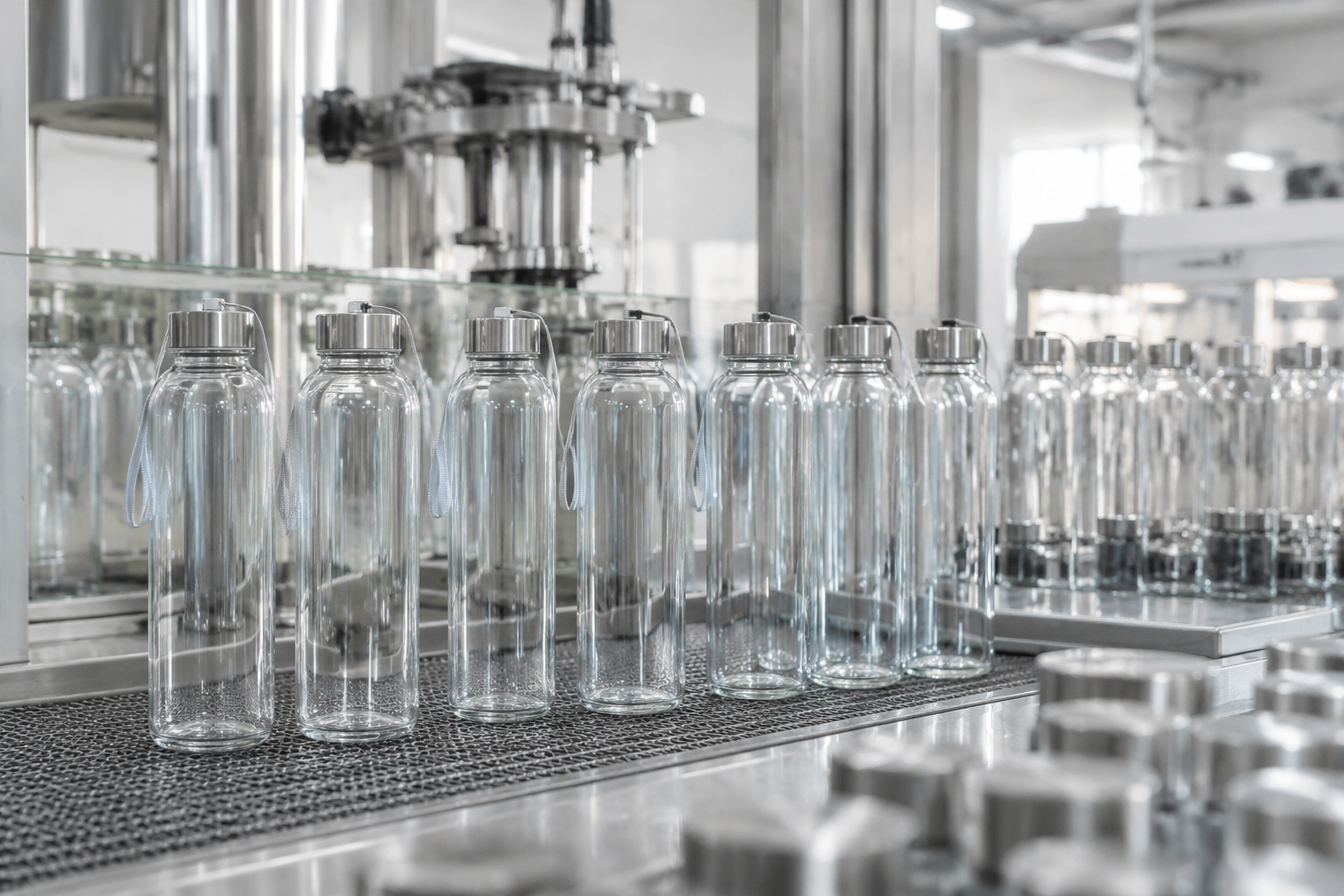
Key Takeaways
- Typical MOQ for borosilicate glass refillable water bottle bulk starts at 3,000 units per SKU; common lead time is 25-35 days after sample approval.
- A 2.5-3.0 mm wall and tempered borosilicate body usually cost 15-30% more than soda-lime, but they cut breakage risk in transit.
- FOB China pricing often lands at USD 1.45-3.20 per unit depending on lid, capacity, and decoration; premium sets go higher.
- For export programs, ask for AQL 2.5/4.0, REACH/CPSIA support, and drop-test packaging before you commit to canteen wholesale or drinkware wholesale.
If you are sourcing a borosilicate glass refillable water bottle bulk order, the bottle is not the hard part. The hard part is choosing a spec that ships clean, stays inside margin, and does not turn into complaint emails after the first lot lands. On paper, glass looks straightforward. In the packing room, 1.5 mm versus 2.0 mm wall thickness, a lid torque check, decoration limits, and carton drop strength change the whole quote.
For procurement managers and brand owners, the real comparison is borosilicate glass against stainless, Tritan, or soda-lime, then the actual use case: daily hydration, office gifting, premium retail, or a canteen program. We run export orders out of Zhejiang, and QC pulled the sample on a 1.2 m drop test before one buyer signed off, because this is the wrong question to ask if the spec still moves after approval. Buyers come in with a price target, then the math shows the bottle spec controls breakage, freight, and repeat orders.
Borosilicate vs. other bottle builds
I’ll keep the tags and table intact, then rewrite the prose to sound like a factory-side sales engineer with tighter, more specific sourcing language.When you compare a borosilicate glass refillable water bottle bulk program with stainless steel or Tritan, the real question is not “which material is better.” It is which one fits the margin, the retail channel, and the brand story. Borosilicate gives a cleaner look, stronger thermal shock resistance, and a premium read that works for wholesale drinkware, retail gifting, and private label launches. It is heavier than steel and chips easier, so freight and carton design matter more. We run break tests on the line, and a 1.8 m drop onto a corner is where weak pack-outs show up fast.
Here is the practical split. If the buyer wants a lightweight gym bottle or commuter bottle, borosilicate is usually the wrong call. If the program is premium hydration, tea infusions, or office use, glass wins on shelf presentation. For bulk drinkware programs where the retailer wants a higher ticket item, glass often moves faster than plastic when the packaging looks serious. A real factory in Zhejiang should show packed-carton damage assumptions and the 500 pcs MOQ split, not just the ex-works price. We’ve seen this go sideways when the PO says “safe pack” and nothing else.
| Material | Best fit | Typical FOB USD | Risk |
|---|---|---|---|
| Borosilicate glass | Premium retail, office, gifting | 1.45-3.20 | Breakage if packed poorly |
| Stainless steel | Travel, sports, insulation | 2.10-5.80 | Higher tooling and coating cost |
| Tritan / copolyester | Lightweight daily bottle | 1.20-2.80 | Perception is less premium |
If you need a broader portfolio, some buyers run stainless for the canteen bulk program and keep borosilicate for premium SKUs. That split usually makes more sense than trying to make one material cover every channel. The math does not work otherwise.
Spec table that buyers actually use
I’ll rewrite the prose to sound like a shop-floor sourcing note, keep the HTML structure intact, and make the spec table more buyer-ready without changing the tags.Most sourcing misses start with a vague spec sheet. We run comparisons on the same fields every time: body thickness, mouth size, lid type, seal material, and decoration method. If one supplier quotes a beer tumbler bulk style bottle with a loose gasket and another comes back with a tighter cap at a higher price, the cap is usually the part that pays back. Same story on a bulk growler or wholesale growler line. The lid and carton do real work.
| Spec | Recommended range | Why it matters |
|---|---|---|
| Body thickness | 2.5-3.0 mm | Keeps the bottle light enough for freight while holding up on the line |
| Capacity | 350 ml, 500 ml, 750 ml | These are the sizes buyers reorder most often for retail and promo runs |
| Lid seal | Food-grade silicone, 50-60 Shore A | QC pulled the sample and leak risk drops when the seal sits in this range |
| Drop test | 1.0 m to 1.2 m packed | Gives a real check on export carton strength before you ship |
| AQL | 2.5 major / 4.0 minor | Matches the acceptance level we use for mass orders |
For alcohol flask bulk, alcohol flask in bulk, or alcohol flask wholesale bulk requests, add closure torque and odor control to the list. A bottle that looks clean and leaks on arrival is the wrong win. For canteen wholesale and wholesale canteen programs, insist on sample parity: the approved sample has to match the mass run for glass thickness, cap color, and print position. We’ve seen this go sideways when a PO typo changed the lid code by one digit.
Use-case fit by channel
I’ll rewrite the prose in-place, keep the HTML structure unchanged, and make it sound like a factory-side sales engineer wrote it.The cleanest way to spec a borosilicate glass refillable water bottle bulk order is to start with the channel, not the decoration. Retail buyers want shelf pull, distributors watch claim rates, and procurement teams care about repeatable replenishment. We run this split every week on the line. A bottle that sells in one channel can fail in another, so compare use case first and print second.
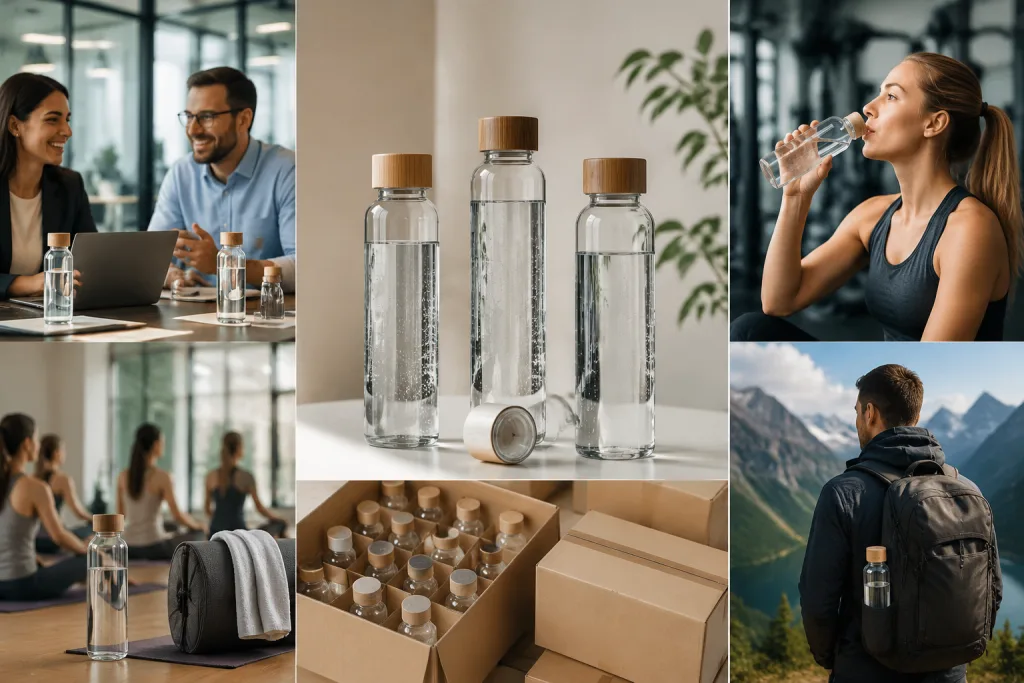
- Premium retail: 500 ml bottle, bamboo or stainless cap, one-color logo, rigid window box.
- Corporate gifting: 350 ml to 500 ml, printed sleeve, individual carton, insert card.
- Office pantry: 750 ml, wider mouth, dishwasher-safe mark, leakproof lid.
- Tea and wellness: Infuser insert, borosilicate body, removable stainless filter.
For beer growler bulk, beer growler in bulk, or beer growler wholesale bulk programs, the spec sheet changes fast. Neck finish, handle strength, and closure style carry more weight than they do on a plain water bottle; QC pulled a 2.5 mm closure sample last month and the buyer flagged the wobble. A beer tumbler wholesale SKU needs stacking, washability, and shelf impact checked in the same run. If your assortment includes growler bulk or wholesale growler items, keep them in a separate spec family so the MOQ math stays clean. The wrong question is “what is the lowest landed cost?” The real question is whether the bottle survives the channel you sell into.
Pricing, MOQ, and margin math
I’m rewriting the section in-place, keeping the HTML exactly as-is and tightening the sales-ops language. Next I’ll make the pricing and margin math sound like a factory-side quote discussion, with one concrete floor detail per paragraph.For most Zhejiang factories, the workable start point for borosilicate bottle production is 3,000 units per design. At 5,000 units, we get better room on carton print and lid sourcing. A standard 500 ml model with basic screen print usually sits at USD 1.45-2.10 FOB China; a premium set with bamboo lid, sleeve, and infuser runs USD 2.60-3.20. Laser engraving, custom carton art, or mixed-color caps add setup charges, and the line needs more time because the artwork proof and cap sorting are not free.
The margin math is straightforward. A bottle that costs 18% more but cuts breakage from 3% to 1% can land cheaper. We saw this on a 20 ft trial where QC pulled the sample pallet after one carton failed the drop test at 80 cm. This is the wrong question to ask: do not stop at unit price. Ask for packed-carton simulation, not just loose samples. Too many factories quote a clean ex-factory number and leave the pack-out risk off the sheet. Push for one quote that includes master carton spec, inner protection, and palletization. For sea freight drinkware bulk, that detail decides whether the deal holds.
At our Hangzhou facility in Zhejiang, monthly output reaches 180,000 units across glass and steel drinkware, with 25-35 day lead times for standard borosilicate runs after sample approval.
If you are comparing canteen wholesale against drinkware wholesale or bulk drinkware programs, use total landed cost per sellable unit, not FOB alone. Add 0.5%-2.5% for breakage, 1-3% for rework, and the freight uplift that comes with glass weight. We once caught a PO typo where the buyer wrote 5000 pcs but the carton mark said 5,000 sets; that kind of mismatch burns a week. That is the number your margin team actually needs.
Decoration and compliance choices
I’ll rewrite just the prose inside the existing tags, keep the structure intact, and make it sound like a factory-side sales engineer wrote it.Decoration is where a clean quote can turn messy. Borosilicate glass takes silkscreen, decal, acid etch, and laser marking in different ways. If the art has hairline text or a fade, we ask for a production sample, not a PDF. On a 500 pcs run, one-color silkscreen is usually the safest and lowest-cost route. Laser engraving fits metal lids; on the glass body, it only works if the design stays simple.
Compliance is just as important. For North America and Europe, ask for food-contact declarations, REACH, LFGB support where required, and CPSIA if the order is for kids or family channels. We also ship ink and silicone test reports for export programs. If you are sourcing wholesale canteen or wholesale drinkware from China, keep the paper trail tight: approved artwork, approved sample, signed PO, and an inspection spec tied to AQL 2.5. The buyer flagged a typo in the PO once, and it saved a reprint.
- Silkscreen: Best for 1-2 colors, stable cost, fast repeat orders.
- Decal: Better for detailed art, but higher reject risk if curing is poor.
- Laser on lid: Clean premium look for bamboo or stainless closures.
- Etch-style effect: Good for minimalist branding and gift sets.
That same rule applies if you buy beer tumbler in bulk or beer tumbler wholesale bulk lines. The decoration method has to match wash cycles and shelf price, not just the mockup your designer likes. We’ve seen that go sideways after 12 dishwasher rounds, and the line tells the truth fast.
Inspection, packaging, and freight
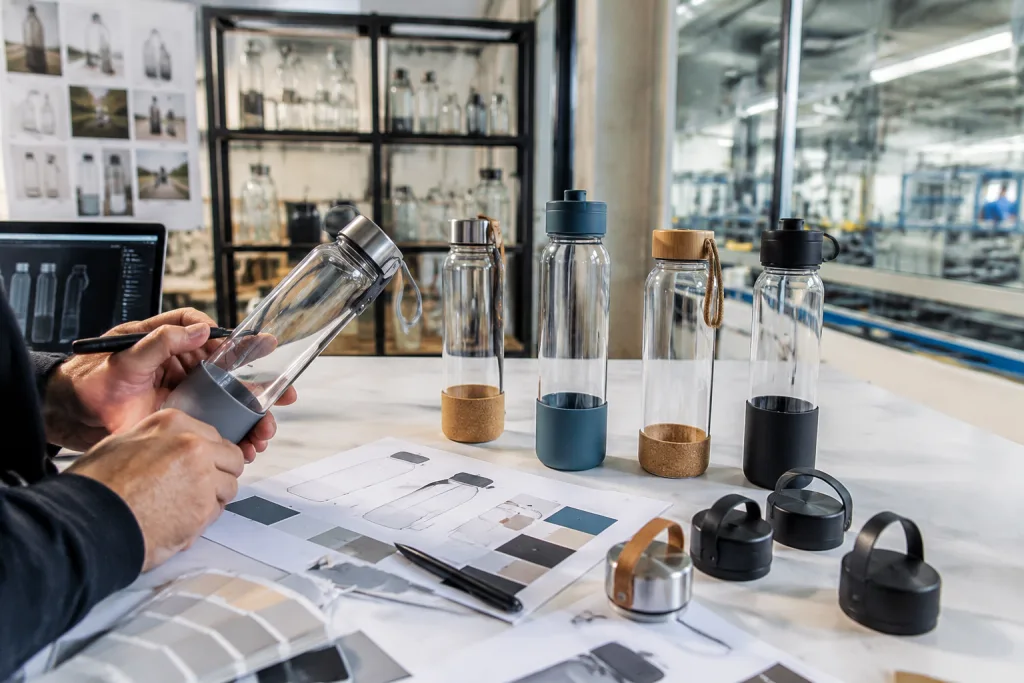
Glass lives or dies in the packout. A strong bottle with weak cartons still shows up broken. For borosilicate glass refillable water bottle bulk shipments, we ask for inner protection as a separate spec, divider crush data, and export carton compression numbers. A 5-ply inner box and 7-ply master carton are standard on mid-premium glass bottles, and we’ve seen them hold up better on 18-day ocean lanes than on mixed air-and-sea moves. If the destination warehouse runs Amazon FBA, carton size and label placement are not side issues.
Inspection should cover body uniformity, rim chips, lid torque, leak test, and print alignment. AQL 2.5 for major defects is normal, but premium retail buyers often tighten that internally. QC pulled the sample at 30 pcs, and the buyer flagged one lid that backed off under torque. For each batch, ask for carton photos and a random-drop test on a finished case. If you are buying in alcohol flask wholesale or alcohol flask wholesale bulk formats, fragrance retention, seal integrity, and finish defects need the same discipline. Cheap checks cost more later.
On freight, borosilicate is denser than Tritan and often heavier than a comparable steel bottle with a thin wall. That changes cube and freight more than first-time buyers expect, and the math does not work if you guess. We run SKU grouping by weight class, then build pallet counts and carton plans off that, especially when the PO has a typo on net weight and the forwarder catches it late. If you are also sourcing bulk canteen items or a growler wholesale line, keep the cartons sorted by weight band so your booking and warehouse intake stay clean.
Where this bottle wins
The strongest use case for a borosilicate glass refillable water bottle bulk order is premium hydration with a clean, reusable story. We ship these for 500 ml and 750 ml programs when the buyer wants to see the contents, add a tea infuser, or sell a giftable bottle that still works on a desk. It fits subscription boxes, wellness brands, and office pantry programs. Simple use case.
Where it loses is just as important. If the customer wants rough outdoor use, a sub-$2 target, or insulated performance, stainless is the better call. We’ve seen glass go sideways in heavy discount retail when the carton spec was thin and the drop test came back ugly at 80 cm. For distributors handling bulk drinkware, keep borosilicate in the premium lane and use canteen bulk or bulk growler stock for the price-driven accounts. The math does not work any other way.
In Zhejiang, China, we see the best results when buyers treat the bottle as a system: body, closure, print, carton, and freight plan. QC pulled the sample on a line with a 0.8 mm wall check, and one PO typo on the carton count cost a week. That is the difference between a cheap quote and a sellable program. If you want the low-risk version, ask for a sample pack, a packed-carton test report, and a firm MOQ before you place the first PO.
Request a sample pack and FOB quote
Send your target capacity, logo format, and carton spec. We will match the right borosilicate build, pricing, and lead time for your program.
Frequently asked questions
What MOQ should I expect for borosilicate glass refillable water bottle bulk?
A realistic MOQ is 3,000 units per design for a standard borosilicate bottle, with 5,000 units giving better pricing. If you add a custom lid, infuser, or printed carton, some factories in Zhejiang, China may ask for 5,000-10,000 units because tooling and packaging setup costs spread better at that level. For mixed colors, expect higher minimums per color unless the factory runs shared body stock.
What is a fair FOB price for a 500 ml bottle?
For a 500 ml borosilicate bottle, FOB China often falls between USD 1.45 and USD 2.10 for basic print and standard closure. A premium version with bamboo lid, infuser, or gift box can run USD 2.60-3.20. If the quote is much lower, check glass thickness, carton quality, and whether decoration is included. Cheap quotes often move the risk into breakage or rework.
How do I compare this against a stainless steel bottle order?
Compare the landed cost per sellable unit, not just the unit price. Borosilicate may cost 15-30% more in freight-sensitive lanes because of weight and breakage packaging, but it can outperform on shelf appeal and premium positioning. Stainless is usually better for travel and insulation. For wholesale drinkware programs, borosilicate wins where the customer values appearance and visibility of contents.
What tests should I ask for before approving production?
Ask for leak testing, drop testing at 1.0 m to 1.2 m on packed cartons, cap torque checks, rim chip inspection, and print adhesion review. If you sell into Europe or North America, request food-contact compliance support, REACH or LFGB-related documents as needed, and AQL 2.5/4.0 inspection terms. For a first order, approve a gold sample and make mass production match it exactly.
Can I use the same factory for growler bulk and canteen wholesale?
Sometimes, yes, but only if the supplier has separate lines or strong tooling control. A bulk growler or beer growler wholesale bulk line needs different closures, neck strength, and packaging from a refillable water bottle. Canteen wholesale programs may use different materials entirely. A capable China factory should quote each SKU family separately so MOQ, lead time, and inspection criteria stay clear.