Key Takeaways
- Borosilicate glass + PP closures usually start at 1,000-3,000 pcs MOQ, with 20-35 day lead time after sample approval.
- A serious RFQ should name capacity in ml, wall thickness in mm, logo method, carton spec, and test standard like FDA or REACH.
- Private label pricing commonly moves by $0.18-$0.60 per color print position and $0.25-$0.90 per carton set-up, depending on volume.
- For bulk orders, ask for PO line items: bottle body, PP lid, gasket, packaging, inserts, and QC test terms under AQL 2.5/4.0.
If you are buying a borosilicate glass polypropylene bottle private label program, the hard part is not finding a factory. The hard part is getting the spec to hold on the line. One loose drawing, one vague cap note, or one missing decoration line item, and a “simple bottle” turns into 3 sample rounds and a late PO.
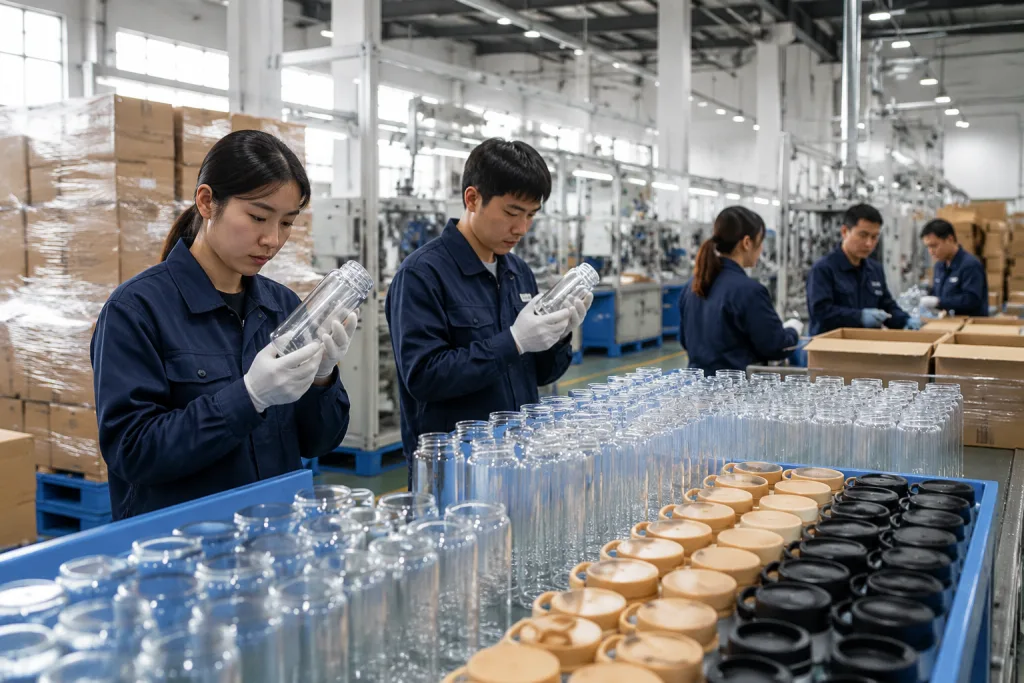
We treat this as a sourcing sequence, not a product search. Start with a clean RFQ, then lock the sample against the exact line items you will buy in bulk. On our line in Zhejiang, the request has to be specific: 500 ml or 750 ml, wall thickness in mm, closure torque, logo method, carton pack, and test standard. I’ve seen buyers push back on a 0.3 mm wall note and lose a week because the math does not work. If you are a canteen distributor or distributor drinkware buyer, that discipline saves time and margin.
Start with the exact RFQ
Your first job is not to ask for a catalog. Send an RFQ the factory can price without guessing. For a borosilicate glass polypropylene bottle private label project, put the basics on one page: capacity, such as 350 ml, 500 ml, or 750 ml; bottle weight; glass wall thickness, usually 1.8-2.2 mm for standard retail programs; lid material in PP; gasket material, usually silicone; and target market, because US and EU compliance are not the same. If you want a canteen custom program, say whether the bottle is for hot tea, cold brew, or daily hydration. We run the line on that kind of detail.
Add the commercial facts next. State target MOQ, expected annual volume, and whether you need FOB Ningbo or FOB Shanghai. Zhejiang factories quote faster when decoration is clear. A canteen promotional buyer might need one-color pad print, while a private label brand may want 360-degree silk screen, laser engraving on the cap, or an embossed logo on the PP lid. Put the packing detail in writing: 1 pc per egg-crate insert, 24 pcs per carton, barcode label, and master carton strength target of 5-ply or 7-ply. QC pulled the sample last week and found a PO typo on the carton count, so this is not a small point. If you are comparing canteen suppliers, ask each one for the same spec sheet so the quotes line up.
One useful trick: include a simple PO-style line sheet in the RFQ. That tells the canteen factory you are not buying a sample toy; you are building a production SKU. It also makes it easier to compare distributor canteen offers against direct factory pricing in China. We’ve seen this go sideways when a buyer sent three vague lines and expected a clean quote.
Check the sample before price
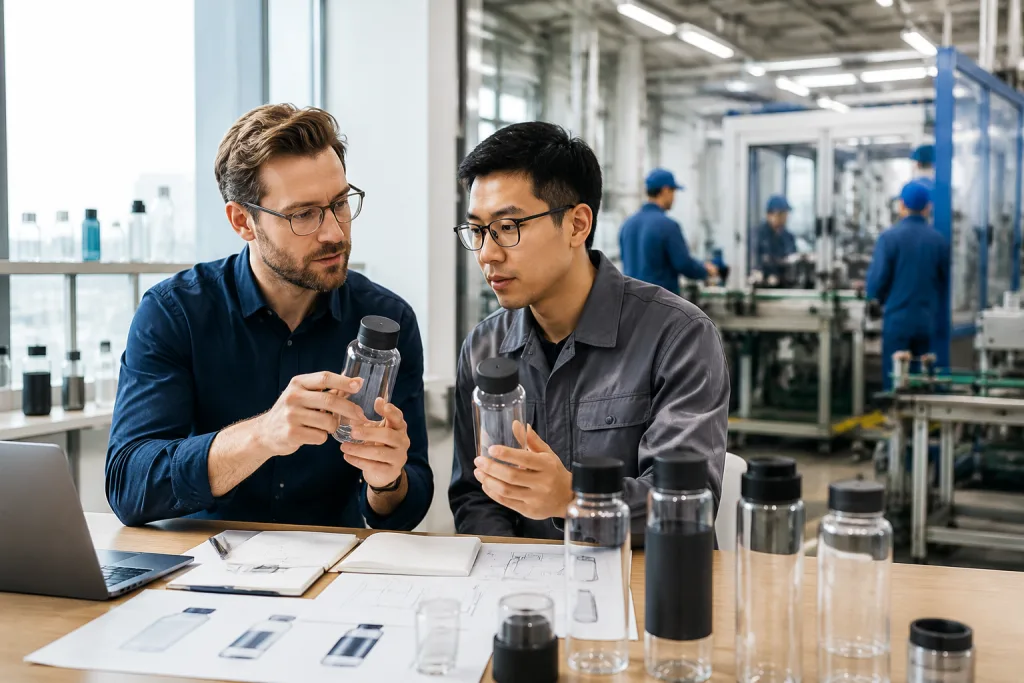
Do not push on bulk price before the sample clears basic technical checks. For a borosilicate glass bottle with a PP lid, that first sample is where a lot of projects die without drama. Check the mouth finish with a caliper, confirm lid fit, measure gasket compression, and set the bottle on a flat table to see if it rocks. Then test thermal behavior. Borosilicate glass takes temperature shock better than soda-lime glass, but the limit still matters. If the user will pour boiling water, say it on the PO. If not, say that too. A custom growler or customized growler order needs a stronger closure than a light commuter bottle.
Ask the factory for sample charges, sample lead time, and whether they deduct sample cost from the first bulk order. In Zhejiang, a capable canteen factory can usually turn a standard sample in 5-10 days if the mold is already on the line. For logo approval, ask for one physical sample with the exact decoration method, not a blank body with a sticker. We’ve seen this go sideways when the buyer approved the art from a PDF and the print shifted 2 mm on the glass. A canteen customizable project should prove print area, color density, and abrasion resistance before you sign off.
Use a short sample checklist:
- Cap torque and leak test after 24 hours
- Drop test from 80-100 cm with packed sample
- Logo rub test for 50-100 cycles
- Odor check on PP lid and gasket
If your customer is a canteen distributor or distributor drinkware buyer, this is where you protect resale margin. The math doesn’t work if a cheap sample looks fine on the desk and then leaks in field use. A slightly higher unit price from a disciplined canteen supplier beats a return claim every time.
Price the bulk PO line by line
Bulk pricing only works when the PO is split into line items. That is how we buy custom drinkware from China without guessing what is inside the quote, and it keeps the buyer from getting hit with surprise charges later. For a borosilicate glass polypropylene bottle private label order, spell out the bottle body, PP lid, silicone gasket, logo decoration, inner tray or egg-crate insert, printed carton, barcode sticker, and test fee if there is one. We run into POs with a typo on the carton spec all the time. One missing line item, and the math goes sideways.
At 3,000 pcs, a plain 500 ml borosilicate body with PP lid usually lands around $1.10-$2.20 FOB China, but wall thickness, lid style, and decoration move it fast. Add $0.18-$0.60 for one-color print, $0.25-$0.45 for custom carton art, and more if the design needs a molded handle or special straw top. For canteen customized branding, small artwork changes barely move the number. Mold changes do. If you need a custom canteen shape, ask whether the canteen manufacturer is quoting a stock mold or a new tool, because a new mold changes the whole cost stack. QC pulled the sample on a 1.8 mm wall once, and the buyer flagged it before we shipped.
Check the commercial terms line by line. A serious canteen vendor should quote MOQ, mass production lead time, carton dimensions, gross weight, and inspection standard. A 30% deposit and 70% balance before shipment is standard in China. If the supplier says they can do everything but will not define the PO line items, that is not flexibility. It is risk, and we have seen it go sideways more than once.
Lock standards before production
I’ll rewrite the prose in place, keep the HTML structure untouched, and tighten the language so it sounds like a factory-side sales engineer wrote it.Choose the right branding method
The logo is not a decoration afterthought. It changes cost, lead time, and sometimes the failure rate. For a borosilicate glass polypropylene bottle private label order, silk screen printing is still the go-to for clean color logos on glass. Laser engraving works better on metal accents or caps when the design needs a premium, permanent look. We ran a job last month with a 2-color print plus a debossed cap mark, and QC pulled the sample twice before the line settled it. If you want a canteen customizable program with multiple SKUs, keep the logo system simple: one artwork, one PMS color, one placement. Every extra variant adds setup time.
For canteen customized and customized drinkware projects, the label method should match the channel. Retail brands often want a sharp logo on the body and a neutral lid. A canteen promotional buyer may prefer a lower-cost one-color print with a 7-day turnaround. A canteen distributor selling across several accounts may need a shared base SKU with different retail sleeves or gift boxes. We’ve seen this go sideways when the buyer flagged a PO typo on the artwork code and expected us to split the run. That is the wrong question to ask; the real test is whether the same bottle tooling can carry three account versions without resetting the line.
Here is the practical rule: if the order is under 3,000 pcs, do not overcomplicate the artwork. If the order is 10,000 pcs or more, separate the branding cost from the bottle cost and negotiate the decoration method like its own line item. On one 304 stainless cap job, the print fixture alone added 0.18 USD per piece, and the math did not work until we trimmed the logo to one spot. That is how experienced custom drinkware buyers keep margin intact while still making the product look like a real brand.
Move from approval to bulk shipment
Once the sample is signed off, move straight to a production PO with dates on paper, not vague promises. The order confirmation needs the production quantity, approved sample reference, packaging spec, QC standard, shipping mark, and delivery terms. On a borosilicate glass bottle program, we usually see 25-35 days after deposit and artwork approval if the base material is already in stock. If the job needs a new mold or fresh packaging tooling, add time. Rush service does not fix a missing detail.
For shipment planning, decide early whether you want mixed cartons or full cartons by SKU. Full cartons cut handling damage. Mixed cartons work for distributor canteen programs, but only when the inner pack labels are clean and the picker can read them fast. One buyer flagged a PO typo on the carton count; the line caught it before packing. If you sell to North America, you may also need master carton barcodes, country of origin marks, and bilingual inserts. For Europe, ask for pallet counts, stack height in mm, and warehouse receiving rules so the load lands cleanly.
Inspect the first mass production run with the same eye as the sample: lid seal, print alignment, carton compression, and any glass abrasion. QC pulled the sample on one run and found a 0.3 mm print shift at the shoulder, which was enough to hold the batch. A good Zhejiang vendor should replace a defect trend fast. That is standard commercial discipline. If you are buying customized canteen or customizable growler lines across multiple customers, keep the PO structure reusable so the next reorder takes hours, not days.
Request a factory quote with your spec
Send your bottle size, logo method, and carton detail. We will price it like a real production order, not a rough guess.
Frequently asked questions
What is a realistic MOQ for this bottle style?
For a borosilicate glass polypropylene bottle private label order, MOQ often starts at 1,000 pcs for a stock mold and rises to 3,000 pcs or more if you want custom color PP, special packaging, or logo tooling. If you need a new shape, the canteen factory may ask for 5,000 pcs or a mold fee. In Zhejiang, a standard sample can usually be ready in 5-10 days, with bulk lead time around 25-35 days after approval. Smaller canteen distributors sometimes split orders by color to hit volume without overstocking one SKU.
Can I use this for hot and cold beverages?
Yes, but define the use case in the RFQ. Borosilicate glass is chosen because it handles thermal shock better than ordinary glass, but the closure matters too. A PP lid with a silicone gasket works for hot tea, cold brew, and room-temperature drinks if the seal is tested properly. If you plan to fill with boiling water, state the temperature target and ask for a leak test plus a practical thermal cycle test. For custom drinkware programs, this is where a canteen manufacturer should give you clear limits, not marketing language.
How should I structure the PO line items?
Keep it simple and explicit: bottle body, PP lid, silicone gasket, logo decoration, carton, insert, barcode label, and any test or tooling fee. That makes it easier to compare canteen supplier quotes and prevents hidden charges. If the project is a canteen customizable or customized drinkware line, include artwork version, PMS color, carton print, and ship date. For larger distributor drinkware programs, add pallet pattern and master carton count. A clear PO also reduces disputes at inspection and helps customs paperwork stay consistent.
What compliance documents should I request?
Ask for food-contact declarations, material specs for borosilicate glass and PP, and support for FDA or REACH where relevant to your market. If you sell into the EU, confirm ink and gasket compliance too, not just the glass. Many canteen suppliers in China can provide standard certificates, but you should still match the paperwork to your exact SKU and decoration method. If the bottle is going into retail or Amazon, keep the file set organized by SKU and batch. That saves time when customers or platform teams ask for proof later.
How do I control quality on the first bulk order?
Use AQL 2.5 for major defects and AQL 4.0 for minor defects unless your channel is stricter. Define critical defects clearly: leakage, crack, sharp edge, bad lid fit, or contaminated packaging. Ask for pre-shipment photos, carton drop testing, and one retained golden sample signed by both sides. In Zhejiang and other parts of China, good canteen manufacturers will accept a written inspection standard. If you are a canteen distributor or distributor growler buyer, that written standard is what protects repeat orders and reseller confidence.