Key Takeaways
- A serious borosilicate glass polypropylene bottle manufacturer should quote MOQ from 1,000 to 3,000 pcs, not vague 'flexible' numbers.
- For glass body durability, ask for 1.2 mm to 2.0 mm wall thickness and thermal shock data, not just a pretty sample.
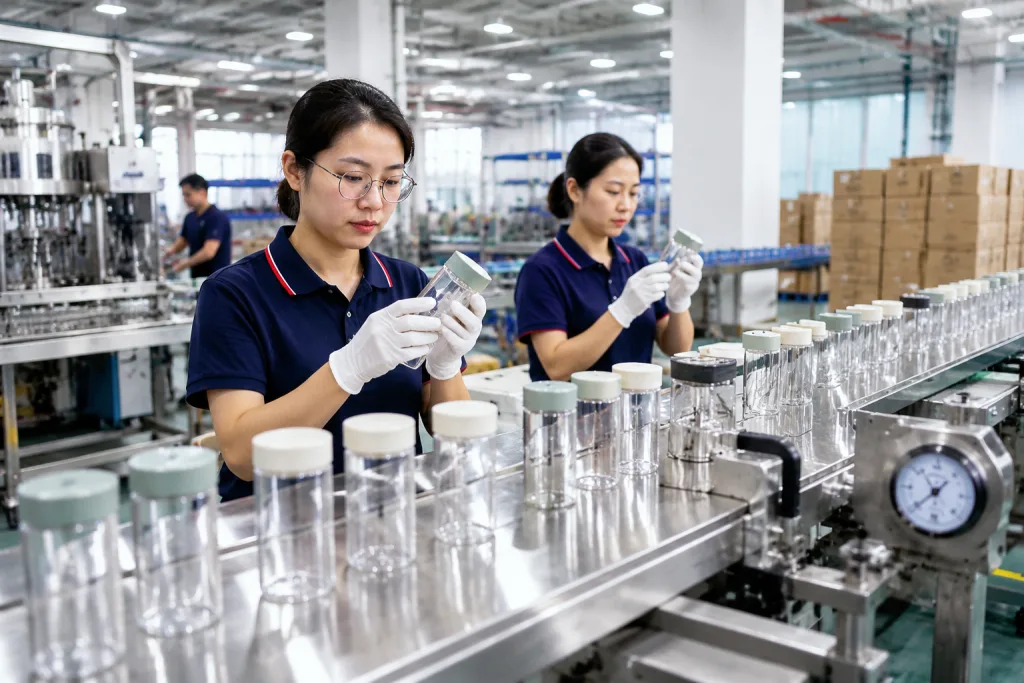
- A Zhejiang canteen factory with 300,000+ units/month capacity is easier to scale than a small trading operation.
- REACH, LFGB, FDA, and AQL 2.5 inspection language should appear in the spec sheet before you approve mass production.
If you are sourcing a borosilicate glass polypropylene bottle manufacturer, the first mistake is treating it like a plain bottle buy. It is not. You are balancing thermal shock resistance, cap fit, print durability, carton crush risk, and freight damage. We have seen a 1.2 mm wall sample pass, then fail after drop testing because one side ran thin by 0.3 mm. The line does not forgive that.
We build drinkware in Zhejiang, China, and the buyers who get better results ask the dull questions early: What is the MOQ? What is the wall thickness? Which test standard applies? How many units can the factory ship each month? QC pulled the sample, checked the PP cap torque, and found a loose fit at 18 N·cm on one batch. If you are a procurement manager, brand owner, or distributor in Europe or North America, you need straight answers, not sales talk.
What are you really buying?
A borosilicate glass polypropylene bottle is a hybrid build. The body is borosilicate glass for heat resistance and low flavor carryover, while the cap, lid, collar, or handle uses PP for impact resistance and lower unit cost. That mix works, but it also creates sourcing risk. Glass and PP move differently under heat, so the interface matters more than most buyers expect.
When you talk to a canteen manufacturer, do not stop at appearance. Ask how the cap seals, which gasket material is inside, whether the PP is food-grade and odor-free, and whether the glass passed thermal shock testing. We run into buyers who skip this, then the first hot-fill sample leaks at the 500 ml bench test. A usable spec sheet should name at least one standard: FDA, LFGB, REACH, or ASTM where relevant. If the seller cannot state the test method, they are guessing.
For buyers comparing canteen custom programs, the real question is not whether the bottle can be customized. It is whether the factory can hold tolerances after decoration. A canteen customizable project with a laser logo on glass and a molded PP lid is a different job from a plain stock item. One 0.3 mm mismatch on the lid thread can turn a clean pack-out into a rework pile. Decoration, packaging, and lid color matching all affect yield. Factories that know custom drinkware quote the full assembly, not just the bottle body.
How do you vet the factory?
Start with capacity and process control. A real canteen factory should tell you monthly output, mold ownership, and how many lines run glass, PP injection, or final assembly. For a mid-size export plant in Zhejiang, 200,000 to 500,000 units per month is believable. If the answer is “we can do any quantity,” that is the wrong question to ask. Ask for the number.
Then check business proof. Ask for BSCI, ISO 9001, or equivalent audit records if you need them for a retail chain or distributor canteen program. If you sell into Europe, ask how they handle REACH. If you sell private label in the U.S., ask about food contact documents and carton labeling. We once saw a PO typo on the master carton mark, and QC pulled the sample because the barcode sat 8 mm off spec. A canteen supplier that only ships domestic orders often misses export packaging details like inner box drop tests and carton compression.
Procurement checklist:
- Ask for factory audit certificates and a recent production video.
- Confirm the factory owns or controls the mold for cap, collar, and bottle shape.
- Request a sample that uses production-grade PP, not soft hand-sample plastic.
- Check whether the seller is a canteen vendor or a true manufacturer with assembly capability.
If you work with canteen distributors, do not assume their pricing is factory-direct. Distributor drinkware pricing can work for small runs, but the math does not work for repeat orders once hidden margin and slow change control show up. A direct canteen manufacturer in Zhejiang usually gives cleaner communication and fewer surprises. We run the line this way for a reason.
What specs should you lock first?
Lock the functional specs before you talk about print or color. For borosilicate glass, the numbers that matter are wall thickness, capacity tolerance, neck finish, and thermal shock performance. We usually start at 1.5 mm wall thickness for daily-use bottles and move to 2.0 mm when the buyer wants more abuse resistance. Capacity tolerance should sit within ±5% unless the order is going into premium retail. Neck and cap alignment matters too; if the thread is off by even a little, QC pulled the sample and the whole closure stack goes sideways.
For the PP parts, call out resin grade, color masterbatch stability, and whether the lid is microwave-safe. Do not assume that last point. The buyer flagged it on one 12,000-piece canteen job after the lid warped at 120°C, and we had to rework the tool. If your customer wants a promotional canteen, keep it simple: one lid color, one logo position, one closure system. This is the wrong question to ask if someone pushes for six decorations and a fancy lid; the math does not work on the line.
Brands ordering a customized canteen or customized growler should lock packaging at the same time. We’ve seen growler orders pass shelf fit and still fail in the carton, which is a clean way to lose money. For custom growler packaging on Amazon or retail, ask for a drop-test-ready master carton from day one, not after the first freight damage claim. One PO typo we see a lot is a 6-pack carton spec written as 8-pack, and that mistake costs a full reprint.
What should samples prove?
A sample is proof only after it survives checks. One piece proves one cavity was cut right. It does not prove the line can hold sealing, printing, and transit abuse. For a borosilicate glass polypropylene bottle manufacturer, we run thermal shock, leak test, lid torque, and odor checks on the sample. If the PP comes off the bag with a sharp smell, QC pulled the sample for a reason.
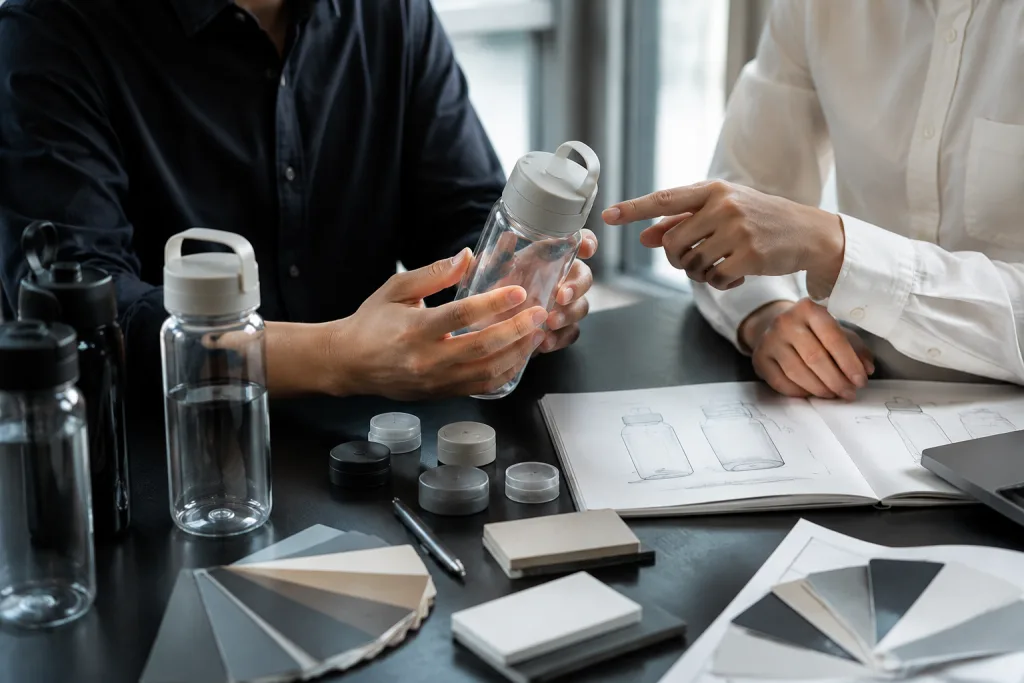
Ask for two sample stages: a visual approval sample and a pre-production sample. The visual sample locks shape and branding. The pre-production sample must use the same glass, PP, and gasket as mass production. If the factory offers a custom canteen in multiple colors, ask for a small color chip or PMS reference; screen photos are a waste of time. For glass decoration, silkscreen and laser engraving age differently in wash tests, so if your buyer wants dishwasher use, run 3 cycles before sign-off. We’ve seen this go sideways on a 12 mm logo line that looked fine on day one.
Good buyers do not ask 'Can you make it?'; they ask 'Can you repeat it 10,000 times with the same seal, print, and wall thickness?'
For canteen promotional campaigns, the timing is tight. One typo on the PO can burn a week. If you are working through canteen suppliers or canteen vendors, insist on a sample sign-off sheet with dimensions, logo position, and carton count. The math does not work any other way.
How much should it cost?
Price comes down to size, print method, cap structure, and carton spec, but a buyer still needs a sane target. For a basic borosilicate glass body with a PP lid, FOB China pricing usually starts around USD 1.20 to 2.80 per unit at 1,000 pcs. Once you add double-wall styling, silicone seals, or higher-end decoration, the number moves to USD 2.80 to 4.50. If a quote lands far below that, ask for the glass wall thickness, the inspection standard, and the packing detail. We’ve seen the line miss that too many times.
MOQ usually sits at 1,000 to 3,000 pcs for custom drinkware, and some Zhejiang factories will take a smaller trial run if the lid tooling is simple. A new lid mold or insert can cost USD 180 to 1,500, depending on the cavity count and engraving work. Lead time is usually 20 to 35 days after sample approval for stock colors, and 35 to 50 days for a first custom run with new print. That is normal for China. QC pulled the sample at 2.0 mm wall thickness and the buyer flagged a lid typo on the PO; that kind of detail delays release fast.
If you are a canteen distributor, unit price is the wrong question to ask by itself. Shipping damage, rework, and slow replies eat margin faster than a 10-cent gap on paper. We ship enough cartons to know the math does not work any other way. For distributor drinkware, you need stable yield, clear carton specs, and a supplier that answers before the booking window closes.

How do you protect the launch?
Launch protection starts with inspection and packing discipline. Put AQL 2.5 for major defects and AQL 4.0 for minor defects into the purchase order unless your retail standard is tighter. Major defects cover cracks, leakage, lid misfit, and print failure that the buyer will flag on day one. Minor defects can cover tiny bubbles or light cosmetic marks, depending on the channel. For export, ask for carton drop-test logic and pallet stacking rules before the goods leave Zhejiang.
Your checklist should also cover labeling. If you sell in North America, make sure the carton and inner box carry the right SKU, barcode, country of origin, and FNSKU if you are preparing Amazon FBA. For Europe, confirm the language set and compliance papers match the destination country. We once caught a PO typo on an FNSKU line, and that kind of miss can stall a shipment for 12 days while the warehouse relabels. A canteen customized for one channel often needs a different outer pack for another. This is the right question to ask a canteen factory with export experience, not a generic canteen supplier.
If the project is a canteen custom program for retail chains or corporate gifts, ask for a pre-shipment inspection report, carton weight, and a spare-parts ratio. On our line, a 2% spare lid allowance is a practical start for first deliveries. QC pulled the sample at 1.5 mm lid gap tolerance, and that small buffer can save the launch if a few lids arrive scratched or out of tolerance.
Send your spec, and we’ll quote cleanly
Share capacity, logo, carton, and target market. We’ll turn it into a practical OEM plan from Zhejiang with clear MOQ, lead time, and FOB pricing.
Frequently asked questions
Is borosilicate glass better than soda-lime glass for drinkware?
Usually yes, if you need thermal shock resistance and low taste transfer. Borosilicate glass handles hot-filling and rapid temperature changes better than standard soda-lime glass. In practice, many export buyers specify 1.5 mm to 2.0 mm wall thickness for daily-use bottles. It is not unbreakable, so you still need proper carton protection and AQL inspection. For a borosilicate glass polypropylene bottle manufacturer, ask for test data, not just a material claim. If the factory cannot share thermal shock or impact evidence, treat the material story as incomplete.
What MOQ should I expect for a custom bottle?
For a custom canteen or customized drinkware project, a normal MOQ is 1,000 to 3,000 pcs per design or color. Simpler lid-only changes may go lower, but new molds or multiple decoration steps usually push the minimum up. If you need a custom growler or customizable growler with a new cap, ask whether the tooling fee is separate from the order MOQ. A Zhejiang canteen factory may be flexible on first orders, but if the seller promises 300 pcs on a fully customized structure, check the hidden charges and lead time.
How long does production usually take in China?
After sample approval, standard production is often 20 to 35 days. If you need new molds, special coatings, or first-time packaging artwork, plan for 35 to 50 days. That is a normal timeline for China when the supplier is handling glass forming, PP injection, printing, and final packing. A canteen manufacturer in Zhejiang with solid capacity can often ship 300,000+ units per month across multiple SKUs, but your own order still depends on material availability and inspection results. Build in at least one week for final pre-shipment checks.
What documents should a distributor ask for?
At minimum, ask for product specifications, material declarations, compliance files, and a sample inspection report. If you sell into Europe, request REACH or LFGB-related documentation where relevant. For U.S. retail or Amazon, ask for food-contact statements and carton labeling confirmation. A canteen distributor or distributor drinkware buyer should also ask for photos of finished cartons, master carton dimensions, and loading quantity. If you use FBA, make sure the vendor can print FNSKU correctly and keep the barcode readable after shrink wrap.
Can I combine promotional and retail orders?
Yes, but only if the packaging and decoration plan is shared early. A canteen promotional order often uses a simpler box and a lower-cost print setup, while retail needs stricter carton strength and barcode accuracy. If you mix the two without a clear spec, the factory may quote one price and build another. For a canteen promotional launch, a 1-color logo and standard lid is usually the safest route. For retail, insist on pre-production samples, AQL 2.5 major defect checks, and destination-specific pack labels before you release the PO.