Key Takeaways
- Borosilicate glass bottles usually quote from USD 1.20-3.80 FOB depending on capacity, lid, print, and packout
- A practical MOQ for a custom run is often 3,000-5,000 pcs, with 25-35 days lead time after sample approval
- Specify wall thickness, borosilicate grade, PP lid resin, and gasket material in the RFQ or your sample will drift
- Use AQL 2.5 for major defects and 4.0 for minor defects, plus drop and leak tests before bulk release
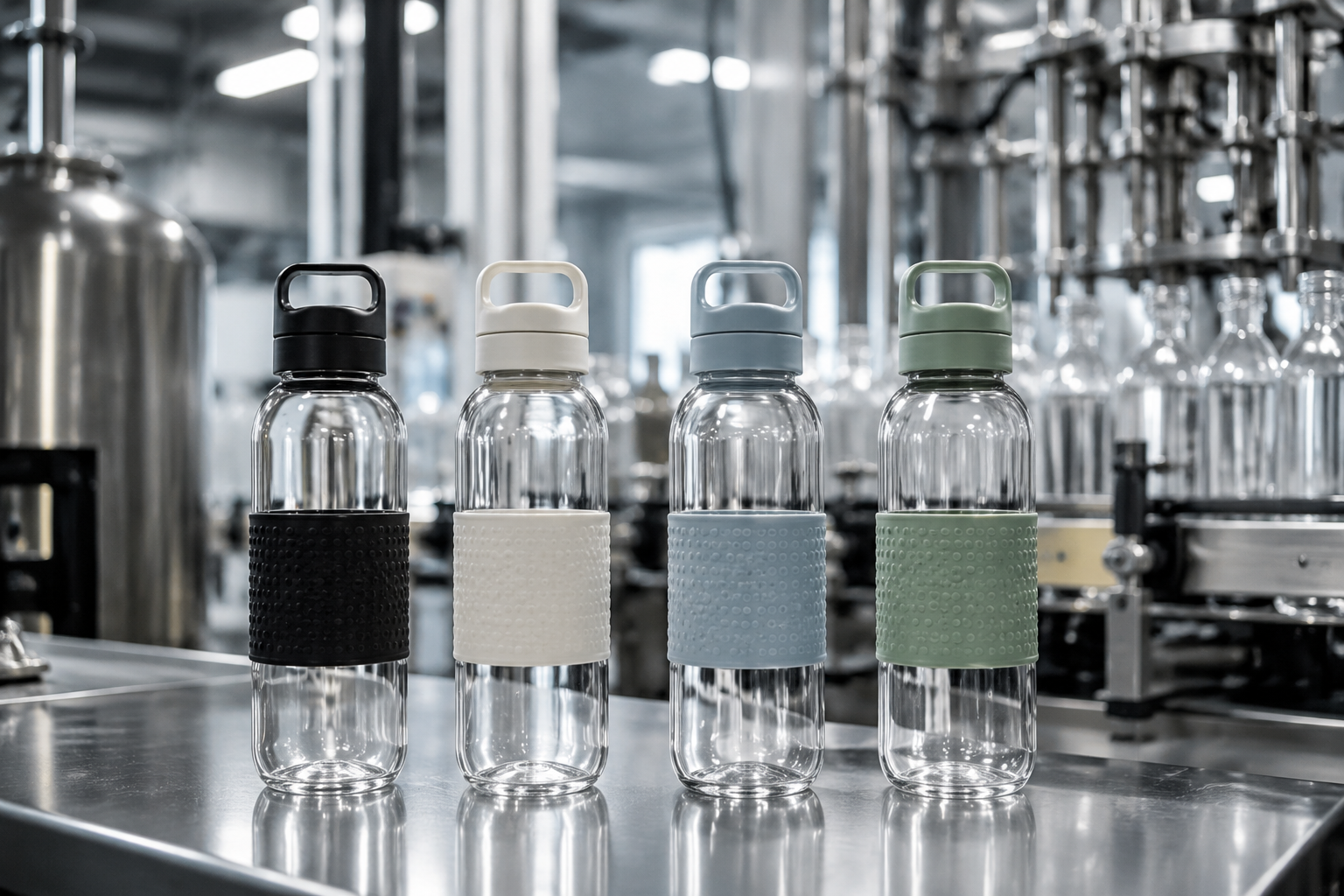
If you are buying a borosilicate glass polypropylene bottle custom, the hard part is not the material. It is getting the supplier to quote the right structure, the right lid, and the right test standard before you burn 12 days on a sample that was never going to pass your market. We see this pattern every week in Zhejiang: a buyer asks for a “glass bottle with plastic cap,” then the quote skips gasket grade, 2.0 mm wall thickness, and carton loss. That is the wrong question to ask.
The cleaner move is to run the purchase like a sourcing job with checkpoints. Start with a tight RFQ, lock the sample spec, then turn the approved sample into a bulk PO the line can follow without guessing. A PO typo on lid color or capacity turns into rework fast, and QC pulled the sample once because the print drifted 1.5 mm off-center. This matters whether you are a brand owner, a canteen distributor, or a drinkware buyer comparing canteen factory options in China. A serious canteen manufacturer should give you numbers, not talk.
Start with the RFQ numbers
Your RFQ should read like a purchase order draft, not a wish list. For a borosilicate glass polypropylene bottle custom program, send the factory capacity, target volume, finish, decoration, and market compliance target on one page. If you want a 350 ml body with a PP screw lid, say it. If you need BPA-free PP, a food contact declaration, and REACH paperwork for Europe, say that too. We quote faster when the brief is clean.
Include these line items in the first request:
- Capacity: 350 ml, 500 ml, or 750 ml
- Body: borosilicate glass, target wall thickness 1.8-2.2 mm
- Lid: PP with silicone gasket, or PP with TPE insert if your market accepts it
- Decoration: one-color silkscreen, laser mark, or paper insert
- Packaging: bulk pack, white box, or color box with barcode
At this stage, do not ask only for unit price. Ask for sample fee, tooling if any, MOQ, lead time, and carton loading quantity. We had one buyer push back on tooling, then the lid cavity moved and the sample missed the cap torque spec by 0.3 N·m. A factory in China that answers all five is usually easier to work with than one that hides the freight math until later. For custom drinkware, the real cost often sits in packaging and cap components, not the glass itself.
PO line item example: 3,000 pcs borosilicate bottle, 500 ml, PP lid, 1-color logo, individual white box, FOB Ningbo. That one line already tells the canteen factory how to calculate the job.
Choose the right bottle structure
The bottle structure decides whether the project runs smoothly or turns into a headache. Borosilicate glass is the sensible pick when you want thermal resistance, cleaner taste, and a premium hand feel. It handles hot-fill better than ordinary soda-lime glass, but it is still glass, so carton drop tests and inner dividers need discipline. PP works for the lid because it is light, low-cost, and easy to mold into a canteen customizable shape. The wrong question is “can we make it?” The real question is whether the resin grade, mold polish, and gasket compression hold up after 5,000 opens. On our line, QC pulled a lid sample at 1.8 mm seal thickness; the buyer flagged a tiny warp at the thread root, and that was enough to stop approval.
For a customized drinkware program, I tell buyers to lock these points before sampling:
- Glass grade: borosilicate with declared thermal shock resistance
- Lid thread: standard or custom; standard saves 7-12 days
- Seal: food-grade silicone, 1.5-2.0 mm cross-section
- Finish: matte spray, clear body, or frosted effect
- Logo zone: keep print away from high-friction areas
If you are building a canteen custom range for retail, keep the shape simple. A cleaner profile cuts breakage and stacks better on the shelf. If you are a canteen distributor or canteen vendors selling to promo buyers, a wider mouth and larger print panel usually beat a fancy silhouette. We ship more repeat orders on those specs. That is why a canteen promotional order and a premium retail SKU should not share the same spec sheet. The math does not work. On one PO, the buyer typed “frosted” in the remarks but approved clear body art; the typo cost us a full reproof.
Opinion from the factory floor: a modest bottle with a well-made PP lid sells better than a “premium” shape that leaks in transit.
Sample before you commit
The sample stage is where a project gets disciplined, or gets expensive fast. Ask for a pre-production sample that matches the exact glass thickness, lid color, gasket, and print method. If the supplier sends a hand-made prototype with a different lid or a lighter glass wall, that is not approval material. It is only a talking piece. A canteen maker that knows the line will build a sample on the same mold and the same process as bulk, not a showroom version.
QC pulled the sample at 9 a.m., and we check the basics before any lab file goes out:
- Fill with water, invert for 30 minutes, and check the seal
- Do a room-temperature drop test from 80 cm onto carton corners
- Check lid torque and whether the gasket shifts after repeated opening
- Measure actual volume and neck finish against the drawing
For Europe and North America, ask for REACH, LFGB where needed, and a food-contact statement on the PP component. If you are supplying a distributor growler program or custom growler format, add pressure and cap retention checks because wide-mouth bottles fail in a different way. This is the wrong question to ask if someone says, “Can we skip that?” We’ve seen that go sideways. For customized growler or customized canteen projects, sign off the sample with photos and keep one numbered reference sample on each side. One typo on the PO can turn into a week of back-and-forth.
PO line item example for sample approval: 10 pcs pre-production samples, same mold, same lid color, same print placement, shipment by DHL, sample fee deductible against first bulk order of 5,000 pcs.
Build the bulk PO carefully
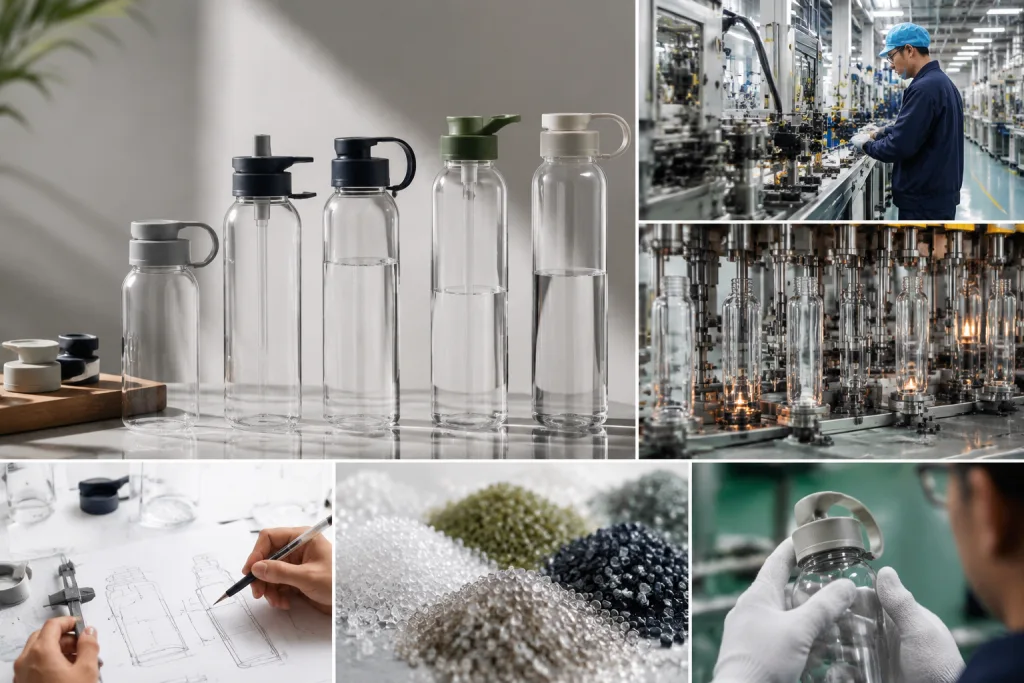
Once the sample is approved, the bulk PO has to kill guesswork. This is where a lot of buyers get sloppy and pay for it later. Put every critical point in the order: dimensions, material declaration, packaging spec, acceptance standard, and ship window. We run this every week in Hangzhou, and a clean PO saves hours at the line. Leave gaps, and the factory will fill them from stock.
A usable bulk PO for custom drinkware should include:
- Product name and capacity
- Glass wall thickness target and tolerance
- PP lid color with Pantone reference
- Logo size, location, and decoration method
- Carton test requirement and barcode type
- Inspection standard: AQL 2.5 major, 4.0 minor
- Approved sample reference number
For pricing, a common FOB range for a simple borosilicate glass polypropylene bottle custom order is USD 1.20-3.80 per unit at 3,000-5,000 pcs, depending on capacity and print. Add 8-15% if you want retail-ready color boxes, accessory inserts, or multi-step decoration. If the buyer is a distributor canteen or drinkware account, the box spec can matter as much as the bottle. We ship quotes as separate line items for a reason; otherwise the landed cost math gets muddy fast.
Do not accept “same as sample” in place of a drawing. Put the drawing number, sample sign-off date, and carton count in the PO. One buyer once sent a PO with the carton count typed as 240 instead of 24; QC pulled the sample, and we caught it before the line started packing. That is the wrong question to ask—lock the document first, then place the order.
Inspect the first bulk run
The first bulk run tells you if the factory runs process control or just gets lucky. For a canteen factory in China, the checks should stay simple and repeatable. You do not need a 20-page audit if you already know what bites you. Check incoming borosilicate clarity, lid fit, gasket seating, print alignment, and carton strength before the container leaves the plant. We ran one lot where the glass inspector caught 3 cloudy pieces in a 1,000-piece sample, and that saved a headache later. If you can, hire a third-party inspector in Zhejiang or near the port to check the first lot under AQL. Cheap insurance.
Focus the inspection on the failure modes that actually cost money:
- Leakage after 10 open-close cycles
- Decoration rub-off after 50 wipe tests
- Chip rate on bottle mouth and base
- Carton collapse or separator failure in export pack
If you sell canteen customized sets into retail, ask for mixed-carton control and barcode verification. We had a buyer flag a PO typo on the pack count, and the line still had to stop while QC rechecked every outer carton. If the order is for promotional channels, confirm the canteen promotional artwork does not break local claims rules. The math does not work if the print file is wrong and the packing mix is loose.
A proper inspection report should show sample quantity, defect photos, and disposition: accept, rework, or hold. If the supplier will not sign off on that discipline, treat them as a one-time canteen vendor, not a long-term canteen manufacturer. We keep one caliper on the desk for mouth diameter checks; it takes 30 seconds and settles arguments fast.
Ship, label, and relabel correctly
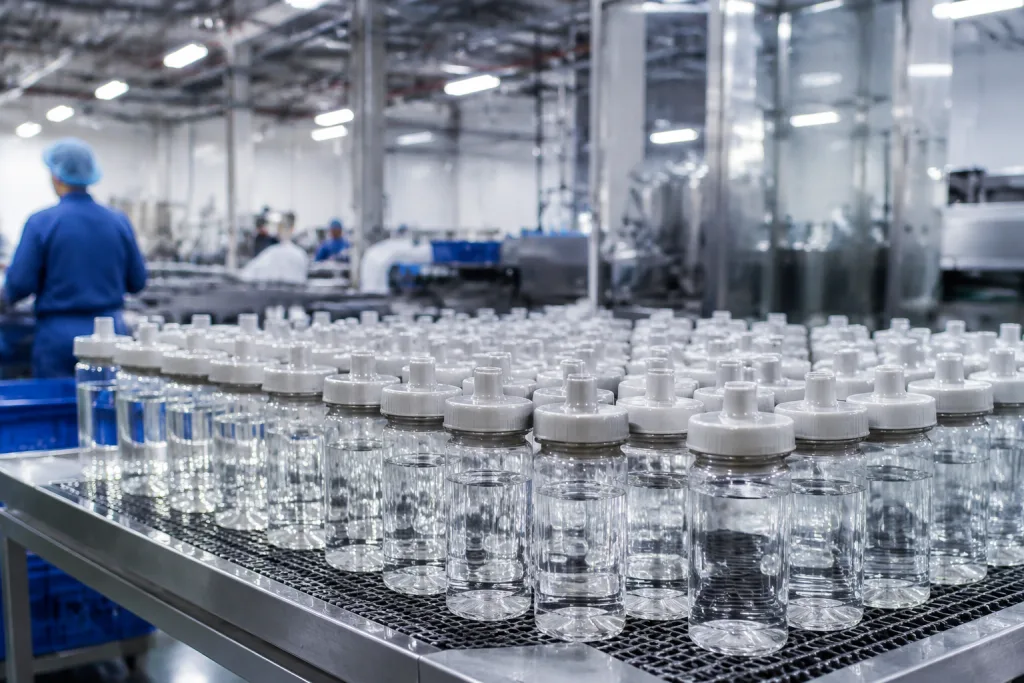
Shipping mistakes stay quiet until finance starts deducting them. For Amazon or retail-linked programs, carton labels and master carton labels need to match the buying channel, and the buyer flagged it fast when they don’t. If you need FNSKU, barcode placement, or polybag rules, put them in before production starts. For a borosilicate glass polypropylene bottle custom SKU, label errors show up more often than broken bottles, especially when one Zhejiang factory is running six export accounts on the same line.
Set the shipment instructions like this:
- Outer carton: 5-ply export carton, 32 ECT minimum
- Inner protection: molded pulp, corrugated divider, or bubble sleeve
- Master carton marks: SKU, qty, gross weight, net weight, carton number
- Incoterm: FOB Ningbo or FOB Shanghai, with the port named clearly
If you are a canteen distributor building a wide assortment, ask the supplier to keep one final packing photo on file. We’ve seen this go sideways when the reorder comes back six months later and a new merchandiser cannot tell the old carton from the new one. For distributor growler or customizable growler lines, confirm whether the box includes spare caps or extra gaskets. A 2 yuan gasket can turn into a 200 yuan claim.
Use one PO line per variation. A custom canteen with two lid colors is two SKUs on the floor, not one, and the ERP will not care about your shorthand. If you want clean repeat orders, make the factory map each version separately. That is standard discipline in Zhejiang, and it saves a lot of arguing when the next container lands.
Send your spec, get a real factory quote
Share the bottle capacity, lid, logo, and target market. We’ll turn it into a usable RFQ and bulk PO without the guesswork.
Frequently asked questions
What MOQ should I expect for a borosilicate glass polypropylene bottle custom order?
For most factories in China, a workable MOQ is 3,000-5,000 pcs per SKU if the mold already exists. If you need a new shape, MOQ can move to 8,000-10,000 pcs because glass forming and PP lid setup must be amortized. For a simple canteen custom order with existing bottle shape, 3,000 pcs is realistic. If you are mixing lid colors or print variants, treat each version as its own line. Zhejiang factories often quote lower MOQ for sample-stage business, but the unit price will usually rise by 10-18%.
How much does a custom bottle usually cost FOB?
A straightforward borosilicate glass polypropylene bottle custom program usually lands around USD 1.20-3.80 FOB per unit at 3,000-5,000 pcs. The lower end is for plain glass, standard PP lid, and simple one-color print. The higher end includes frosted glass, premium gasket, custom color lid, and retail box. If you want a canteen promotional pack with inserts or multi-language packaging, add 8-15%. Always ask the canteen supplier to split bottle, lid, print, and pack so you can see the real cost driver.
What tests should I require before bulk approval?
Ask for leak testing, drop testing from 80 cm, lid torque testing, and carton compression checks. For export drinkware, I recommend AQL 2.5 for major defects and 4.0 for minor defects. If your market needs compliance, request REACH for Europe and food-contact declarations for the PP lid and silicone gasket. For a custom growler or wider-mouth format, add repeated opening-cycle testing because those closures fail differently. A good canteen factory will already have a routine test sheet, but you should still ask for photos and signed results.
Can I mix branding styles in one order?
Yes, but do it carefully. You can combine silkscreen, laser engraving, or label packaging in one program, but each change may become a separate production line or separate packing step. If you want a customizable canteen range for a distributor canteen catalog, keep the base bottle identical and vary only the print or lid color. That keeps setup simpler and reduces scrap. For canteen vendors, the cleanest structure is one base SKU and one or two decoration variants, not five mixed versions in a single PO.
How long does production usually take?
For an approved custom canteen or bottle order, the usual lead time is 25-35 days after sample sign-off and deposit. Add 7-12 days if a new lid mold or special packaging is required. Shipping time depends on destination and Incoterm, but ocean freight from China to Europe or North America often adds 18-35 days. If your project is seasonal, build in extra time for first inspection and carton rework. A Zhejiang canteen manufacturer with stable output can often produce 200,000-400,000 units per month, but your specific SKU still needs its own slot in the schedule.