Key Takeaways
- A proper borosilicate glass polypropylene bottle bulk spec usually starts at MOQ 1,000 to 3,000 pcs and 25-45 day lead time
- Use borosilicate 3.3 glass and food-grade PP, then lock wall thickness, thread fit, and thermal shock limits before PO
- Ask for AQL 2.5 on critical defects and leak tests at 1.0 to 1.5 bar where relevant
- Decoration, cap fit, and transport packaging fail more often than the glass body itself
If you are buying borosilicate glass polypropylene bottle bulk, the first mistake is treating it like one simple SKU. It is not. We run this kind of order with a glass tube or bottle body, a polypropylene closure or base part, and tolerances that have to hold through filling, carton drop tests, and customer abuse. In Zhejiang and across China, the factories that know the job talk in numbers: 3.3 borosilicate, PP food-contact resin, 0.8 mm to 1.2 mm wall targets, AQL 2.5 for critical defects, and lead times that sit at 25 days or stretch to 45 days when tooling or decoration changes. QC pulled the sample on a Tuesday and found a 0.6 mm neck mismatch; that is the sort of miss that turns into a claim later.
Buyers who treat this as generic drinkware usually get leaks, cracks, cap deformation, or print that lifts after one wash. The wrong question is “Can you make it?” The right one is “What fails at 10,000 units?” If you need drinkware wholesale or wholesale drinkware for retail, Amazon, gyms, or corporate programs, build the spec around the breakpoints first. We have seen this go sideways on bulk canteen, bulk drinkware, bulk growler, and a custom line pitched as the best wholesale drink bottle, and the fix always starts with the same thing: tighten the spec before the line starts running.
Where these bottles fail first
The glass does not fail the way most buyers expect. The first trouble shows up at the interface: cap fit, gasket compression, neck finish, or the joint between borosilicate glass and polypropylene. On a canteen wholesale run, a retail gift SKU, or a drinkware bulk order, the weak point is usually a 0.2 mm to 0.5 mm stack-up that nobody measured before mass production.
Split the bottle into failure zones. The body can pass, then the closure creeps under heat, the seal hardens after 48 hours in a dishwasher, or the printed logo scuffs during carton vibration. We run this check on the line with a go/no-go gauge, and the buyer flagged it fast when the cap sat 0.3 mm high. A clean spec should name every contact point:
- Glass composition: borosilicate 3.3, not generic soda-lime
- PP part: food-contact polypropylene with heat resistance stated in °C
- Seal: silicone or TPE with migration data if you sell in Europe or North America
- Thread and neck finish: measured, not described as “standard”
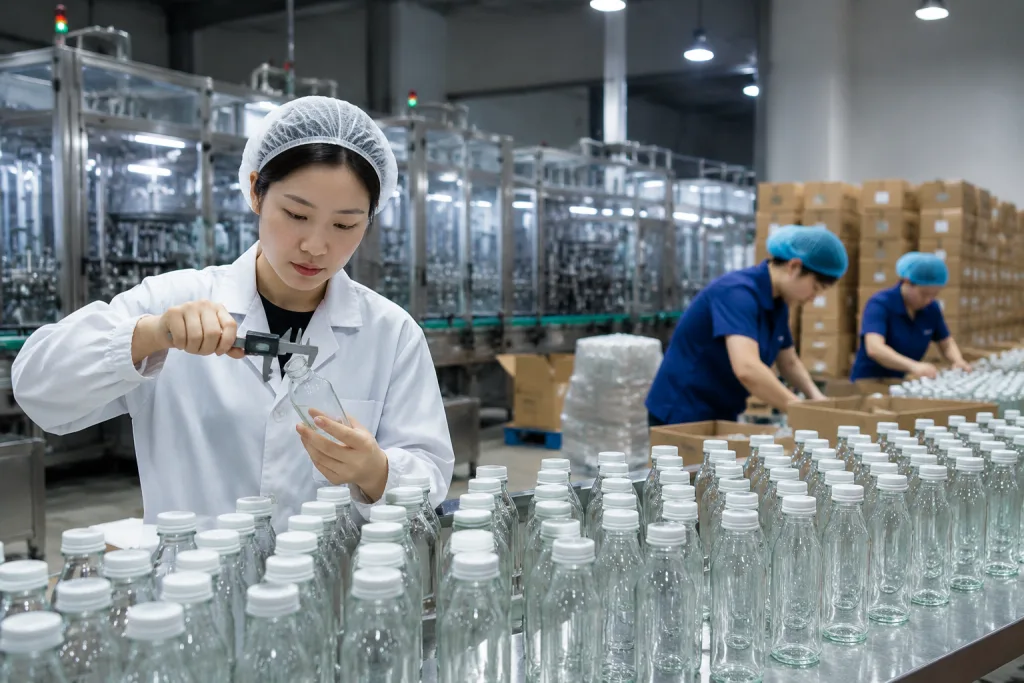
In Zhejiang factories, the good suppliers show gauge data, not just a photo. QC pulled the sample with a caliper and found the neck finish at 21.8 mm against a 22.0 mm spec, which is the sort of gap that turns into complaints later. If they cannot state the neck finish tolerance, this is the wrong question to ask: you are not buying a stable wholesale canteen program. You are buying a future complaint file.
Glass body cracks and thermal shock
Borosilicate is there because thermal shock is a real risk. Buyers still get cracked bodies when they treat “heat resistant” as “cannot fail.” A 3.3 borosilicate body usually handles boiling water better than ordinary glass, but it still breaks when the wall is too thin, annealing is off, or the bottle is packed tight and rides through a cold truck in winter.
Write the spec around three points: wall thickness, annealing quality, and temperature delta. For a retail bottle, 1.0 mm to 1.2 mm wall thickness is a safer starting point than chasing the lightest weight. If the design has a narrow shoulder or embossed logo, that is where stress builds. Ask for thermal shock testing with the actual delta, such as 100°C hot to 20°C water, and get pass/fail criteria in writing. QC pulled a sample at 1.05 mm last week; that sort of number matters more than a sales promise.
What breaks the program is not usually the body material. It is the mix of thin wall, poor anneal, and rough packing.
For alcohol flask bulk or alcohol flask wholesale bulk concepts, the same logic applies even if the end use changes. If the bottle will carry acidic drinks, carbonated contents, or ice-cold liquids after hot filling, keep the test data tied to that use. A factory in China that says “no problem” without a test report is not helping you. A supplier in Zhejiang that sends a thermal cycle report, a visual inspection sheet, and a drop-test method is the one we ship with. The buyer flagged it once on a PO typo—“hot fill” written as “hold fill”—and we fixed the spec before the line ran.
PP cap warping and seal leaks
The polypropylene piece is where a lot of programs slip. PP is cheap, easy to mold, and food-safe when the grade is right, but a bad cooling cycle or a resin picked only on price will move the cap by 0.3 mm or more. We run into this when a buyer pushes canteen bulk or wholesale drinkware pricing too hard; the line trims cost, and cap flatness gets hit first.
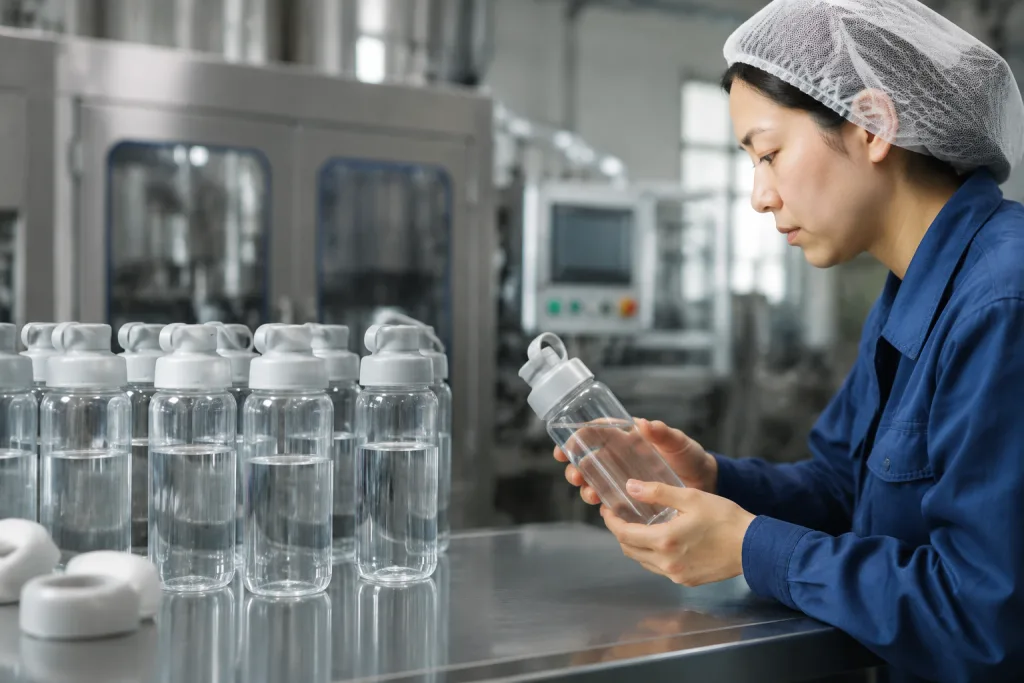
Leaks usually come from three places: gasket compression is uneven, the thread pitch is off, or the cap goes oval after heat exposure. Ask for the cap-flatness tolerance, closure torque range, and leak test method in writing. If the lid is for hot drinks, request a heat-aging check at 70°C or 80°C based on the use case. For beer growler wholesale bulk, pressure is the real test; carbonation finds weak seals fast, and we've seen that go sideways on a 48-hour hold test.
- Specify PP grade and melt flow index if the closure is molded in-house
- Require gasket material disclosure: silicone, TPE, or another approved elastomer
- Set torque limits so customers can open the cap without cracking the thread
- Test after dishwasher exposure, not only out of the mold
A buyer should not approve a canteen bulk order from photos. Ask for sample lids cycled at least 20 to 30 times on the torque tester. If they start squeaking, wobbling, or leaking, the production run will do the same at 5,000 pieces.
Decoration that fails in transit
Decoration is where a lot of drinkware wholesale orders go sideways. Screen print, pad print, heat transfer, or laser marking can look clean on day one and still fail if the ink system does not match the substrate. Glass and PP move at different rates, so a logo that crosses both surfaces carries a built-in stress point. We ran this on the line before: after a 1,200 km carton vibration test, the first complaint was edge wear around the artwork.
For borosilicate glass polypropylene bottle bulk programs, keep decoration away from high-friction zones unless you have a proven process. If the buyer wants a premium look, laser engraving on the glass body usually holds up better than surface print, while the PP parts need a separate marking method. On a beer tumbler bulk or beer tumbler wholesale bulk order, place the mark where hands touch least and skip glossy inks that scuff fast. The buyer flagged that one after 3 days in a sample bag.
Ask for abrasion testing, dishwasher testing, and a carton rub simulation. The factory should state how many cycles the decoration survives before visible failure, not hide behind “normal use.” If the answer stays vague, you are not talking to a manufacturer that understands wholesale growler or growler bulk requirements. You are talking to a decorator hoping the carton does the work. That math does not work.
Tolerance stack-up in mixed materials
Mixed-material assemblies are unforgiving. Glass shrinkage, PP molding shrinkage, gasket compression, and thread finish all stack up. A 0.3 mm miss in one place turns into a cap that rocks or leaks at line speed. We’ve seen that go sideways on a 38 mm neck. This is why the better wholesale drink bottle jobs start with drawings, not a sample photo. If the factory works in Zhejiang, they should send a dimensioned CAD, a tolerance table, and a sample approval sheet before you confirm mass production.
Focus on the dimensions that actually control function:
- Neck OD and thread pitch for cap fit
- Gasket groove depth for seal compression
- Overall height for carton fit and pallet count
- Base diameter for automated packing and cup-holder compatibility
For a bulk growler or wholesale growler format, stack-up matters even more because the bottle is larger and the closure sees more leverage. A 1 mm discrepancy that looks harmless on a 500 ml bottle can become a visible wobble on a 1,000 ml unit. QC pulled the sample and the base sat 1.2 mm off center; the buyer flagged it before shipment. If you want steady drinkware wholesale supply, lock critical dimensions with a sampling rule and reject “approximate” measurements. The math does not work any other way.
Packaging and shipping damage
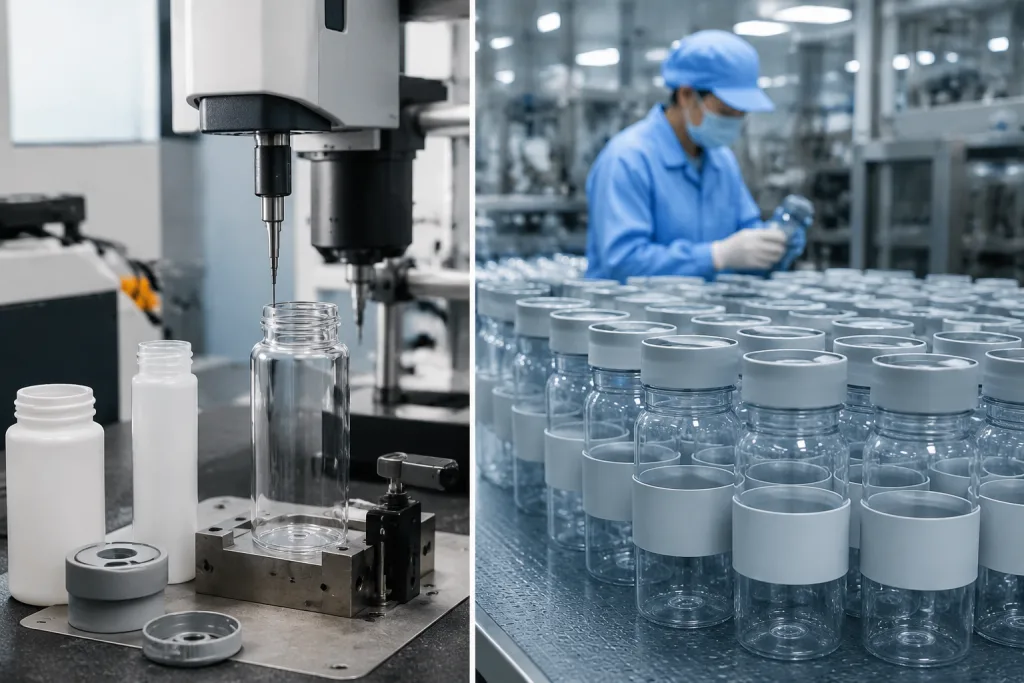
Even a perfect bottle can show up broken if the packout is sloppy. With glass and PP assemblies, carton design is not an afterthought. We have seen one weak corner pad turn a clean shipment into a claims file, and the buyer flags the factory, not the carton. The real issue is usually route mismatch: Zhejiang to port, port to ocean freight, ocean freight to a DC that does not treat cartons gently.
For bulk canteen or alcohol flask in bulk programs, treat the package as one system. Inner trays, molded pulp, PE bags, and divider strength all matter. If the bottle is going to FBA, ask for carton drop-test results that match Amazon inbound handling. If it is going wholesale canteen into retail chains, ask for compression strength and pallet pattern confirmation. We run this with a 600 mm drop sample and a 5 kg top-load check, because “looks fine” is the wrong question to ask. A good supplier should quote the carton spec with the product price, not hide it behind a separate email.
Buyers often chase a lower FOB price and pay for it in breakage. A carton upgrade that adds $0.06 to $0.18 per set can save far more in claims, chargebacks, and rework. We once caught a PO typo where the buyer wrote 24 pcs/carton but the packer sheet said 12; QC pulled the sample, and the math did not work. For drinkware bulk orders, packaging is part of the product.
How to write the purchase spec
If you want the factory to behave, give them a spec the QC team can measure. Loose wording creates loose production. A usable RFQ for borosilicate glass polypropylene bottle bulk should lock down material, size, decoration, test standard, packaging, and acceptance level. We run this the same way on the line: critical-to-quality first, cosmetic points second.
A practical purchase spec should cover:
- Material: borosilicate 3.3 glass, food-grade PP, approved seal compound
- Capacity: net fill volume and overflow volume, with the fill line in mm
- Testing: leak test, drop test, thermal shock, dishwasher cycle if needed; the buyer should state pass/fail limits
- Inspection: AQL level for critical, major, and minor defects
- Commercials: MOQ, FOB Ningbo or Shanghai, lead time, replacement policy
For a first order, MOQ often lands between 1,000 and 3,000 pieces, depending on mold complexity and print setup. Standard lead time from a Zhejiang factory is often 25 to 45 days after sample approval; once the buyer flags a logo typo or changes the carton insert, that clock slips fast. If you are comparing canteen wholesale, wholesale drinkware, or bulk drinkware options, ask for the same spec on every quote. A lower unit price with weak inspection terms is not a lower price. It is deferred risk.
Send your spec for a fast factory review
We’ll check material, tolerances, packaging, and MOQ against real production constraints in China before you commit the PO.
Frequently asked questions
What MOQ should I expect for borosilicate glass polypropylene bottle bulk?
For a standard design, expect MOQ around 1,000 to 3,000 pcs. If the mold is new, the PP closure has custom tooling, or decoration is multi-color, the floor can move to 5,000 pcs. A Zhejiang factory with steady lines may accept lower pilot quantities, but the per-unit price usually rises 12% to 30%.
How do I check if the bottle will leak after shipment?
Ask for a leak test on 100% of samples or a documented batch test under pressure or inversion, depending on the design. For closure systems, request torque range data, gasket compression figures, and post-heat-aging leak results. If the bottle is for beer growler wholesale bulk or carbonated use, pressure behavior must be tested explicitly, not assumed.
Is borosilicate always better than regular glass?
For hot-cold abuse, yes, borosilicate 3.3 is the safer starting point. It handles thermal shock better and is usually the right choice for premium wholesale drinkware. But it is still breakable, and performance depends on wall thickness, annealing, and packaging. A thin, poorly packed borosilicate bottle can fail faster than a thicker well-designed one.
What standards should I ask for in Europe and North America?
Ask for food-contact compliance that matches your market: REACH and, where applicable, LFGB for Europe; FDA-related material declarations for the US; and test evidence for heavy metals, migration, and dishwasher durability if relevant. For process control, request AQL inspection levels and a factory quality summary. If the supplier also has BSCI or similar audit documentation, that helps on retail onboarding.
Can I source this as a beer tumbler bulk or alcohol flask wholesale bulk item?
Yes, but the use case changes the spec. Beer tumbler bulk and beer tumbler wholesale bulk orders need better lid sealing, scuff resistance, and often pressure-aware closures. Alcohol flask bulk and alcohol flask wholesale projects usually focus more on seal integrity, odor control, and cosmetic finish. The product can be similar, but the test plan should match the end use, not the category name.