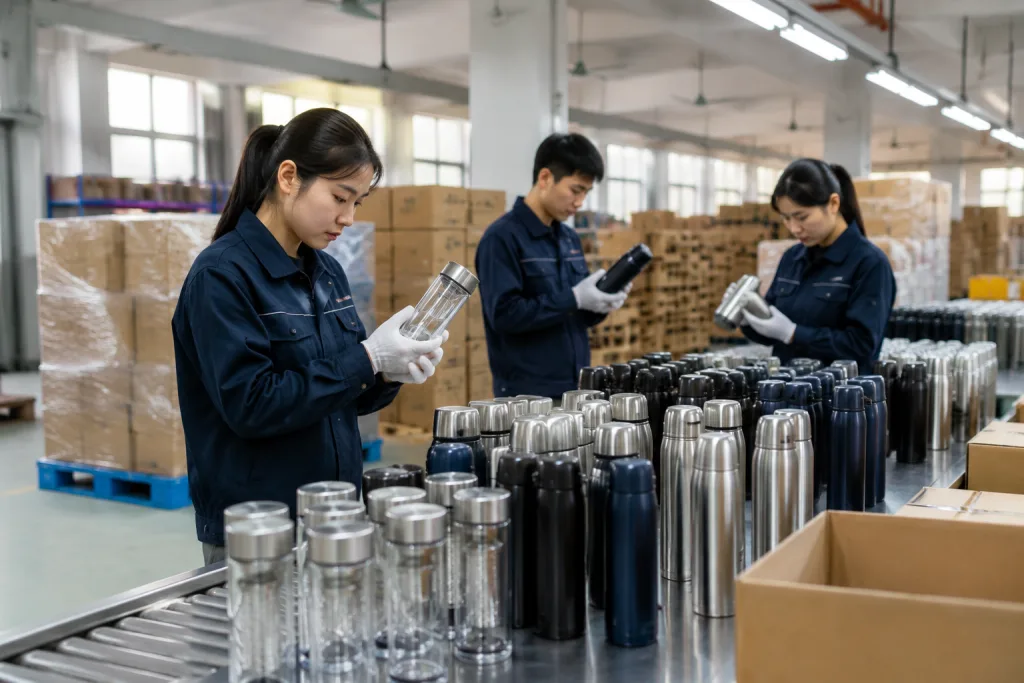
Key Takeaways
- Borosilicate glass liners handle 400°C thermal shock better than soda-lime glass, but bulk breakage risk is still higher than stainless.
- For bulk orders, a common MOQ is 1,000 pcs and lead time is 25-35 days after sample approval.
- A good factory thermos spec for retail usually uses 304 stainless outer walls, 0.5-0.6 mm liner gauge, and leak testing at 30-50 kPa.
- FOB China pricing often starts around USD 3.20-6.80 per unit depending on capacity, decoration, and packaging.
If you are buying borosilicate glass insulated water bottle bulk for outdoor retail or a promotional program, the real question is not style. It is whether the pack-out survives a 1.2 m drop, the breakage stays under 2%, the logo still prints clean at 500 units and 50,000, and the bottle ships without turning into a claims headache.
We see buyers make the same mistake on the line: they treat every insulated bottle as one category. Wrong. Borosilicate glass gives a clean taste and handles heat well, but it does not behave like a 304 stainless vacuum thermos. QC pulled the sample on a 32 mm mouth piece last week because the buyer flagged a weak carton, not the bottle itself. In Zhejiang, good factories run both structures for a reason; the right build depends on your target price, your drop-test standard, and how much loss you can live with in bulk. If you need a custom thermos, a promotional thermos, or a factory thermos that ships safely and prints cleanly, start with the spec sheet, not the catalog photo.
Glass liner or stainless body?
Buyers often ask for a borosilicate glass insulated water bottle bulk program, then later find they needed a stainless thermos. Those are different jobs. Borosilicate glass gives a clean drinking surface, no metal taste, and solid heat tolerance on the liner. Stainless vacuum construction takes drops better and cuts claim risk on retail shelves and Amazon.
Here is the practical split:
| Spec | Borosilicate glass insulated bottle | Stainless vacuum thermos |
|---|---|---|
| Temperature stability | Good for hot drinks, stable at high heat | Excellent for hot and cold retention |
| Impact resistance | Low to moderate | High |
| Weight | Usually lighter in the inner structure | Often heavier but tougher |
| Taste neutrality | Very strong | Strong, if 304/316 stainless is used |
| Best use | Office, gifting, premium wellness sets | Outdoor retail, travel, Amazon, field use |
If you sell to outdoor retailers, do not push glass into hard-use programs. We saw a buyer flag a 1.2 mm liner after a carton-drop test; the math did not work. For premium gifting, hospitality, or a branded wellness kit, borosilicate can be the better fit. A proper thermos quote should show drop-test limits, packaging spec, and liner thickness, not just capacity and color.
Spec table buyers should demand
On a bulk thermos buy, the spec sheet decides the margin. We run quotes against the sheet, not the sample photo. A proper manufacturer thermos quotation needs more than capacity and logo method; ask for dimensional tolerance, liner thickness, vacuum level, cap resin, and carton spec. If a thermos factory in Zhejiang needs a day to answer, that is a warning sign.
Minimum data to compare
- Capacity: 350 ml, 500 ml, 750 ml, or 1,000 ml
- Outer material: 304 stainless steel, PP cap, or ABS cap
- Liner: borosilicate glass, usually 1.2-1.8 mm wall thickness
- Heat retention: 6-12 hours for hot-fill systems, depending on construction
- Leak test: 30-50 kPa minimum for screw-cap assemblies
- Carton spec: 12 pcs or 24 pcs per master carton with molded inserts
For promotional thermos programs, the imprint area and decoration limit matter just as much. Laser marking on stainless holds up better than pad print, and it usually costs less when the buyer asks for a second run after the first logo fades. With glass bottles, we often push a sleeve, label, or protective coating because one scuff on the line can turn into a claim. A good custom thermos supplier will say when decoration adds risk, and we have seen buyers flag a PO typo on the logo size after the first carton was packed.
Use case fit by channel
The right bottle depends on the sales channel. Outdoor retailers ask about drop tests, condensation, and how the unit holds up after a week in a van. Promo buyers look at perceived value, landed cost, and whether the gift ends up in a desk drawer. Distributor thermos programs care about reorder speed, lid compatibility, and whether one mold can cover 350 ml, 500 ml, and 750 ml.
| Channel | Best fit | Why |
|---|---|---|
| Outdoor retail | Stainless thermos | Better abuse tolerance, easier claim control |
| Premium promotion | Borosilicate glass insulated bottle | Clean taste, premium look, strong gifting appeal |
| Corporate merch | Customizable thermos | Simple logo placement, flexible packaging |
| Distributor programs | Thermos bulk mix | Multiple sizes, one sourcing relationship |
We run a hybrid line too: stainless outer shell with a borosilicate inner liner. It can work for a custom thermos order, but QC pulled the sample once after a 1.2 mm packing gap showed up in the carton test. For store delivery, this is the wrong question to ask: do not try to make one build cover every channel. Pick the construction that matches the channel and ship that spec clean.
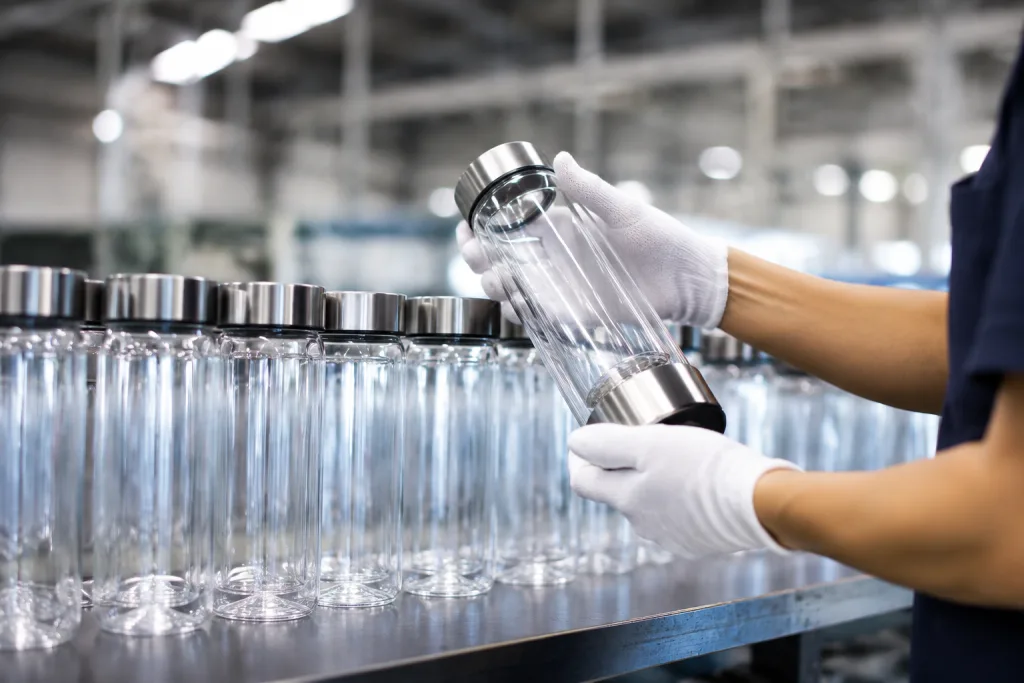
Price, MOQ, and lead time reality
Price gets messy fast when buyers compare a factory thermos quote with a generic online listing. Split it into product cost, decoration, and packaging. In Zhejiang, a standard borosilicate glass insulated water bottle bulk order with one-color print and a basic gift box usually lands around USD 3.20-4.60 FOB at 1,000 pcs. A stainless vacuum custom thermos with laser logo and an upgraded gift box moves into the USD 4.80-6.80 range, and the lid tooling can push it higher if the buyer wants a new cap shape.
Typical commercial terms from a real manufacturer thermos source look like this: one buyer once sent a PO with the color code typed wrong, and we had to stop the line before packing 12,000 pcs.
- MOQ: 1,000 pcs for stock structure, 3,000 pcs for custom color or lid
- Sample lead time: 7-10 days
- Mass production: 25-35 days after sample approval
- Monthly output: 300,000 units from a mid-sized thermos factory in Hangzhou or nearby Zhejiang
Do not let low unit price hide breakage allowance. If the bottle is fragile, a 2% damage rate wipes out the savings fast. We’ve seen this go sideways on a 20-foot container when the buyer skipped carton drop testing. That is why many thermos manufacturer quotes from China include overpack requirements, carton drop standards, and replacement terms. Ask for AQL 2.5 on appearance and AQL 4.0 on functional checks, then decide whether the math still works.
Branding methods that survive bulk
Your decoration choice should follow the material, not the mood board. For a custom thermos with stainless steel bodies, we run laser engraving, silk screen, heat transfer, and wrap labels. Borosilicate glass needs a tighter check. Direct print on glass can look sharp, but we test adhesion, dishwasher wear, and chip risk before we quote it for bulk. We saw one sample pass 50 wash cycles and fail at the edge after a 1.2 m drop test, so this is the wrong question to ask if the bottle will be handled rough on the line. In that case, a secondary sleeve or a stronger carton does more than a fancy logo.
Use this rule of thumb:
- Laser engraving: Best for stainless, durable, clean, no ink wear
- Silk screen: Good for simple logos, lower cost, but limited color count
- UV print: Strong branding impact, needs abrasion testing
- Deboss or emboss: Best on certain caps and sleeves, not always on bottles
For promotional thermos orders, I usually recommend one primary decoration and one backup version. That keeps the production line simple and avoids delays when the buyer flags a typo in the artwork file at proof stage. A thermos custom project that starts with four logo variants often turns into a schedule problem. We ship faster when the buyer locks one method, one Pantone range, and one artwork position before tooling. The math does not work any other way.
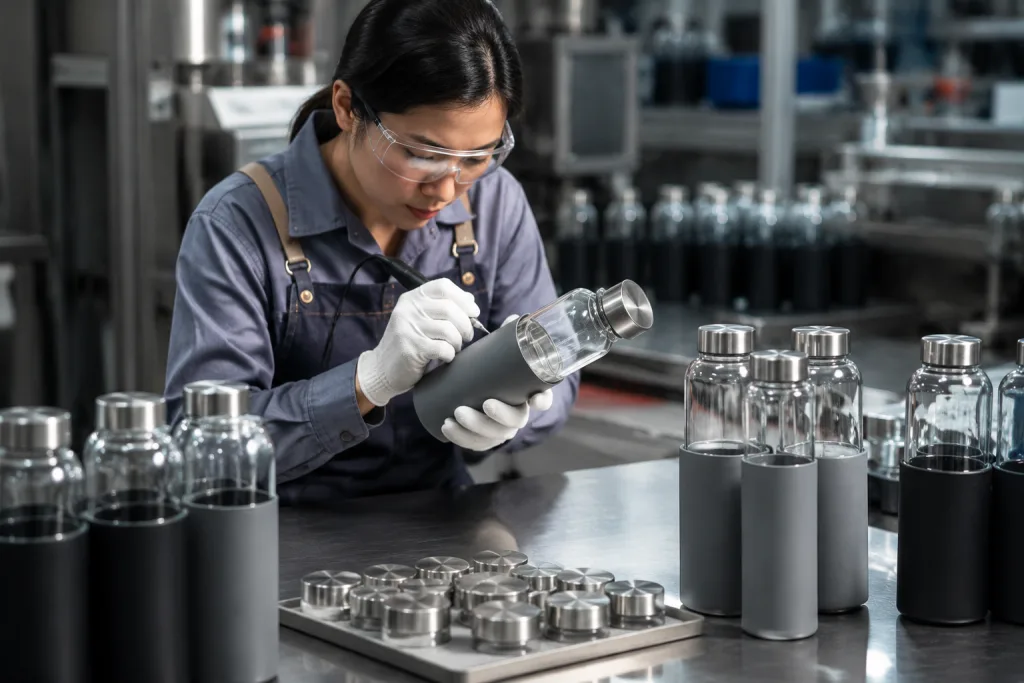
Buying from China without surprises
If you source from China, the gap between a solid and a weak thermos supplier is not the sales pitch. It is breakage control, packing spec, and inspection discipline. A real thermos factory should show raw material certificates, trial-assembly photos, and carton loading details. In Zhejiang, the better shops are blunt about what passes and what gets rejected. That saves time.
Ask for these controls before you send a deposit:
- Material compliance: REACH for EU, food-contact declarations for cups and lids
- Process control: Vacuum retention checks, thermal cycle testing, cap torque testing
- Inspection: Pre-shipment AQL report with photos and carton counts
- Packaging: Individual box, insert, outer carton, and drop-test confirmation
For North America and Europe, the better result comes from a thermos partner that understands retail compliance, not just factory output. We run repeat orders on the same gasket, the same cap fit, the same carton size, and the same logo position. That is how you cut returns and keep reorder lead times steady. If a buyer says the artwork is “close enough,” the math does not work.
Request a factory quote for your bulk thermos
Send target capacity, logo method, and carton spec. We will quote a practical China factory option with MOQ, lead time, and packaging.
Frequently asked questions
Is borosilicate glass better than stainless for bulk thermos orders?
Better depends on the channel. Borosilicate glass is stronger than ordinary glass and handles thermal shock well, but it is still less impact-resistant than stainless. If your order is for premium gifting or office use, it can be a good fit. If the bottles will go into outdoor retail, e-commerce, or field use, stainless usually cuts claims. In bulk, the cost difference can be only USD 1.00-2.00 per unit, but the breakage risk can be much higher with glass. For most thermos bulk retail programs, stainless is the safer commercial choice.
What MOQ should I expect from a thermos manufacturer in China?
For stock shapes, many manufacturers in Zhejiang quote 1,000 pcs MOQ. If you want a custom lid, special coating, or unique packaging, 3,000 pcs is more realistic. A fully new mold can push it to 5,000 pcs or more. Sample time is usually 7-10 days, and mass production is typically 25-35 days after approval. If a thermos supplier says they can do 200 pcs at factory pricing, check whether it is truly custom or just a stock item with a logo.
What price range is normal for a custom thermos FOB China?
For a basic custom thermos, FOB China pricing often starts around USD 3.50-4.50 per unit at 1,000 pcs. Better packaging, laser engraving, or upgraded lids can raise that to USD 5.00-7.00. Borosilicate glass insulated models may sit slightly lower or similar depending on carton and breakage protection. You should ask for separate line items for bottle, decoration, insert, and master carton. That is the only way to compare a manufacturer thermos quote fairly.
How do I reduce breakage in borosilicate glass insulated water bottle bulk shipments?
Use molded inserts, not loose kraft dividers. Specify a 3-layer or 5-layer export carton, and ask the thermos factory for drop-test results before shipment. Keep individual boxes tight so the bottle cannot move inside the carton. For a fragile liner, I would also ask for 1-2% spare quantity packed in the same lot. If you are shipping to Amazon or DTC, make sure the outer packaging can survive FNSKU labeling and transit vibration. Packaging matters more than a small price discount.
Can I mix promotional thermos and retail thermos in one order?
Yes, but only if the base structure is the same. For example, you can order one bottle body with two logo versions or two colorways. If you mix different caps, capacities, or liner constructions, you usually create separate SKUs and lose production efficiency. A good supplier thermos partner in China will tell you where the split point is. For distributors thermos programs, I recommend one base mold, two decoration options, and one packaging spec to keep replenishment simple.