Key Takeaways
- Ask for a complete RFQ spec: 500 ml size, 2.0-2.5 mm wall thickness, closure type, and decoration method.
- For custom bottle programs, budget USD 1.35-2.80 per unit FOB China depending on lid, print, and packaging.
- A practical sample cycle takes 7-12 days for prototype plus 3-5 days for courier transit.
- For bulk gym water bottle orders, insist on AQL 2.5 major and 4.0 minor, plus REACH and LFGB where needed.
For a gym chain or a fitness brand, the borosilicate question is not “premium or not.” The real test is whether the supplier can hold wall thickness, pack bottles so they survive transit, and ship on schedule without handing you a claims pile. A borosilicate glass gym water bottle supplier should put wall thickness, cap torque, drop-test limit, and print method in one email. If that takes three follow-ups, we already know the line is weak.
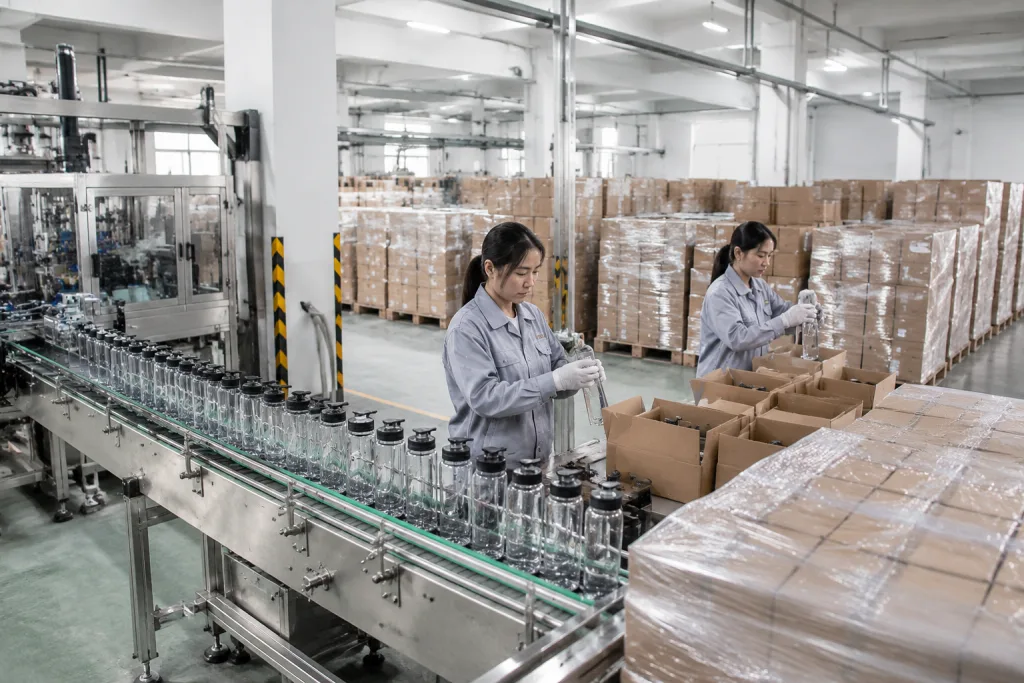
If you source in China, Zhejiang in particular, you see plenty of factories that can make a decent bottle once. Fewer can run the same spec for a season. At BottleForge Industrial in Hangzhou, we run 180,000 units a month, with a 3,000-piece MOQ for custom colors and logos and a normal 25-35 day lead time after sample approval. QC pulled the sample for a 1.2 mm wall check last week, and that is the gap between a one-off buy and a real bulk fitness water bottle program.
Start With The RFQ, Not The Price
I’ll rewrite the section in-place, keep the HTML structure intact, and make it read like a factory-side sales engineer wrote it. Then I’ll do a quick pass to strip any AI-ish phrasing and keep the sourcing details concrete.If you want a clean sourcing job, start with a tight RFQ. A borosilicate glass gym water bottle supplier does not need a long story; we need the specs that let us price without guessing. Send target capacity, lid style, logo method, packaging target, destination market, and annual volume. If you only ask for “custom gym water bottle pricing,” you get a nice-looking number and a painful sample round later.
We run better quotes from a structured PO line list on the first inquiry:
- Product: 500 ml borosilicate glass bottle
- Glass: 2.2 mm wall thickness, clear body
- Lid: PP screw lid with silicone seal
- Decoration: one-color silk screen or laser engraving
- Packaging: egg crate, white box, or retail carton
- Compliance: REACH, LFGB, food-contact declaration
For fitness brands, the cheap quote usually hides the costly part: packaging and breakage. A bulk sports water bottle can sit at USD 1.10 FOB until you add a molded insert, barcode label, and carton drop test. We saw one buyer flag a PO because the carton size was written as 24 x 18 x 16 cm on the inquiry and 240 x 180 x 160 mm on the draft—same box, different line item, different headache. If you are a distributor fitness water bottle buyer, split the forecast at 5,000, 10,000, and 50,000 units. That gives the factory room to lock tooling, print setup, and carton planning before the line starts.
Good RFQs save one full sample round. Bad RFQs give you three rounds and a week of email delay.
Choose The Right Glass Build
I’ll rewrite just the prose inside the existing tags, keep the HTML structure intact, and make it read like a factory-side sales engineer wrote it.Borosilicate is not a slogan. It takes thermal shock better than soda-lime glass, and that matters when a buyer washes bottles in hot water or fills them with a 70°C drink. For a custom sports water bottle program, it gives you cleaner clarity, fewer crack claims, and a more believable premium line. The math is simple: borosilicate usually lands 15-30% above ordinary glass, depending on shape, print, and whether the lid is a basic PP cap or a more complex shaker top.
For gym use, do not overbuild the bottle. We run 500 ml bodies at 2.0-2.5 mm wall thickness for most orders, and that range holds up without turning the bottle into a brick. A 650 ml customized fitness water bottle with a thick base can survive a drop test, but the freight quote will punish you; we’ve seen buyers push back hard once the carton weight jumps by 18%. For the lid, the closure does the real work. If the bottle is for shaker use, specify a vented cap or insert. If it is a clean hydration bottle, a simple PP lid with a silicone gasket is enough.
- Thermal shock: ask for supplier test data, not a promise
- Weight: target 250-380 g for a 500 ml glass body with lid
- Seal: silicone ring should pass leak test after 1,000 open-close cycles
- Surface: choose clear, frosted, or sprayed finish before sampling
When a buyer asks for a customizable sports water bottle, the right move is to simplify the bottle first and customize the lid, logo, and carton second. QC pulled one sample last month with a loose gasket, and that came from trying to do too much on the first shot. Keep the bottle stable, then build the program around it.
Make Sample Approval Ruthless
I’ll rewrite just this section, keep the HTML intact, and make the copy sound like a factory-side sales engineer wrote it.Sampling is where most custom bottle programs go off the rails. Do not approve a sample because it “looks good.” Approve it only when it hits measurable targets. A supplier in Hangzhou, Zhejiang should ship a physical sample in 7-12 days, and for a true custom made shaker bottle or custom logo shaker bottle, plan on one tooling round if the cap structure is new. If the factory cannot explain the sample build clearly, the bulk order will not improve later.
Ask for these sample checkpoints before you sign off:
- Capacity tolerance: within ±5%
- Drop test: 1.0 m onto carton corners, no functional leak
- Leak test: inverted for 24 hours at room temperature
- Logo adhesion: no visible wear after 50 wash cycles
- Fit test: lid threads engage smoothly, no cross-threading
Your sample PO line items should match the final order line by line. List the glass bottle, lid, seal, print method, sample carton, and courier charge separately. That makes price talks cleaner later. We once caught a PO typo on “seal” versus “sear,” and the buyer flagged it before the line started. If you are buying a bulk shaker bottle for a gym chain, test it with staff first. They will tell you if the cap is too stiff, the mouth feels awkward, or the bottle knocks around in a treadmill cup holder. That is the feedback that matters.
A good borosilicate glass gym water bottle supplier will also tell you what not to do. Do not ask for a full-body wrap print on a curved clear bottle if your retail margin is tight. It looks clean in a mockup and ugly in the quote. We run a 60 mm print zone on most first orders, and that is usually the safer move. For most distributors shaker bottle programs, one-color logo placement on the front or back is the better first run.
Price The Bulk Order Properly
I’ll rewrite the section in-place, keep the HTML structure untouched, and tighten the pricing language so it sounds like a factory-side sales engineer.Bulk pricing comes down to five levers: glass weight, lid complexity, decoration, packaging, and volume. For standard custom gym water bottle programs, FOB China pricing usually sits between USD 1.35 and USD 2.80 per unit. We ran one 500ml line at 290g and another at 360g; the heavier body pushed the quote up by 0.14 USD before print. A plain bottle with a standard lid and one-color logo sits on the low end. A frosted body, printed measurement scale, custom lid color, and retail carton move the number up fast. That is normal.
Do not let a supplier bury everything in one unit price. Ask for a line-by-line PO structure:
- Glass body: USD 0.55-1.10
- Lid and gasket: USD 0.20-0.55
- Decoration: USD 0.08-0.35
- Packaging: USD 0.10-0.40
- Master carton and labor: USD 0.05-0.18
If you are a distributor sports water bottle buyer, volume tiers change the math. At 3,000 units, a custom bottle prices one way; at 10,000 units, the lid tool and print setup spread out enough to cut 8-15% from unit cost. We had a buyer flag a PO typo once: “3,000” turned into “30,000,” and the gap showed up immediately in the tooling line. For a custom shaker bottle, add cost for the mixing insert, anti-slip sleeve, or measurement scale. If the supplier quotes far below market, ask whether breakage allowance and outer carton spec are included. We’ve seen that go sideways. In China, the surprise is usually an unquoted detail, not the glass itself.
When comparing suppliers in Zhejiang and other parts of China, ask for the same Incoterms every time, usually FOB Ningbo or FOB Shanghai. Otherwise, you are comparing apples to landed apples. QC pulled the sample on one 24oz order and found the freight carton spec changed from 5-ply to 3-ply; that alone moved the landed cost by 0.09 USD. A serious distributor fitness water bottle program needs clean cost control before it needs a pretty mockup.
Lock Quality Controls In The PO
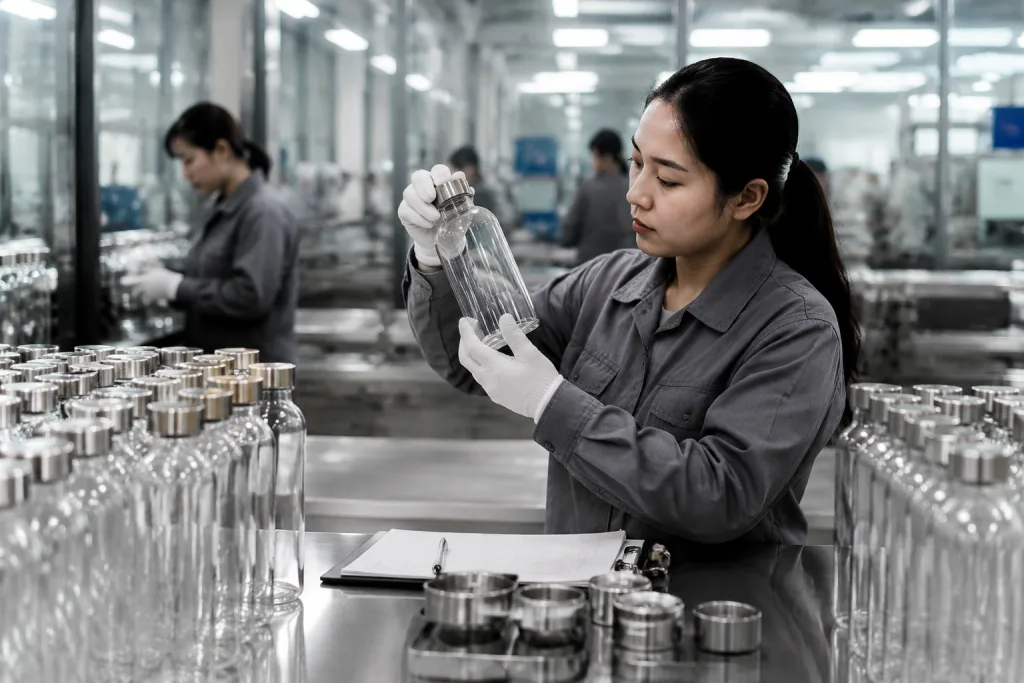
Quality control is not a postscript. Put it in the purchase order, and the supplier reads it as a hard requirement, not a side note. For borosilicate glass drinkware, the line problems we see are cracks at the neck, leakage from the lid seal, and decoration loss after the first wash. If you spell out the checkpoints, the factory can catch them before cartons move.
Your PO should include these items:
- Pre-production sample signoff before mass run
- In-line inspection at 30% production
- Final inspection under AQL 2.5 major / 4.0 minor
- Packaging compression and drop test
- REACH, LFGB, or FDA food-contact documents as required
For a 10,000-piece gym bottle order, we ask for first-off photos, lid torque checks at 0.8-1.2 N·m, and carton counts before packing closes. QC pulled the sample once on a 24 oz bottle and found a logo offset of 2 mm; the buyer flagged it, and we reprinted that same day. If you are buying a customizable shaker bottle for North America, get FNSKU, UPC, and carton labels checked before the goods leave Zhejiang. Fixing that in your warehouse costs more, and the math does not work.
Good factories in China also know how to handle breakage allowance. For glass, 1-2% natural loss can be normal depending on bottle shape, sleeve choice, and master carton design. If a supplier promises zero loss on a long freight move, that is the wrong question to ask. A practical custom fitness water bottle order writes the risk into the PO and keeps the line honest.
Plan Shipment, Storage, And Reorder
Once the PO is confirmed, the work shifts to logistics. Glass bottles need a carton layout that holds up, moisture-safe pallet wrapping, and a freight plan that fits the sales window. A borosilicate glass gym water bottle supplier in Hangzhou should give you carton count, pallet dimensions, and container loading efficiency before the line is done. We had a buyer flag a missing 2 mm foam spacer on a 10,000-unit run, and that small miss turned into cracked necks at the port. That is the gap between a factory and a box mover.
For a 10,000-unit bulk sports water bottle shipment, ask for:
- Inner pack count per carton
- Carton strength specification
- Pallet height and total gross weight
- Container loading plan for 20' or 40'HQ
- Lead time: 25-35 days after sample approval
Gym chains need replenishment discipline, not heroics. If sell-through is steady, set the reorder point at 30-45 days of stock. That gives Zhejiang production enough time to refill without expensive air freight. We run this math on every repeat order, and the buyer almost always asks for 2 weeks faster; the math does not work. For distributors fitness water bottle and distributors shaker bottle programs, the supplier should keep your mold, color chip, and print file on hand so the second order does not start from zero.
If you are building a custom sports water bottle line for retail, keep the first order modest and the second order smarter. The first run tells you breakage rate, retail feedback, and true landed cost; QC pulled the sample and found one carton failing the 12 kg drop check, which changed the packing spec fast. The second run is where margin starts to behave. That is the normal rhythm of sourcing in China, and it works when the paperwork stays tight and the specs stay boring.
Send your RFQ and lock your spec
Get a factory quote with MOQ, sample timing, and FOB pricing from a Zhejiang borosilicate glass gym water bottle supplier that ships at scale.
Frequently asked questions
What MOQ should I expect for a custom borosilicate bottle?
For a standard custom gym water bottle, a realistic MOQ is 3,000 pieces per design and color. If you add a new cap mold or a complex shaker insert, the MOQ can move to 5,000 pieces. For simple logo changes only, some Zhejiang factories can start at 1,000 pieces, but your unit price will be higher. Ask for MOQ by line item: glass body, lid, decoration, and packaging. That is the cleanest way to compare quotes.
How long does sample approval usually take?
A standard sample cycle is 7-12 days for production plus 3-5 days for international courier. If the sample needs a new lid structure or a special custom logo shaker bottle feature, add another week. Do not approve only by photo. Check fit, leak resistance, print quality, and carton mockup. For buyers in Europe and North America, that extra week is cheaper than a container dispute later.
What compliance documents should I request?
For EU and North America, ask for REACH, LFGB where needed, and a food-contact declaration. If you are shipping into retail or Amazon channels, you may also need carton labels, UPC, and FNSKU setup. For a borosilicate glass gym water bottle supplier, ask whether the lid material is BPA-free and whether the seal is food-grade silicone. Keep the document request in the PO so nothing gets missed.
Can one supplier handle both bottles and shakers?
Yes, if the factory has both glass molding and closure capability. A good supplier can produce a custom shaker bottle, a custom made shaker bottle, and a plain hydration bottle under one quality system. The key is whether they control lid fit and decoration in-house or outsource them. If the supplier cannot explain that split, you should be cautious. Mixed programs work best when the same QC standard applies to every SKU.
What unit price is reasonable for bulk orders?
For a basic FOB China order, expect about USD 1.35-2.80 per unit depending on size, lid complexity, and decoration. A simple bulk gym water bottle with one-color print sits near the low end; a frosted, retail-packed, custom logo shaker bottle sits higher. If a quote is far below that range, check whether packaging, testing, and breakage allowance are excluded. Zhejiang factories usually price more honestly when the spec sheet is complete.