Key Takeaways
- Borosilicate glass usually adds 12-25% to unit cost versus ordinary glass, but it improves heat shock resistance and premium positioning.
- Typical MOQ starts at 1,000-3,000 pcs for stock shapes, while custom molds often need 5,000-10,000 pcs.
- Lead time is usually 20-35 days for decorated stock items and 45-70 days for new custom tooling.
- Packaging, lid complexity, and decoration can change landed cost by USD 0.20-1.10 per bottle.
If you are sourcing a borosilicate glass fitness water bottle manufacturer, start with the wrong question and you lose money fast. A $0.40 unit-price gap means nothing if the mold lands 28 days late, the cap leaks on the first drop test, or the freight bill jumps because the pack-out was wrong. For fitness brands and gym chains, borosilicate glass is a premium move: clean look, better heat resistance, and a clearer story than ordinary soda-lime glass.
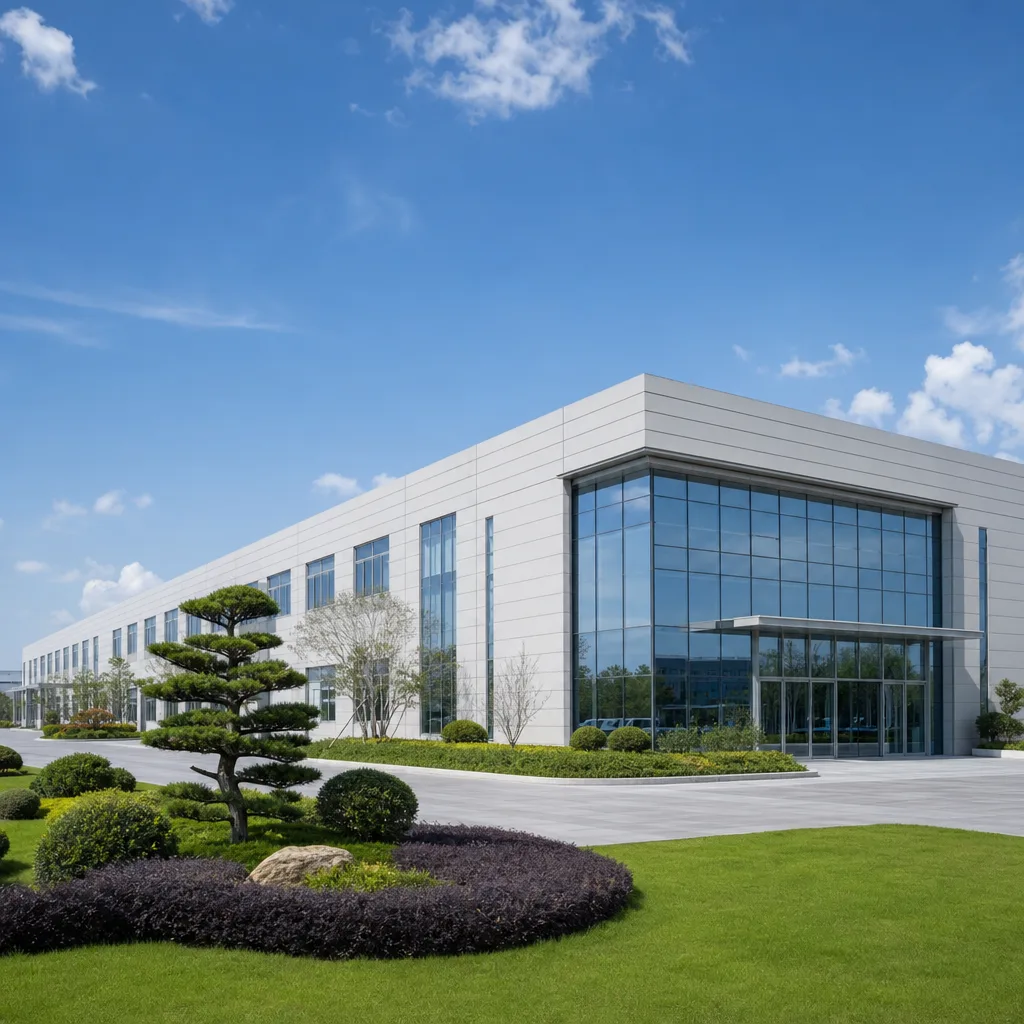
The real question is how the price is built and what the schedule looks like at 3,000, 10,000, or 50,000 units. We see this all the time in Zhejiang. The factories that ship well are not just glass shapers; they run packaging, decoration, and export paperwork as one line. At BottleForge Industrial in Hangzhou, we run about 450,000 units per month, and the buyers who move fastest lock the structure, lid type, decoration method, and carton spec before they ask for a quote. QC pulled the sample, checked the cap torque, and the order moved. The math works only when the spec is fixed.
What actually drives unit cost
I’ll rewrite the section in place, keep the HTML structure intact, and strip out the AI-ish phrasing while adding a couple of factory-floor details and tighter cost language.Buyers ask for one quote on a borosilicate glass fitness water bottle manufacturer, then try to compare suppliers from that single number. That does not work. Split it into glass body, lid, decoration, packaging, and export handling. On a 500 ml bottle, the glass body usually lands at USD 0.55-1.10, while the lid runs from USD 0.18 for a plain PP cap to USD 1.20 for a stainless-steel or leakproof build. We once had a buyer flag a PO that said “500ml” on one line and “550 ml” on the next; QC pulled the sample, and the numbers were off by 50 ml before we even talked price.
Decoration changes the math faster than first-time buyers expect. One-color silkscreen is still the cheap route and usually sits at USD 0.03-0.08 per side at volume. Laser engraving on a metal lid can be USD 0.10-0.25. Full-wrap print, gradient coating, and soft-touch finishes cost more because the line slows down and the reject pile grows. On our packaging bench in Zhejiang, an egg-crate tray, inner box, and 5-ply export carton can add USD 0.20-0.45 per set. If you are buying for a distributor fitness water bottle or distributor shaker bottle program, ask for the cost split line by line. The math does not work any other way.
- Glass body: USD 0.55-1.10 for 500 ml stock shapes
- Lid: USD 0.18-1.20 depending on sealing and material
- Decoration: USD 0.03-0.25 per bottle
- Packaging: USD 0.20-0.45 per set
MOQ tiers that make sense
I’ll rewrite this section in-place, keep the HTML structure intact, and tighten the MOQ language so it reads like a factory-side sales note.MOQ is where a lot of orders stall. We see it on the line all the time. A stock borosilicate bottle with a standard lid can start at 1,000 pcs if you accept factory colors and a single-color print. Once the buyer asks for a custom logo shaker bottle or custom gym water bottle with Pantone color matching, the practical MOQ usually moves to 3,000-5,000 pcs. New molds or a special lid system normally need 5,000-10,000 pcs because the tooling, sample prep, and setup time have to be spread across a larger run.
For a bulk fitness water bottle or bulk gym water bottle program, the tiering is straightforward. At 1,000-2,999 pcs, you pay for flexibility. At 3,000-9,999 pcs, print cost and packaging cost start to make sense. Above 10,000 pcs, carton loading, freight use, and manual handling all improve. We had one buyer flag a PO because they wanted the 1,000 pcs price and 5,000 pcs packaging; the math does not work. If you are a gym chain or retail distributor, ask a better question: where does the unit cost drop enough to justify the next tier? That depends on the lid, not just the bottle size. A 450 ml custom shaker bottle with a PP lid behaves differently from a 600 ml customized sports water bottle with a stainless cap. QC pulled the sample and the lid torque test changed the quote.
Practical MOQ guide
- 1,000-2,999 pcs: stock bottle, simple logo, standard packaging
- 3,000-4,999 pcs: custom print, color lid, upgraded insert card
- 5,000-10,000 pcs: custom mold, special lid, branded box
Lead time by production stage
Lead time is a chain, not one number. If the bottle shape is already in stock, the fastest run is usually 20-35 days after artwork approval and deposit. That covers bottle prep, silk-screen or decal work, assembly, packing, and final inspection under AQL 2.5 for major defects. If the buyer asks for a new lid color or a new print plate, add 5-10 days. If you need a new mold for a custom made shaker bottle or custom sports water bottle, add 25-45 days for tooling before mass production starts. We run the line this way every week, and the mold quote is the part that moves the calendar.
Factories in Zhejiang that export regularly know the real delay is often approval, not glass forming. QC pulled the sample, then the buyer flagged a 2 mm logo shift and a carton typo, and the schedule slipped six days. If you want a 45-day ship date, freeze artwork before the PO. For large custom gym water bottle or customizable fitness water bottle programs, plan backward from the launch date, not from the factory start date. That is the difference between a clean rollout and an airfreight bill nobody wants to pay.
- Stock item, no tooling: 20-35 days
- New print or lid color: 25-40 days
- New mold or new closure: 45-70 days
- Ocean freight to Europe/North America: 18-40 days port to port
Glass specs buyers should check
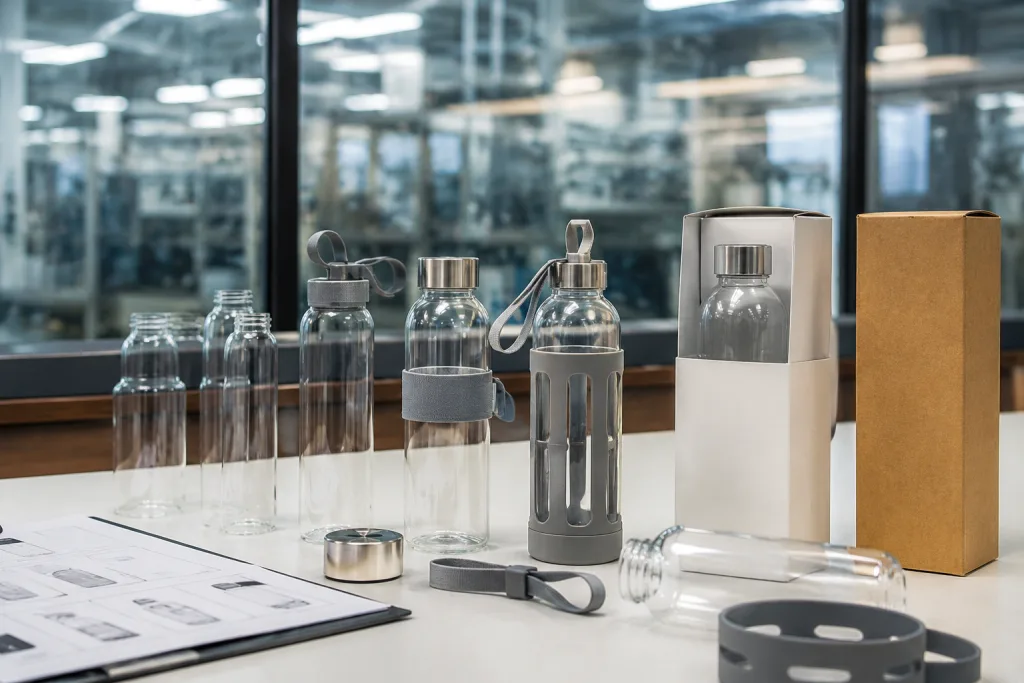
Borosilicate glass is not one spec. For a fitness bottle, wall thickness usually lands at 1.2-1.8 mm, and that range changes with diameter and fill size. Go thinner and freight drops a bit, but we’ve seen the line crack bottles during capping and carton drop tests. For a 450-600 ml bottle, empty weight usually sits at 230-420 g, depending on shape and whether you add a silicone sleeve.
Ask for thermal resistance data, chemical compliance, and finish tolerances. A good export supplier in China should know REACH for Europe and food-contact requirements for North America. If the bottle is for hot water, check whether the cap material stays stable at heat; PP and Tritan-style parts behave differently, and the buyer flagged this after one PO called for a 90°C fill but a low-grade lid. For a bulk sports water bottle going into gyms, a straight-wall body with a wide mouth and one-hand opening keeps the spec simple. For a bulk shaker bottle, the closure system matters more than the glass. Bad seal, bad sale.
- Wall thickness: 1.2-1.8 mm typical
- Empty weight: 230-420 g for 450-600 ml
- Compliance: REACH, food-contact declaration, test reports on request
- Durability: inspect rim finish, base thickness, and cap torque
Decoration choices that change margin
Decoration is where a lot of custom fitness water bottle programs give up margin without seeing it. Silkscreen printing still runs the show because it is cheap, fast, and stable for one- to two-color branding. If you are sourcing a custom logo shaker bottle for retail or a custom gym water bottle for a chain rollout, silkscreen is usually the safest call. Laser engraving works on metal parts, but many lid structures will not take it. UV print gives more color freedom, and it also adds labor plus extra QC checks at the line.
For a premium distributor sports water bottle program, ask a different question: does the bottle need one logo, or a full brand system with capacity marks, use instructions, and a QR code? Every extra print area adds setup time and scrap. On a 5,000 pcs run, a second print position may add USD 0.04-0.06, but a third specialty finish can push rejection up 2-4%. The buyer flags that number fast when pallets are headed to a warehouse club or gym chain. We have seen this go sideways. Zhejiang factories with export habits will tell you the line: keep the logo clear, keep the carton clean, and do not over-spec the bottle when the channel does not pay for it.
- Silkscreen: best for 1-2 color volume branding
- Laser engraving: works best on metal lids and flat caps
- UV print: fits full-color logos and small graphics
- Soft-touch coating: premium feel, but adds cost and QC risk
How to buy for chains and distributors
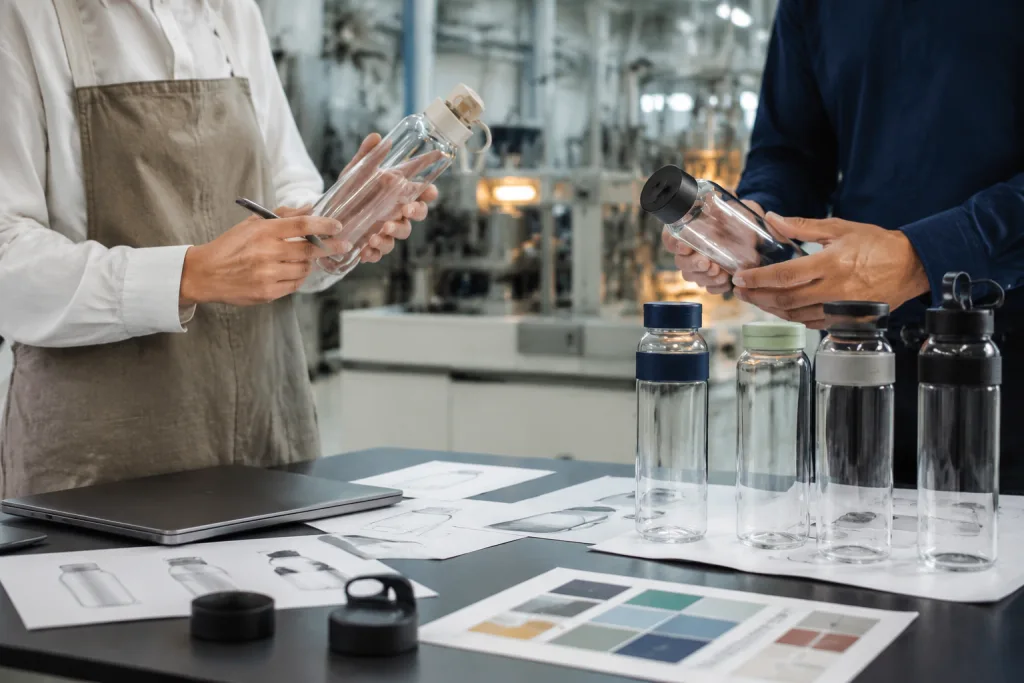
If you are a fitness brand, gym chain, or distributor buying fitness water bottles, the buying model has to match sell-through. Chains want the same look every time, fixed carton count, and fast replacement stock. Distributors care about margin, pallet fill, and not sitting on 6 slow SKUs. That is why a distributor shaker bottle order usually runs better with one body shape, two lid colors, and one print method. Start simple. Expand later if the numbers work.
Ask the factory for FOB pricing, carton configuration, and case pack before you approve samples. FOB Ningbo or Shanghai is standard for Zhejiang exporters, and the gap between 24 pcs per carton and 36 pcs per carton can swing freight enough to wipe out a low unit price. We had a buyer flag a PO typo once—`24ctn` became `42ctn`—and the whole carton plan went sideways. For a custom sports water bottle program, ask for a pre-production sample, a bulk confirmation sample, and an AQL inspection plan. If your retailer sells on Amazon or a similar channel, you may also need FNSKU-ready labels and individual polybagging. The right borosilicate glass fitness water bottle manufacturer is the one that ships repeat orders without changing the carton math every month.
Good sourcing is boring: same spec, same pack, same lead time, no surprises.
Request a factory quote with real cost breakdown
Send your target capacity, logo method, carton spec, and order volume. We will quote FOB pricing, MOQ tiers, and lead time from Zhejiang with no guesswork.
Frequently asked questions
What is a realistic MOQ for a custom borosilicate glass fitness bottle?
For a stock bottle with your logo, 1,000-3,000 pcs is realistic. If you want a custom lid color, custom box, or multiple print positions, expect 3,000-5,000 pcs. New molds or a special closure usually need 5,000-10,000 pcs because the factory has to recover tooling and setup. In Zhejiang, a serious export factory should quote each tier separately, not hide everything in one blended number.
How much does a borosilicate glass fitness water bottle cost?
For 500-600 ml, a simple export-ready bottle usually lands around USD 0.95-2.40 FOB depending on lid, print, and packaging. A basic glass body may be USD 0.55-1.10, while a better leakproof lid can add USD 0.40-1.20. If you add a sleeve, retail box, and second-color print, the cost climbs quickly. Always ask for the split, not just the total.
How long does production take for custom sports water bottles?
Stock shapes with simple logo work usually take 20-35 days after deposit and artwork approval. A new print plate or lid color can add 5-10 days. If you need a new mold for a custom made shaker bottle or custom gym water bottle, plan 45-70 days including tooling. Ocean freight to Europe or North America adds another 18-40 days depending on destination and booking window.
Can borosilicate glass bottles pass EU and US compliance needs?
Yes, if the materials and packaging are specified correctly. Ask for food-contact declarations, REACH support for Europe, and material statements for lids, seals, and inks. If your buyer wants test reports, request them before mass production. A legitimate China supplier should understand these documents and be able to coordinate third-party testing when needed.
Which product type is easier to source: shaker bottle or water bottle?
A basic custom gym water bottle is usually easier because it has fewer moving parts. A custom shaker bottle needs a better seal, often a mixing insert, and more leak testing. If you are sourcing bulk shaker bottle programs, check cap torque, gasket fit, and drop performance. The more complex the closure, the more important it is to approve samples before you scale.