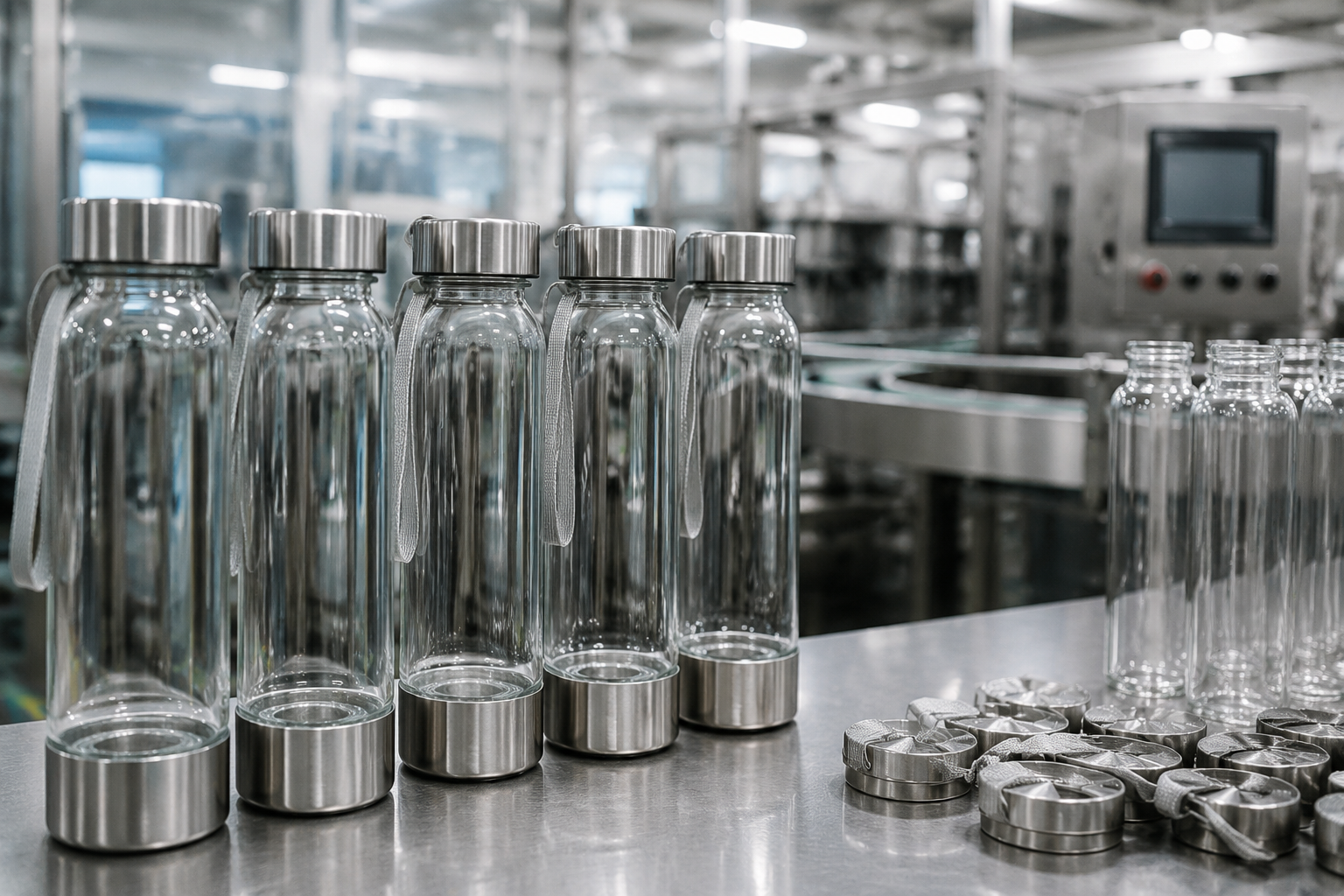
Key Takeaways
- Borosilicate glass is chosen for thermal shock resistance, not for indestructibility; 3.3 glass is the common spec.
- A realistic MOQ in China is often 3,000 units, with 25–35 day production after sample approval.
- Wall thickness, cap liner, and drop-test packaging matter more than shape if you want fewer freight claims.
- For Europe and North America, ask for REACH, food-contact declarations, and AQL 2.5 / 4.0 inspection terms.
If you are sourcing a borosilicate glass drink bottle wholesale program, the real question is not “can a factory make it?” The real question is whether the bottle survives your market, your freight budget, and daily use without turning into a claims problem. We’ve seen this go sideways on a 0.5 mm wall spec that looked fine on a sample table. A clean sample is easy. A production spec from China or Zhejiang is the part that matters.
For procurement managers and brand owners, the buy decision usually comes down to four points: glass formula, closure system, decoration method, and ship method. On our line, MOQ may start at 3,000 units, lead time runs 25–35 days after approval, and monthly output can reach 150,000 units if the artwork and packing are locked early. QC pulled the sample and checked the cap torque twice because a loose lid creates more trouble than a scratched logo. Buy the bottle as a system, not as a piece of glass.
Start with the use case
Before you compare quotes, lock down the bottle’s job. A borosilicate glass drink bottle for cold brew is a different spec from a tea infuser bottle, a gym bottle, or a retail gift item. If the brief stays vague, the factory fills the gap with a generic spec, and you pay for it later in breakage, returns, or slow sell-through. We see that go sideways all the time, whether the order ships from Zhejiang or another China base.
Start with three hard questions: what liquid goes in, what temperature range the user will see, and how much abuse the pack must survive in transit. Borosilicate handles thermal shock better than soda-lime glass, but the delta still needs a number. If the use case is hot-fill plus ice water, ask for a clear test plan, like ASTM-style thermal shock testing or an internal factory test at 120°C to 20°C. If the bottle is only for iced drinks, a heavy 500 ml wall section is usually the wrong call. That extra glass adds cost and freight weight, and the math does not work in bulk drinkware and drinkware wholesale programs.
Good buyers also define the commercial role. Is this the best wholesale drink bottle in a premium assortment, or a range item that sits beside bulk canteen, canteen bulk, or wholesale canteen SKUs? Premium retail wants a cleaner finish and tighter cosmetic AQL; marketplace and promo channels care more about landed cost and carton survival. QC pulled the sample on a 2 mm chip once, and the buyer flagged it before the line ran. If you cannot name the use case, the supplier cannot quote the right bottle.
Choose the right glass spec
Not all borosilicate behaves the same on the line. Ask for borosilicate 3.3 glass, the standard wall thickness, and the exact neck finish so your cap actually fits. For most wholesale drinkware runs, we see 1.8 mm to 2.5 mm on lightweight retail bottles and 2.5 mm to 3.0 mm on heavier premium builds. Thicker is not the answer by default. A 290 g bottle ships differently from a 210 g bottle, and the buyer usually feels that in hand before they ever read the spec sheet.
The wall spec sets the rest of the job: weight, forming tolerance, print area, and breakage rate. A 500 ml bottle at 210 g and a 500 ml bottle at 290 g do not behave the same in packing cartons or on a pallet. If you are comparing borosilicate glass drink bottle wholesale quotes, ask for a full drawing with tolerance bands, not a hero photo and an outer size. We ship a lot of 500 ml shapes, and the factory that works cleanly will state height, body diameter, and mouth finish within a measurable range, often ±1.5 mm to ±2.0 mm on key dimensions depending on tooling and shape.
For Europe and North America, ask for food-contact declarations and confirm the glass is lead-free and cadmium-free. For China production, ask for batch traceability too. If QC pulled the sample and nobody can tell you which furnace batch it came from, that is a weak control point. We’ve seen that go sideways when a buyer scaled from 1,000 units to 20,000 and the color and wall weight drifted. That is the wrong question to ignore.
Buy borosilicate for thermal performance and brand positioning, not because “glass is glass.” The spec decides the result on the shelf and in transit.
Make the closure do the work
The cap is where a borosilicate glass drink bottle wholesale order turns smooth or turns into a headache. The glass body fails in plain sight; the closure fails in the truck, in the carton, and on the shelf. Leaks, odor hold, weak threads, and liners that warp after heat exposure all start here. We run a lot of these samples through the line, and the buyer usually flags the cap before they ever complain about the bottle.
For cold beverage use, PP, ABS, bamboo-accent, and stainless caps all work. The right pick depends on the channel, and this is the wrong question to ask if you start with appearance alone. For premium drinkware wholesale, a stainless overcap with silicone seal is standard. For light bulk drinkware programs, a simple PP lid keeps the cost down. Ask for torque data in N·cm, then ask for 24-hour leak tests in upright and inverted positions. If the bottle will hold carbonation or warmer liquids, pressure control needs to be set before tooling, not after the PO typo shows up and the order is already on the schedule.
Decoration changes the closure spec too. If the logo sits on the shoulder or neck, it can eat into the grip area or block the shelf face. Keep that print zone clear. If you need laser engraving on a metal lid or silkscreen on glass, lock those choices early. QC pulled the sample on one job because the hinge cracked at 1,000 cycles; that lid looked fine in photos and failed on the bench. For buyers handling drinkware bulk orders, the closure is where returns start or stop.
Test packaging like freight
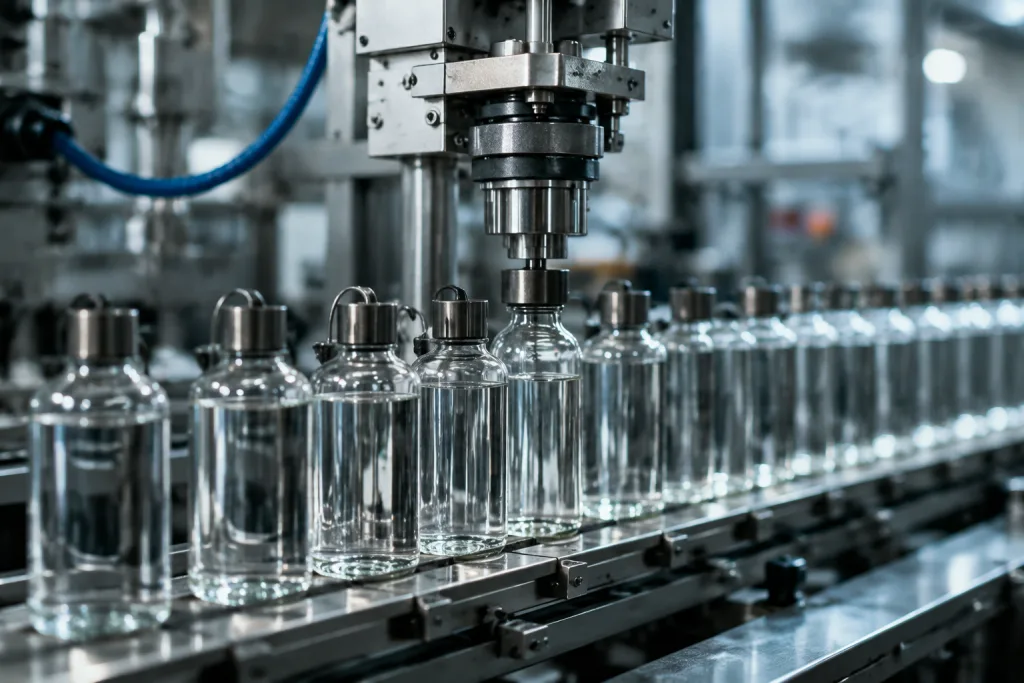
Glass bottles are bought in transit, not in the factory. Plain and simple. Packaging is part of the product spec, so when you source from China or Zhejiang to Europe or North America, treat the shipper carton, inner tray, and dividers as one unit. A 3-layer brown carton may pass domestic delivery, then fail once it sees ocean freight, warehouse handling, and last-mile sortation. We’ve seen that go sideways on a 12 kg master carton.
Ask for drop-test data at carton level, not only product level. That’s the right question to ask. A workable target is a 60 cm to 80 cm drop on corners and edges for retail-ready packed goods, with no leakage and no major cosmetic failure. On the line, QC pulled a sample that looked fine until the corner seam split at 70 cm. For bulk canteen or bulk growler formats, the outer box has to manage higher mass and a harder hit. For beer growler bulk or beer growler wholesale bulk programs, add molded pulp or EPE dividers so the bottles do not touch. For beer tumbler bulk and beer tumbler wholesale bulk items, scuffing and rim chips show up first, so spacing and surface protection matter more than carton thickness.
Do not skip pallet pattern and carton count. A bottle that survives a 1-meter lab drop can still fail when 1,200 cartons stack in a container. If you need retail pack with barcode and FNSKU labels, tell the factory before the packing order is released. We ship a lot of these, and a PO typo on label position can force a full rework. That costs days. On a China export program, days hurt more than the carton upgrade.
Set commercial terms that hold up
Price only means something when it sits on a real trade term. For borosilicate glass drink bottle wholesale sourcing, compare FOB, not loose ex-factory quotes that leave out carton, print, or packing charges. A quote that looks 6% cheaper can flip fast once the buyer flags custom color lids, molded inserts, or test certificates on the PO.
Ask for the full commercial split: unit price by MOQ tier, mold cost if any, sample charge, printing charge, packaging charge, and the fee for third-party inspection. A practical MOQ is 3,000 units for a plain bottle, 5,000 units for a more complex shape, and 10,000 units if you need custom color or special closures. Lead time is often 25–35 days after sample sign-off for standard builds, and decoration plus packaging can add 7 to 10 days. On our line in Zhejiang, one furnace can support 150,000 units per month, but the order still moves at the speed of approval. That’s the math.
Set AQL before production starts. A common baseline is AQL 2.5 for major defects and 4.0 for minor defects, with a separate rule for critical breakage. QC pulled the sample last week and found one hairline crack at the neck finish, the kind of miss that becomes a claim if you ignore it. If your brand sits in premium retail, tighten cosmetic standards. If you are buying alcohol flask bulk, alcohol flask in bulk, alcohol flask wholesale, or alcohol flask wholesale bulk SKUs alongside glass bottles, keep the inspection standard aligned across the range so inbound checks do not turn into a cleanup job. The same applies to wholesale growler, growler wholesale, growler bulk, or wholesale canteen projects.
Match the bottle to channel economics
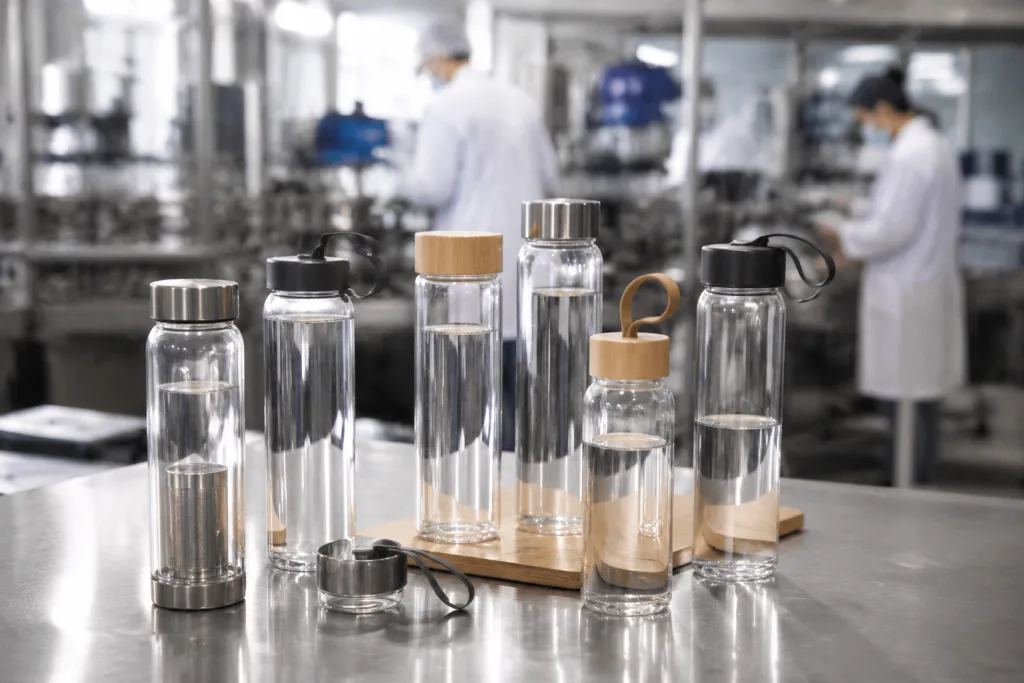
The right bottle for a DTC brand is often wrong for a distributor, and the reverse is true too. We’ve seen a 420 ml borosilicate bottle pass a DTC launch with a matte sleeve and still get rejected by a chain buyer because the case pack was messy. DTC can carry a slightly heavier bottle if the unboxing story sells; a distributor wants stackable cartons, low breakage, and clean claims handling. That gap moves the sourcing call more than most buyers expect.
If you sell to retail chains, put shelf impact, barcode placement, and case pack efficiency first. If you sell through Amazon or marketplace channels, the packaging has to survive FBA intake and warehouse sorting. That means FNSKU labels in the same spot on every unit, carton marks that match the PO, and no loose accessories rolling around in the master carton. If you are building a broader line that includes canteen wholesale, canteen bulk, wholesale drink bottle, or wholesale drinkware options, the borosilicate SKU should sit at the premium end, not act like the price leader. Let the bottle earn margin through finish, testing, and pack-out control.
One buying rule we use on the line: do not choose the cheapest bottle unless you already know which complaint you want to live with. Chips in transit, foggy print, or a cap that weeps after 12 days in a carton test are not savings. The math does not work. Lock the spec, approve one golden sample, and keep the factory from changing wall thickness, cap liner, or carton structure mid-run.
Send your spec and get a factory quote
We can review your drawing, confirm MOQ, and align glass, cap, and packaging before production starts. China and Zhejiang factory terms, no guesswork.
Frequently asked questions
What is the typical MOQ for borosilicate glass drink bottle wholesale orders?
For a standard shape, a practical MOQ is often 3,000 units in China. If you need custom color lids, special printing, or a new mold, expect 5,000 to 10,000 units. Some factories in Zhejiang can handle smaller trial runs, but price per unit rises fast below 2,000 units. Ask whether the MOQ is per color, per size, or per total order, because that changes the cost curve more than buyers expect.
How do I check if the bottle is really borosilicate glass?
Ask for the glass composition and the thermal shock test result, not just a marketing label. Genuine borosilicate 3.3 glass is commonly used for better heat resistance. A reliable supplier should provide batch traceability, food-contact declarations, and an internal test such as 120°C to 20°C thermal shock or an equivalent standard. If the factory cannot explain wall thickness, weight, and furnace batch, the claim is weak.
What lead time should I budget for production in China?
For a normal borosilicate bottle, 25–35 days after sample approval is realistic. Add time if you need custom packaging, multiple decoration steps, or third-party inspection. If the supplier says 10 days for a full custom build, check carefully. In Zhejiang and other Chinese manufacturing hubs, fast claims are common; real lead time depends on material availability, decoration queue, and packaging readiness.
What quality checks matter most for this product?
Focus on three points: visual defects, dimensional tolerance, and leak performance. Use AQL 2.5 for major defects and 4.0 for minor defects as a starting point, then tighten the standard if the bottle is premium retail. For closures, request torque and leak testing. For shipping packs, do carton drop tests at 60–80 cm. For Europe and North America, also confirm REACH and food-contact compliance.
Can I use this bottle for beer or other specialty drinks?
Yes, but the cap and packaging spec must match the beverage. For beer growler wholesale, beer growler bulk, or beer growler wholesale bulk programs, you need a stronger seal and better carton protection than for still water. Beer tumbler bulk and beer tumbler wholesale bulk items may need different opening geometry and decoration. For alcohol flask wholesale or alcohol flask in bulk, the focus shifts to closure security and premium presentation. Do not reuse one generic spec across all categories.