Key Takeaways
- A real borosilicate glass drink bottle private label RFQ should include capacity, wall thickness, lid spec, logo method, and target MOQ of 3,000 to 5,000 pcs
- Sample cost is often USD 30 to 120 per SKU, with 7 to 14 days for plain samples and 12 to 20 days for decorated samples
- Bulk lead time from a canteen factory in Zhejiang is commonly 30 to 45 days after sample approval and deposit
- For export buyers, ask for REACH, LFGB, FDA, and an AQL 2.5/4.0 inspection plan before you sign the PO
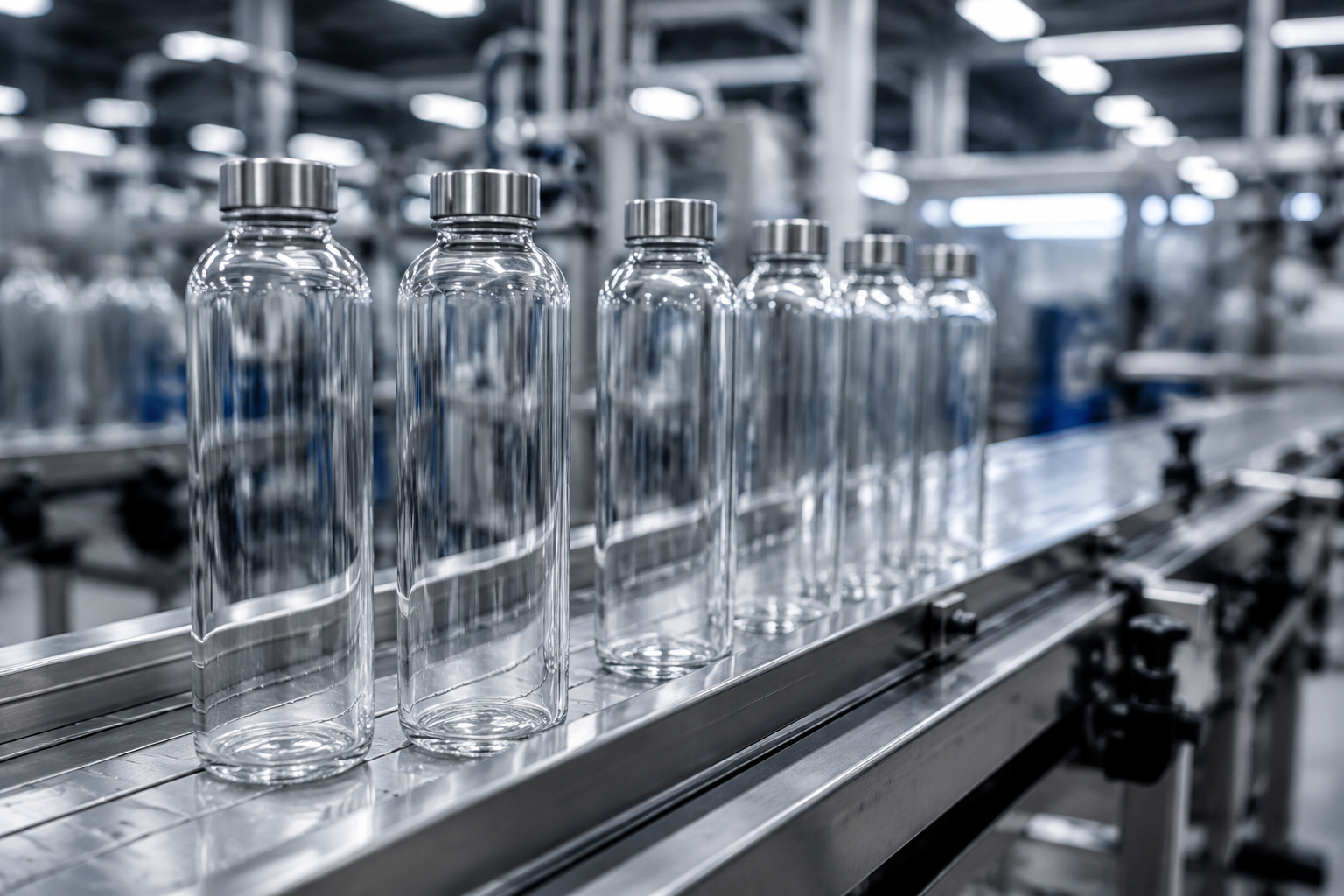
If you are sourcing a borosilicate glass drink bottle private label program, the bottle is not the hard part. The hard part is locking down wall thickness, lid type, decoration, and the compliance pack before two weeks turn into two months of vague email loops. We run this kind of RFQ every week in Zhejiang, and a quick quote is not the same as a usable quote.
The cleaner way is to force the details early: exact capacity, glass grade, closure system, MOQ, test standard, and how the PO will read when you go to bulk. A decent canteen factory should answer that without drama. We usually see trouble start at the 350 ml / 500 ml split, or when the buyer says “same as sample” but the PO misses the lid gasket spec. A good supplier will point out where the cost jumps, where QC pulled the sample apart, and how to keep margin intact for Europe or North America.
Start With the RFQ, Not the Price
I’ll rewrite the HTML in place, keep the tag structure unchanged, and tune the prose to sound like a real factory-side sales engineer.If you send a one-line inquiry like “glass bottle quote please,” you get a one-line reply and usually the wrong bottle. A serious RFQ for a borosilicate glass drink bottle private label job should read like a spec sheet, not a mood board. Put the capacity in ml and oz, say straight-wall or round-bottom glass, name the lid material, and spell out the use case: office water bottle, tea bottle, or retail shelf item. If you are also sourcing a custom drinkware line, say it now. Decoration and pack-out shift fast once that scope opens.
We quote better when the RFQ is PO-ready. Ask for EXW and FOB Ningbo or Shanghai, sample charge, tooling if any, logo method, carton count, and MOQ. On our line in Zhejiang, 3,000 pcs per design is a normal private label MOQ for a stock glass body with custom print; full custom packaging often moves to 5,000 pcs. If a supplier says 500 pcs with full customization, the buyer flagged it for a reason. Usually that means stock goods with a sticker. Fine for a test order. Not fine if you want a scalable canteen customizable program.
Put these PO line items in the RFQ so you do not reopen them later:
- Product name and SKU code
- Capacity, glass thickness, and tolerance
- Closure spec, gasket material, and leak test requirement
- Logo area, color count, and decoration standard
- Outer carton and master carton dimensions
- Inspection level: AQL 2.5 major, 4.0 minor
We saw one buyer send “500 ml bottle” and a PO typo that changed the lid from bamboo to PP. QC pulled the sample, and the math did not work after the reprint. Quote this way and the factory sees you as someone who knows the cost drivers. That gets cleaner answers and fewer surprises on the line.
Lock the Bottle Spec Before Sampling
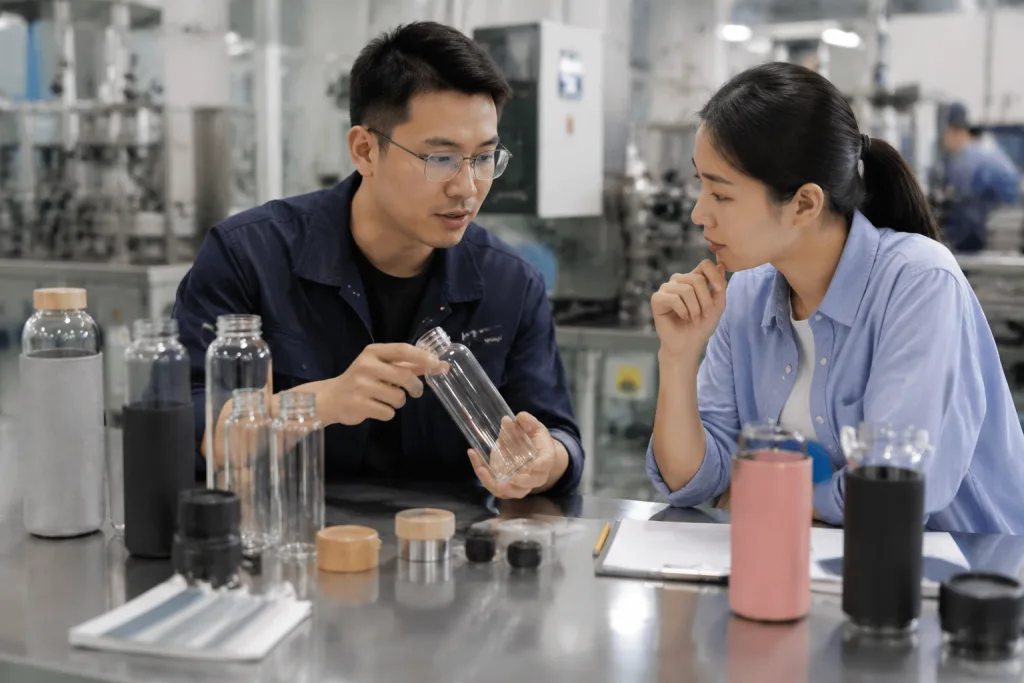
I’ll rewrite the section in place, keep the HTML exactly as-is, and tighten the wording so it reads like a buyer-facing factory note.The sample stage is where a lot of buyers burn cash by signing off on a good-looking bottle that fails in real use. For borosilicate glass, ask for wall thickness in millimeters, not “thick” or “premium.” On a 500 ml bottle, 1.8 mm to 2.2 mm is a normal working range. Go thinner and breakage risk climbs; go thicker and the landed cost moves up fast. We had one buyer flag a 2.0 mm spec because the PO said “strong bottle” and nothing else, which is the wrong question to ask. If you are building a premium line, the lid matters almost as much as the bottle. A canteen customizable program with bamboo, stainless steel, or PP lids behaves differently in leak tests, print placement, and unit cost.
Sample pricing should be clear from day one. Plain stock samples may cost USD 15 to 35 each, while custom logo samples or printed samples often land at USD 30 to 120 depending on process. A laser logo on a metal lid is cleaner for low-volume validation; silkscreen on glass works if you already locked the Pantone and curing spec. We once reworked a PO because the buyer typed “1C print” but wanted two colors, and QC pulled the sample back before the line ran. If you need a private-label canteen promotional version for a distributor canteen campaign, say whether the print is one color, two color, or wrapped around the bottle.
Do not approve samples without checking:
- Drop behavior from 60 cm onto a wooden or carton surface
- Hot-fill or cold-fill performance if the product will see temperature swings
- Thread match between cap and bottle neck
- Odor check on gasket and lid components
- Packaging fit for export cartons and e-commerce prep
Sampling from a Zhejiang canteen manufacturer should take 7 to 14 days for plain samples and 12 to 20 days for branded ones. We ship faster when the artwork is locked, but a missing neck finish on the spec sheet can add 3 extra days right away. If you are also sourcing a custom canteen or customized drinkware range, keep the sample record in one file. Fragmented approvals turn into expensive bulk mistakes.
Ask for Compliance Before Deposit
I’ll rewrite the section in place, keep the HTML structure unchanged, and tighten the language so it reads like a factory-side sales engineer.For Europe and North America, compliance is not optional. Before you send the deposit, ask for the test plan and the exact document set the factory can ship with the goods. For borosilicate glass drink bottles, that usually means food-contact declarations, REACH support, and, where needed, FDA material statements. If the lid uses stainless steel, ask for the grade on paper, like 304 or 201. If there is a silicone ring, request the silicone formulation statement. “Safe material” with no file behind it is a red flag.
You also want the quality plan in writing. A solid drinkware factory in China should state whether pre-shipment inspection runs at AQL 2.5 for major defects and 4.0 for minor defects, or whether your market needs a tighter standard. We run this check on the line with calipers and carton gauges, because a 1.5 mm label shift can trigger a buyer complaint. If your retail customer needs barcode and carton accuracy, add carton label verification, FNSKU for Amazon, and drop-test checks on the outer box. For distributor programs, bad labels send more cartons back than broken glass.
Ask for compliance documents before you approve the deposit, not after production starts. Once the glass is in process, you have less leverage and more delay.
Here is the PO language worth adding at this step:
- “Supplier to provide material declarations and test reports before mass production.”
- “Buyer approval required for artwork, carton layout, and master carton mark.”
- “Replacement policy for defect rate above agreed AQL.”
This is where experienced drinkware manufacturers separate themselves from a basic vendor. They know export paperwork is part of the product, and QC pulled the sample on our side before the buyer even asked.
Build the Purchase Order Line by Line
I’m rewriting the section directly in HTML, keeping the tag structure and tightening the sales-engineer tone. I’ll preserve the heading and list shape, then make each paragraph sound like a factory-side buyer discussion with concrete PO details.Sampling That Predicts Bulk Reality
The best sample is not the prettiest one. It is the one that behaves like bulk production. We run a pilot sample, a decorated sample, and, if the packing route is fixed, a carton-packed sample. When buyers jump from bottle sample to deposit, they miss cap torque, print position, or insert fit problems. A canteen manufacturer should revise the sample once or twice without treating every tweak like a new project. We have seen a 0.5 mm cap mismatch turn into a full lot complaint.
Ask for three checks before approval. First, physical fit: cap torque, gasket seal, and no wobble on a flat surface. Second, visual quality: no bubbles, no uneven spray, no crooked logo. Third, packing quality: the bottle should survive carton handling with no edge crush or print scuffing. If you are building a canteen promotional item for retail or events, this question is not optional. Presentation drives sell-through, and the line will show you the weak point fast if QC pulled the sample and found a loose insert.
For buyers managing distributor canteen programs, sample approval should also include spare-parts logic. If lids, straws, or gaskets can be reordered separately, get the item codes now. That makes after-sales easier. It also helps when your canteen distributor channel wants mixed SKUs in one container. Clean sample records save a lot of back-and-forth later, and the buyer flagged it on our side when a PO typo mixed up two lid codes.
Good factories in Zhejiang do not mind this rigor. The better ones prefer it because it cuts production claims. If a supplier pushes you to skip sample verification and go straight to bulk, that is the wrong question to ask. They are chasing speed, not account quality, and we have seen that go sideways on a 5,000-piece run before the first carton leaves the line.
Move to Bulk Without Losing Control
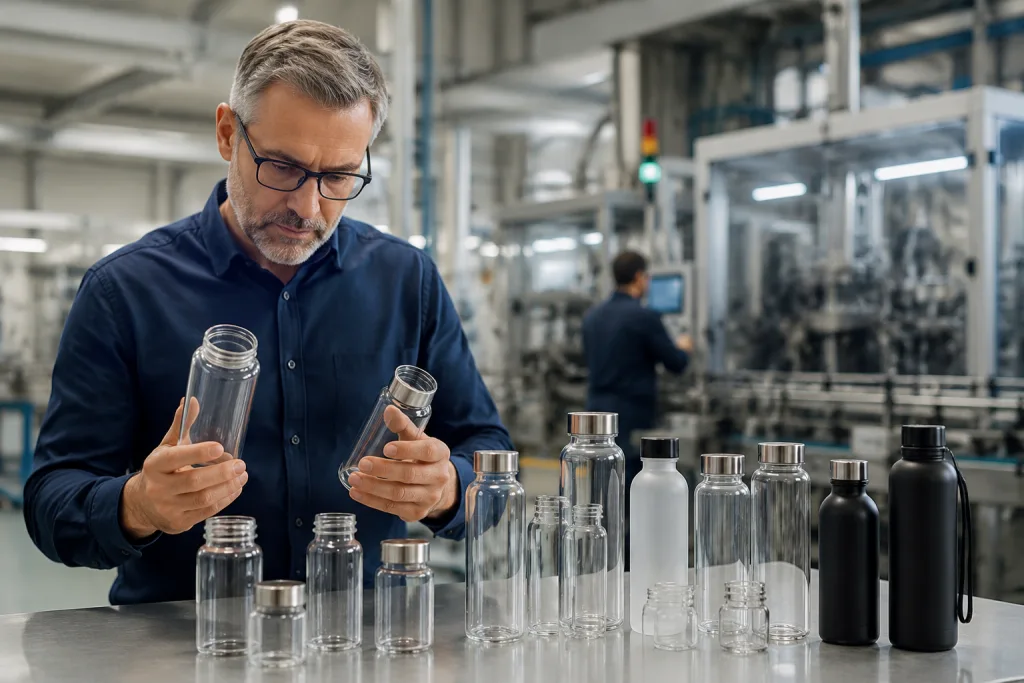
Once the sample is approved, lock the bulk schedule. For a standard borosilicate glass bottle order, 30 to 45 days after deposit and artwork approval is the normal window. Add 7 to 10 days if you need custom packaging, special coatings, or a more complex lid. A China supplier promising 15 days on a decorated export order is either guessing or planning to push the line too hard.
Before production starts, confirm the line setup and the inspection points. Ask where the first article is checked, whether print is inspected inline or offline, and how breakage gets recorded. On a Zhejiang line, QC pulled the sample and logged breakage by shift; that is the level you want. For export buyers, this is where AQL and carton verification earn their keep. Rejecting 2 percent at the factory beats explaining 12 percent damage to your customer.
Typical bulk pricing for a 500 ml borosilicate bottle runs from about USD 1.20 to 3.80 FOB, depending on lid, print, and packaging. That spread is normal; the accessory stack changes the math fast. If you want a private label look, budget for the box and insert, not just the logo. We’ve seen this go sideways on first retail launch, when the bottle was fine but the carton looked like a stock item.
After shipment, keep the production file: approved sample photos, carton artwork, inspection report, and signed PO revisions. One PO typo on lid color can save a fight later if the file is complete. That file becomes the base for the next order. If your buyer base includes canteen distributors or private-label retailers, it also shortens reorders and keeps multiple markets moving from one source in China.
Send your RFQ and lock the spec
We can turn your bottle idea into a clean PO, sample plan, and bulk schedule from our Zhejiang factory team.
Frequently asked questions
What MOQ should I expect for borosilicate glass drink bottle private label orders?
For a standard stock body with custom logo or packaging, MOQ is often 3,000 to 5,000 pcs per SKU. If you want a new mold, special lid, or full custom color box, the factory may ask for 5,000 to 10,000 pcs. A Zhejiang canteen factory will usually quote lower MOQ only when the body is already in stock. Be careful: low MOQ often means fewer customization options or slower color matching.
How much do samples usually cost?
Plain samples usually run USD 15 to 35 each. Custom printed or branded samples often cost USD 30 to 120 depending on decoration method, number of colors, and packaging. If the factory must assemble a special lid or custom box, expect extra charges. For a serious buyer, that sample spend is small compared with a bad bulk order. Ask whether the sample fee is refundable against the first PO.
What lead time is realistic for bulk production?
For a standard private label order, bulk lead time is commonly 30 to 45 days after deposit, artwork approval, and sample sign-off. Add 7 to 10 days if you want special packaging or extra QC steps. In Zhejiang and other parts of China, the best factories will give a schedule broken into glass forming, decoration, assembly, packing, and pre-shipment inspection. That is the schedule you should trust.
Which compliance documents should I request?
Ask for food-contact declarations, REACH support for Europe, and any FDA-related material statements you need for the U.S. If the lid includes stainless steel, request the steel grade. If silicone parts are used, ask for a material statement for the gasket. For export orders, also request the inspection plan, carton labels, and test reports tied to your SKU. Do not rely on verbal assurances from a canteen supplier.
Can one factory handle both custom canteen and glass bottle programs?
Yes, many canteen manufacturers in China handle multiple custom drinkware categories, including custom canteen, customized drinkware, and customized growler programs. The advantage is simpler sourcing and shared packaging know-how. The risk is that not every factory is equally strong in glass, steel, and insulation. Ask for category-specific photos, testing records, and monthly output. A capable factory should be able to show 200,000 to 500,000 units per month across the relevant drinkware lines, with clear separation by product type.