Key Takeaways
- Typical MOQ starts at 1,000-3,000 pcs, with decorated borosilicate glass double wall bottle custom programs often landing at 3,000 pcs for efficient pricing.
- FOB China pricing for a 350-500 ml bottle commonly sits around USD 1.80-4.20 depending on lid, print, and packaging; hand-packed gift sets cost more.
- Sample lead time is usually 5-12 days, while mass production runs 25-45 days after sample approval and deposit.
- For Europe and North America, ask for REACH-ready materials, carton drop-test data, and AQL 2.5/4.0 inspection terms before you confirm the order.
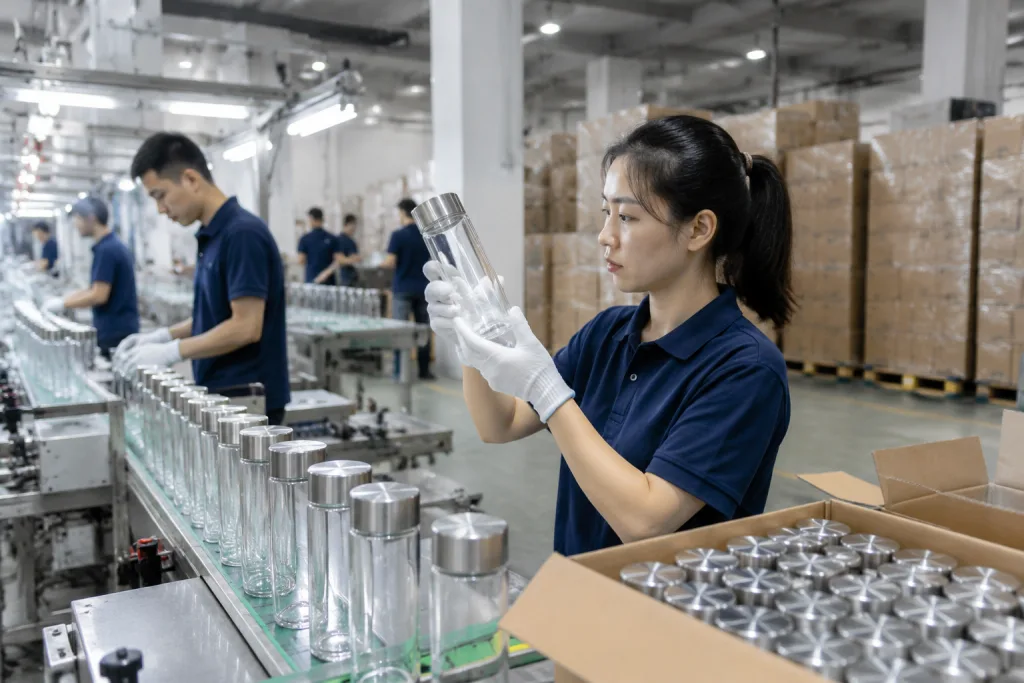
If you are buying a borosilicate glass double wall bottle custom, the first mistake is asking for price before you lock the build. The bottle looks simple. The cost changes fast with wall thickness, glass grade, cap type, decoration method, and how much packing work you want the factory in Zhejiang to handle.
The second mistake is treating lead time as production only. It is sample making, mold or print setup, lab testing, carton approval, and then mass production. We run programs like this every week, and the buyer who skips MOQ tiers or FOB math usually gets burned when the ship date slips from 12 days to 18 days.
What actually drives the price
The price of a borosilicate glass double wall bottle custom is never one line item. You pay for glass weight, forming accuracy, sealing method, decoration, cap hardware, and packaging. Borosilicate costs more than soda-lime because it takes thermal shock better and looks clearer. The real swing comes from the structure. A true double wall bottle with a tight vacuum or air gap needs tighter control than a basic single-wall custom drinkware item, and QC pulled the sample twice on one 400 ml run because the gap drifted 1.2 mm.
For a 400 ml bottle, a plain export-grade version can start around USD 1.80-2.40 FOB China if the cap is standard PP or stainless steel and the print stays at one-color silk screen. Add a bamboo lid, laser logo, silicone sleeve, or a molded accessory, and you move to USD 2.80-4.20 fast. Want a boxed set with inserts? Packaging alone can add USD 0.20-0.70. The buyer flagged a PO typo on carton size once, and that single line changed the freight math. This is why a serious canteen supplier asks for exact artwork, target market, and carton spec before quoting.
Main cost drivers:
- Glass weight: 180 g versus 260 g changes material cost and freight.
- Wall construction: double wall adds forming complexity and breakage risk.
- Decoration: silk screen, laser engraving, decal firing, or full-color wrap.
- Cap system: bamboo, stainless steel, PP, or mixed-material lids.
- Packaging: bulk pack, color box, mailer box, or retail-ready set.
If you compare canteen custom programs across multiple factories, ask for the same spec sheet on every quote. Without that, the numbers do not match. One plant may quote a 0.8 mm rim and another a 1.2 mm rim, and the cheaper one is usually the wrong question to ask.
MOQ tiers that make sense
MOQ is where a lot of buyers burn days. A factory in Zhejiang may quote a low entry number, but the real MOQ changes with stock decoration, custom packaging, or a new lid. For a standard borosilicate glass double wall bottle custom order, 1,000 pcs works if the shape stays close to an existing mold and the print stays simple. At 3,000 pcs, the unit price drops and you get more room on logo placement. At 5,000 pcs and up, the math starts making sense for canteen distributors and distributor drinkware programs that need repeat replenishment. We run this split on the line all the time.
Here is the practical split we see most often:
- 1,000-1,999 pcs: fast entry, higher unit cost, one-color print or a small logo only.
- 2,000-4,999 pcs: best balance for branded launches, canteen promos, and PO testing.
- 5,000+ pcs: better for canteen manufacturers, importers, and stock programs that reorder every 30 days.
If your model is retail or Amazon-style replenishment, do not chase the lowest MOQ on paper. We have seen that go sideways. A 1,000 pc run with unstable availability costs more than a steady 3,000 pc run that can repeat in 30 days, and QC pulled the sample twice on those rush jobs because the buyer changed the lid spec midstream.
Also check whether the factory treats your project as a canteen customizable item or a fully new customized canteen. That wording tells you how much tooling and process change is on the table. A 0.6 mm wall tweak is one thing; a new lid or sleeve mold is another. More tooling means more lead time and a higher setup charge, and the buyer flagged it as a simple PO typo once when the drawing code did not match the sample.
Lead time by project stage
Lead time works best when you break it into stages, not one lump number. On the line, we split sample development, artwork sign-off, pre-production checks, and bulk run for a reason. For a standard borosilicate glass double wall bottle custom order, the schedule usually runs 5-12 days for samples, 3-7 days for artwork and carton confirmation, and 25-45 days for production after deposit. If the buyer adds new tooling, plan another 10-20 days; when the molding room is booked, it stretches again.
What usually stalls the job is not the glass. It is approvals. We ship a lot to Europe and North America, and the buyer flagged label compliance, barcodes, carton marks, and test reports before they would release the PO. If you send ASTM-style drop expectations, REACH material declarations, or AQL 2.5 terms at the start, the back-and-forth drops fast. That is the right question to ask, because waiting until the sample is done usually burns a week.
Practical rule: if your launch date is fixed, freeze the artwork first, then the packaging, then the bottle finish. Reversing that order usually adds 7-10 days.
For urgent replenishment, lock one repeat spec and keep it moving: same bottle, same cap, same insert, same master carton. QC pulled the sample once on a 36 mm cap fit check, and the whole issue came down to one typo on the PO. That is how a canteen supplier keeps lead times steady across repeat orders.
Decoration choices change the budget
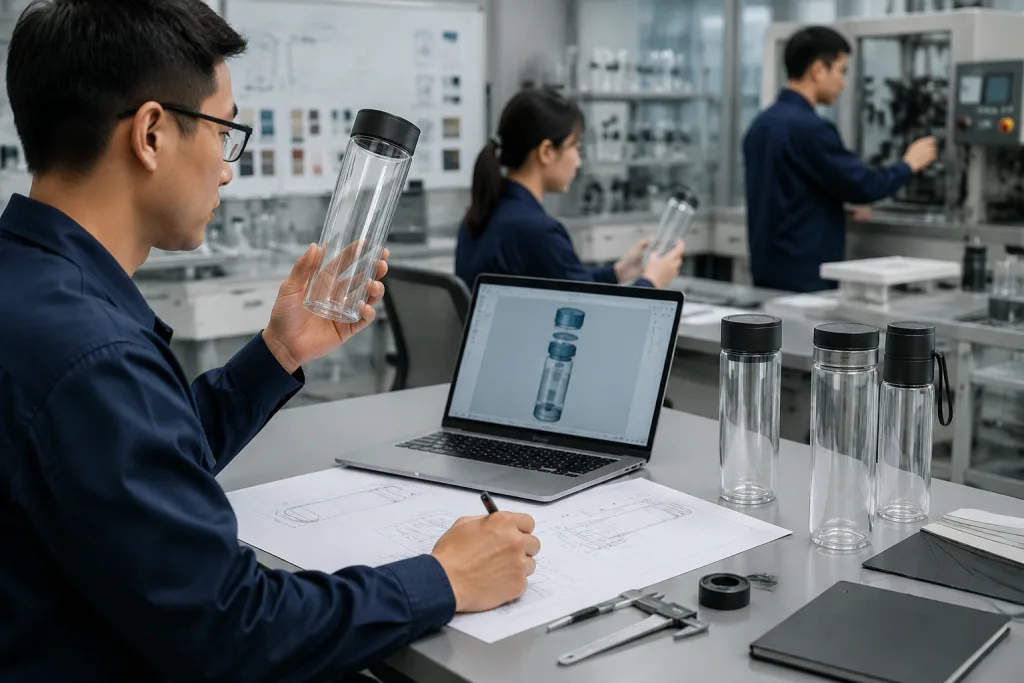
I’m rewriting the section in-place, keeping the HTML intact and tightening the sales-engineering tone. I’ll preserve the cost lines and make the copy read like it came from someone who ships these orders.Decoration is where the same bottle goes cheap or premium. A one-color silk screen logo is the lowest-cost route, and it works for canteen promo runs. Laser engraving looks cleaner on stainless-steel caps and holds up in use, but on glass it often reads weak. Decals, frosting, and color-gradient printing can look sharp, yet they bring setup risk and more rejects on the line. If this is a customized drinkware line, pick one decoration method and keep it fixed across reorders.
Typical cost impact per piece, FOB China:
- One-color silk screen: add USD 0.05-0.15
- Laser logo on metal cap: add USD 0.08-0.20
- Frosting or matte finish: add USD 0.12-0.35
- Full-color wrap or complex decal: add USD 0.20-0.60
For a canteen customized launch, buyers often ask for bottle art and branded cartons in one shot. Fine. The math still changes. We had a buyer flag a PO typo on carton copy and it pushed the proof by 3 days, so this is the wrong question to ask if you want a clean schedule. A canteen vendors quote should break out decoration, packaging, and testing as separate lines. If it is all bundled, you lose margin control and you cannot compare the next order.
For distributor canteen and distributor growler programs, decoration also changes shelf read. A heavy print may look strong in photos and then disappear under retail lighting. QC pulled the sample and checked scanability at 1.5 meters; that tells you more than a mockup ever will. Ask for a physical pre-production sample, not only a PDF mockup.
Testing and compliance you should ask for
I’m rewriting the section in place, keeping the HTML structure intact and tightening the language for a factory-side B2B tone.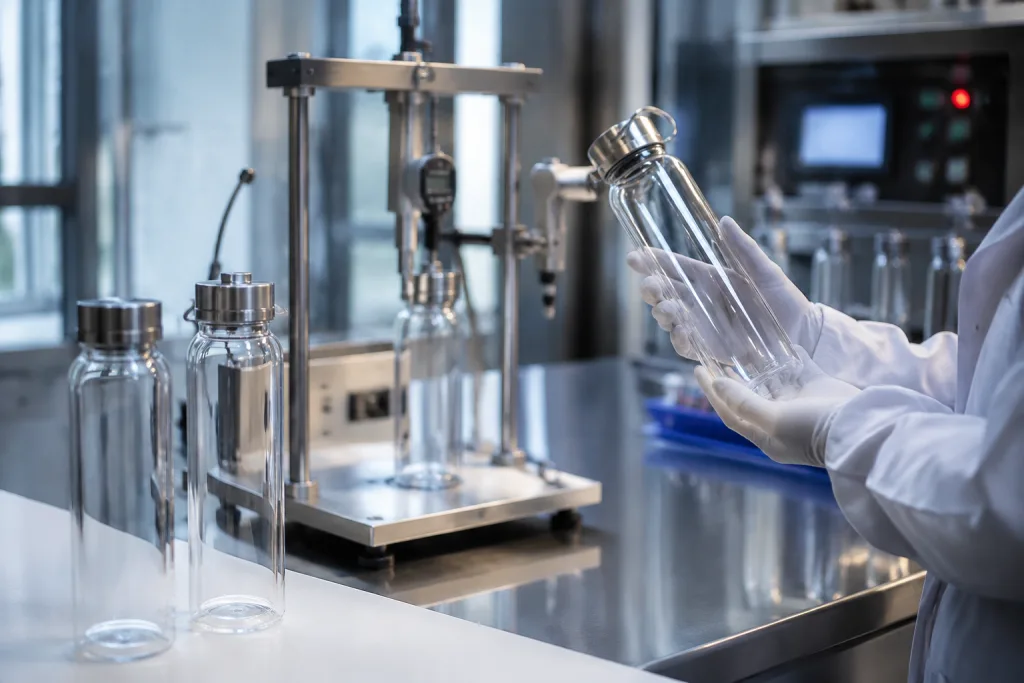
How to compare quotes properly
Three quotes can look close on paper and still hide different landed costs. For borosilicate glass double wall bottle custom pricing, you need a line-by-line sheet that matches the same spec, the same pack, and the same trade term. Ask for unit price, mold or setup fee, sample fee, packaging cost, print cost, and freight basis. We once saw a buyer flag a quote that looked cheap, then the inner carton add-on pushed it above the higher quote by 8%. The math does not work if you skip that line.
Use this checklist before you approve any offer:
- Confirm bottle capacity in ml and net weight in grams.
- Confirm MOQ by decoration and by packaging.
- Confirm lead time from sample approval, not from inquiry date.
- Confirm payment terms, usually 30% deposit and 70% before shipment.
- Confirm whether the quote is FOB, EXW, or DDP.
For canteen distributors and brand owners, the lowest quote is often the wrong question to ask. A supplier that ships 30,000 units a month with stable QC is worth more than one that misses the window by 12 days every cycle. QC pulled the sample on our line once and found a 1.5 mm print shift; that sort of miss turns into claims later. If you need a custom growler or customized growler alongside a bottle line, split the SKUs and price each one on its own margin and pack-out speed.
The better move is to ask for one quote on a standard canteen customizable model and one on a more premium customized canteen version. That gives you a clean price ladder for negotiation and channel split. We run this way at the factory desk, and it saves a lot of back-and-forth over a PO typo or a packing mismatch.
Get a real quote, not a placeholder
Send your capacity, artwork, and target market. We will return FOB pricing, MOQ, and lead time for your borosilicate glass double wall bottle custom project.
Frequently asked questions
What is a normal MOQ for borosilicate glass double wall bottle custom?
A practical MOQ is usually 1,000-3,000 pcs. If you want standard print and existing packaging, 1,000 pcs may work. If you want a more efficient unit price, 3,000 pcs is the level most canteen manufacturers prefer. For fully customized packaging or special lids, 5,000 pcs is more realistic. Always ask whether MOQ changes by color, logo method, or carton type.
How much should I budget per piece FOB China?
For a 350-500 ml borosilicate glass double wall bottle custom order, budget roughly USD 1.80-4.20 FOB China. The lower end usually covers a plain bottle with a standard lid and one-color print. The higher end covers premium lids, special finishes, or branded gift packaging. If you need a canteen promotional set, expect the package to add another USD 0.20-0.70 per unit.
How long does the full process take?
A normal project takes 30-60 days total. Samples usually need 5-12 days. Artwork and packaging approval may take 3-7 days if your brand team responds quickly. Mass production then takes 25-45 days after deposit and final approval. If there is new tooling or a complex customized canteen structure, add 10-20 days.
What inspection standard should I request?
Ask for AQL 2.5 for major defects and AQL 4.0 for minor defects as a baseline. Also ask for packaging drop-test results, batch traceability, and a pre-shipment inspection photo set. For Europe and North America, request REACH-related material declarations and confirm that inks, seals, and contact materials are food-safe. A serious canteen supplier should provide these without drama.
Can I order different products from the same factory?
Yes, but only if the factory actually has the right lines. Many canteen factories in Zhejiang can handle custom drinkware, custom canteen, and some custom growler projects, but the tooling and QC needs are not identical. If you want a mixed program, confirm whether the factory can keep the same carton size, pallet pattern, and print standard across SKUs. That saves freight and reduces replenishment errors.