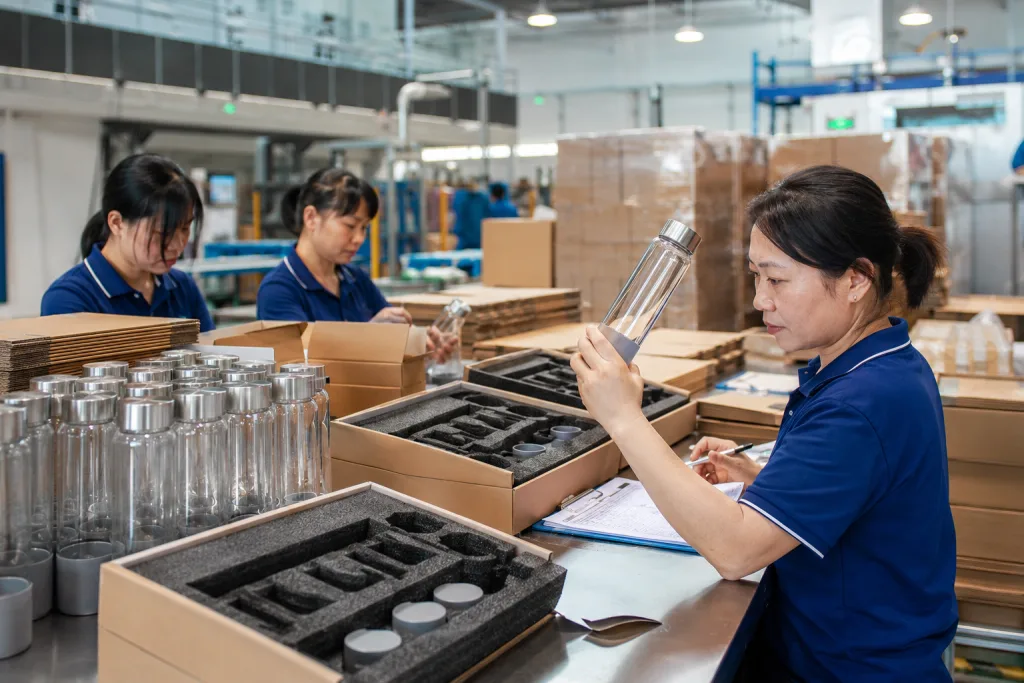
Key Takeaways
- Typical MOQ for a borosilicate glass bottle bulk order starts at 3,000 pcs, with lead time around 25-35 days after sample approval.
- For most wellness brands, a 450-600 ml bottle with 1.5-2.0 mm wall thickness and a PP or bamboo cap is the safest commercial choice.
- Printed logos usually add USD 0.12-0.35 per piece; laser engraving is cleaner but often needs a higher unit price and works best on metal parts.
- Ask for AQL 2.5/4.0 inspection, thermal shock testing, and REACH-compliant materials before you confirm a borosilicate glass bottle customized order.
You are not just buying a bottle. You are buying freight that leaves Zhejiang, lands in Europe or North America, and still has to pass retail inspection with your logo intact after 20 dishwasher cycles. That is why a borosilicate glass bottle with custom logo needs a different sourcing process from a standard promo item.
If you pick the wrong wall thickness, the wrong decoration method, or skip cap torque and thermal shock testing, replacement cost will eat the margin fast. We run this on the line every week: lock the specs first, then confirm them with samples and QC records before mass production. That is the only sensible way to buy a custom glass water bottle in bulk.
Start with the actual buyer problem
Take a real order: a wellness brand in Germany wants a 500 ml borosilicate glass bottle with custom logo for retail and subscription boxes. They need 5,000 pcs, two cap colors, and packaging that can survive parcel delivery. The first mistake is treating the bottle like a generic item. A custom glass water bottle usually fails in three spots: the glass body, the closure, and the decoration. If you approve only a pretty sample, you are taking a risk.
For a borosilicate glass bottle custom project, ask what the bottle must do before you ask how it should look. Is it for cold brew, daily hydration, or hot tea? Will it sit in a gym bag or on a premium retail shelf? Borosilicate glass handles temperature change better than soda-lime glass, but it is still glass. In Zhejiang, where export factories run drinkware lines at scale, a serious borosilicate glass bottle factory asks for use case, target price, and packaging requirements before it quotes. QC pulled a sample once and found a 1.6 mm wall drift on one side; that is the kind of detail that changes the whole order.
Good buyer brief: 500 ml, 1.6 mm wall, screw cap, one-color logo, inner box, drop-tested master carton, REACH declaration, FOB Ningbo or FOB Shanghai.
Weak buyer brief: “Make it premium, sustainable, and cheap.” That is not a spec.
Choose the right bottle spec
The bottle spec sets cost, breakage, and how the buyer reads your brand. For a borosilicate glass bottle wholesale run, we keep the first order tight: one body shape, one neck finish, one cap family. Every extra variable means more mold coordination and a higher chance of mixed packing. We’ve seen that go sideways on the line. If you plan a borosilicate glass bottle customizable across SKUs later, start from one common platform.
The numbers matter. A 500 ml cylindrical bottle usually sits at 1.5-2.0 mm wall thickness. Below 1.5 mm, transit breakage jumps unless the carton spec is strong. Above 2.0 mm, the bottle gets heavier and freight follows. For one EU buyer, the sample at 248 g passed drop testing, but the PO had “28/400” typed as “28/40”; QC caught it before we ran the cap line. If you want a bulk glass water bottle for retail, lock the neck finish early: 28/400, 38 mm, or another standard.
Cap choice is not decoration. PP caps are light and low cost, bamboo caps support the sustainability pitch, and stainless caps give a more premium hand feel. The wrong question is “which cap looks nicest?” Ask which one matches your price target and fill line. If you are a borosilicate glass bottle distributor or retailer, the end user notices the cap in the hand first, not the glass formula.
Logo methods that hold up
For a borosilicate glass bottle with custom logo, pick the decoration method by channel, not by taste. Screen printing is the line we run most often. It stays stable, keeps cost down, and handles 1 to 2 colors well. At volume, the added cost usually sits around USD 0.12-0.25 per piece, depending on color count and print area. If the buyer wants a cleaner premium look, we push engraving onto a stainless cap, bamboo lid, or metal collar, not straight onto the glass.
Direct glass printing can look sharp, but curing has to be right. One time QC pulled the sample after an adhesion rub test because the logo marked up too fast, and that batch never left the shop. If the factory skips ink adhesion checks, the print can scratch off during washing or handling. For premium retail, a borosilicate glass bottle with frosted body, one-color print, and a matching cap usually sells better than loud artwork. Clean beats busy.
What to ask your supplier:
- How many print cycles does the logo survive in dishwasher testing?
- Is the ink compliant with REACH and food-contact requirements?
- Can the logo placement stay within ±2 mm?
- Will the color match Pantone within a realistic tolerance, or do you need a physical sample approval?
If you plan to sell through a borosilicate glass bottle distributor network, logo consistency matters more than fancy artwork. We have seen a buyer flag a PO because the cap logo and bottle logo used different Pantone calls, and the math did not work for rework. A clean mark that survives shipping, warehousing, and carton rubbing is the practical choice.
QC the first sample like a buyer
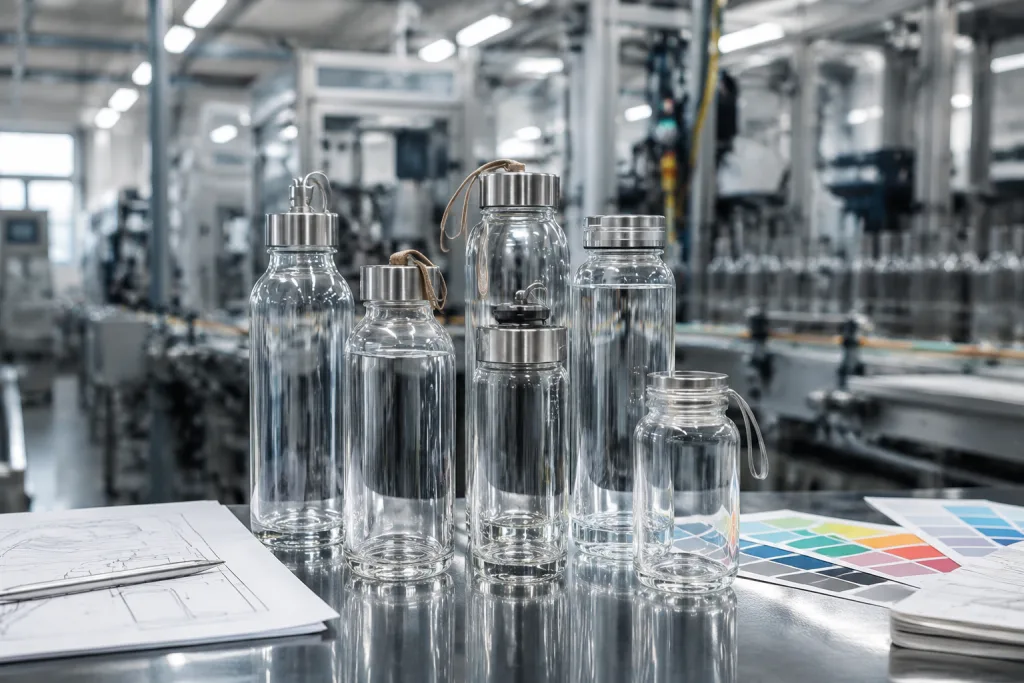
Once the sample lands from China, don’t judge it under showroom light. Put it on a flat steel table and watch for wobble, check the rim for chips, confirm the fill line, and leave it upside down with water for 24 hours. We’ve seen buyers miss a bad seal because they only did a quick desk check. A borosilicate glass bottle manufacturer worth your time should log the result, not wave it away as “handwork tolerance.”
Here is the sample QC checklist I would use for a 5,000 pc order from Zhejiang:
- Body dimensions within ±1.5 mm for height and diameter
- Weight variation within ±5%
- No visible bubbles larger than 1 mm in the viewing zone
- Logo register within ±2 mm
- Cap fit consistent on at least 20 repeated open-close cycles
- Thermal shock test: hot water to cold surface without cracking
Ask the borosilicate glass bottle supplier for photos, a short video, and a signed pre-production sample sheet. We run this with a simple caliper check and a 1,000 ml fill test before approval. If they push back, that’s your signal. A solid borosilicate glass bottle vendor also confirms the packing: single inner box, dividers, and a carton drop test plan, because one cracked bottle can wipe out the margin on a DDP or FOB shipment.
Price the order like a landed cost
Buyers get burned when they stop at unit price. On a borosilicate glass bottle bulk order, the quote can sit at USD 1.20-1.80 per piece based on shape, cap, and decoration, but the landed bill still needs cartons, inserts, testing, freight, duty, and local fulfillment. We ship plenty of Amazon cartons, and a weak outer box turns into damage claims fast. That is the wrong question to ask: the bottle price is only one line on the PO.
For the sample order above, a real cost build from a borosilicate glass bottle factory in China often looks like this: bottle body USD 0.85-1.15, cap USD 0.18-0.45, logo USD 0.12-0.30, packaging USD 0.20-0.50, and export carton allocation USD 0.05-0.10. If you want a customized glass water bottle with an individual gift box, add more. QC pulled the sample on a 3 mm wall bottle and flagged the insert fit, so we reworked the tray before mass production. Ask the factory to split product cost and packaging cost; otherwise the comparison is messy.
MOQ matters too. A clean commercial MOQ for this item is often 3,000 pcs per design, and it can move to 5,000 pcs if you need special cap colors. In Zhejiang, a mid-sized factory may run 200,000-500,000 units per month across bottle lines, but your slot still depends on mold status and decoration timing. The buyer flagged a typo on the packing list before, and that sort of small miss can hold a shipment at the warehouse. A borosilicate glass bottle manufacturer usually asks for a deposit before they lock line time, and the math does not work any other way.
Move from trial order to repeat order
If the first shipment moves, the second order should fix the math. A brand owner or distributor can keep the same body mold, same neck finish, and same carton spec, then change only the logo color, sleeve, cap finish, or retail insert. That is how we turn a one-off custom borosilicate glass bottle into a repeat order. QC pulled the master sample on the line and matched it against the approved record; that saved us a bad PO twice last quarter.
A repeat order gives you more room on QC. Once the factory has your approved master sample and production records, push for tighter control: AQL 2.5 for critical defects, 4.0 for minor defects, and carton drop testing on a defined percentage of cartons. If the buyer flags Europe, ask for REACH documents and any food-contact declaration that applies. For North American retail or ecommerce, carton marks and label copy need to be locked before mass production, not after the goods are already on the water. We’ve seen that go sideways on a 2,000 pcs run because one PO typo changed the carton count.
This is where a borosilicate glass bottle distributor, borosilicate glass bottle supplier, or direct factory partner in China earns the keep. The right partner in Zhejiang will tell you what is realistic, what adds cost, and what will crack in transit. That honesty beats a cheap quote. On our side, we run a 1.2 mm wall spec check before packing, because the wrong question is always “can you do it cheaper?”
What a clean factory workflow looks like
I’m rewriting the section in-place, keeping the HTML untouched and tightening the sales-engineer tone. Next I’ll return the cleaned prose only, with factory-floor details and fewer AI-style transitions.A clean order flow looks plain. Good. First, you lock the drawing and decoration method. Then the factory runs a pre-production sample. You sign off with notes. After that, the borosilicate glass bottle factory starts mass production. QC checks each lot against the sample and the inspection standard. Cartons get packed, labeled, and counted before loading. If one step is fuzzy, delays show up fast.
For a borosilicate glass bottle promotional order, speed matters, but traceability matters more. Ask for batch numbers on outer cartons and a simple production record. We once had a buyer flag a PO typo on the carton mark, and that tiny mistake cost a full day on the line. If a supplier cannot trace a lot, that is a red flag. A proper borosilicate glass bottle manufacturer in China should explain the raw material source, decoration ink, and packaging material without dancing around it. That is standard export work, not a premium add-on.
“A cheap bottle is only cheap if it arrives intact and sells through.”
If you are building a wellness or sustainability brand, the bottle should look deliberate, not disposable. Pick a simple design, a verified decoration method, and a factory that can repeat the same result lot after lot. In Zhejiang, the stronger factories ask hard questions early, like logo position tolerance or whether the lid sample passed a 72-hour leak check. That pushback saves money later. The wrong question is, “Can you make it cheap?” The better question is, “Can you make it the same 5,000 times?”
Send your bottle spec for a fast quote
We can review your artwork, confirm MOQ, and quote a borosilicate glass bottle with custom logo from our Zhejiang production line in 24 hours.
Frequently asked questions
What MOQ should I expect for a borosilicate glass bottle with custom logo?
For a standard bottle with one-color logo, MOQ is usually 3,000 pcs per design. If you need special cap colors, frosted glass, or premium gift boxes, the order may move to 5,000 pcs. A borosilicate glass bottle wholesale program can sometimes combine colors only if the body mold stays the same. In Zhejiang, factories with stable export lines can often schedule a 25-35 day lead time after sample approval, but peak season and packaging complexity can add a week or two.
Is borosilicate glass really better for daily water bottles?
Yes, for temperature resistance and clarity, borosilicate is the better material choice versus regular soda-lime glass. It handles hot and cold use more safely, which is why many wellness brands choose a custom borosilicate glass bottle. That said, it is still glass, so you must control wall thickness, cap seal, and packaging. For retail and ecommerce, a 500 ml bottle at 1.5-2.0 mm wall thickness is usually a practical balance between weight and durability.
What logo method lasts longest on glass bottles?
For direct bottle branding, high-quality screen printing with proper curing is the most common choice. It is cost-effective and works well for a borosilicate glass bottle customized for retail. If you want stronger wear resistance, laser engraving on a cap or metal component is better than printing on the body. Ask the factory to test dishwasher cycles and rubbing resistance; otherwise a cheap logo may fail after a few washes.
How do I check a supplier before placing a bulk order?
Ask for company registration, export photos, production capacity, and current QC documents. A serious borosilicate glass bottle supplier should provide sample photos, inspection standards, and material declarations. For Europe, ask about REACH; for general export, request AQL inspection terms and carton drop-test procedures. If the factory claims to produce 500,000 units per month, verify whether that is for all drinkware or only one product line. Capacity sounds good only when it matches your item.
What should I budget for a custom glass water bottle landed cost?
For a practical 500 ml order, factory pricing may fall around USD 1.20-1.80 per piece depending on the cap and logo. Add packaging, inland freight, export handling, and ocean or air freight before comparing suppliers. A packaged, branded borosilicate glass bottle bulk order can easily land 20-40% higher than the bare bottle quote. If you want a gift-style box or multi-color decoration, budget another USD 0.20-0.60 per unit.