Key Takeaways
- 3.3 borosilicate glass with 1.2-1.8 mm wall thickness is the practical retail range for a 500 ml bottle
- A real borosilicate glass bottle manufacturer should quote MOQ, often 3,000 pcs per SKU, and 30-45 day lead time after sample approval
- Closures and neck finish decide leak risk more than the glass itself; ask for torque and leak tests, not just photos
- For Europe and North America, ask for REACH, LFGB or FDA food-contact support, AQL 2.5 inspection, and carton drop testing
Buying a custom glass water bottle for a wellness brand or sustainable retail program? The bottle is not the product. The spec sheet is. A borosilicate glass bottle supplier should give you the glass grade, 1.8 mm or 2.0 mm wall thickness, neck finish, closure material, decoration method, and test standard without guessing while the line is waiting for a go-ahead.
This matters because glass looks simple until shipment 1 arrives with 3 chipped rims per carton, lids leaking at the silicone ring, or logo ink failing after 20 dishwasher cycles. In Zhejiang, China, a better borosilicate glass bottle factory sells control, not a catalog photo. At borosilicate glass bottle wholesale volume, ask for MOQ, 30-day sample-plus-bulk timing versus 45 days with decal firing, AQL, FOB terms, and the plan when your buyer flags a customized glass water bottle in a second size next season. QC pulled the sample for this exact issue last month. The math does not work if the supplier only talks about shape and price.
Read the glass spec before the sample
The first line on any borosilicate glass bottle supplier quote should be the glass grade. For drinkware, ask for 3.3 borosilicate, not a loose “heat-resistant glass” claim. The difference is the coefficient of thermal expansion: 3.3×10⁻⁶/K is the number that tells you how the bottle behaves during hot-fill, cold storage, and dishwasher cycles. No number, no spec. On our line, QC checks the sample wall with a Mitutoyo caliper before we even talk about sleeve color or cap finish.
Ask the borosilicate glass bottle manufacturer for a material declaration and a test report. A report we trust names the chemical composition, annealing range, and thermal shock result, with the lab stamp still readable after the PDF has been forwarded 6 times. For a custom borosilicate glass bottle used in wellness retail, “Is it premium?” is the wrong question to ask. Ask whether it survives normal use. A bottle that passes a 120°C thermal shock test can still chip if the rim is too thin after fire polishing; QC pulled one sample last year with a 0.9 mm rim, and the buyer flagged chips after only 3 drop tests on the retail counter.
For borosilicate glass bottle bulk orders, also ask whether the factory makes drinkware on a dedicated line or shares equipment with labware. A borosilicate glass bottle factory in Zhejiang often runs both. That is workable if they separate incoming raw material, control the annealing oven, and track each batch from tube cutting to carton packing. We ship orders like this, but the math does not work when the supplier cannot match a batch code to an annealing chart or explain why the PO says 500 ml while the sample sticker says 520 ml. We have seen this go sideways.
- Good sign: the supplier gives you a confirmed 3.3 glass grade plus a test report showing the batch code.
- Bad sign: the quote says only “high borosilicate” with no percentage, standard, or report number.
- Buyer impact: steadier hot-and-cold performance and fewer breakage claims at retail.
Wall thickness changes the whole bottle
Wall thickness decides whether a customizable glass water bottle feels like a retail product or a fragile giveaway. For a 350-750 ml bottle, we run 1.2-1.8 mm as the normal working range. At 1.2 mm, the bottle is lighter and freight looks better, but fulfillment damage goes up when the warehouse packs loose units into mailer cartons. We saw QC pull 32 cracked rims from one 3,000 pcs pilot run after the buyer skipped inner dividers. At 1.8 mm, the bottle weighs more, but the hand feel is stronger and shoppers usually read the bottle as more durable.
Do not accept a borosilicate glass bottle vendor quoting thickness only as an average. Ask for the tolerance at the body, shoulder, and rim. The rim fails first. A bottle can be 1.5 mm on the body and still crack if the finish is uneven by 0.3 mm. For a 500 ml bulk glass water bottle, a finished weight of 280-380 g is a realistic window depending on shape, sleeve, and cap style. We check this with a digital caliper and gram scale on the line, not from the drawing alone.
Thermal behavior also changes your packaging cost. A lighter customized glass water bottle saves freight on paper, but the math does not work if you then add a 35 g silicone sleeve, shrink band, or molded pulp tray to protect the glass. In export programs from China, we usually get the cleanest result at 1.4-1.6 mm with an outer sleeve for grip and shock absorption. One US buyer flagged carton weight after the first packing mockup because 24 pcs per master carton crossed 11 kg. That turns your carton into a brick fast.
If you are building a borosilicate glass bottle promotional item, thinner glass can work, but accept the higher breakage risk and keep the decoration simple. One-color silk screen is safer than a full-wrap decal near the shoulder. If you are selling a premium hydration line, the bottle should feel deliberate in the hand. Short answer: do not chase the thinnest wall just to save 18 g. We have seen this go sideways when the first retail drop test exposes weak rims.
What to confirm in the sample
- Body thickness, shoulder thickness, and rim thickness in millimeters, measured with a caliper on at least 10 pcs
- Weight tolerance per SKU, usually within ±5%, written on the approved sample sheet
- Drop-test result with packaging, not just the bare bottle, including carton height and floor type
- Whether the sleeve or base pad changes stability on flat surfaces during a simple wobble check
Neck finish decides leak risk
Most leak complaints come from the neck, not the glass. On our line, we see it when a 28 mm finish gets paired with a lid made for 30 mm, or when the gasket groove is cut too shallow. Start the custom borosilicate glass bottle project with the neck standard, then match the cap. Wide-mouth bottles fill fast with ice, fruit, or powder mixes. A tighter finish usually seals cleaner and cuts carton breakage in transit.
For a custom borosilicate glass bottle, ask for the finish drawing, not a sales sketch: thread pitch, opening diameter, sealing surface, and neck height. The wrong question is whether the lid looks good in CAD. We had a buyer flag a cap that sat 0.5 mm high; on the bench it looked fine, but under torque it rocked and missed the gasket seat. QC pulled the sample, and that tiny gap became a warehouse return.
Closure material matters just as much. For a wellness brand, I would go with food-contact silicone or EPDM gaskets, not mystery foam liners. Stainless steel caps look sharp, but if the inner part is plastic, the resin grade needs to be on file. For a borosilicate glass bottle wholesale program in Europe or North America, ask for an inverted leak test for 24 hours at room temperature, plus a torque check at the line. We have seen a 12 Ncm cap pass by hand and fail after pallet vibration.
One clean lid design beats three trendy lid options that all leak under load.
If you plan to sell a customizable borosilicate glass bottle through retail and DTC at the same time, standardize the neck across sizes. That lets us ship one cap set across 500 ml and 750 ml SKUs, trim SKU count, and hold margin when the second order lands at 8,000 pcs instead of 2,000. We saw one brand lose a month because the PO typo said 38 mm finish on page 2 and 28 mm on page 4.
Decoration must survive real use
Decoration is where 6 out of 10 borosilicate glass bottle manufacturers overpromise. On glass, we run silkscreen printing, ceramic decals, acid-etch style effects, or engraving on compatible areas such as a metal lid. The right method depends on target price, wash durability, and artwork coverage, not the prettiest sample photo. A borosilicate glass bottle customizable for a wellness label does not need every available finish; it needs the finish that stays readable after 500 mm carton drop tests, sea freight rubbing, and repeat washing. QC pulled the sample last month and found the “B” in a yoga brand logo already thinning after the third hot-wash check.
If the bottle will go through retail, e-commerce, or subscription programs, ask for the rated dishwasher cycles in writing. A basic silkscreen may look fine on day one and fail after 20 high-temperature washes if the ink system is wrong. For Europe, request REACH support and food-contact documentation for inks, coatings, and lid materials. For North America, ask for FDA food-contact conformity and, if you sell into California, a Prop 65 review for the full assembled item. Get the full item checked. We have seen this go sideways when the glass passed, but the printed lid insert failed the buyer’s compliance review two days before booking.
Packaging is part of decoration too. A customized glass water bottle that arrives with a loose paper wrap and no cavity support will break more often than the same bottle packed in a molded pulp tray or partitioned carton. The math does not work if you save USD 0.08 on packing and then lose 3% to cracked bottles. If you are building a borosilicate glass bottle promotional pack, keep the artwork on the carton simple and let the bottle carry the branding. That usually cuts cost and reduces mismatch between samples and mass production; the line can hold a 1.5 mm logo position tolerance, but carton color matching across two paper mills is where buyers flag trouble.
- Retail-safe combo: one-color logo with dishwasher-rated ink, carton label with barcode zone, molded tray, shrink band.
- Premium combo: etched glass effect on the bottle body, matte sleeve with 0.3 mm registration allowance, printed gift box.
- Amazon-ready combo: FNSKU label zone, scannable outer carton, no loose inserts that rattle during drop testing.
MOQ, price, and lead time in China
Buyers often ask for borosilicate glass bottle bulk pricing first, but capacity comes first. A solid borosilicate glass bottle factory in Zhejiang may run around 600,000 units per month across multiple drinkware lines, but your SKU still has to fit the kiln schedule, decal room, and packing line. For a custom glass water bottle, MOQ is often 3,000 pcs per design if you want new decoration or a new lid. We had one buyer push for 500 pcs with two Pantone logos and a bamboo cap; the math didn’t work. At that volume, the unit price usually rises by 12-25%, and the supplier will protect the line with limited customization.
For FOB China pricing, a simple clear bottle with a basic cap can land around USD 2.10-3.60 at 3,000 pcs. Add a sleeve, custom carton, and logo, and you are more likely in the USD 3.80-5.20 range, especially if the carton needs a 350 gsm white card and 5-layer export master carton. A premium customized glass water bottle with a metal lid, special print, and gift box can move into USD 5.50-8.00 depending on size and packaging. These are not retail numbers. They are the numbers we use to check whether a borosilicate glass bottle supplier matches your margin target before anyone spends 7 days making samples.
Lead time matters just as much. Sample development is usually 5-10 days if the mold exists, and 15-20 days if the factory must adjust tooling; last month QC pulled a sample with a 0.8 mm mouth tolerance issue, and that alone cost 3 extra days. Mass production after sample approval is commonly 30-45 days. Shipping from China adds another 25-40 days by sea to Europe or North America, depending on port and booking speed. If you are a borosilicate glass bottle distributor or a sustainable retailer with seasonal launches, plan 90 days back from sell-in, not from the invoice date.
In Zhejiang and other parts of China, good suppliers will tell you where the bottleneck is: mold, lid sourcing, print drying, or carton procurement. Ask the direct question. We’ve seen this go sideways when the PO says “silver lid” but the approved sample was brushed stainless, and the buyer flagged it during pre-shipment inspection. That is the kind of detail you want from a borosilicate glass bottle wholesale partner.
How to audit the supplier line
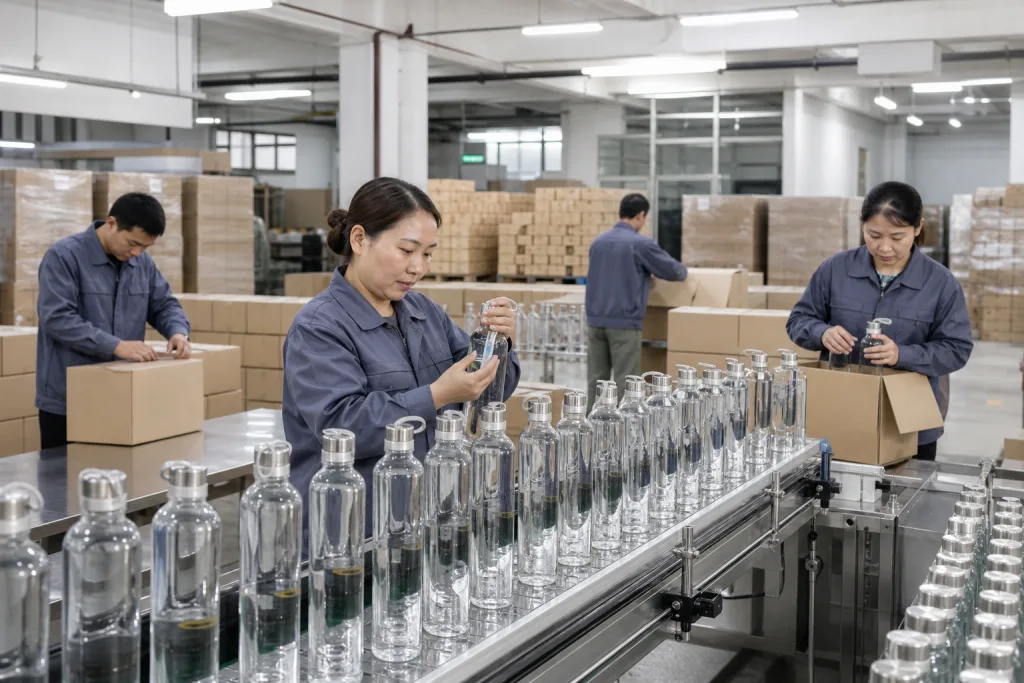
There is a big gap between a borosilicate glass bottle factory and a vendor forwarding showroom photos on WeChat. Ask who owns the mold drawings, who schedules the line, and whose name is on the inspection records. Then ask for a live video, with today’s date written on a carton flap. Not a catalog. A real plant can show the raw glass tube or press feed, forming station, annealing lehr, silk-screen jig, packing table, and final carton check. We usually ask them to measure the mouth OD with a digital caliper on camera; if they dodge that 30-second request, we assume they do not control the line.
For quality control, ask for AQL 2.5 for critical defects and 4.0 for minor defects unless your brand has tighter limits. Critical defects include rim cracks, lid leaks, and missing food-contact documentation. Minor defects include print shift inside your approved tolerance, such as a logo sitting 1.5 mm off center when the signed sample allows 2 mm. Ask whether the factory is BSCI audited and ISO 9001 managed. Those certificates are not a safety net by themselves. We have seen clean PDFs and messy inspection benches, so QC should pull samples from finished cartons, not from a “golden sample” shelf.
If you source from China, do not skip packaging verification. A clean bottle can still fail in transit if the carton is 3 mm too tight or the partition board is too soft. Ask for a carton drop test from 76 cm, then confirm pallet labels, FNSKU placement, and export marks before mass packing starts. For a distributor glass water bottle program, these details save warehouse time and cut chargebacks. The buyer flagged this once after the PO said “Amazon label on carton,” but the factory put the FNSKU on the inner color box. Wrong place. Two days lost.
My rule is simple: if the borosilicate glass bottle supplier cannot explain the line in one minute, they probably do not control it. In Zhejiang, the better factories answer with measurements, shift capacity, and defect rates, not soft adjectives. This is the wrong question to ask: “Can you make good quality?” Ask how many pieces ran yesterday, what the annealing temperature was, and who signed the final inspection sheet.
- Ask for: business license, export record, tooling ownership, inspection report, sample sign-off sheet, and one photo of the mold number stamped on the tool.
- Check: AQL level, packaging test, lid torque range in kgf·cm, and whether the lid supplier is in-house or outsourced.
- Expect: one accountable person for sales follow-up, one engineer for drawing changes, and one QC lead who can answer when the buyer flags a defect.
Send your bottle spec and get a real quote
We will check glass grade, closure fit, MOQ, and packaging so you can source confidently from China.
Frequently asked questions
Is borosilicate glass really better for a water bottle?
For a custom glass water bottle, yes, if you care about thermal shock and premium positioning. Borosilicate 3.3 handles hot-cold changes far better than standard soda-lime glass, and that matters for wellness brands selling tea, fruit water, or hot-fill SKUs. But it is still glass. It will chip if the rim is thin or the customer drops it on tile. A practical retail spec is 1.4-1.6 mm wall thickness, a reinforced rim, and a sleeve or padded carton. That gives you the upside of glass without pretending it is unbreakable.
What MOQ should I expect from a borosilicate glass bottle supplier?
For a custom borosilicate glass bottle, 3,000 pcs per SKU is a realistic starting point in China, especially if you want a new logo, new cap, or custom packaging. Some borosilicate glass bottle manufacturers can accept 1,000-2,000 pcs if they use stock tooling and a standard lid, but the unit cost usually rises 12-25%. If you need multiple colors or two sizes, your MOQ may be split by size and print setup. For borosilicate glass bottle bulk orders, ask the factory to quote both trial MOQ and repeat-order MOQ so you can plan cash flow.
How do I know I am dealing with a real factory, not a trading company?
Ask for a live production video, business license, export records, and the tooling ownership file. A real borosilicate glass bottle factory can show forming, annealing, printing, and packing on the same site or explain the outsourced step clearly. A trading company often only has product photos and a sales catalog. Also ask who issues the inspection report, where the lids are sourced, and whether they can quote AQL 2.5 or 4.0. If the answer is vague, you are probably talking to a vendor, not a manufacturer.
What should I test in samples before I approve production?
Test the sample like a retailer, not like a designer. Check leak performance upside down for 24 hours, lid torque, rim smoothness, and carton fit. If the bottle will be used for hot tea or cold infusions, do a thermal cycle between hot and cold water and look for stress marks. For a customized glass water bottle, also inspect print alignment, dishwasher durability if relevant, and whether the cap still closes after repeated open-close cycles. If you sell in North America or Europe, make sure the sample pack includes material declarations and food-contact support.
Can I sell a customized glass water bottle on Amazon or through retail?
Yes, but your packaging must be finished before you think about ads. Amazon and retail buyers care about breakage, barcodes, and carton dimensions as much as the bottle itself. For an Amazon-ready borosilicate glass bottle, ask for FNSKU placement, scannable carton labels, and enough internal protection to survive a drop test. If you sell through a distributor borosilicate glass bottle channel, keep the outer carton clean and consistent so warehouse teams can pick, scan, and palletize fast. Strong packaging usually reduces damage claims more than a lower bottle price does.