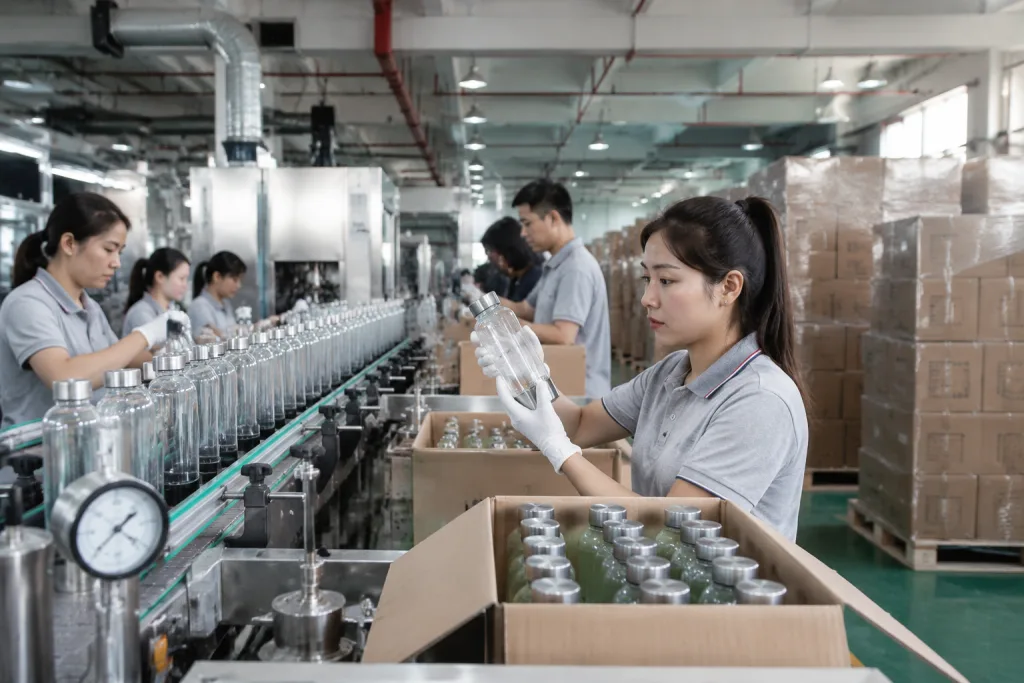
Key Takeaways
- A useful RFQ for borosilicate glass bottle private label should include 8 core specs: capacity, OD, height, weight, lid, logo method, carton style, and test standard.
- Typical sample lead time from a borosilicate glass bottle factory is 7-12 days; bulk lead time is usually 25-40 days after sample approval.
- For a 500 ml bulk glass water bottle, common FOB China pricing starts around USD 1.20-2.60 depending on lid, decoration, and packaging.
- Most first orders land at 1,000-3,000 pcs MOQ per SKU, with 3% spare lids and 0.5%-1.5% AQL inspection targets.
If you are sourcing a borosilicate glass bottle private label program, the hard part is not finding glass. The real fight is getting the wall thickness, lid seal, logo print, and pack-out right before the line starts. We have seen a buyer approve a 500 ml sample, then come back after QC with a crack issue because the spec never pinned down the mouth size or gasket material. That kind of miss burns weeks.
In Zhejiang, the clean jobs start with a plain RFQ: capacity, target weight, lid style, carton count, drop test standard, and whether the order is for retail or replenishment. Give us those numbers and we can quote fast. Leave them vague, and the sample room spends 12 days on the wrong version while the buyer flags a typo on the PO. For a custom glass water bottle or a borosilicate glass bottle wholesale run, that is the wrong place to save time.
Start with a usable RFQ
I’ll rewrite the section in place, keep the HTML tags intact, and tighten the RFQ language so it reads like a factory-side sales note.Your first job is not price. It is giving a borosilicate glass bottle manufacturer enough facts to quote the right item. A weak RFQ gets a weak answer. A clean RFQ tells the factory whether you fit an existing mold or need a new borosilicate glass bottle custom project.
Send one page, not a messy email chain. Put in capacity in ml and oz, target bottle height and diameter, wall thickness if you know it, lid material, color, logo area, and carton count. For example: 500 ml, 68 mm diameter, 245 mm height, 2.0 mm wall, bamboo lid with silicone ring, one-color logo, 24 pcs per carton. On our line, that saves a round of back-and-forth and the buyer stops asking for “similar but cheaper.”
Ask for FOB Ningbo or FOB Shanghai pricing, sample fee, mold fee if applicable, and carton dimensions. If you want a borosilicate glass bottle distributor model later, say whether you need neutral packaging or branded retail packaging from day one. That is the right question to ask. A simple RFQ also lets you compare borosilicate glass bottle suppliers on the same basis, not on sales talk.
Separate standard from custom
I’ll rewrite the section in-place, keep the HTML untouched, and make the copy read like a factory-side sales engineer wrote it.Not every borosilicate glass bottle private label job needs new tooling. We see buyers ask for a full custom bottle when the line already has a close mold on the shelf. If the body is 2-3 mm off and only the lid, print, or sleeve changes, you save time and cash. For a wellness brand testing one SKU, that is usually the right call.
Use a hard split. If you only need logo printing, a color box, or a different cap, treat it as a customizable borosilicate glass bottle order. If you want a new shoulder curve, embossing, or a special infuser insert, the math changes and we run an engineering check. On our side, a mold fee for borosilicate usually lands at USD 800 to USD 3,000, and development adds 10-20 days; QC pulled a sample once and the lid gap was 1.5 mm, which is the kind of miss that burns margin. A Zhejiang factory with a decent glass line will often offer a near-match stock mold first, and buyers who skip that step usually pay for it.
Watch the phrase customized borosilicate glass bottle. In export work, it can mean a logo-only tweak or a full structural change, and the buyer flagged a PO once because “custom” was written in the notes with no detail. Spell out what changes and what stays standard. That keeps the sample round tight and the prototype cost under control.
Price the sample correctly
I’ll rewrite the section to sound like a real sales engineer, keep the HTML exactly intact, and make the sample-cost logic sharper and more concrete.Sample pricing is where a lot of buyers get lost. A sample is not just the bottle; it usually includes the bottle, lid, logo process, and hand-packed courier freight. On a borosilicate glass bottle wholesale order, we often credit the sample fee back on the bulk PO, but do not assume that. Ask the supplier to write down whether the fee is refundable and whether the courier charge is included. We once saw a buyer miss a USD 38 freight line because the PO had a typo on the sample address.
A clean sample PO should list: 2-3 units per version, the logo method, cap color, gasket material, and packaging if you need a retail-ready sample. If you are comparing borosilicate glass bottle manufacturers, send the same spec to each one. We run into this all the time: one factory ships a plain bottle, another sends a full retail pack, and the quote comparison goes sideways. QC pulled a sample here once and found the print location was off by 3 mm because the buyer never stated the artwork position.
Sample PO line items: 3 pcs 500 ml clear bottle, bamboo lid with silicone seal, one-color silk print, plain white box, 1 master carton, sample fee USD 25-60, courier at buyer account.
Most borosilicate glass bottle distributors and vendors quote 7-12 days for a sample. That works if the lid is standard. If you ask for a new print screen, UV coating, or a special accessory, add a few more days. If the sample drags past 15 days without a real reason, the line is probably backed up or the supplier is not organized. This is the wrong question to ask: not “can you do it fast,” but “what is blocking it?” In China, the schedule usually shows process control, not factory size.
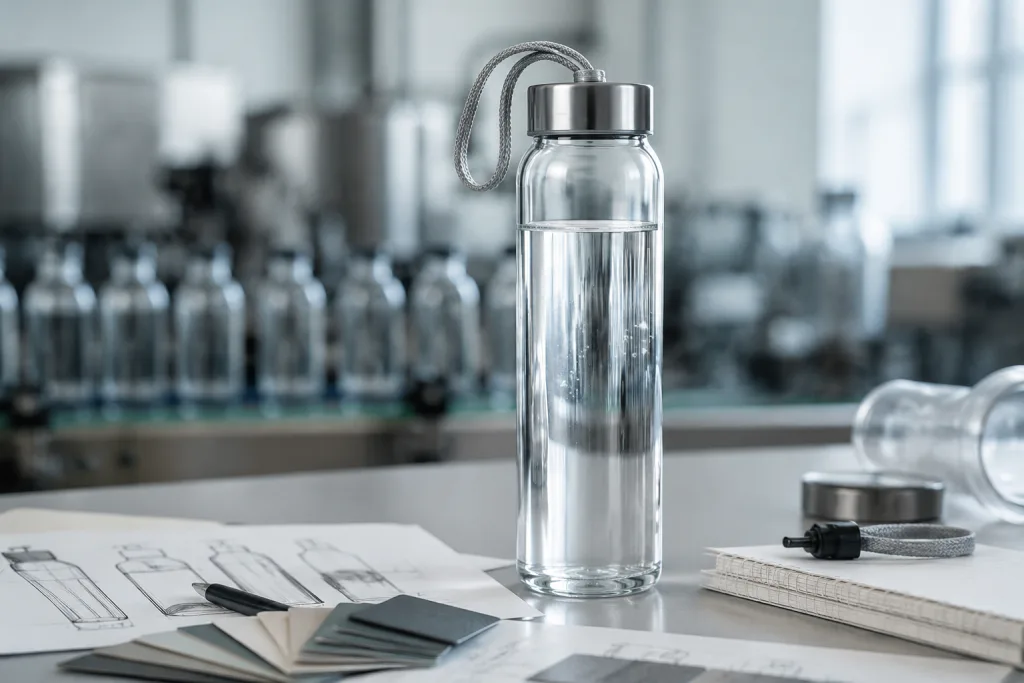
Check the sample like a buyer
I’ll rewrite the section in-place, keep the HTML untouched, and make the copy sound like a buyer-facing sales engineer wrote it.When the sample lands, don’t just hold it up to the light and call it fine. Put calipers on it. A borosilicate glass bottle private label order lives or dies on repeatability, so we check height, mouth finish, lid torque, and whether the silicone ring still seats after 20 open-close cycles. On a 500 ml bottle, plus/minus 8% weight tolerance is common; for premium retail, we push tighter if the line can hold it.
Ask for the QC plan before you sign off on bulk. A solid borosilicate glass bottle manufacturer should put AQL 2.5 for major defects and AQL 4.0 for minor defects in writing, or show its own inspection sheet with the defect list. On glass, we look at cracks, bubbles in functional areas, chip edges, print adhesion, and leak performance. If the bottle is for hot fill or tea, ask for thermal shock data with the actual range, like 0°C to 100°C, not a vague promise. The buyer flagged it for a reason.
Don’t skip the carton check. A bulk glass water bottle can pass production and still break in transit if the box is soft. Ask the factory to state the drop-test target, inner tray type, and whether the shipper is 5-ply or 7-ply. If you sell on Amazon or to retail chains, confirm barcode placement and whether the carton fits your FNSKU or retail label. We’ve seen one typo on a PO turn into a full relabel job. That math doesn’t work.
Lock the bulk PO line by line
I’ll rewrite the section in-place, keep the HTML structure, and tighten the language so it reads like a factory-side sales engineer wrote it.Once the sample gets approved, move to a purchase order that reads like an engineering sheet, not a sales brochure. The PO should name the exact bottle spec, lid spec, logo artwork file, carton count, packing method, tolerance, inspection standard, and shipment terms. We had a buyer flag a PO typo once — “borossilicate” in the title — and the line still caught it before print. For a borosilicate glass bottle customized for a retailer, this is where the details stop drifting.
A clean bulk PO for a custom glass water bottle should list unit price in USD, MOQ, total quantity, lead time, payment terms, spare parts, and packing spare rate. A 1,500 pcs order might be quoted at USD 1.48 FOB Ningbo, 30 days lead time, 30% deposit and 70% before shipment, with 3% spare lids included. If the buyer wants mixed colors, state whether MOQ applies per color or to the full order. The math does not work if that point stays vague. We run that check on the packing table before QC pulls the sample.
Also confirm whether the supplier is a direct borosilicate glass bottle factory or a trading layer. You need to know who controls the line and who owns the corrective action if a batch fails inspection. A direct factory in Zhejiang usually gives tighter control over print, kiln schedule, and packing; we see that difference in the kiln log and the carton drop test. A distributor can still work if they manage multiple product lines, but do not guess who signs the final QC report.
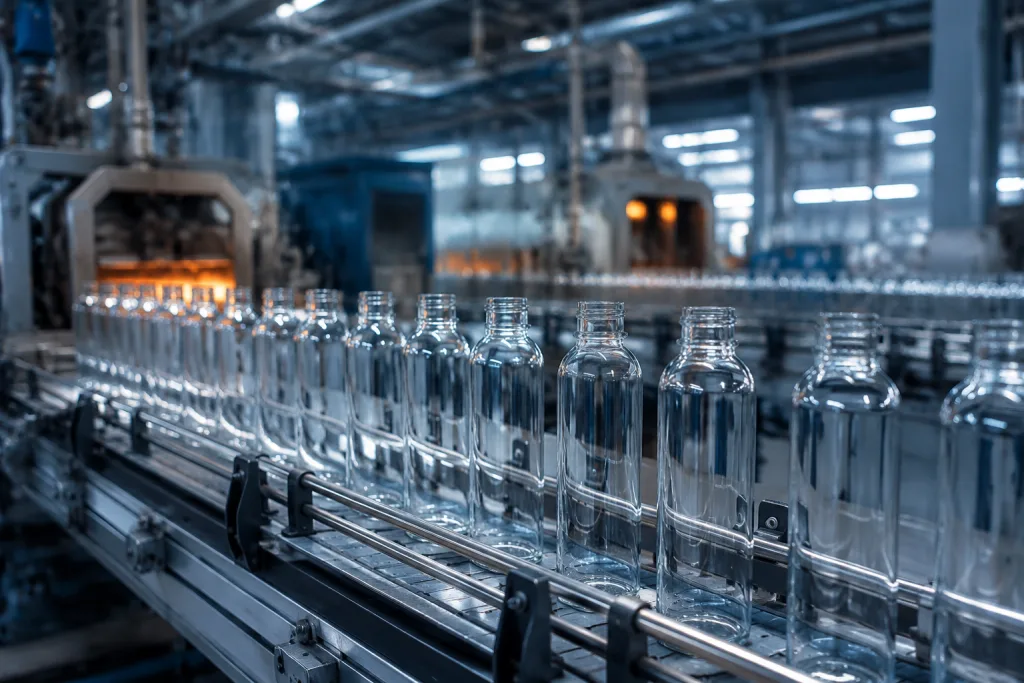
Control QC before shipment
I’ll rewrite the section in place, keep the HTML tags untouched, and tighten the sales-engineer tone with concrete QC details and factory-floor language.For glass, shipment quality is a checklist, not a feeling. Ask for pre-shipment photos, carton drop test results if the line ran them, and a random inspection report before balance payment. On a 3,000 pcs order, we usually tell buyers to spend the money on a third-party inspector at AQL 2.5 major and 4.0 minor; the math works better than eating a full rework after the buyer flags chipped rims.
Write the checks for your own category. Wellness brands usually want clear glass, a 500 ml fill line that matches the artwork, and a lid finish that does not scratch in the bag. Sustainable retailers ask for recycled carton content, low-ink printing, and proof the bottle can sit in the shelf set as a reusable alternative to single-use plastic. If your borosilicate glass bottle promotional program includes a sleeve or insert, QC should verify paper weight and adhesive strength against the retail claim; we have seen this go sideways on a simple 120 gsm spec typo.
Before ship date, confirm carton count, gross weight, carton dimensions, HS code, and whether the goods move on a pallet. For large borosilicate glass bottle bulk shipments, palletization cuts breakage and makes warehouse receiving cleaner, especially when the carton stays under 18 kg. In Zhejiang export work, the factories that ship smoothly treat packaging as part of the product, not an afterthought, and they check the 5 mm foam pad before the truck leaves the gate.
Scale from trial to repeat order
I’ve got the section and constraints. I’m rewriting the prose in-place, keeping the HTML tags untouched and making it sound like a factory-side sales engineer wrote it.Your first order is not the finish line; it is the check that the bottle, the lid, and the line can repeat. If the sample sells, ask the borosilicate glass bottle supplier for the production file: screen-print settings, lid lot, carton spec, and the defects QC pulled on the floor. We keep those records by batch, and without them the next PO turns into a new project. That is the wrong question to ask.
For repeat programs, push the pricing on volume you can actually repeat. A 1,000 pcs trial order might land at USD 1.85 each, while a 10,000 pcs annual program can drop 8%-15% depending on decoration and lid choice. On one run, the buyer flagged a typo in the PO on the cap finish, and we caught it before filling the 5,000 pcs cartons. If you work with a borosilicate glass bottle distributor, ask whether they can hold stock, split releases by month, or keep mixed-container inventory. The math works better than chasing the lowest one-time quote.
If your brand is adding SKUs, keep one bottle body and change the lid, sleeve, and print. That is the cleanest way to build a borosilicate glass bottle wholesale line without breaking inventory into small piles. A Zhejiang factory can usually run one 500 ml body across 3-5 retail versions, which keeps the line simple and cuts dead stock. We have seen this go sideways when the buyer wants six bottle shapes at once.
Send your RFQ and get a real quote
We can quote your borosilicate glass bottle private label project with clear MOQ, FOB pricing, sample steps, and carton specs from Zhejiang.
Frequently asked questions
What MOQ should I expect for a borosilicate glass bottle private label order?
For most direct factory programs, expect 1,000-3,000 pcs per SKU. If the bottle body is stock and only the lid or logo changes, some borosilicate glass bottle manufacturers will accept 500 pcs, but the unit price usually rises 10%-25%. If you need mixed colors, many factories apply MOQ per color, not per order. In Zhejiang, a more organized borosilicate glass bottle factory may support lower trial quantities if you agree to standard packaging and one print position.
How much does a custom glass water bottle cost FOB China?
A simple 500 ml clear bottle with basic lid and one-color logo often lands around USD 1.20-1.80 FOB. Add bamboo lids, special coating, embossing, or premium gift boxes, and the range can move to USD 2.20-2.60 or higher. For a borosilicate glass bottle custom project, mold fees are separate if you change the body shape. Always ask for FOB Ningbo or FOB Shanghai so you can compare borosilicate glass bottle suppliers on the same basis.
How long does sample and bulk lead time usually take?
A standard sample is often 7-12 days if the mold exists and the logo is simple. Bulk production typically runs 25-40 days after sample approval and deposit. If you request new tooling, packaging development, or extra testing, add 10-20 days. A reliable borosilicate glass bottle manufacturer in China should give you a written schedule tied to approval milestones, not a vague promise.
What tests should I request for borosilicate glass bottle wholesale orders?
Ask for leak testing, thermal shock testing if the bottle will hold hot liquids, print adhesion checks, and visual inspection at AQL 2.5 major and 4.0 minor. If the product enters Europe or North America, confirm REACH-related material compliance for any coatings, inks, or accessories, and ask whether the factory can provide test reports or declarations. For retail, add carton compression and drop-test expectations.
Should I buy from a factory or a distributor?
If you need lower cost, faster engineering feedback, and tighter control, a direct borosilicate glass bottle factory is usually better. If you need combined sourcing, flexible inventory, or multiple SKUs across categories, a borosilicate glass bottle distributor can help. The key is clarity: ask who owns the QC, who confirms the artwork, and who pays if the lot fails. In China, that responsibility should be written before you send deposit.