Key Takeaways
- Most borosilicate glass bottle custom color projects start at 3,000-5,000 pcs per SKU, with 25-35 days lead time.
- A coated custom glass water bottle usually adds USD 0.18-0.65 per unit depending on opacity, finish, and logo method.
- Request color tolerance by Pantone code and an AQL 2.5 visual standard, not just a sample photo.
- A Zhejiang borosilicate glass bottle factory should be able to document monthly output, coating method, and packing drop-test data.
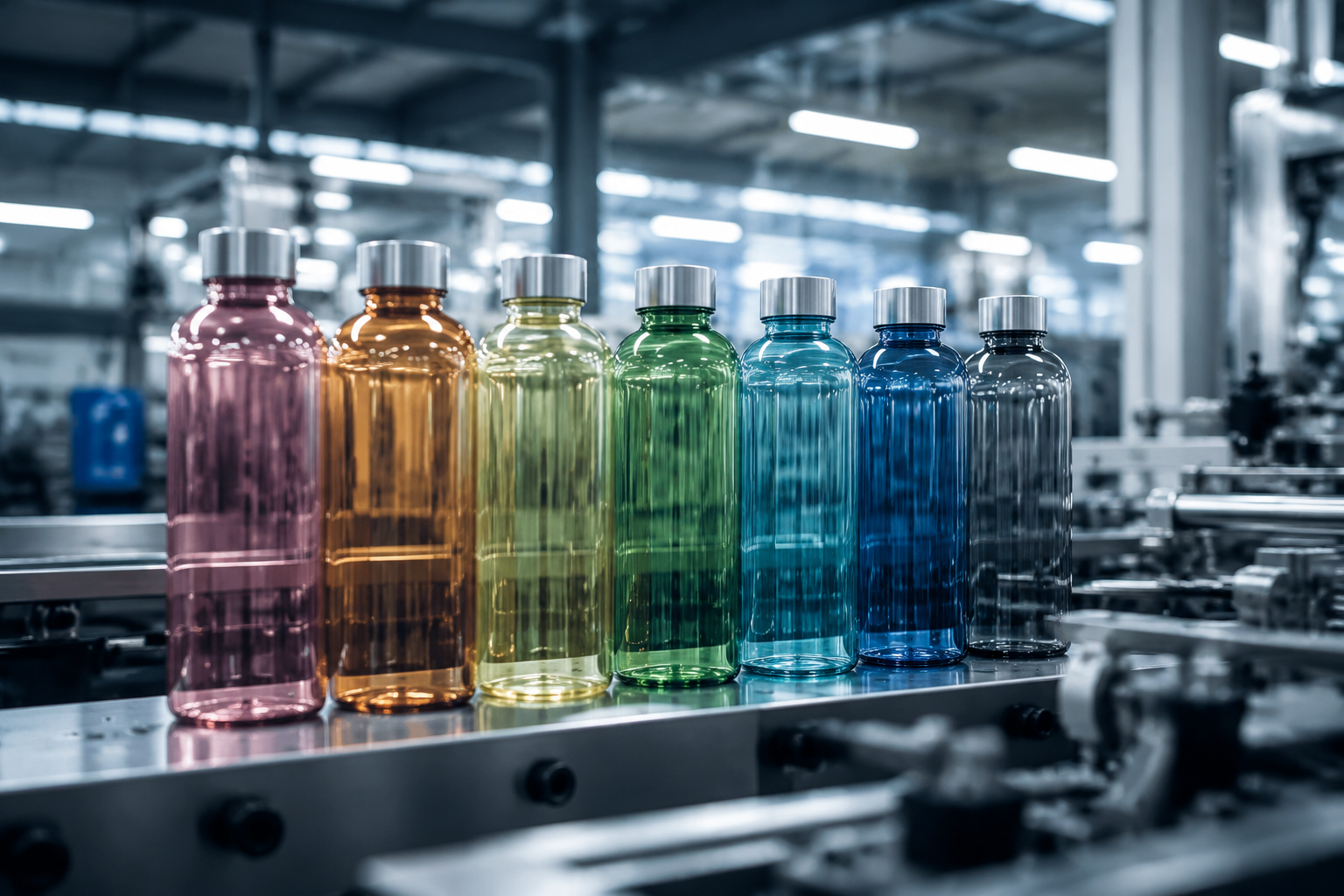
If you are sourcing a borosilicate glass bottle custom color program, the real question is not whether glass can be colored. It is whether the shade holds across 5,000 or 50,000 units, survives transit, and still looks clean on a retail shelf. We have seen buyers approve a good-looking sample, then the line shifts by one Pantone step, the logo lands 3 mm off, or the coating starts scuffing after 2 weeks in distribution.
For wellness brands and sustainable retailers, a custom glass water bottle has to do more than look clean. It needs stable borosilicate performance, a MOQ you can plan around, and packaging that does not blow up a FOB quote at the freight stage. In Zhejiang and across China, the better borosilicate glass bottle factory teams run on process checks, not just color chips. That is the standard to ask for before you sign off on a borosilicate glass bottle custom order.
What color can borosilicate hold?
I’ll keep the HTML structure intact and rewrite the prose with a more factory-floor, buyer-facing tone. Next I’m tightening the color guidance, adding a few concrete production details, and removing the AI-style filler.The first thing to know is simple: borosilicate glass is usually not dyed like plastic. For a borosilicate glass bottle custom color program, the color usually comes from external coating, a tinted glass batch, or both. For most wellness brands, coating wins on the line because we get tighter shade control, faster sampling, and better repeatability across a customized glass water bottle run. Tinted glass can look clean, but it narrows your shade range and makes a small Pantone tweak cost real money.
Ask your borosilicate glass bottle supplier which layer actually holds the color. If the answer is fuzzy, that is your warning sign. A proper spec should call out coating thickness, cure method, adhesion test, and the finish, whether gloss, matte, frosted, or soft-touch. We usually see 12-18 micron coating for decorative color, then a separate logo process. QC pulled the sample after a tape test once and the film lifted at the shoulder; that batch never made it past inspection. For retail, matte hides scuffs better than high gloss. On a bulk borosilicate glass bottle order, that matters because cartons, conveyors, and warehouse stacking will expose a weak finish fast.
One practical note: color on a borosilicate glass bottle wholesale order is easier to keep under control when each SKU has one body color, one cap finish, and one logo position. If you ask for five colors, you are running five production plans. The math does not work any other way. That pushes MOQ up and gives QC more to check at a borosilicate glass bottle manufacturer in China.
Checklist before you request samples
I’ll rewrite the prose only, keep the HTML structure intact, and make the checklist sound like a plant-side sales engineer wrote it.Do not send “nice blue” or “sage green.” That is how samples go off track. A procurement-ready brief needs hard targets, not vibes. If you want a borosilicate glass bottle custom program that holds up in production, send this checklist before sampling:
- Pantone code or a physical chip for the bottle body
- Finish type: gloss, matte, frosted, translucent, or opaque
- Bottle size: 350 ml, 500 ml, 600 ml, or 750 ml
- Glass thickness target: 1.8 mm to 2.2 mm for hand carry
- Closure type: bamboo lid, PP cap, stainless cap, or silicone sleeve
- Logo method: silk screen, decal, UV print, or laser on accessory parts
- Packing spec: individual box, egg-crate tray, master carton count, drop-test requirement
If you are comparing borosilicate glass bottle manufacturers, ask them to put the MOQ in writing. We run this every week in Zhejiang: a serious borosilicate glass bottle factory should quote 3,000 pcs MOQ for one color and 25-35 days after sample approval. The buyer flagged a 500 pcs offer once, and QC pulled the sample with color drift on the second carton. That math does not work. A borosilicate glass bottle distributor can handle small runs, but the factory gives tighter control on coating and packing.
Buyer rule: if the color spec cannot fit on one page, it is not ready for production.
How to judge supplier capability
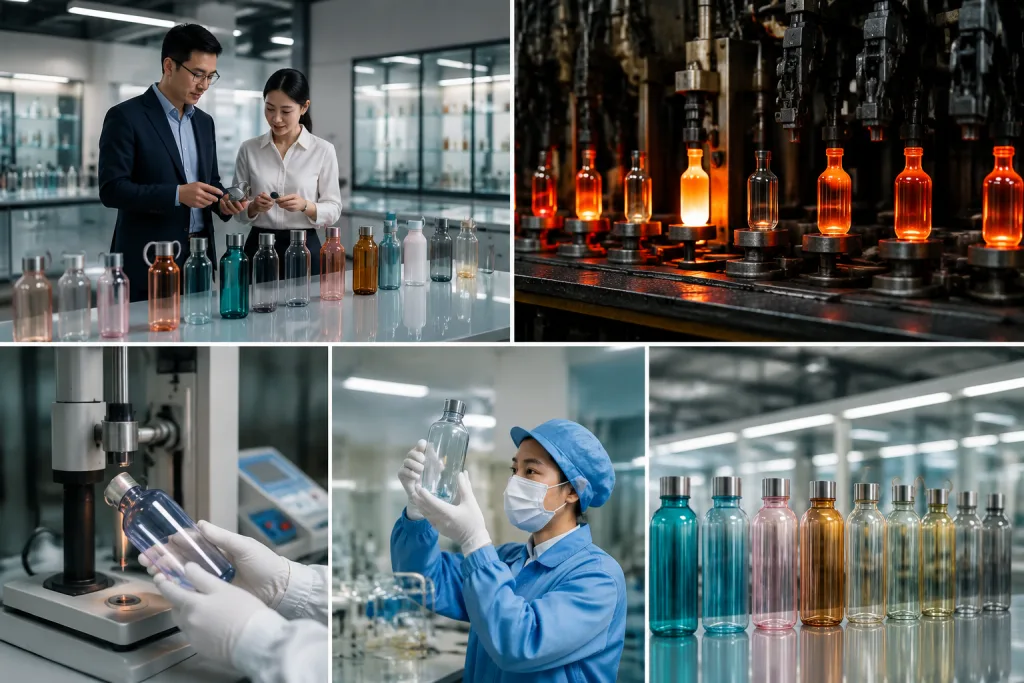
Procurement managers usually ask whether they should work with a borosilicate glass bottle supplier, a borosilicate glass bottle vendor, or direct with a factory. My view is simple: if color match and retail packing matter, go as close to the line as you can. A borosilicate glass bottle manufacturer in Zhejiang with a real coating line can hold cure temperature, overspray, and lot traceability tighter than a middleman. We run into this on 500 ml bottles all the time. If you need local stock and fast replenishment in North America or Europe, a distributor can work, but the margin is thinner and the color risk goes up.
Ask three questions. First, what is the monthly output? A mid-size China plant may run 200,000-400,000 units per month across glass SKUs, but only part of that capacity is open for colored bottles. Second, what tests are routine? You want adhesion, dishwasher tolerance, and carton drop testing. Third, how is QC handled? A supplier should know AQL 2.5 for critical appearance checks and should be able to split body defects from decoration defects. We had a buyer flag a PO typo once because “blue” became “green” on the carton mark. For a customizable borosilicate glass bottle program, that split matters because body rejection and print rejection are two different headaches.
One more thing: if a borosilicate glass bottle distributor claims factory-direct pricing but cannot answer coating chemistry or curing details, that quote is a sales quote, not a production quote. The math does not work. In Zhejiang and elsewhere in China, the better factories get specific about process because they know process protects margin on export orders. QC pulled the sample, checked the 1.2 mm coating edge, and the issue was obvious in seconds.
Pricing and MOQ reality
For a borosilicate glass bottle wholesale order, the price sits more in decoration and packing than in the raw glass. A plain clear 500 ml bottle usually lands around USD 0.85-1.25 FOB China, depending on shape, wall thickness, and cap. We run a 1.5 mm wall on some lines; once you add custom color coating, the quote often moves into the USD 1.05-1.70 range. Put on a matte finish, two-color print, and an individual gift box, and the same item can reach USD 1.80-2.60 FOB. That spread is normal. One flat price for every finish is a bad sign.
For MOQ, a common start for a custom borosilicate glass bottle is 3,000 pcs per color per size. If the design needs a special mold, the first order may need 5,000 pcs or a one-time tooling charge. We had a buyer flag a PO typo on the first run because the cap color code was wrong, and the rework cost more than the sample set. A simple color change on an existing mold is far easier than a new shape. If you are a wellness brand testing a new SKU, the safer move is often a bulk glass water bottle order with one body color and one cap color, then scale after sell-through data. A borosilicate glass bottle customized for retailer programs should be quoted with separate lines for bottle, lid, packaging, and freight so you can see where the cost sits.
Be careful with low quotes from borosilicate glass bottle vendors. If the unit price is too low, something is missing: coating quality, packing protection, or final inspection labor. QC pulled the sample on one job and found 6 cracked necks in AQL 2.5 cartons, which told us the first quote was fantasy. In export drinkware, the cheapest quote usually becomes the highest landed cost.
Quality checks that protect your margin
Color is only half the issue. A custom glass water bottle that chips, leaks, or scratches in the carton is a lost program, even if the shade matches the sample. We run a 1.8-2.2 mm wall on most handheld wellness bottles; go thinner and freight looks better on paper, then breakage starts eating the margin. Check glass thickness, shoulder symmetry, mouth finish, lid torque, and carton compression. For long-haul shipments into Europe or North America, the pack spec matters as much as the bottle spec.
Ask for these controls:
- Appearance inspection at AQL 2.5 for surface marks and coating defects
- Leak test on 100% of capped bottles when the closure design is critical
- Carton drop test from 60-80 cm, depending on pack-out
- Dishwasher or hand-wash resistance claim backed by internal test data
- Batch code traceability for every production lot
A good borosilicate glass bottle manufacturer in China should not promise “unbreakable.” That is the wrong question to ask. Borosilicate stands up to heat and handles abuse better than soda-lime glass, but it is still glass. We look for controlled breakage risk, stable cure on the color coating, and packing that survives pallet movement; QC pulled the sample and the coating passed, then the buyer flagged a PO typo on the carton count, which is the kind of small miss that turns into a big claim. That is how you protect gross margin on a borosilicate glass bottle promotional program or a branded retail launch.
Packaging for wellness retail
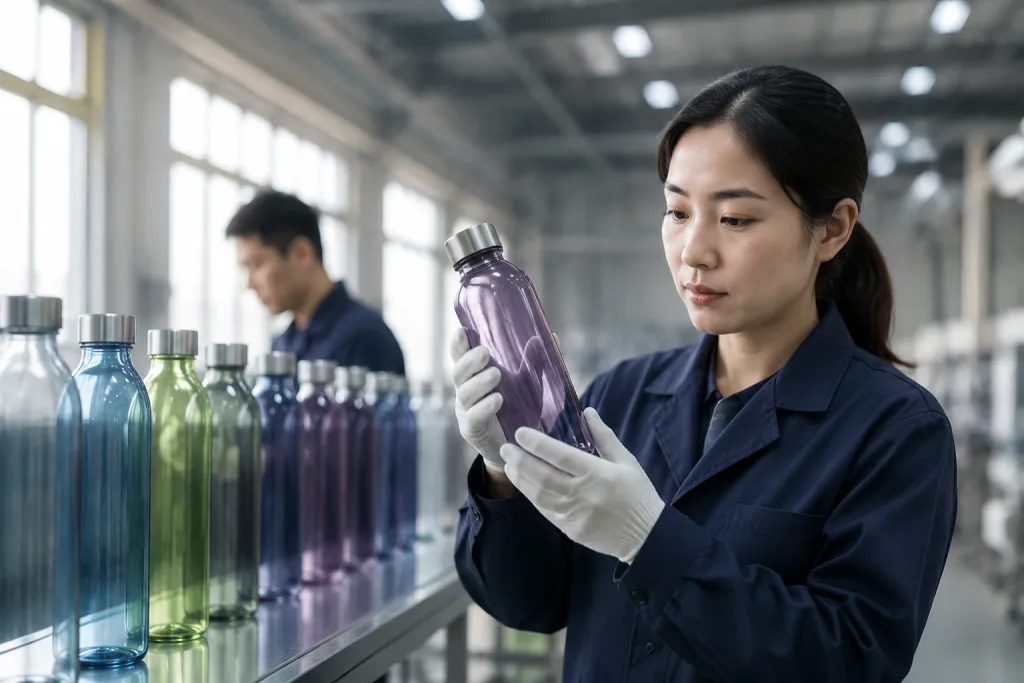
Wellness brands and sustainable retailers sell a story as much as a bottle. If the pack looks cheap, the bottle gets priced that way. For a customized borosilicate glass bottle, we run shelf-ready cartons and export-safe shipping at the same time: one-piece box, molded pulp tray or 3 mm EPE insert, plus a master carton with upright arrows and lot code marks. On an Amazon run, the buyer flagged missing FNSKU labels twice, so we now check the label map before QC signs off.
Color changes the pack decision. Dark finishes hide rub marks, while pastel tones look clean on the shelf but show glue spots and dust fast. If you are on a distributor borosilicate glass bottle program, write the handling note in plain language: no tight shrink wrap, no carton-to-carton abrasion, no stacking above 8 layers. We’ve seen a 1 mm coating edge chip because the pallet film was wound too hard; that is the wrong question to ask if the buyer only looks at box art.
For European and North American buyers, keep compliance copy short and factual. Ask for REACH-relevant material declarations, food-contact statements where applicable, and records for inks or coatings on the bottle or cap. Our QA desk keeps the MSDS set beside the sealing machine, and if the supplier cannot produce the file, the line stops. A Zhejiang plant shipping export cartons should package for retail and document review in the same pass, not turn every request into a new round of excuses.
Request a color-matched sample quote now
Send your Pantone, size, lid, and pack spec. We’ll quote a borosilicate glass bottle custom order with clear MOQ, lead time, and FOB terms.
Frequently asked questions
What is the MOQ for borosilicate glass bottle custom color?
For most factory programs, a practical MOQ is 3,000 pcs per color per size. Some borosilicate glass bottle manufacturers can go lower on plain stock shapes, but custom color coating usually needs a full production run to justify setup and curing. If you add a special lid or printed box, the real MOQ can move to 5,000 pcs. For a distributor borosilicate glass bottle order, small quantities may be available, but the unit cost is usually higher and color matching is less controlled.
How much does a custom color glass bottle cost FOB China?
A plain clear 500 ml borosilicate bottle may be around USD 0.85-1.25 FOB China. Add custom coating and the range often becomes USD 1.05-1.70. If you want matte color, two-color decoration, and individual box packing, USD 1.80-2.60 is realistic. The final number depends on bottle weight, cap type, and defect tolerance. A Zhejiang factory will usually break out bottle, lid, print, and pack-out separately so you can compare true cost drivers.
Can borosilicate glass be dyed through the glass?
Sometimes, but for most commercial orders the color is applied as a coating or surface treatment rather than fully dyeing the glass mass. True tinted glass limits shade flexibility and makes sampling slower. If you want a borosilicate glass bottle customizable for retail colors like sage, amber, or blush, surface coating is usually the better route. It gives you better Pantone control and easier iteration if the first sample is slightly off.
What tests should I request before approving production?
At minimum, request color approval against a physical sample, adhesion testing for the coating, leak testing on capped units, and drop testing for the packed carton. Use AQL 2.5 for appearance checks and ask for batch traceability. If your custom glass water bottle will go into e-commerce, also request box compression and transit simulation. A serious borosilicate glass bottle factory in China should have these checks in place already.
Should I buy from a factory or a distributor?
If you need stable color, packaging control, and better pricing, go direct to a borosilicate glass bottle factory or manufacturer. If you need a small trial order or local stock, a borosilicate glass bottle distributor or vendor can help, but the tradeoff is usually higher unit cost and less control over the production lot. For a wellness brand planning repeat orders, direct factory sourcing in China or Zhejiang usually gives you the best leverage on MOQ, finish, and lead time.