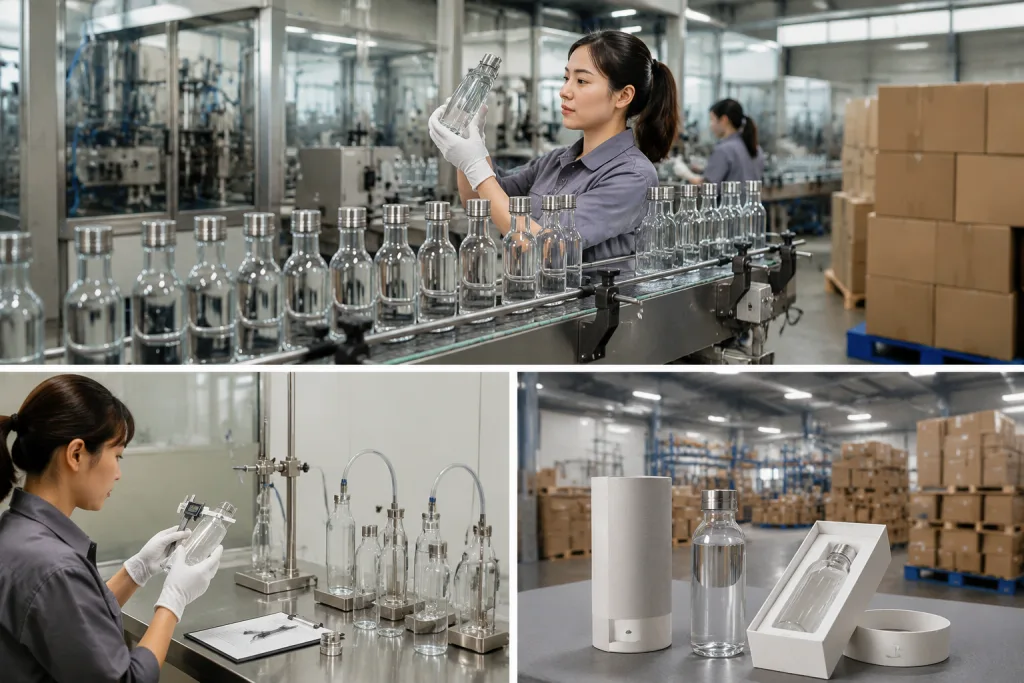
Key Takeaways
- Typical MOQ for borosilicate glass bottle bulk orders starts at 3,000 pcs, with 30–45 days lead time.
- Borosilicate glass handles thermal shock better than soda-lime; target 120°C to 150°C differential performance.
- A 500 ml custom glass water bottle usually lands at USD 1.05–2.20 FOB China depending on closure and print.
- Wellness brands usually need custom borosilicate glass bottle decoration plus REACH and AQL 2.5 inspection control.
If you are buying glass bottles for a wellness line, the real question is not whether glass looks premium. It is whether the bottle survives a 1.2 m drop, passes REACH, fits your fill line, and reaches your warehouse without a stack of breakage claims. We have seen buyers fixate on the picture and miss the carton test. That is the wrong question to ask. Borosilicate glass borosilicate glass bottle wholesale gets interesting because it is rarely the cheapest option, but once you count return rates, shelf damage, and customs delays, the math usually favors it.
For brands and retailers sourcing from Zhejiang or broader China, the spec sheet matters more than the brochure. A borosilicate glass bottle factory can run 300 ml, 500 ml, and 1000 ml formats with 1.2 mm to 2.5 mm wall thickness, and QC will pull the sample against a caliper before the line moves. The right pick still depends on where the bottle sells, because a yoga studio order, a grocery shelf program, and a subscription box run on different rules. Here is the comparison you need before you place a bulk glass water bottle order.
Spec table first, not sales talk
Start with the numbers. A borosilicate glass bottle wholesale quote that is 15% lower can turn costly if the wall runs thin, the cap leaks, or the print peels after dishwasher testing. We run this check before branding talk. For wellness brands, the spec table should cut the shortlist first.
| Spec | Typical range | Buyer impact |
|---|---|---|
| Capacity | 250 ml / 350 ml / 500 ml / 750 ml / 1000 ml | 500 ml moves easiest in retail, and 750 ml fits gym sets better |
| Wall thickness | 1.2 mm–2.5 mm | 2.0 mm or above feels safer in hand and cuts crack complaints |
| Thermal shock | 120°C–150°C differential | Needed for hot fill, tea, and the buyer who asked for ice-to-boil tests |
| MOQ | 3,000–5,000 pcs | Sets cash tied up and whether you can test 2 colors without pain |
| Lead time | 30–45 days | Matters when the launch date is fixed and the PO typo already cost a week |
| FOB price | USD 0.88–2.40 | Changes with closure, print, and carton spec; the math does not work if you ignore packing |
A borosilicate glass bottle manufacturer in Zhejiang usually quotes the bottle body, lid, and finishing separately. That is normal. QC pulled the sample on a 1.5 mm wall and found a small lip chip, so we know the line margin is tight. If you want a custom borosilicate glass bottle with a silicone sleeve, bamboo lid, or stainless cap, each part changes tooling, cycle time, and breakage risk. Ask for the full landed unit cost, not just the bottle body.
Borosilicate versus soda-lime
If your product team is still comparing materials, keep it simple: borosilicate is the safer bet for hot-and-cold use, while soda-lime only wins on price. For a custom glass water bottle that may see tea, citrus infusions, or dishwasher cycles, borosilicate gives more room before failure. We run thermal shock checks at 95°C, and the line shows the gap fast.
The tradeoff is cost. A customized glass water bottle in soda-lime may land 20%–35% cheaper ex-factory, but that saving gets eaten once breakage, returns, or customer complaints start stacking up. We saw one PO typo on wall thickness — 2.0 mm typed as 2.2 mm — and the buyer flagged it before packing, because that kind of slip turns into a margin leak. A distributor glass water bottle program also benefits from borosilicate because shelf damage and transit losses stay lower when the spec is honest. If you sell through retail chains, this is the wrong question to ask: “Which quote is lower?” The math does not work.
Use borosilicate when the bottle is part of the product promise. Use cheaper glass only when the bottle is disposable-looking and cold-fill only.
For borosilicate glass bottle distributors, this comparison usually decides the order. You are not just buying glass. You are buying fewer QC pulls, less service friction, and a cleaner premium story in the channel.
Which use case fits which bottle
Not every buyer should order the same custom borosilicate glass bottle. The use case decides the spec. If your brand sits in wellness, a 500 ml clear bottle with a bamboo lid and silicone sleeve is the easy retail move. We run that SKU a lot. For giftable sets, the same body with a printed measurement scale and tuck-box packaging sells better in Europe and North America. QC pulled a sample with a 1.9 mm wall last week, and that was the one the buyer kept.
- Retail wellness brands: 500 ml, minimal print, 1.8 mm–2.2 mm wall thickness, FSC carton.
- Studio and gym channels: 600 ml–750 ml, loop cap or leakproof screw cap, carton tested for 1 m drop.
- Corporate gifting: custom borosilicate glass bottle with one-color print, gift tube, and promo sleeve.
- Subscription boxes: 350 ml–500 ml, lighter packing, lower FOB target, stable carton dimensions.
If you are sourcing borosilicate glass bottle customized for a distributor program, think sell-through first. The wrong question is “which bottle looks premium?” A 750 ml bottle can look good on a board, but 500 ml turns faster and fits more home and office use. We’ve seen this go sideways when the PO called for 750 ml and the carton size pushed freight up by 18%. That is why a lot of borosilicate glass bottle vendors in Zhejiang keep 500 ml as the base mold and adjust from there.
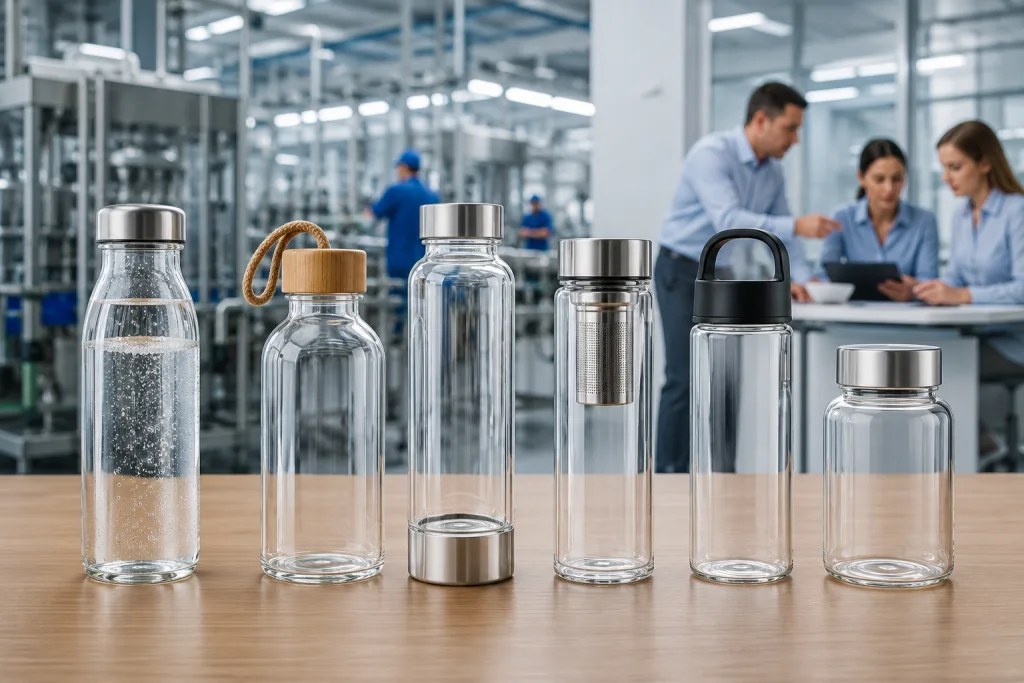
Custom options that actually matter
Decoration is where a lot of buyers overbuild the PO. We keep it to five levers: logo print, frosted finish, sleeve, lid type, and packaging. The rest needs a channel reason, not a wish list. On the line, QC pulled a sample with three logo placements and the buyer flagged the extra cost; the math did not work.
For a borosilicate glass bottle promotional program, one-color silkscreen usually covers the job. If the bottle will be handled hard, laser engraving on the lid or powder-coated stainless parts holds up better, but the glass still needs the right print process. For retail, a matte frosting effect can support a higher shelf price. For Amazon or DTC, clear volume markings and a tighter carton fit matter, because one crushed case can wipe out the margin on 12 units.
Typical decoration costs from a borosilicate glass bottle factory in China look like this: one-color print at USD 0.08–0.18, frosted finish at USD 0.12–0.30, bamboo lid upgrade at USD 0.22–0.55, silicone sleeve at USD 0.18–0.40. We ship a lot of these, and when a quote lands far outside that range, the buyer usually missed packaging, test fees, or extra handling. A PO typo on carton quantity once turned a clean quote into a mess over 1,000 pcs.
Wholesale pricing and MOQ realities
Borosilicate glass bottle wholesale pricing is not a black box. It follows volume, cap style, and packaging count. At 3,000 pcs, a plain 500 ml clear bottle with a basic cap usually lands around USD 0.88–1.25 FOB China. Add a bamboo lid, sleeve, and printed logo, and that SKU moves to USD 1.35–2.20. If you want a gift box and an individual mailer carton, add another USD 0.20–0.60. We run this math on the line every week, and the buyer usually pushes back on packaging first.
Most borosilicate glass bottle manufacturers in Zhejiang will give better terms at 10,000 pcs and above, often cutting 8%–15% off the unit price. That only helps if the design is frozen. A first-time buyer should test one or two SKUs, not five; the MOQ looks cheap on paper, then inventory sits for 90 days. A serious borosilicate glass bottle supplier can handle mixed-color lids or mixed-pack assortments, but once customization starts, the MOQ does not stay friendly. We’ve seen that go sideways on a 7,500 pc order when the PO typo split the carton spec.
Ask for AQL 2.5 on chip, crack, leak, and print misalignment. This is the right question to ask before a single bottle leaves the blowing mold. On a consumer glass bottle, one bad carton can wipe out the margin from several good ones. QC pulled the sample with a 0.8 mm chip last month, and that was enough to stop the batch. China can do this at scale, but only if the inspection standard is set before production starts, not after shipment.
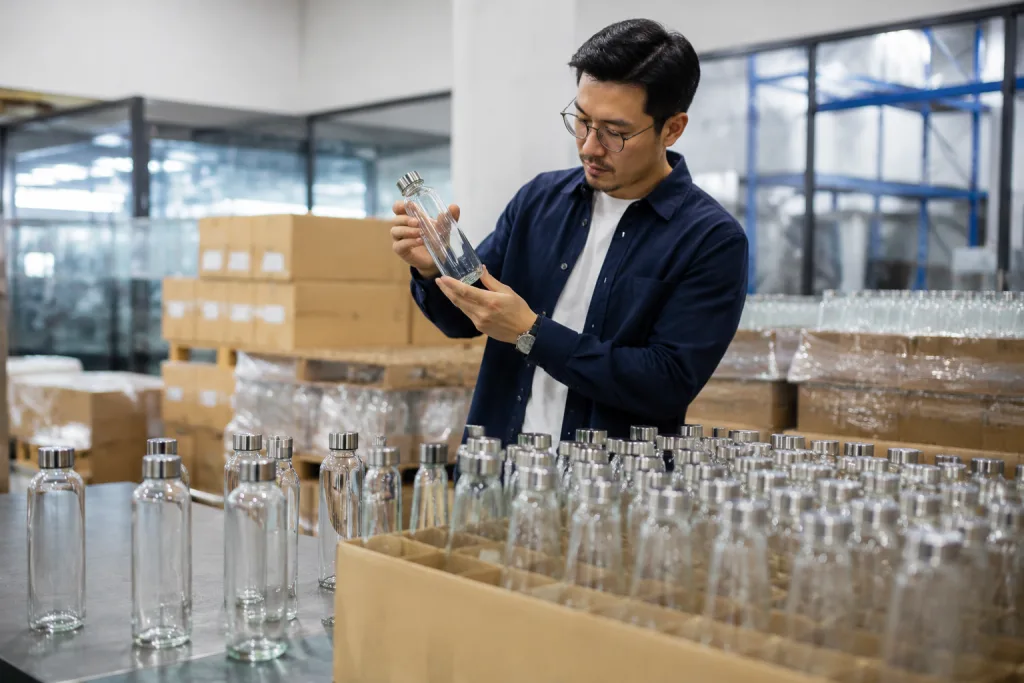
Factory checks before you place order
I’m rewriting the section in place, keeping the HTML intact and tightening the sales-engineering voice. Next I’ll make the factory checks sound like something a buyer would hear from a real line manager, not a brochure.If you are choosing a borosilicate glass bottle factory, do not stop at catalog photos. Check output capacity, QC flow, and export history. A real borosilicate glass bottle manufacturer should handle 200,000 to 500,000 units per month on standard molds, with 30–45 days for a normal order and more time for new tooling. We run a 12-head leak tester on the line in Zhejiang, and BottleForge Industrial, for example, can push past 600,000 units a month on mainstream glass bottle lines. That kind of output keeps retailer programs from slipping.
Ask these questions before you approve samples: Can they provide REACH and food-contact documents? Do they support drop tests and thermal shock reports? Can they show AQL records for a previous export lot? Do they control cap torque and leakage in-house? We have seen buyers miss a typo on the PO and end up with the wrong cap spec; that is the wrong place to save time. If the answers stay vague, you are dealing with a trading layer, not a production partner.
For wellness brands and sustainable retailers, transparency matters. You want a borosilicate glass bottle supplier that can explain glass composition, annealing process, and packaging method without hand-waving. QC pulled the sample and found a 0.8 mm neck deviation on one lot, which is the sort of detail that tells you whether the factory is steady or guessing. This matters even more when you order from China and ship into the EU or North America, where sloppy paperwork turns into delays fast.
Request your borosilicate bottle quote today
Send your capacity, lid choice, and target MOQ. We will price the bottle, packaging, and lead time for your next retail or wellness launch.
Frequently asked questions
What is the usual MOQ for borosilicate glass bottle wholesale?
Most borosilicate glass bottle wholesale orders start at 3,000 pcs per design, with many China factories preferring 5,000 pcs for better pricing. If you add custom printing, a sleeve, or a special lid, the effective MOQ can rise to 5,000–10,000 pcs. For a first launch, 3,000 pcs is usually enough to test sell-through without overcommitting cash.
How much does a custom borosilicate glass bottle cost?
A basic 500 ml custom borosilicate glass bottle usually costs USD 0.88–1.25 FOB China. Add a bamboo lid, silicone sleeve, logo print, and gift box, and the price commonly lands at USD 1.35–2.20. If you request customized glass water bottle packaging for ecommerce, expect another USD 0.20–0.60. Exact pricing depends on decoration area, cap material, and order quantity.
Can borosilicate glass bottles handle hot drinks?
Yes, borosilicate glass is designed for better thermal shock resistance than ordinary glass. In practical sourcing terms, you should ask for 120°C–150°C differential performance, especially if the bottle will hold tea, hot water, or cold-to-hot transitions. That said, the lid, gasket, and print still need testing. A good bottle can fail if the closure is weak.
What compliance documents should I request from suppliers?
For EU and North America, request REACH, food-contact declarations, and any applicable FDA-related material statements from the borosilicate glass bottle supplier. If you are selling through retail or Amazon, ask for carton drop-test data, leak testing, and AQL inspection records. For branded import programs, many buyers also ask for MSDS, HS code confirmation, and labeling proof before shipment.
How do I choose between supplier, factory, and distributor?
If you need a standard bottle quickly, a borosilicate glass bottle distributor can be useful, but pricing and customization are usually weaker. If you want a custom borosilicate glass bottle with your own print, lid, or packaging, a direct borosilicate glass bottle factory or manufacturer is better. For long-term retail programs, direct factory sourcing from China usually gives more control over QC, MOQ, and replacement terms.