Key Takeaways
- A 5,000-unit blender bottle order usually needs 30-45 days after sample approval
- Specify resin, wall thickness, leak test, logo process, carton drop test, and AQL before paying the deposit
- FOB China pricing can shift 8-15% depending on lid structure, packaging, and print coverage
- A good Zhejiang factory should confirm MOQ, mold status, compliance documents, and daily output before sampling
You are not buying a “bottle.” You are buying a repeatable product system: resin grade, shaker ball fit, cap sealing, print adhesion, carton strength, and inspection rules. A blender bottle factory in Zhejiang can make a clean sample in 7 days, but the order only makes money if the specs are locked before the line opens. We run PP resin checks by batch, test the flip cap with a 0.3 bar air leak gauge, and still see buyers lose time because the PO says “blue” instead of Pantone 293C.
Take a real 5,000-unit custom drinkware order for a gym chain, nutrition brand, or distributor program in Europe or North America. The same buying logic applies to a custom canteen, customized growler, or canteen promotional line from China, but don’t start by asking for the lowest unit price. That is the wrong question to ask. Ask what changes the factory has already priced in: logo method, carton drop test, spare lids, AQL 2.5 inspection, and whether QC pulled the sample from mass production or from the sample room shelf.
Start with the commercial job
The first mistake is asking a blender bottle factory for “your best price” before the sales job is clear. Wrong question. A 700 ml shaker for a sports nutrition launch is not the same build as a staff gift, a gym resale bottle, or a canteen distributor catalog SKU. We can quote all 4, but the cheapest mold set and lid spec often fail the channel. Last month QC pulled a sample with a 0.35 mm lid gap; fine for a giveaway, not fine for retail complaints.
For this scenario, assume you need 5,000 units of a 700 ml shaker bottle with a screw lid, flip cap, mixing ball, one-color logo, and individual polybag. Target selling region: Germany, Netherlands, and Canada. Your landed cost target is USD 1.35-1.70 per unit FOB Ningbo or Shanghai, before ocean freight, duty, and local handling. On the line, we would check cup weight, lid torque with a torque gauge, and logo position against a paper jig before packing starts.
That commercial frame tells the canteen supplier what to protect. For retail resale, the lid must feel solid and the logo cannot rub off after 50 dishwasher cycles. For a promotional campaign, carton timing and color accuracy often beat a premium spring ball, especially when the buyer has a fixed event date. For Amazon or marketplace resale, FNSKU labeling, carton weight under 15 kg, barcode scanning, and outer carton drop strength belong in the specification. We have seen this go sideways when a PO says “barcode on carton” but the warehouse needs barcode on each polybag.
At BottleForge Industrial in Hangzhou, Zhejiang, we ask buyers to confirm the sales channel before we talk tooling. It is not curiosity. A distributor canteen program needs neutral master cartons and mixed colors. A nutrition brand usually asks for brand-color lids and a printed insert. A canteen vendor selling to schools asks for child-safe materials and stricter migration reports. If you do not define the job, the factory fills the gaps with assumptions, and the math does not work in mass production. One buyer flagged this after pilot packing because their PO had “blue lid,” while their brand guide called for Pantone 286C.
Turn the idea into a specification
A practical specification sheet does not need to look polished. It needs to be clear enough that our molding line, packing team, and QC inspector read the same meaning. For a blender bottle factory, the core sheet should list capacity, body material, lid material, ball material, dimensions with tolerance, weight range, Pantone color, logo size, packaging, compliance, and inspection method. One missing line can cost a day; last month QC pulled the sample because the PO said “blue lid” while the approved chip was Pantone 2955C.
For the 700 ml order, we would start with this spec: PP body, food-contact grade; PP lid; 304 stainless steel mixing ball; body weight 95-115 g; lid weight 38-48 g; wall thickness target 1.6-2.0 mm at the main body; silicone seal ring if the design requires it; leak test at 45 degrees and inverted for 30 minutes. Put it on the sheet. If you want Tritan instead of PP, say it before mold trial, not after we run the first 20 samples. Tritan gives better clarity and a higher shelf feel, but the math changes on resin cost, mold shrinkage, carton weight, and sometimes lead time, for example 12 days for PP sampling versus 18 days when we need to adjust the injection parameters.
Use Pantone codes for plastic color, not “dark blue” or “lime.” Phone screens lie. A canteen customized project with three green shades can go sideways fast if approval comes from a WhatsApp photo under warehouse lighting. For logo work, send vector files in AI, EPS, or PDF, with the print size marked in mm. A 45 x 55 mm one-color silk-screen logo uses a different screen, jig, and curing check than a 360-degree full-wrap heat transfer print, and the buyer flagged it once only after seeing the first 50 pcs off the line.
Buyers often put too many items under customizable drinkware, and this is the wrong question to ask if the factory is quoting risk. A customizable canteen, customizable growler, and shaker bottle may carry the same brand artwork, but the engineering risk is not the same. A custom growler needs vacuum performance and weld inspection. A customized canteen may need strap pull testing or cap torque testing with a torque meter. A blender bottle needs lid sealing, thread consistency, and mixing ball corrosion checks after salt-spray or dishwasher simulation. Treat each item like its own SKU, even if the artwork is shared; we ship cleaner orders that way.
Check factory fit before sampling
Before you pay a sample fee, check whether the canteen factory or blender bottle factory is built for your order size and compliance list. We see about 7 out of 10 small canteen vendors decorate stock bottles only; they do not control injection molding, lid assembly, silicone ring fitting, and export packing in the same plant. That gap shows up fast when QC pulls 32 samples and 3 lids leak after a 30-minute upside-down test.
Ask blunt questions. What is the MOQ per color? Is 5,000 units enough for custom Pantone plastic, or does the factory require 3,000 units per color? Is the mold private, shared, or open market? What is the monthly output for this category? Our Zhejiang production network can support around 300,000-500,000 plastic shaker and sports bottle units per month depending on season, with normal MOQ from 3,000 units for stock colors and 5,000-10,000 units for custom colors. If a buyer asks for 8 colors at 600 pcs each with custom PP resin, the math doesn't work; the line loses time on color purging and the scrap rate climbs.
Compliance is not optional for Europe and North America. For EU buyers, ask for food-contact declarations, LFGB or EU 10/2011 test references where applicable, and REACH/SVHC awareness for decoration materials. For US buyers, ask about FDA food-contact material suitability and California Proposition 65 screening when needed. If the project touches children, ask about ASTM or CPSIA relevance before sampling, not after cartons are packed. We once caught this at artwork stage because the PO said “kids gym bottle” while the supplier quote only covered adult sports use.
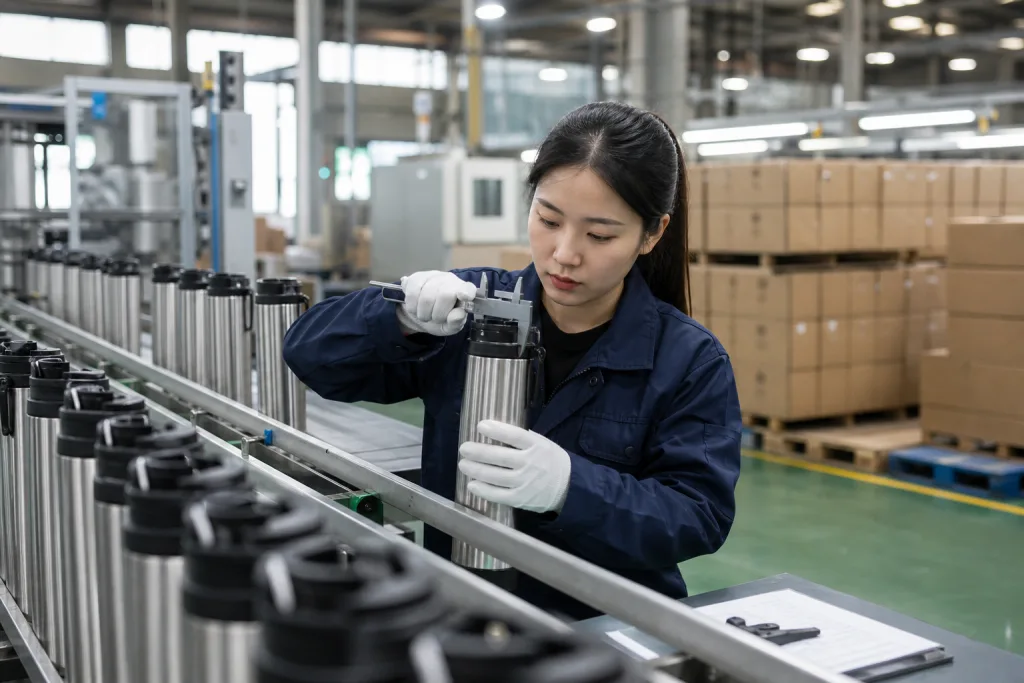
Ask who runs QC. A canteen manufacturer that says “our workers check everything” is giving you a slogan, not a control plan. You want incoming material checks, first-article approval, in-process inspection, and final AQL inspection with records from calipers, torque tests, and a simple leak jig. For a normal B2B drinkware order, AQL 2.5 for major defects and 4.0 for minor defects is common. Critical defects, such as foreign matter inside the bottle or severe leaking, should be zero tolerance.
Approve samples with abuse tests
The golden sample is your contract in physical form. Don’t sign it off just because the logo looks sharp under office lights. Beat it up the way an end user will on a bad Monday morning. We’ve seen this go sideways over a cap that passed a desk check but leaked after 40 seconds in the shaker fixture.
For the 700 ml blender bottle order, sample approval should include at least five checks. First, fill to nominal capacity on a digital scale and confirm the printed or molded capacity mark if you use one. Second, shake with water for 60 seconds and inspect cap leakage at the flip spout, lid thread, and seal ring. Third, put the bottle upside down for 30 minutes on white tissue so one drop is easy to catch. Fourth, rub the logo with a wet cloth 50 cycles and an alcohol cloth 20 cycles if the surface claims stronger adhesion. Fifth, run a dishwasher simulation or hot water soak if you market it as dishwasher safe; QC pulled one sample last year where the logo softened after a 75°C soak.
A practical buyer keeps two approved samples: one at your office and one sealed at the China factory. Sign and date both samples, or photograph the sample beside the specification sheet and Pantone card. For a canteen promotional order, this can feel like extra work. It isn’t. If the mass-production logo shifts 8 mm or the lid color moves away from the approved Pantone, the sealed sample settles the argument fast. The buyer flagged it, we open the carton, and the line has a clear reference.
Do not forget packaging samples. A distributor growler or distributor canteen may ship in brown cartons to a warehouse, while a retail blender bottle may need a hang tag, barcode sticker, paper sleeve, or gift box. Packaging changes can add USD 0.05-0.35 per unit and 3-7 days to the lead time. If you need recyclable packaging or no polybag for sustainability reasons, put that into the sample stage. Changing packing rules after mass production starts creates rework, not savings; the math doesn’t work once 6,000 inner boxes are already folded and labeled.
Price the order beyond unit cost
FOB unit price is only one line on the buyer’s cost sheet. A cheap quote often means 68 g body weight instead of 78 g, recycled PP mixed into the resin, a loose flip cap, weak 5-layer cartons, or logo cost left outside the offer. When we compare canteen suppliers or blender bottle factory quotes, we put every supplier into the same format: product price with gram weight and material grade; logo cost with print size and color count; mold or setup cost with refund terms; packaging cost with carton spec; sample fee with courier charge; testing fee with lab name; spare parts ratio; FOB port, usually Ningbo or Shanghai for our line.
For our 5,000-unit scenario, a normal PP shaker with one-color silk-screen logo might sit around USD 1.10-1.55 FOB China depending on lid structure, body weight, inner ball material, packaging, and order season. Tritan raises the price. A full-wrap print may add USD 0.18-0.45, and QC pulled one sample last month where the wrap shifted 3 mm at the seam, so do not price decoration from a catalog photo only. A custom color below the resin supplier’s efficient batch size may bring a surcharge or push MOQ higher; this is where the math fails on small promo orders.
Payment terms are usually 30% deposit and 70% balance before shipment for new buyers. Established canteen distributors with repeat orders may negotiate better terms after several clean shipments, but first orders rarely move far from the standard. Lead time is typically 30-45 days after deposit and sample approval, not after your first email. Add another 7-12 days if third-party lab testing is required before shipment, because SGS or Intertek still needs production samples, courier time, and a clean report before we release cargo. We ship after papers match.
For Europe and North America, price landed cost, not only FOB. Ocean freight swings can move your final cost more than the factory’s profit margin, and carton size changes how many units we load per CBM. A 5,000-unit order may not fill a container, so you may ship LCL, consolidate with other custom drinkware SKUs, or pay rail/air for a fixed campaign date. If the shipment goes to Amazon FBA, carton labels, FNSKU placement, pallet height, and outer carton weight must be quoted and checked before production; we once had a buyer flag 16.8 kg cartons because their warehouse cap was 15 kg. A good canteen vendor asks these questions early. A weak one calls it your problem after packing.
Control production before cartons close
Catch defects before cartons close. For a blender bottle factory order, ask for a pre-production sample made with the same PP resin, color masterbatch, screen mesh, and lid gasket planned for bulk. Then run an in-line inspection when 20-30% of goods are finished; on a 10,000 pcs order, that means checking around 2,000-3,000 pcs, not waiting until all shakers are sealed. This matters most for custom resin color, new logo screens, or a lid mold that sat idle for 6 months. We have seen this go sideways when the first good sample used lab resin, but the line switched to bulk pellets from a different lot.
Production controls are simple. They need to be strict. Resin batch numbers should match the approved material sheet, and QC should keep the bag label photo in the inspection file. Color should be checked against a physical Pantone chip under the same light box, not under the packing-room LED at 7 p.m. Lid threads should be tested with bottle bodies from the same run, using a torque gauge if the buyer has a leak standard. Mixing balls should be 304 stainless steel unless another grade is approved in writing. Cartons should meet the agreed ply and burst strength; printed shipping marks alone do not protect a 12 kg master carton after two warehouse drops.
Final inspection should follow a written checklist. For AQL inspection, define defects before the inspector opens the first carton. Major defects include leakage, wrong logo, severe color mismatch, broken cap hinge, sharp plastic flash, missing mixing ball, incorrect capacity, or unreadable barcode. Minor defects include small print specks, slight surface scratches, or tiny color spots within agreed limits. Critical defects include contamination, unsafe sharp edges, or foreign objects inside sealed packaging. Last month QC pulled a sample with a 0.8 mm plastic burr near the drinking spout; the buyer called it cosmetic, but we held the line because lips touch that edge.
Use photos, videos, and measurable standards instead of emotional wording. “Logo poor” is the wrong instruction because nobody on the packing line can measure it. “Logo position tolerance ±3 mm; no ink gap over 1 mm; alcohol rub 20 cycles without exposed base color” gives the inspector something to check with a ruler, cotton cloth, and stopwatch. Whether you work with a canteen manufacturer in Zhejiang or another China supplier, measurable acceptance rules protect both sides. They cut arguments, and they get shipment release done faster when the vessel ETD is 18 days away.
Plan reorder data from day one
A first order should be built so the second order is easier. We open a clean production file from day one: mold number, material grade, Pantone code, logo process, packing method, carton dimensions, net/gross weight, inspection report, and shipping marks. Sounds admin-heavy. It saves us when QC pulled the sample on line 2 after 200 pcs and the buyer came back six months later asking for the exact same spec.
If you plan a wider custom drinkware range, line up the system early. Your blender bottle, custom canteen, customized growler, and sports bottle can share logo placement rules, carton label format, barcode logic, and brand color standards. We had one buyer send a PO with “carton lable” in the notes and catch it only after 3,000 labels were queued. That kind of slip burns time. It also helps the factory reserve capacity when you move from 5,000 units to 20,000 or 50,000 units per wave.
Track customer feedback after launch. If 0.8% of buyers complain about flip-cap stiffness, send photos and batch codes to the factory. If gym users love the body shape but ask for a larger 900 ml version, that is usable product data, not casual comments. We once saw hinge wear show up after 4,000 opens on the cycle tester, and the next run changed lid torque, ball diameter, and packaging in one shot. Give us real numbers, or the feedback will stay too vague to act on.
For B2B buyers, the goal is not finding the lowest-cost canteen manufacturers once. The goal is building a repeatable supply chain in China that ships the same acceptable product every time. That means clear specifications, controlled samples, written QC rules, realistic lead times, and honest cost discussion. Chasing the cheapest quote is the wrong question. We run a 24-hour cap-torque check before mass production, and that one step has saved more reorder problems than any sales promise. Do that, and a blender bottle factory becomes less of a gamble and more of a production partner.
Send us your blender bottle specification for review
We will check MOQ, material, logo method, QC risks, and realistic FOB China pricing before you commit to sampling.
Frequently asked questions
What MOQ should I expect from a blender bottle factory?
For standard stock colors, many China factories can start around 3,000 units per model, though 5,000 units is more practical for stable pricing. For custom Pantone plastic, expect 5,000-10,000 units per color because resin mixing and injection molding setup create waste. If you need three colors at 2,000 units each, ask whether the factory will accept a surcharge. For a canteen promotional campaign with a tight budget, choosing stock body colors and custom logo printing is usually cheaper than custom resin. Always confirm whether MOQ is per model, per color, or per logo design.
How long does a custom blender bottle order take?
A normal OEM blender bottle order takes about 30-45 days after sample approval and deposit. Sampling usually needs 5-10 days for stock mold products with simple logo printing. Custom colors, new packaging, or third-party lab testing can add 7-15 days. If you need a new mold, the schedule may extend to 45-75 days before mass production. Shipping is separate: ocean freight to Europe or North America can add roughly 25-45 days depending on port and season. Do not plan a campaign using only the factory production lead time.
Which logo process is best for customized drinkware?
For blender bottles, one-color silk-screen printing is the most common because it is cost-effective and works well on PP or Tritan surfaces. A simple logo may add about USD 0.03-0.08 per unit depending on size and quantity. Heat transfer or full-wrap printing gives more color, but it can add USD 0.18-0.45 and needs stronger artwork control. Laser engraving is more suitable for stainless steel custom growler or vacuum bottle items, not most plastic shaker bodies. Ask for rub testing and dishwasher guidance before approving any decoration method.
What QC defects matter most for blender bottles?
The most important defects are leakage, wrong material, poor lid fit, sharp plastic flash, missing mixing ball, weak logo adhesion, color mismatch, and dirty interior surfaces. For B2B orders, use AQL 2.5 for major defects and 4.0 for minor defects as a normal starting point. Critical defects should be zero tolerance. During inspection, test filled bottles upside down, shake them for 60 seconds, check cap hinges, scan barcodes if used, and compare production units against the signed sample. Do not rely only on appearance checks at the carton level.
Can one supplier handle blender bottles, canteens, and growlers?
Yes, but only if the supplier has the right production network and QC system. A plastic blender bottle, a stainless custom growler, and a canteen customizable program involve different materials, molds, and tests. The advantage of using one experienced canteen supplier is consistent branding, consolidated shipping, shared inspection standards, and simpler communication. The risk is that a trader may outsource everything without technical control. Ask for factory audits, product-specific test reports, monthly capacity, and sample history for each category before combining SKUs into one distributor drinkware order.