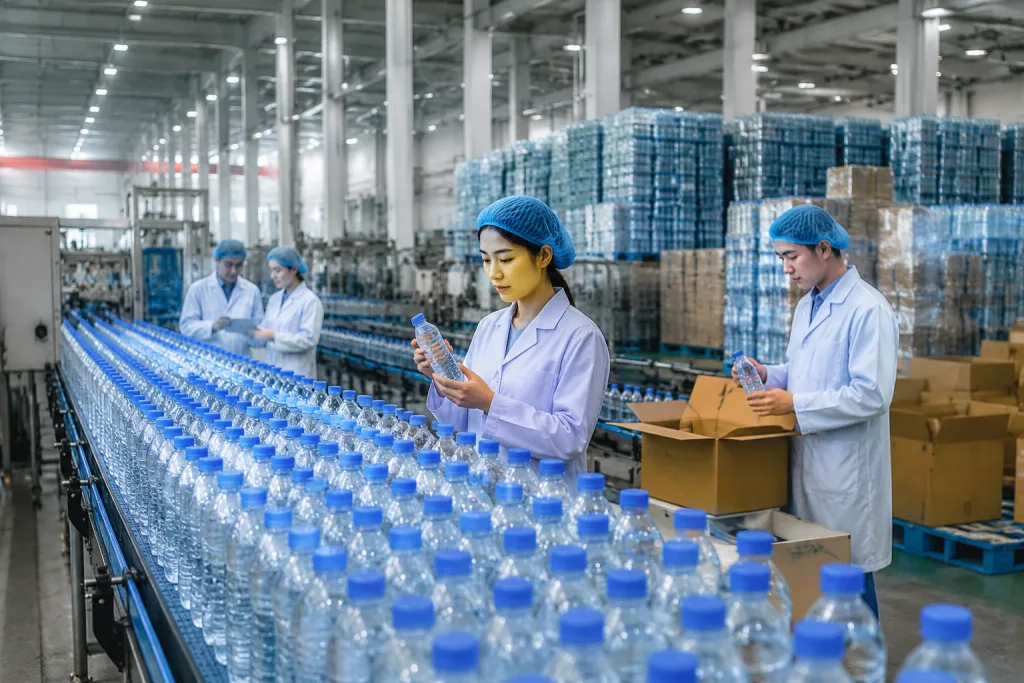
Key Takeaways
- Most wholesale plastic bottles land between $0.35 and $2.20 FOB China, depending on resin, closure, and decoration.
- For private label, expect MOQ from 3,000 to 10,000 pcs; custom color or special mold work usually pushes higher.
- Ask for REACH, food-contact, and migration testing early; do not wait until after sampling.
- A Zhejiang factory with 300,000 units/month capacity can still miss your date if you skip carton spec, lid approval, and incoterm alignment.
If you are buying the best wholesale plastic water bottle, the real question is not “which bottle looks good?” It is which bottle survives your margin, your compliance file, and the way your buyer actually uses it. We run these jobs every day in Zhejiang, and the first mistake is usually picking by photo instead of by resin, cap fit, print method, and carton count.
Start with three numbers: use case, target price, and lead time. A 500 mL Tritan-style bottle, a 750 mL PP sports bottle, and a translucent PET promo bottle all land in different cost bands, even when the shape looks close. The math does not work any other way. A factory can ship 300,000 units per month, but your order still needs the right MOQ, AQL target, and test papers before QC pulls the sample from the line.
Start with the use case
The best wholesale plastic water bottle is the one that fits the buying job. A gym chain needs a 500 mL or 750 mL bottle that survives drops on tile floors. A retail brand wants shelf appeal and a clean print panel. An Amazon seller watches FNSKU placement, carton count, and breakage rate. A corporate gift buyer often cares more about logo space and ship date than long-cycle durability. If you do not lock the use case first, every sample looks acceptable and every quote looks messy.
Keep the choice simple. Pick capacity first, then material, then closure. A 500 mL bottle in PP or Tritan is a different order from a 1 L screw-top canteen wholesale run. We had a buyer send a PO with the lid code wrong by one digit; QC pulled the sample, and the whole carton plan had to be redone. For a bulk canteen used outdoors, wall thickness and lid seal matter more than glossy looks. For a best wholesale drink bottle for retail, clarity, hand feel, and print consistency beat a low unit price. That is the real math.
- Fitness or sports: 500–750 mL, one-hand use, leak resistance
- Retail promo: 500–1000 mL, clean surface for branding
- Outdoor/camping: thicker wall, secure cap, carry loop
- Value programs: lowest FOB, simple mold, fast turn
When you source in China, especially from Zhejiang, the factories that ask for use case, lid style, and carton count usually save you time later. The ones that only ask for quantity and logo tend to ship the cheapest sample and the most expensive problems.
Pick the right plastic resin
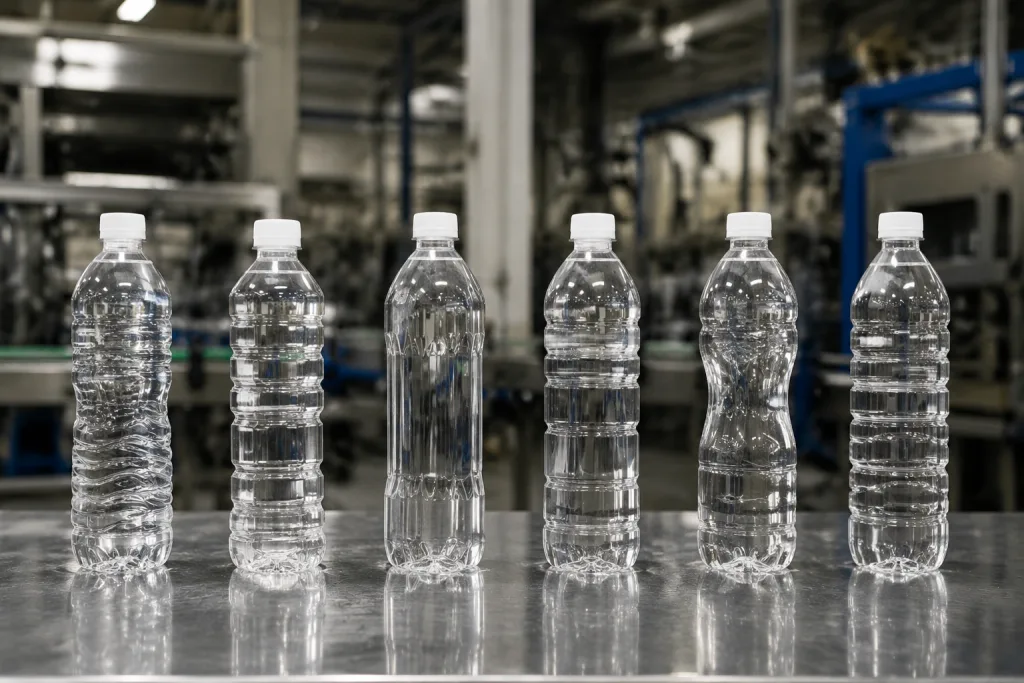
Material choice drives most of the user experience and a big slice of landed cost. PP is the workhorse: low cost, light weight, decent impact resistance, and easy production on the injection line. PET gives cleaner clarity and a more retail-ready look, but heat tolerance is weaker and the bottle can feel softer in hand. Tritan-style copolyester sits higher on the price ladder, usually for buyers who want a BPA-free story and better toughness. HDPE shows up in rough-use bottles and canteen bulk programs because it is durable and familiar, though less clear.
Do not pay for resin properties you will never use. We’ve seen a school program price out at $0.38–$0.75 FOB in PP, then the buyer flagged the sample because the spec sheet quietly wanted a “premium” bottle; that math does not work. A branded retail bottle may justify $0.90–$1.80 FOB if the clarity, finish, and cap action are better. Ask the factory for resin declaration and test basis. If you need Europe or North America compliance, request REACH screening, food-contact declarations, and migration data before you approve mass production. QC pulled the sample on a 58 mm cap once because the PO typo said “PET” but the approved sample was PP.
Practical trade-offs
- PP: lowest cost, lighter, good for bulk drinkware and school sets
- PET: clearer, better shelf look, lower heat tolerance in hot-fill use
- Tritan-style copolyester: tougher, premium, higher FOB for retail programs
- HDPE: rugged, opaque, useful for canteen bulk orders and outdoor kits
If your buyer brief says “best wholesale plastic water bottle,” check whether they want commodity PP or a premium bottle. We run into this mismatch all the time, and it burns samples fast. The line keeps moving, but the margin disappears.
Judge the bottle by conversion cost
Price per piece is not the full number. Judge the conversion cost: resin, mold amortization, cap, decoration, labor, QC, packaging, and freight readiness. Two bottles can both quote at $0.62 FOB and still land differently. One needs a special lid insert, a tight 0.2 mm neck tolerance, and individual polybagging. The other ships in a plain master carton. On a 20,000-piece run, that gap shows up fast.
For branded programs, mold complexity and decoration method usually drive cost. Simple silk screen costs less than wrap print or multi-color pad print. Laser engraving is rare on plastic, but some hybrid lids or inserts use it. If you are comparing bulk drinkware options, ask for a quote that splits unit price, tooling, sample fee, packaging, and production lead time. We run these breakdowns every week, and a clean Zhejiang factory quote should land in 24–48 hours. If it does not, the math is not clean.
“Cheap” in sourcing usually means the factory cut something you did not ask about yet.
For a lot of buyers, the best wholesale plastic water bottle is the one with a landed cost that stays put. Carton dimensions, pallet count, and container loading need to be locked before PO release, not after pre-production samples. QC pulled the sample on a 40HQ load last month and found the carton height was off by 12 mm; that kind of miss changes freight fast. The buyer flagged it, and they were right.
Check cap, seal, and ergonomics
The cap is where a lot of plastic bottle orders fail on the line. A bottle can pass visual approval and still leak in a bag because the seal geometry is weak or the thread finish drifts by 0.2 mm. If the bottle is for sports, travel, or promotions, ask for leak testing, drop testing, and thread inspection. We want cap torque to stay steady across a 500-piece sample, not just on the golden sample. QC pulled the sample at 12 N·cm and the second lot already felt loose.
Ergonomics matter more than buyers expect. A 750 mL bottle with a narrow body and a soft grip ring often outsells a prettier bottle that feels awkward in hand. For wholesale canteen or wholesale drinkware projects, check whether the shape fits cup holders, backpack pockets, or gym racks. For beer tumbler bulk or beer growler wholesale bulk programs, the mouth opening and closure style need to match the pour and wash cycle. If you are sourcing alcohol flask bulk or alcohol flask wholesale bulk items, finish quality and closure reliability matter more, because the buyer will flag a scratch or a sticky cap fast. We’ve seen this go sideways when a PO had the lid code typed one digit off.
- Leak test: upright, inverted, and shake test
- Drop test: 1.0–1.2 m, filled and empty
- Thread check: cap fit on production neck finish
- Grip check: wet-hand and one-hand use
Buyers often obsess over bottle shape and ignore the lid. That is the wrong question to ask. In bulk drinkware, the lid is usually where returns start, and one bad gasket can sink a 5,000-piece order.
Set compliance before sampling
Do not let sampling outrun compliance. If you need Europe, ask for REACH-related documents and food-contact declarations before the first sample leaves the line. If you sell in the U.S. or Canada, ask what test basis the factory uses for plastic contact safety and packaging. The factory should name the exact resin grade, pigment system, and additive package. If they cannot, you do not have a sourcing partner; you have a decoration shop with a quote sheet.
A reliable China supplier should also lock down AQL before you place an order. For consumer drinkware, many buyers use AQL 2.5 for major defects and 4.0 for minor defects, but your own risk profile may be stricter. We run incoming material inspection, in-process checks, and final packing checks on every batch, and QC pulled the sample twice when a cap thread was 0.3 mm off. If you are buying wholesale growler, growler bulk, or beer growler in bulk styles, the same rule applies: finish, odor, seal, and carton drop performance all need verification. The math does not work any other way.
Compliance is not paperwork after the fact. It is part of the product definition. If your goal is the best wholesale drink bottle, treat test reports as a gate, not a nice-to-have attachment.
Choose the factory on proof, not promises
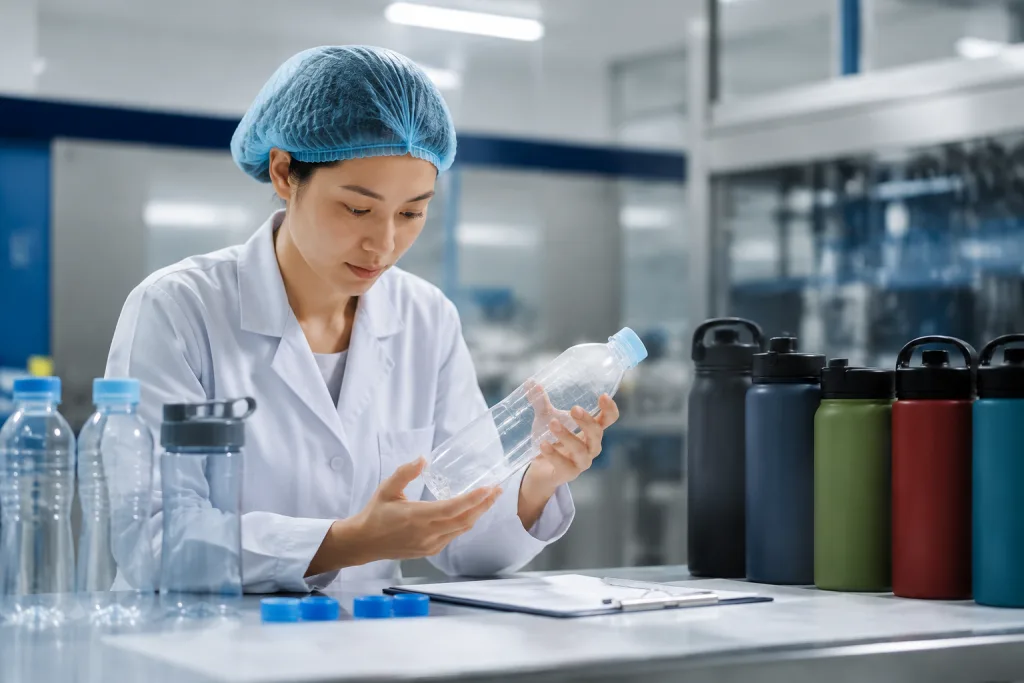
You can learn a lot from the first five questions a factory asks. A serious supplier wants bottle volume, material, target market, decoration area, carton spec, and whether you need custom color matching. The wrong one just asks quantity and sends a fast quote. We see that all the time. In Zhejiang, there are solid plants, but you still need to separate real production from trading talk.
Ask for proof that fits your order. If you need 20,000 units in 35 days, capacity matters, but only if the line can hold tolerance from first shot to last carton. Ask for mold shop photos, the injection or blow line, and QC checkpoints. QC pulled the sample on a 0.3 mm wall-thickness drift last month; that is the kind of detail that matters. If they say 300,000 units/month, ask how many lines run your bottle style and how long tooling changeover takes. Also confirm OEM color, private label, and mixed pack support for drinkware wholesale programs.
- Capacity: monthly output, line allocation, and peak-season output
- Lead time: sample, tooling, and mass production tracked separately
- Documents: test reports, declarations, inspection records
- Packaging: carton strength, label position, master pack count
If you are comparing canteen wholesale, wholesale canteen, or bulk canteen options, the factory that can explain its process in plain English usually saves you from hidden costs later. We have seen the math go sideways when a buyer chases the lowest unit price and ignores packaging, color tolerance, and MOQ.
Source your bottle with fewer surprises
Send your target capacity, price band, and market. We’ll map the right plastic bottle spec, MOQ, and compliance path for China supply.
Frequently asked questions
What MOQ should I expect for the best wholesale plastic water bottle?
For standard shapes, expect MOQ around 3,000 to 5,000 pcs in one color if the mold already exists. For custom color, custom lid, or private label print, 5,000 to 10,000 pcs is more realistic. If you need a new mold, many Zhejiang factories will ask for 10,000 pcs or a tooling fee that is later amortized into the unit price. Always separate sample quantity, production MOQ, and packaging MOQ. That avoids confusion when you compare drinkware wholesale quotes from China suppliers.
How much does a plastic water bottle cost FOB China?
A simple PP bottle may run $0.35 to $0.75 FOB China depending on size and cap. A better-finished PET or premium copolyester bottle can land around $0.90 to $2.20 FOB. Decoration, carton spec, and cap design can move the number fast. If you ask for the best wholesale drink bottle, do not compare quotes only on plastic weight. Compare resin grade, print method, and whether the price includes polybag, insert card, or custom box.
What compliance documents should I request first?
Ask for food-contact declaration, material specification, and test reports tied to the exact resin and pigment used. For Europe, REACH-related screening is standard due diligence. For North America, request any relevant migration or food-safety documentation the factory can provide. If you are selling through Amazon or retail, also ask for carton labeling details and FNSKU packing support. A serious factory in China should provide these before mass production, not after you pay the balance.
How do I reduce leak complaints on bulk drinkware orders?
Start with the lid. Request sample testing for upright, inverted, and shake leak tests, plus a drop test from 1.0 to 1.2 m. Confirm thread finish tolerance and ask for a golden sample with signed approval. Use AQL 2.5 for major defects if the order is consumer-facing. For canteen bulk or wholesale canteen projects, this is usually cheaper than handling returns. Packaging also matters: a loose cap in transit can create a false leak issue.
Can I combine several styles like growler wholesale and alcohol flask wholesale bulk in one PO?
You can, but only if the factory is truly set up for mixed production planning. Combining beer growler wholesale bulk, alcohol flask bulk, and beer tumbler bulk styles often means different tooling, caps, and packing methods, so the lead time may stretch. A factory may accept a combined PO of 10,000 to 30,000 pcs total, but each SKU still needs its own MOQ and QC record. In practice, mixed orders work best when one plant controls all tooling and final packing in-house.