Key Takeaways
- Double-wall vacuum stainless thermos options usually land at 12 oz, 17 oz, 20 oz, and 32 oz for outdoor and promo buyers.
- A practical MOQ for a custom thermos from China is often 1,000 units, with FOB pricing commonly starting around USD 2.40-6.80 depending on lid and decoration.
- For cold-chain performance, expect 6-12 hours hot and 12-24 hours cold from a quality insulated thermos built to ASTM-style test expectations.
- Laser engraving is usually best for permanent branding; silk screen works when you need a lower-cost promotional thermos at higher volume.
If you buy drinkware for outdoor retail or promotions, the wrong thermos costs you twice: first in margin, then in returns. The best wholesale insulated water bottle is not the flashiest finish on the table. It is the one that fits your target price, lid style, logo method, and freight plan without blowing up at customs or filling the warehouse with slow stock.
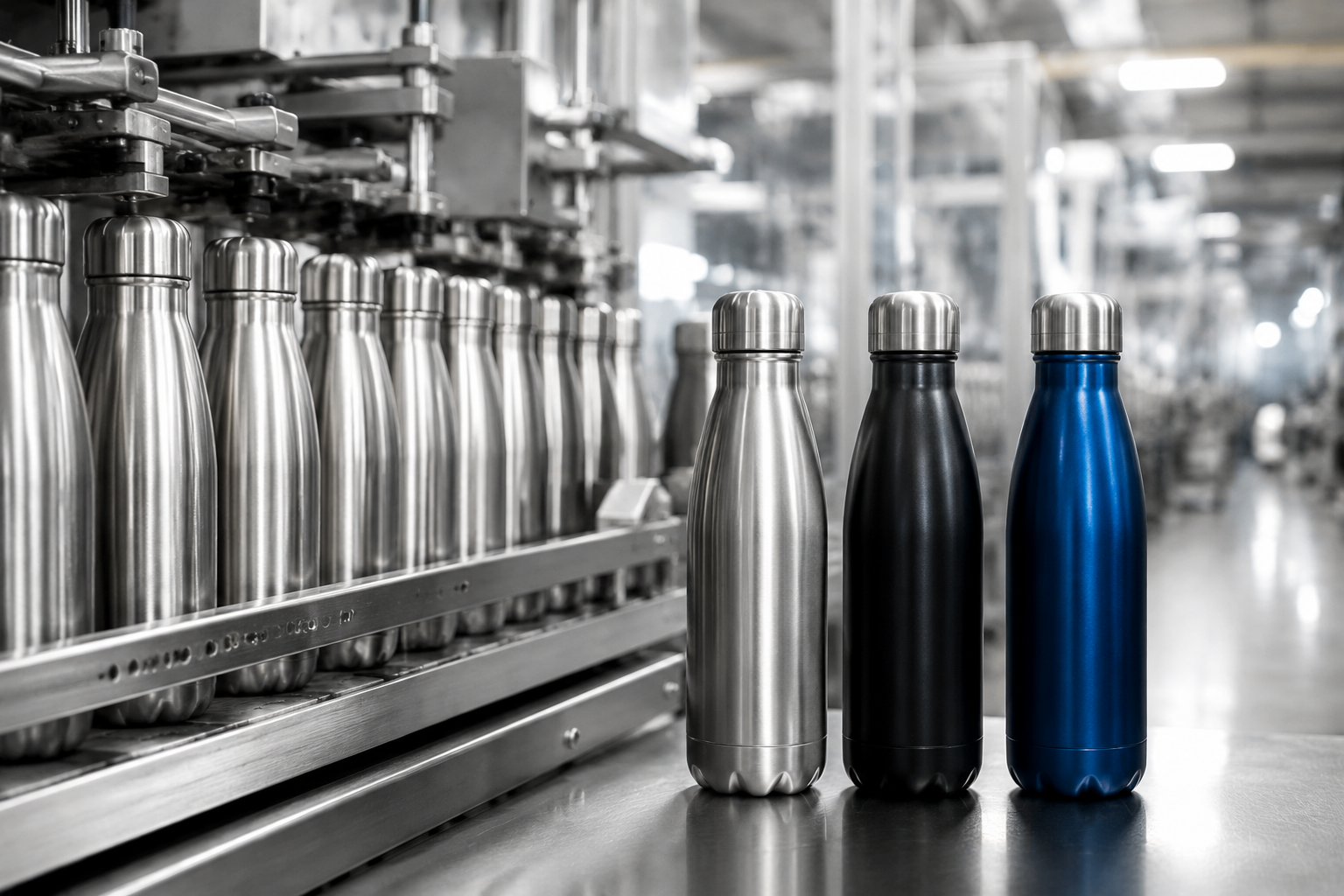
In Zhejiang, where most serious drinkware programs are built, the real talk is short: capacity, 18/8 stainless steel, wall construction, lid leak performance, and MOQ. At BottleForge in China, a standard factory thermos program starts at 1,000 units, runs 35-45 days, and ships more than 200,000 units a month. QC pulled the sample, checked the cap threads, and found the same issue we see every season: the buyer wants premium branding, but the PO typo turns a clean spec sheet into a headache. That is the level where you compare a custom thermos, customizable thermos, or promotional thermos by spec, not by guesswork.
Two Thermoses, One Buying Decision
When buyers ask for the best wholesale insulated water bottle, they are usually choosing between two different thermoses: a clean commuter piece that lives on a desk, or a tougher outdoor bottle that gets tossed in backpacks, hits ice, and takes abuse. Put those two side by side before anyone talks about color or logo. A factory thermos with a narrow mouth and powder coat can beat the others on insulation and grip, while a promotional thermos with a wider mouth and a plain lid usually wins on price and packing speed.
Here is how we run the spec check in Zhejiang and the other China production hubs: start with use case, then compare wall structure, steel grade, lid parts, and decoration. QC pulled the sample on a 0.3 mm dent once, and the buyer flagged it because that is the kind of defect that shows up on a shelf. If your buyer is a national outdoor retailer, a 500 ml or 750 ml custom thermos in 18/8 stainless steel is usually the right target. If the buyer is pushing a seasonal campaign, a thermos promotional model at 16 oz ships easier and takes less warehouse space.
| Spec | Outdoor Retail Fit | Promo Fit |
|---|---|---|
| Capacity | 17-24 oz | 12-20 oz |
| Lid | Screw cap or flip lid with gasket | Basic screw lid |
| Finish | Powder coat | Gloss or paint |
| Typical FOB | USD 3.80-6.80 | USD 2.40-4.20 |
The price is not the first question. The wrong question is, "Which one looks premium?" We have seen that go sideways when the bottle is too heavy, or the MOQ is built around a PO typo that should have been 5,000 pcs, not 500. Pick the bottle your customer will carry twice a week, not once for the photo.
Spec Table Buyers Actually Need
I’ll rewrite the section in-place, keeping the HTML and links intact while tightening the sales-engineer tone and swapping in concrete shop-floor detail.Use Cases by Channel
The right thermos custom program depends on where it lands. We see this on the line every week. Outdoor retailers want repeat orders; promotional brands want fast conversion and clean branding; distributors want stable pricing and fewer SKUs. Those three channels do not want the same bottle, even if they all ask for the best wholesale insulated water bottle.
Outdoor retail
Choose a 20-24 oz customizable thermos with powder coating, a carry loop, and a gasketed lid. Retail buyers care about shelf presence and perceived value, and the math gets ugly fast if the finish scuffs after one carton test. QC pulled the sample with a 1.2 mm lid gap last month, and the buyer flagged it before we even quoted reorders.
Promotions
Choose a 12-16 oz promotional thermos with simpler decoration and fewer parts. That keeps landed cost down and cuts assembly headaches. Silk screen works when the artwork is one or two colors, and laser engraving is the better call when the brand wants a mark that stays put in transit. We had a PO typo once that changed the logo from 2 colors to 3; the buyer noticed because the print cost jumped 18%.
Distribution
For thermos distributors and distributors thermos programs, prioritize stackable packaging, consistent carton counts, and colorways that can be reordered in 60-90 days. A supplier thermos program runs smoother when the factory can hold raw steel and keep the same cap tooling across multiple SKUs. We ship better on this setup because one carton spec, like 24 pcs per case, beats a mixed pack every time.
If your channel mix spans all three, ask for a modular platform. One body, two lids, and three decoration methods usually beat a one-off shape that looks clever on paper but costs too much to replenish.
Decoration Choices Without Guesswork
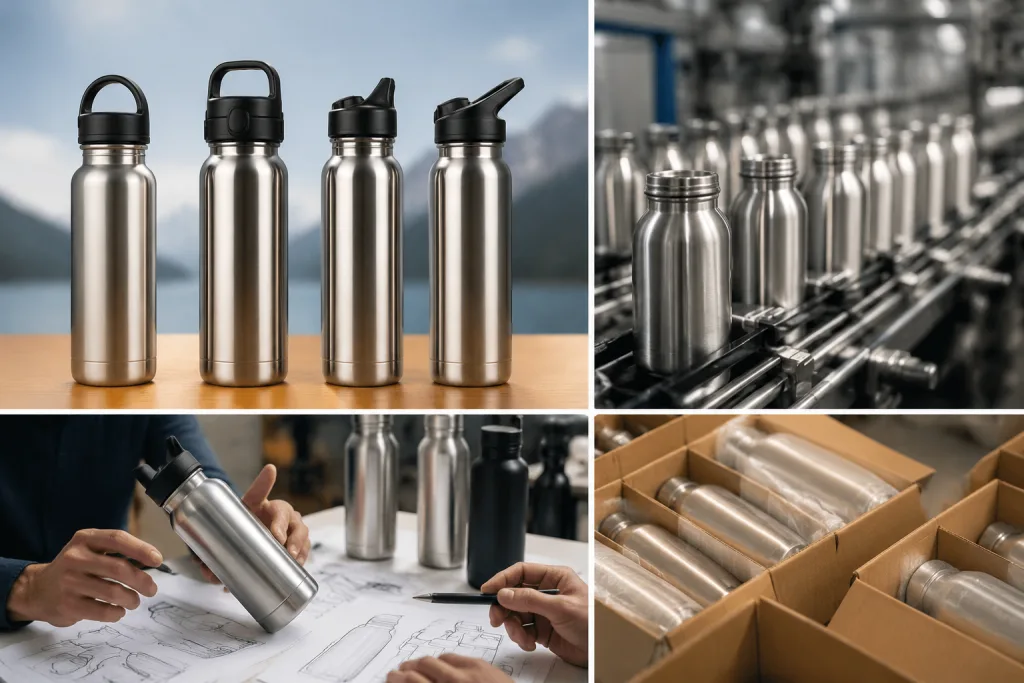
The logo method changes cost and how buyers read the bottle on shelf. For a custom thermos or thermos customizable program, the real choice is permanence versus artwork size. We run silk screen, laser engraving, UV print, and heat transfer on the line, but the finish decides what passes. One sample can look perfect on brushed steel and fail on a matte powder coat.
- Laser engraving: best for stainless or powder-coated bodies when you want a permanent mark and a clean metal look.
- Silk screen: best for thermos bulk orders with 500 pcs or more and one- to two-color art.
- UV print: useful for full-color promo art, but abrasion testing should be part of the PO.
- Debossed or embossed marks: works only when the body wall and mold structure can take the press.
A buyer flagged one PO typo after asking for a 360-degree wrap on a curved body, then the logo stretched at the seam. That is the wrong question to ask. Keep the decoration zone realistic. For a promotional thermos, one clean logo panel usually sells better than a crowded wrap print. For a manufacturer thermos line aimed at retail, a subtle laser mark looks sharper and holds up after 20 to 30 wash cycles.
If you are choosing between laser and print, use silkscreen vs laser engraving as a practical reference and ask for AQL 2.5 inspection photos before approval. QC pulled the sample at the 12 mm logo edge last time, and that saved a rework.
Factory Checks That Protect Margin
Buying from a thermos factory is not about grabbing the lowest quote. It is about stopping margin leaks before the order leaves the gate. In Zhejiang, the better lines show you test records, carton specs, and lid drawings on day one. The weak ones hide behind a clean sample. We see that go sideways fast.
Check these basics before you sign off:
- Food-contact declaration and REACH-friendly material set.
- Leak test for the lid, with 24-hour inverted testing.
- Drop test from 1 meter for packed cartons.
- Salt spray or abrasion check for powder coat on retail bottles.
- AQL inspection plan for final shipment.
A solid thermos manufacturer will also tell you what it cannot promise. Vacuum retention depends on lid structure, filling accuracy, and how the goods are handled after sealing. If a supplier thermos quote looks too cheap, ask where the money disappeared: thinner steel, weaker coating, or poor carton protection. QC pulled the sample on one order we ran, and the carton inner tray had 3 mm of crush before the pallet even moved.
For branded programs, ask for BSCI or a similar social compliance file when the buyer wants it, then check pack-out with the real export carton. I’ve seen a factory thermos order pass on the pallet and fail in transit because the tray rubbed the finish during ocean shipping. One typo on the PO, and the wrong insert goes into 5,000 units. That is not a small miss.
Picking the Right Bottle Size
Size drives more than shelf appeal. It changes freight, unit cost, and how often the bottle gets used. A trail shop does not need the same wholesale insulated water bottle as a corporate gift program. Pick the wrong size and you end up with dead stock or markdowns. We’ve seen that go sideways on a 5,000-piece order.
| Size | Best For | Wholesale Note |
|---|---|---|
| 12-16 oz | Promotions, gift sets, commuter use | Lowest freight cost, easiest to bundle |
| 17-20 oz | Retail, school, light outdoor use | Most balanced for a thermos distributor |
| 24-32 oz | Hiking, camping, long shifts | Higher perceived value, higher carton weight |
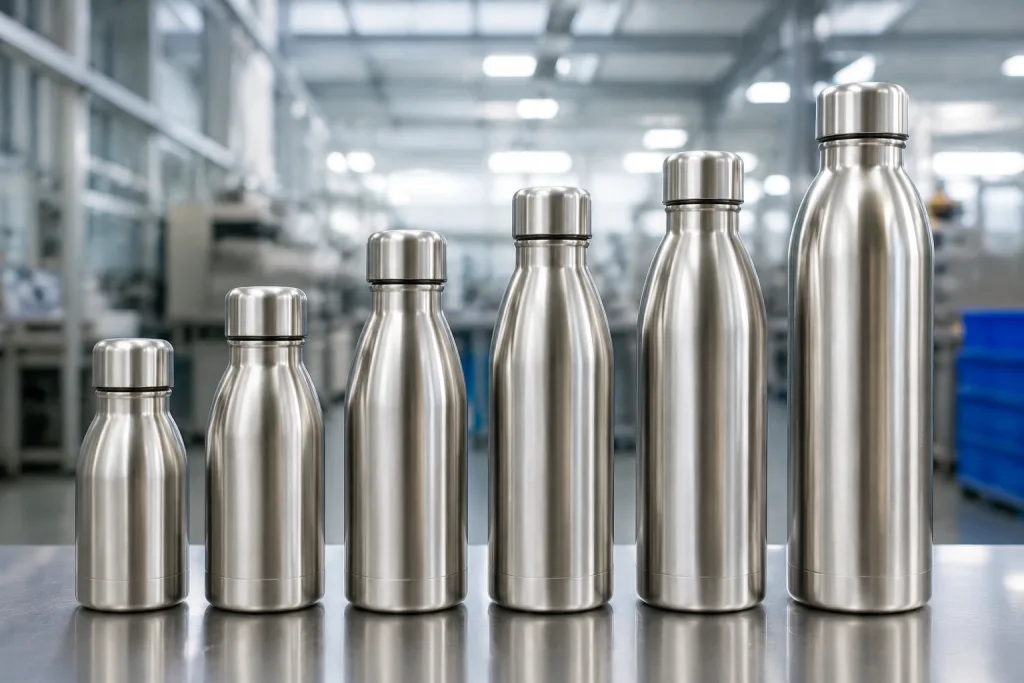
For a custom thermos launch, 500 ml is usually the safest first run because buyers in North America and Europe know that size. If the buyer wants a more promotional look, we run a shorter body with a wider shoulder so it reads cleaner on the shelf without losing insulation room. QC pulled the sample at 245 mm, and that shape still packed well in the master carton. One hero size and one backup size works; five versions just split volume.
That also keeps replenishment moving. Fewer SKUs mean the thermos supplier can hold raw stock, and your reorder cycle stays tight. The buyer flagged a PO typo once and asked for 3 sizes instead of 2; the math did not work, and the line paid for it in changeover time.
When Custom Is Worth It
I’m rewriting the section to sound like a factory-side sales engineer, keeping the HTML intact and tightening the economics with concrete shop-floor detail.Not every order needs a fully custom thermos. A stock bottle, a custom lid, and your logo can do the job, and you skip new tooling. We run this setup a lot for buyers who need speed. A true custom project makes sense when the silhouette has to change, the cap needs a special function, the retail color must be exclusive, or the box has to win on shelf in a 30-day promo window.
Tooling only makes sense when the volume can carry it. A new lid mold can add several thousand dollars before the first unit ships, and the line still needs a pilot run. If your forecast is under 5,000 units, stay with existing molds where you can. If you are buying as a thermos manufacturer partner or private-label distributor, the math starts to work when you can lock 10,000 units across two seasons. QC pulled the sample on a 58 mm lid last month; the buyer flagged it because the cost jump did not match the sales plan.
Here is the right question: will the change move product, cut damage, or support a higher price? If the answer is no, new tooling is a waste. If the answer is yes on all three, custom stops being a branding cost and starts working like margin. We have seen this go sideways when a PO typo changed the box artwork code, and the buyer had to eat a reprint on 3,000 cartons.
For a deeper look at product categories and build options, see stainless thermos products and quality control standards.
Shipping, Packing, and Reorder Reality
The last mile is not the line. It is the carton. A thermos bulk order can pass sampling and still land badly if the pack-out shifts in transit or the pallet plan eats up cube. We’ve seen that go sideways on a 1,000-unit run, and the buyer flagged it before the truck even left Hangzhou.
Ask for these numbers before you release production:
- Inner box dimensions and weight, in mm and kg.
- Master carton count and gross weight.
- Units per 20-foot and 40-foot container.
- Drop-test method used on packed cartons.
- Replacement rate target under AQL 2.5.
For FOB shipping, a well-packed 500 ml stainless thermos usually ships cleanly, while a heavier 32 oz unit needs stronger cartons and tighter pallet stacking. The math does not work the same. One 2 mm change in carton wall spec can move landed cost more than a new buyer expects, and QC pulled the sample after a corner crush on the line. Plan reorder timing at 45-60 days before stockout, especially if spring and early fall are your peak months.
When you build the next PO, tell the factory your carton label format, whether you need FNSKU or retailer barcode, and if master carton markings should be English only or bilingual. We run into PO typos on this all the time—one missing barcode line can burn half a day at receiving.
Send your spec, get a factory quote
We can price your custom thermos program, confirm MOQ, and match the right stainless build to your retail or promotional channel.
Frequently asked questions
What MOQ should I expect for a custom stainless thermos?
For most factory thermos programs in China, a realistic MOQ is 1,000 units per design or color. If you need a new lid or new mold, the MOQ can rise to 3,000 units or more because tooling must be amortized. For repeat-stock shapes with custom logo only, some suppliers can quote 500 units, but the unit price usually climbs by 10-20%. If you are buying for outdoor retail, 1,000-3,000 units is the practical band. For promotions, ask whether mixed-color cartons are allowed, because that can help you test demand without overcommitting.
How much does a wholesale insulated water bottle cost from China?
A standard double-wall stainless thermos from China often lands in the FOB range of USD 2.40-6.80 depending on size, coating, lid complexity, and decoration. A simple promotional thermos with one-color print may sit near the low end. A retail-ready custom thermos with powder coat, laser logo, and upgraded lid can move toward the upper end. Freight, duty, and inland delivery are extra. If you want a fair comparison, ask every supplier thermos quote to show body spec, lid type, packing method, and carton count so you are not comparing different builds.
Which branding method lasts longest on a thermos?
Laser engraving usually lasts the longest because it removes or marks the surface rather than sitting on top of it. On stainless or powder-coated bodies, it resists abrasion better than most printed options. Silk screen can still work well on a promotional thermos if the artwork is simple and the coating is stable, but it is more vulnerable to scuffing over time. For outdoor retail, laser is usually the safer choice. For high-volume giveaway programs, print can be cheaper and still look strong if your campaign horizon is short.
What tests should I request before shipping?
At minimum, request a lid leak test, a vacuum retention check, and carton drop testing. For a serious insulated thermos order, ask for AQL 2.5 final inspection, food-contact material confirmation, and if relevant, REACH-aligned paperwork for Europe. If the body has powder coating, ask for abrasion or rub testing as well. A good thermos manufacturer in Zhejiang or elsewhere in China should be able to show you actual test photos and production QC sheets, not just a sample photo. For retail orders, confirm barcode placement and master carton markings too.
Can one thermos model work for both retail and promotions?
Yes, but only if the platform is flexible. The best approach is usually one body with two decoration options and two lid options. That lets you run a premium retail version and a lower-cost promotional thermos without separate tooling for everything. For example, a 500 ml body with powder coat and laser engraving can serve retail, while the same body with a simpler lid and silk screen can serve a promo program. This setup is common among distributors thermos buyers because it keeps inventory manageable and improves reorder speed.