Key Takeaways
- A reliable promotional Tritan bottle program usually starts at 1,000-3,000 pcs MOQ per color or logo
- Tritan should be specified by resin grade, capacity tolerance, wall thickness, and food-contact test requirement
- Logo choice matters: 1-color silkscreen is cheaper, while UV print or insert paper gives more retail impact
- Ask every canteen factory for lead time, AQL level, packaging spec, and pre-production sample approval process
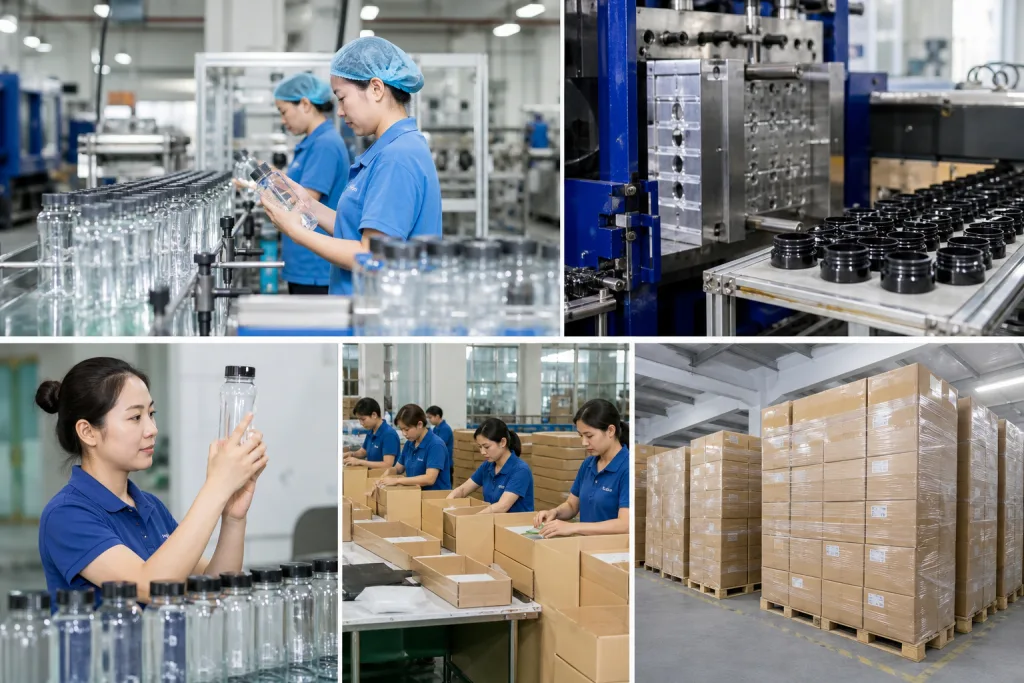
The best promotional Tritan bottle is not the one with the lowest FOB price. For a distributor program, the real cost shows up in logo peel-off, cartons that arrive two days late, lids that drip after the first shake test, and packaging that makes a $3 bottle look like a clearance item. We run this every week in Zhejiang, and QC pulled a sample last Friday with a print that scratched at 50 rubs. You need a canteen supplier who can talk material grade, mold choice, decoration limits, and inspection standard before you send a PO.
From our Hangzhou line, we keep seeing the same mistake: buyers ask for a “500 ml Tritan bottle with logo” and expect the quotes to line up. They do not. A 1.2 mm wall, a flip cap with a silicone ring, UV silk print, carton drop test, and AQL 2.5 can move the unit price by USD 0.20–0.80. We had one PO with a cap code typo, and the buyer flagged it before tooling started. Use the questions and checklist below before you choose a canteen manufacturer.
First, define the job
Before you ask canteen vendors for prices, define the job the bottle has to do. A conference giveaway for 2,000 visitors is not the same product as a retail-ready customizable canteen for a loyalty program. If it only needs to survive three months on an office desk, a simple screw lid and 1-color logo usually pass. If your client expects an outdoor bottle, look harder at the cap seal, carry loop, abrasion test, and 5-layer export carton strength. We see buyers chase the lowest unit price first; this is the wrong question to ask. Last month QC pulled a sample with a nice body mold, but the lid leaked after 30 seconds upside down.
Write the buying brief in measurable terms. Capacity: 500 ml, 650 ml, 750 ml, or 1,000 ml. Body material: Tritan, not generic PC. Lid: PP or ABS, with food-grade silicone gasket. Temperature range: typically -10°C to 96°C for the bottle body, but do not promise boiling-water use unless the exact resin and lid assembly have been tested. Wall thickness: most promotional bottles we run sit around 1.3-1.8 mm; a 2.0 mm body feels better in hand but adds resin cost and weight. Our caliper check at the injection line catches this fast, especially near the shoulder where thin spots show up first.
For a canteen promotional order, define the audience before the mold and lid choice. Gym users usually ask for one-hand flip lids because they drink between sets. Universities often choose screw caps because the math works better and returns from leakage stay lower. Corporate gift buyers may ask for a frosted body, soft-touch strap, or color-matched cap, but MOQ by color can become the pain point. A distributor canteen order for mixed clients is safer in clear, smoke gray, navy, and white. We have seen this go sideways when the PO says “assorted colors” and the buyer later flags that pink was never approved.
Checklist before RFQ:
- Target capacity and bottle dimensions, including height, bottom diameter, and carton fit
- Logo size, color count, and placement, with artwork in AI or PDF
- Quantity by color, not just total quantity, because the line changes masterbatch by batch
- Delivery term: FOB Ningbo/Shanghai, CIF, DDP, or domestic China warehouse
- Required compliance: FDA, LFGB, REACH, California Prop 65, or EU food contact
- Packaging: bulk pack, white box, kraft box, or retail color box, with drop-test needs stated
What makes Tritan worth using
Tritan sells well in custom drinkware because it gives a clear, glass-like body without the breakage claims buyers worry about with glass. When we run branded copolyester resin with proper incoming labels, it is BPA-free, so procurement teams choose it over ordinary plastic for supermarket, school, and sports programs. For the best promotional Tritan bottle, material safety is only part of the sell. The real value is what the buyer sees on the table: clean transparency, solid hand feel, and a logo area wide enough for a 65-80 mm print without making the bottle look disposable.
Tritan is not magic. It scratches. It can deform if cartons sit near a hot container wall for 18 days instead of a normal 12-day lane. It can show flow marks when injection temperature, mold cooling, or blow pressure is not controlled. QC pulled the sample on one 750 ml body last season and found a faint gate shadow under side light; the buyer flagged it before we did mass printing. Cheap canteen suppliers may quote “Tritan style” or “PCTG” without clear resin paperwork. If your market is Europe or North America, vague wording is the wrong thing to accept. Ask for the resin name, food-contact report, and the test lab. Reports should match the material and color you are ordering, not a random clear bottle tested two years ago.
Against stainless steel, Tritan usually gives a lower unit cost and stronger logo visibility on transparent bodies. Against glass, it cuts weight and reduces breakage risk for school, sports, and travel campaigns. For a canteen custom program under USD 3.00 FOB, Tritan often hits the best balance between appearance and budget. The math does not work if the buyer asks for a premium thermal feel at this price; we have seen that go sideways after the first counter sample.
Practical rule: if your client wants a premium thermal product, choose stainless steel. If they want a bright, lightweight, retail-looking bottle at a promotional price, Tritan is often the better fit.
At BottleForge Industrial in Zhejiang, China, our standard Tritan bottle production planning runs around 180,000-250,000 units/month depending on cap complexity and printing load. Normal MOQ is 1,000 pcs for existing mold stock colors, and 3,000 pcs when you need a custom cap or body color. On the line, a simple flip cap moves faster than a lockable one with silicone straw parts, and that difference shows up fast in packing output and AQL recheck time.
The RFQ questions that prevent trouble
A good canteen distributor should not have to guess what sits inside the quote. The wrong question is “what is your best price?” On our line, QC pulled the sample before packing, and that same rule should go into your RFQ: the same bottle, the same packaging, the same inspection level. If one canteen factory quotes individual opp bag plus export carton and another quotes a retail box with insert card, the cheaper number is not a real comparison.
Ask these questions directly:
- Which resin is used? Require Tritan-grade copolyester documentation, plus food-contact reports and batch traceability.
- Is the mold private or open market? Open mold is cheaper and faster. Private mold protects the shape, but tooling can land at USD 3,000-12,000. We have seen buyers approve the first sample and then get hit with a shape change on the second run.
- What is the gasket material? Food-grade silicone is the safe choice. Ask for an odor check after hot water exposure, not just a photo on the bench.
- How is leakage tested? A basic factory test is 100% water fill and inversion. Better programs add random shake testing after assembly. If the buyer flagged a leak on the first carton, this step would have saved a round trip.
- What is the AQL level? For promotional goods, most buyers use AQL 2.5 major / 4.0 minor. Retail programs may use tighter limits, and that changes how we run the final check.
- What is packed per carton? A 650 ml bottle may pack 24 or 48 pcs/ctn depending on the box style, and freight follows that number. One PO typo on 24 pcs/ctn versus 42 pcs/ctn can wreck the carton count.
Also ask for a split quote: blank bottle, logo cost, packaging cost, mold or color surcharge, and a freight estimate. This is where the math works or it does not. You will see fast whether the canteen manufacturer knows export costing or is just tossing out one pretty number. For North American programs, ask whether cartons can carry FNSKU, SKU barcode, country of origin, and a suffocation warning if polybags are used. For EU programs, ask for REACH and food-contact declaration paperwork before sample approval, not after production starts. We ship that paperwork with the sample file when the buyer asks early; if they wait, the schedule slips.
Logo method is not decoration only
Logo method changes price, lead time, scrap rate, and how the bottle looks after 3 months of use. On the line, we run silkscreen, heat transfer, UV digital print, laser on metal lid parts, and printed paper insert for a double-wall shell. Each one fits a different order size, artwork file, and bottle shape. Pick the wrong method, and the buyer flags it at sample stage.
For a 1-color or 2-color logo, silkscreen is still the workhorse. It usually lands at USD 0.08-0.25 per position, based on print size and color count, and it holds up when the ink system is matched to Tritan. We had a PO last month with a 2 mm font on a 550 ml bottle; QC pulled the sample and the thin stroke closed up. Tiny text, gradients, and photo-style logos do not print clean. That is the wrong question to ask if you want detail.
UV digital printing works for multi-color artwork and short campaigns. It costs more, often USD 0.35-0.90 per logo, but it skips plate setup for complex artwork. The risk is adhesion when surface treatment is rushed. One buyer sent a file named final-final-v7.pdf, and the first sample showed a color shift at the cap edge. Always approve a printed pre-production sample, then run a tape test and a 24-hour room-temperature water exposure check.
Heat transfer gives large wraparound graphics and stronger shelf impact. It can make a customizable drinkware program look more retail. The film needs a smoother bottle shape, clean registration, and tighter QC. We’ve seen this go sideways on a bottle with three ribs and a 0.8 mm curve near the shoulder; the artwork distorted as soon as the bottle came off the sleeve line. If the body has ribs, curves, or measuring marks, expect trouble.
For a customizable growler or a larger custom growler made from Tritan, the logo zone can be bigger, but heavier bottles need better jigs during printing. Do not assume a decoration method that works on a 500 ml bottle will transfer to a 1,500 ml growler. Ask for the maximum print area in millimeters and request a dieline before you send final artwork. We had a PO typo on 1500 versus 15.00 once, and that small slip burned a full day.
Price ranges you can trust
Promotional drinkware pricing moves with resin, exchange rate, energy cost, and packaging. A realistic FOB China range still gives you a good smell test on quotes. For an existing-mold 600-750 ml Tritan bottle with PP lid, 1-color logo, and bulk export carton, factory-direct quotes usually sit around USD 1.35-2.20 at 3,000-10,000 pcs. We run this type on a 160-220 ton injection line, and the lid tolerance we check with a caliper is often within 0.2 mm. Add a retail box and the cost may increase USD 0.18-0.45. Add UV full-color logo and it may increase USD 0.35-0.90. A more complex flip lid with lock, strap, and silicone spout can push the bottle into the USD 2.30-3.50 range. Below that, the math often doesn't work.
If a quote is far below the market, check three things. Is it Tritan, or a cheaper plastic? Is the logo included? Is the export carton strong enough, or just a thin 3-ply box that looks fine in photos? QC pulled one sample last season where the bottle was marked “Tritan,” but the supplier could not show the resin batch label. A crushed carton at the warehouse is not a small problem when you are supplying a distributor drinkware program with a fixed event date. We have seen this go sideways.
For order planning, use these working assumptions. Put the dates on the PO, not only in email; one buyer once typed “ship before May 18” when they meant “arrive before May 18,” and that 12-day gap changed the freight plan.
- Sample lead time: 5-10 days for logo samples on stock bottle
- Mass production: 25-35 days after deposit and sample approval
- MOQ: 1,000 pcs per logo for standard stock bottle, 3,000 pcs per custom color
- Inspection: 1 day for final random inspection using ANSI/ASQ Z1.4 or similar AQL sampling
- Sea freight: allow 25-40 days to EU and US ports such as Hamburg, Rotterdam, Los Angeles, or New York, depending on route
A proper canteen supplier in China should state whether the price is FOB Ningbo, FOB Shanghai, EXW Zhejiang, or another term. If they avoid the Incoterm, push back. It changes who pays the truck from Hangzhou to Ningbo, who handles export declaration, and who eats the extra charge if the forwarder asks for a 24 kg carton weight correction. Small line item. Big argument later.
Compliance and QC checkpoints
For B2B buyers, compliance is not paperwork decoration. It protects your client, your distributor margin, and your next reorder. For a customized drinkware program sold in Europe, ask for EU food-contact testing, LFGB where required, and REACH screening for restricted substances; we usually check the resin lot number on the injection machine record against the test report before mass production. For the US, FDA food-contact compliance and California Prop 65 assessment may be needed depending on distribution. If the bottle is intended for children, you may need ASTM or CPSIA-related review. A kids promotional bottle is not the same risk profile as an adult gym bottle. Treating them the same is the wrong question to ask.
Quality control should start before production. Approve a golden sample with final material, color, logo, lid, gasket, packaging, and carton marks. Keep one sample at your office and one at the factory. The pre-production sample should include real logo ink, not a paper mockup. We run this sample on the actual pad-printing plate or UV fixture, because a buyer once flagged a 3 mm logo shift after the PO said “centered” but the artwork file had no position mark.
During production, check these points:
- Body clarity under a light box, black spots over 0.5 mm, scratches, and flow marks near the shoulder
- Cap thread fit and gasket seating, checked with 10 open-close cycles on the line
- Leakage after inversion and shaking, usually 30 minutes upside down plus a hand-shake test
- Logo position tolerance, usually within ±2 mm for normal promotional work
- Odor after 2-4 hours with warm water, especially after Tritan bodies come out of fresh cartons
- Carton drop strength and divider protection, with QC pulling one packed carton before sealing the batch
Final inspection should not just count defects. It should verify carton quantity, barcode, country-of-origin marking, inner packaging, and shipping marks against the PO and packing list. If you are a canteen distributor serving 4 customers in one shipment, ask your canteen manufacturer to separate production lots by PO, color, and logo version. Mixed cartons are a common cause of expensive warehouse repacking; we have seen one wrong side mark turn an 18-pallet shipment into 12 hours of relabeling at the forwarder’s warehouse.
Supplier signals before deposit
You can tell a lot about a canteen manufacturer before you send the deposit. A solid supplier answers in writing, not with a lazy “no problem.” We run into this all the time: the buyer flags a PO typo on the print area, and the factory that knows its job replies with resin grade, cap material, MOQ, lead time, carton size, gross weight, test reports, and sample steps in one mail. If your artwork wraps over a curved grip section, a real line-side team will say the logo will stretch 3 to 5 mm instead of taking the file and hoping for the best.
Factory audits matter when the program is large or repeats every season. BSCI, ISO 9001, or a similar audit file does not make a bottle perfect, but it tells you if the plant has a working system. For a first PO under 5,000 pcs, a full audit is not always the right question to ask. Ask for the business license, export history, and recent production photos from the line. If QC pulled the sample and found sink marks on the shoulder, you want to know that before you book a container.
Payment terms say plenty. A normal deal is 30% deposit and 70% balance before shipment after inspection. If a supplier wants 100% upfront for an existing mold item, ask why. The math does not work in your favor. We have seen this go sideways when a factory promised a 10-day turn and then lost two days on resin prep alone. A real Zhejiang schedule still needs injection or blowing, logo setup, assembly, packing, and QC. That takes time.
The best promotional Tritan bottle is the one your client can reorder without drama. Pick a supplier that keeps color chips, logo screens, artwork files, carton specs, and inspection records tied to the same SKU. We ship smoother when those files stay clean, and the buyer comes back with the same order six months later. One 18 kg carton spec or one old print proof that went missing can break the next repeat run. That is what turns a one-off canteen order into a stable distributor program.
Send your Tritan bottle brief for a practical quote
Share quantity, logo, market, and delivery date. We will return FOB pricing, MOQ, lead time, and decoration options without guesswork.
Frequently asked questions
What MOQ should I expect for a custom Tritan promotional bottle?
For an existing mold, expect 1,000 pcs per logo as a practical starting MOQ. If you need a custom body color or cap color, 3,000 pcs per color is more realistic because resin mixing, machine setup, and color matching create waste. For private mold work, factories may ask for 5,000-10,000 pcs for the first run plus tooling cost. Smaller orders are possible, but unit price rises fast because printing setup, sample labor, and export documentation are spread over fewer pieces. If you are testing a distributor drinkware market, start with a stock mold and one strong color.
How do I know the bottle is real Tritan and not cheaper plastic?
Ask for the resin documentation, food-contact test report, and material declaration that names the copolyester grade. The report should match the bottle body material and, ideally, the color you are buying. Also compare appearance and toughness: real Tritan usually has high clarity and good impact resistance, while cheaper plastics may look cloudy or scratch more easily. For larger orders, request a third-party lab test from SGS, Intertek, TÜV, or a similar lab. The cost is usually a few hundred USD, which is cheap compared with a failed 10,000 pc promotion.
Which logo method is best for a promotional Tritan bottle?
For most canteen promotional orders, 1-color silkscreen is the best cost-to-result option. It is clean, fast, and normally adds about USD 0.08-0.25 per bottle depending on logo size. For full-color logos, UV digital print is better, but budget USD 0.35-0.90 per position and insist on adhesion testing. Heat transfer is useful for large wraparound artwork, although it needs a smooth bottle shape. Do not choose the printing method only from a catalog photo. Ask your canteen factory for the maximum printable area in millimeters and approve a real pre-production sample.
What lead time should I plan for a B2B Tritan bottle order?
For a stock mold with a standard logo, plan 5-10 days for sampling and 25-35 days for mass production after deposit and sample approval. Add another 3-7 days if you need special packaging, custom color matching, or multi-color UV printing. Ocean freight can add 25-40 days to many European and North American ports, so an event order should be placed at least 70-90 days before the required delivery date. Air freight is possible for urgent orders, but bulky drinkware often becomes expensive because cartons cube out before they weigh out.
Can the same supplier make custom canteens, growlers, and other drinkware?
Some canteen manufacturers cover Tritan bottles, stainless steel bottles, sports bottles, and custom growler projects, but not every factory is strong in every category. Tritan needs plastic molding and decoration control. Stainless steel needs forming, welding, polishing, and vacuum testing. A customizable growler may require different tooling and packaging than a 650 ml bottle. If you want one supplier for customized canteen, distributor growler, and other custom drinkware, ask for production photos, monthly capacity by category, and recent inspection reports. A broad catalog is useful only if the factory can control each production line properly.