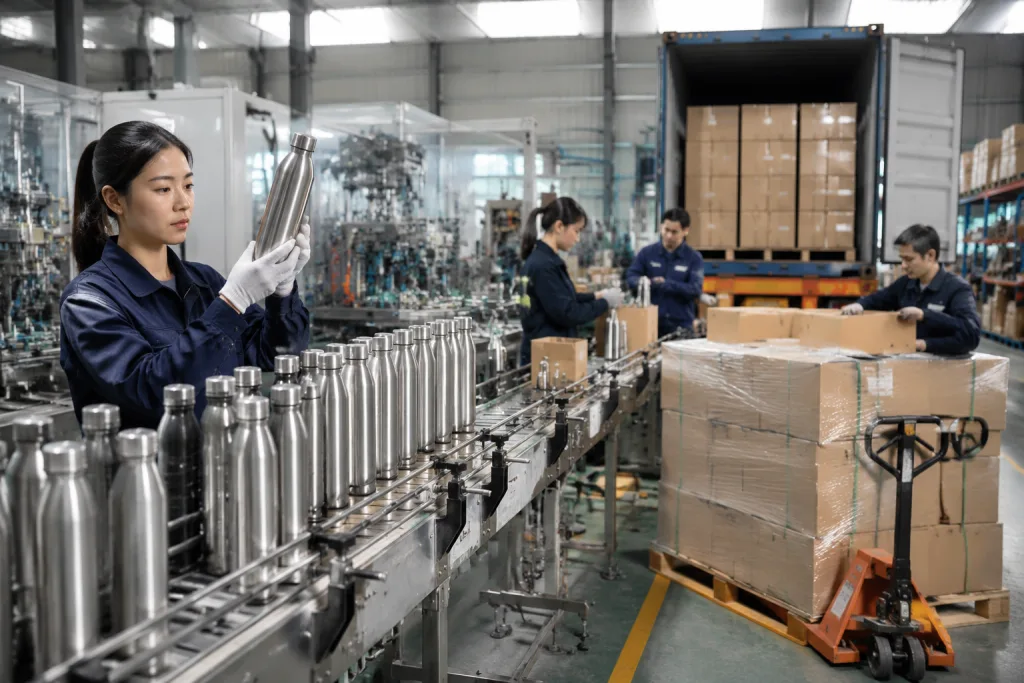
Key Takeaways
- A 500 ml stainless bottle usually lands around USD 2.10-4.80 FOB at 1,000 pcs, depending on steel grade, coating, and decoration.
- Standard lead time from a canteen factory in Zhejiang is 15-25 days after sample approval, but molded accessories or special lids can add 7-12 days.
- MOQ tiers matter more than buyers expect: 300-500 pcs for stock models, 1,000 pcs for customized drinkware, and 3,000+ pcs for deeper price breaks.
- Testing and compliance are not optional; REACH, LFGB, FDA-style food contact, and AQL 2.5 inspection should be built into the quote.
If you are buying the best promotional refillable water bottle for a campaign, you are not just buying a bottle. You are buying margin, lead time, and one shot at avoiding a costly rework. A wrong spec can add 12% to 30% to landed cost, and a slow decoration method can turn a 20-day order into 45 days before QC even clears the first carton.
Most buyers in Europe and North America open with the same question: what is the cheapest custom drinkware option that still looks premium? That is the wrong question to ask. The better question is which canteen custom format gives you the lowest risk at your target MOQ, with a clear packout, a test standard, and an FOB China price that still leaves room for freight. We run these numbers every day on the line in Zhejiang, and once you split them into material, tooling, decoration, and transit time, the math usually stops arguing back.
What Drives Bottle Cost
The best promotional refillable water bottle is rarely the one with the lowest unit price on day one. Cost starts with material choice. A 304 stainless steel body costs less than 316, and a single-wall canteen promotional item runs about 18% to 35% below double-wall vacuum construction. We run the line this way every week. Add powder coating and the decoration cost usually rises by USD 0.18-0.45 per piece; laser engraving looks cleaner, but it slows output when QC pulled three logo jobs on the same shift.
For a canteen supplier, the quote is usually built from five pieces: raw material, forming, welding or sealing, decoration, and packaging. A simple 750 ml custom canteen in 304 stainless with one-color silkscreen may sit at USD 1.65-2.40 FOB at 3,000 pcs. A double-wall customizable canteen with a flip lid, matte finish, and laser logo may move to USD 3.20-5.10. We had a buyer flag a PO typo on the lid code once, and that one line pushed the tooling discussion back two days. If the lid includes silicone, a spring mechanism, or Tritan components, expect extra tooling or a 7-10 day longer lead time. The math does not work any other way.
Buyers often miss packaging. A printed kraft box can add USD 0.12-0.30, while an EVA sleeve or premium retail box adds more and can increase carton cube by 8% to 15%. That hits freight fast, especially if you ship mixed SKUs with a distributor drinkware program. In Zhejiang and other parts of China, factories can quote low ex-works numbers, but the real cost is the unit price, carton efficiency, and rejection risk. We ship enough boxes to know this part goes sideways when nobody checks the outer carton size before booking space.
MOQ Tiers That Actually Matter
MOQ is where a lot of canteen distributors get caught. We have seen buyers sign off on 300 pcs, then realize that price only applies to stock bodies, a blank finish, or one standard logo spot. If you want a custom canteen with a Pantone match, a new lid, or embossed branding, 1,000 pcs is the real starting line. For a fully custom growler or a large insulated format, 3,000 pcs is where the line runs cleaner and defect rates stay under control.
Think about it this way. At 300-500 pcs, you are paying for speed and flexibility, not unit cost. At 1,000 pcs, the custom drinkware math starts to work. At 3,000-5,000 pcs, the factory can spread setup, carton work, and lid tooling across more units, and FOB can drop 10% to 22% against the first tier. That gap is the difference between a promo bottle that gets approved and one that gets squeezed out by margin pressure. We had a buyer flag a PO once because they typed 1000 as 100; QC pulled the sample, and the real issue was the order quantity, not the bottle.
- 300-500 pcs: stock models, simple print, fastest release.
- 1,000 pcs: standard canteen custom program, better balance of cost and branding.
- 3,000+ pcs: stronger pricing for canteen manufacturers, more lid and color options.
If you are testing a new market, start small and accept the higher unit cost. If the bottle is going into retail or Amazon FBA, push for the higher tier early and protect margin. Low MOQ looks safe on paper, but the premium is usually 15% to 25%, and that is the wrong question to ask if you already know the item will repeat. On our line, the 18 mm lid insert tooling is the part that makes the price move, not the carton.
Lead Times By Decoration
Lead time tracks more with decoration than with bottle shape. A plain stock bottle can leave in 10-15 days. One-color silkscreen usually lands at 15-20 days. Laser engraving or a wrapped print with multiple colors moves it to 18-25 days. For a custom drinkware order with new tooling, plan on 25-35 days before shipment, especially if we need test runs or lid tuning on the line.
A China canteen factory should split sample lead time from mass production. Stock molds usually need 5-10 days for samples; new structures take 10-15 days. After sample sign-off, production runs another 15-25 days. If you are buying from Zhejiang, the port helps with outbound freight, but port access does not make the workshop faster. We’ve seen a plant push 60,000 units per month and still be booked solid for the next three weeks.
“Fast” in drinkware usually means stock shells, a standard cap, and a simple logo. Anything else needs calendar time, not hope.
For event-driven campaigns, build a buffer. Add 5-7 days for freight booking and inland handling, plus another 3-10 days if a third-party inspector is coming in. If your team still needs FNSKU labels or retail compliance packs, add 2-4 days; a PO typo on the label file can waste half a day before QC even pulls the sample.
Material Choices And Margin
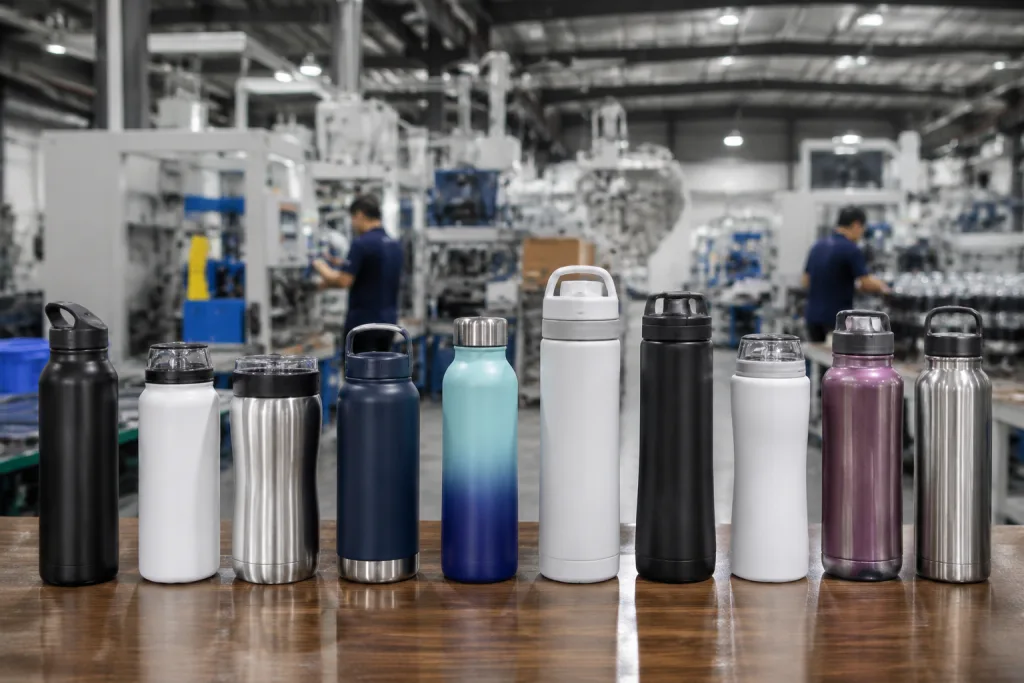
Your material choice sets both the selling price and the complaint rate. Stainless steel carries the best promotional refillable water bottle in most programs because it feels solid, takes print and laser well, and survives shipping better than softer bodies. Glass looks clean on the shelf, but one dropped carton can wipe out the margin. Tritan and other copolyesters fit a lightweight customizable drinkware line, though the buyer will notice the lower perceived value unless the shape does some of the work.
For a canteen vendor serving corporate gifting, 304 stainless is usually the safest middle ground. If the buyer asks for a premium hydration spec, double-wall vacuum with 18/8 steel and a 0.4 mm inner wall is a common build. We run 0.35 mm wall thickness on economy orders, but then QC pulled the sample for dent checks, seam closure, and carton pressure because the math gets tight fast. If the bottle will see hot-fill drinks or outdoor retail, check lid seal and thermal hold instead of chasing the lowest mill price; that is the wrong question to ask.
Margin also depends on how many SKUs you keep alive. One white body with one logo is clean. Five lid colors, two coatings, and mixed box types turn into spare parts on the line. We ship better numbers when the body spec stays fixed and only the decoration changes. A canteen supplier in China will usually quote better on that setup, and that is the simplest way to keep customized drinkware profitable without filling the warehouse with dead stock.
Testing, Compliance, And Rework Risk
Cheap drinkware gets expensive fast when it misses compliance. For Europe, ask for REACH and LFGB suitability by product and by material. For North America, food-contact declarations and migration testing matter. If you are buying from a canteen manufacturer in Zhejiang or elsewhere in China, ask for the actual test scope, not a yes/no reply. We run into POs that say “FDA OK” with no report attached, and that turns into a week of back-and-forth with the buyer flagged. A proper quote should also state the AQL level, usually AQL 2.5 for critical defects and AQL 4.0 for minor defects, depending on your program.
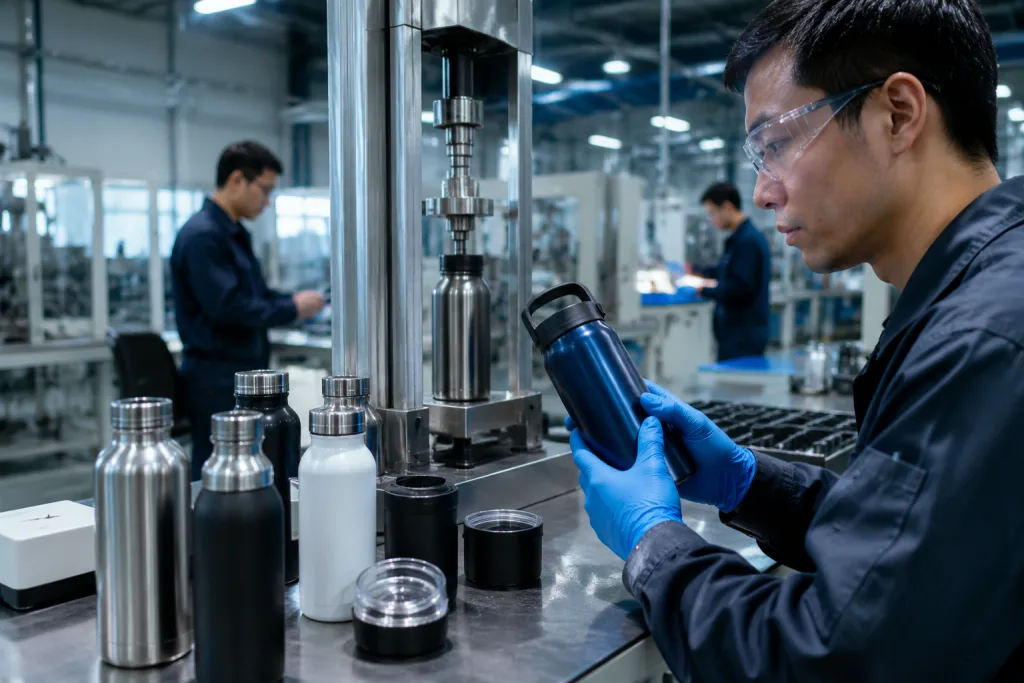
Rework is where projects burn cash. A logo that is 2 mm off position may pass a casual check, then fail a retail launch. A lid that leaks at 95°C after repeated cycles can kill a promo run. Ask the factory how they handle first-article approval, and whether they keep sealed samples from the signed batch. QC pulled the sample on one job and found a pad-print shift of 1.5 mm; that saved a reprint. Good canteen manufacturers track that because it protects both sides when the shipment is opened in your warehouse.
Distributor drinkware buyers should also confirm carton drop resistance and overpack rules if the order is crossing multiple warehouses. If the carton spec is weak, your cheapest unit price turns into a loss once breakage, chargebacks, and returns are counted. We’ve seen 24-bottle cartons fail on a 760 mm drop because the master carton only had 3 mm side pads. Ask for the route, not just the sales sample. A good canteen supplier will match packaging to the lane you ship on.
How To Quote A Real Program
If you want a quote that is worth using, send the factory a full brief. Put size, material, wall structure, cap type, color, logo method, packing, target market, and monthly demand in the first email. A canteen factory cannot price a vague idea. We see this every week on the line: one buyer sends only a logo file, the PO says “best promotional refillable water bottle,” and the reply comes back with three unrelated numbers.
The cleanest way to compare canteen suppliers is to ask for three tiers: sample order, pilot batch, and scale batch. Use figures like 500 pcs, 1,000 pcs, and 5,000 pcs. That shows the price curve and tells you where the real break point sits. We’ve seen the jump from 1,000 to 3,000 pcs cut unit cost by only 8% to 12%, which does not always pay for the extra stock. One buyer pushed back on that, and QC pulled the sample again before we quoted the better lid option.
Use the same comparison logic for canteen distributors, canteen vendors, and direct factory sourcing. Ask for FOB China, sample charge, tooling charge, production lead time, and inspection terms. If a canteen manufacturer in China gives you clear numbers in writing, you are already ahead of most first-time buyers. The wrong question is “what is your best price?” A cleaner question is “what changes the price by 10%?” That saves time, and it catches PO typos before the line starts.
Choosing The Right Partner
The right partner is not the one with the flashiest website. It is the one that can explain cost, lead time, and defect control without dancing around the numbers. A good canteen distributor knows local compliance and channel demand. A good canteen manufacturer knows tooling, welding, coating, and packing. A strong canteen factory in Zhejiang or another industrial cluster in China can usually run both speed and repeatability, which is what most B2B buyers actually need. We’ve seen the buyer flag a 0.3 mm wall-thickness gap before launch; that kind of issue is caught on the line, not in a brochure.
For repeat programs, look for three things: stable monthly capacity, clear sample control, and honest MOQ discipline. If a supplier says yes to every custom request without asking about volumes, that is the wrong question to ask. If they can produce 80,000 to 120,000 units per month, hold a sensible lead time, and still pass inspection, you have a workable source. The math works only when the sample room, the welding jig, and the packing line all stay in step. That matters more than whether the product is called a custom canteen, customized canteen, or customizable canteen; the name stays on the PO, the execution is what ships.
When the brief is tight, the pricing gets tighter too. We’ve seen a buyer add one extra color and blow the carton count by 12%; that turns into real money fast. Keep the spec clean, and the program stays repeatable instead of becoming a one-off procurement headache.
Request a faster, cleaner quote today
Send your size, logo, target MOQ, and deadline. We’ll price the build, flag cost drivers, and give you a realistic China lead time.
Frequently asked questions
What is a realistic FOB price for a promotional refillable water bottle?
For a 500 ml stainless steel bottle, a realistic FOB China range is USD 2.10-4.80 at 1,000 pcs, depending on wall thickness, lid style, and decoration. A simple single-wall canteen customized with one-color print can be lower, while a double-wall vacuum version with laser branding and retail box packaging can move above USD 4.50. Shipping, duties, and inland freight are separate. If a supplier quotes far below that, check whether the finish, steel grade, or testing scope has been cut back. In Zhejiang and other parts of China, the price spread often comes from packaging and lid complexity, not the body alone.
How long does production usually take in China?
For stock shapes with standard decoration, expect 10-15 days. For a more involved custom drinkware program, 15-25 days is normal after sample approval. New molds, special lids, or multicolor printing can push the schedule to 25-35 days. If you add third-party inspection, packaging changes, or label prep, add another 3-7 days. A canteen factory in China may have fast molding, but production still depends on coating curing, quality checks, and packing. If the order is for a campaign deadline, build at least a 1-week buffer into the plan.
What MOQ should I expect from a canteen manufacturer?
A stock canteen custom order may start at 300-500 pcs. For branded customized drinkware with standard decoration, 1,000 pcs is the more realistic MOQ. For special colors, custom lids, or a customizable growler, 3,000 pcs is often the point where pricing becomes efficient. Lower MOQs are possible, but you usually pay a 15% to 25% premium. The right tier depends on whether you are testing a market or planning a repeat distributor drinkware program.
Which compliance checks matter for Europe and North America?
Ask for REACH-related material control and LFGB or equivalent food-contact suitability for Europe. For North America, request food-contact documentation, migration-test support if needed, and clear ink or coating declarations. Use AQL 2.5 for critical defects when you want stricter control on leakage, logo placement, or lid function. A credible canteen supplier should also document carton packing, drop resistance, and batch retention samples. If you are selling through retail or Amazon, labeling and carton marks matter just as much as the bottle.
How do I compare canteen suppliers without wasting time?
Ask every canteen supplier for the same four numbers: unit price at 500, 1,000, and 3,000 pcs; sample lead time; mass production lead time; and any tooling or packaging charges. Then compare only like for like. A low number with no test scope or vague packing detail is not a true quote. Strong canteen vendors will state the material grade, logo method, carton count, and inspection standard. That lets you compare a canteen distributor, canteen vendor, and direct canteen manufacturer on the same basis.