Key Takeaways
- A 500-750 ml stainless thermos usually gives the best promo value at MOQ 3,000 units.
- Double-wall vacuum construction with 18/8 stainless and 0.4-0.5 mm liner thickness is the safe baseline.
- For outdoor retail, a screw lid plus cup lid often outsells a simple flip lid because it feels more premium.
- Expect FOB China pricing from about USD 3.20 to 7.80 depending on finish, lid, and decoration.
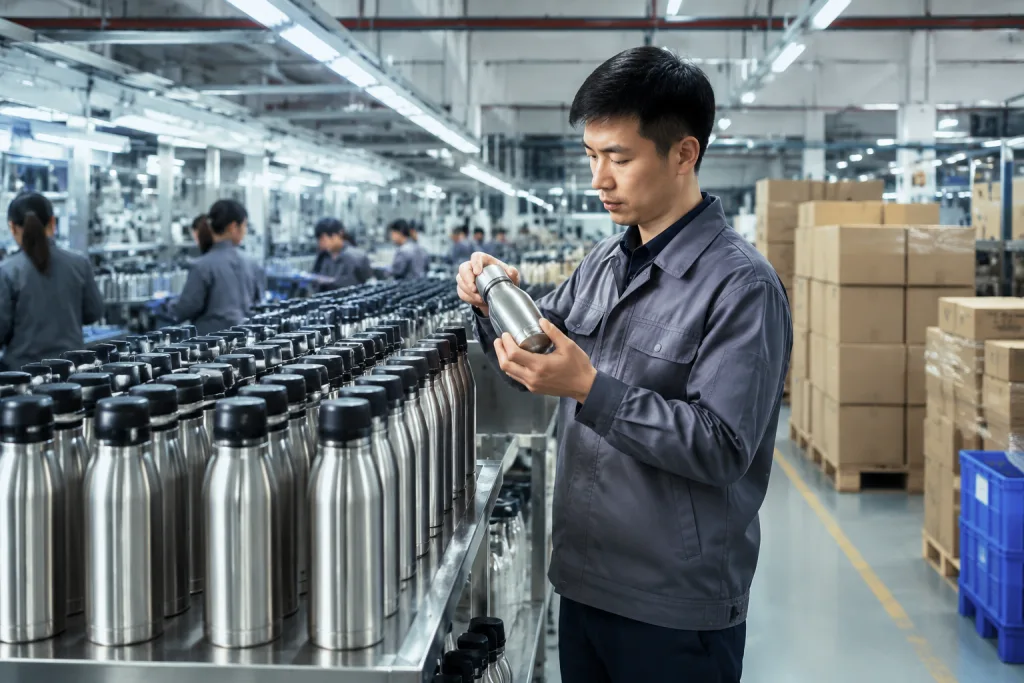
If you are buying the best promotional insulated water bottle, the real question is not “stainless or not.” It is whether the bottle survives carton drops, clears compliance, and still looks carry-worthy after 6 months of daily use. We ship a lot of samples through this same filter. For outdoor retailers and promo brands, that means checking wall structure, lid type, finish wear, and the branding people will keep on a desk or in a pack.
In Zhejiang and across China, most serious thermos programs live or die on spec control. A good factory thermos is not just vacuum insulated; it is built to a repeatable standard, often with MOQ around 3,000 units, 30-45 day lead time, and monthly output above 200,000 units. QC pulled the sample on a 1.2 mm wall last week and found a finish mismatch at the seam; that is the sort of miss that kills a bulk order. If you want a bulk thermos that performs like a product, not a giveaway, judge it like a buyer, not a marketer.
Specs that actually decide the buy
When you compare the best promotional insulated water bottle options, start with the numbers that drive field failures and buyer pushback. For stainless thermos programs, the spec stack is straightforward: 18/8 stainless steel, double-wall vacuum insulation, 0.4-0.5 mm inner wall thickness, BPA-free lid parts, and a leak test standard your supplier can show on paper. If the vendor cannot explain the vacuum retention method or the coating system, you are buying blind. We run into that on the line all the time.
A practical head-to-head spec table beats a glossy sample box every time:
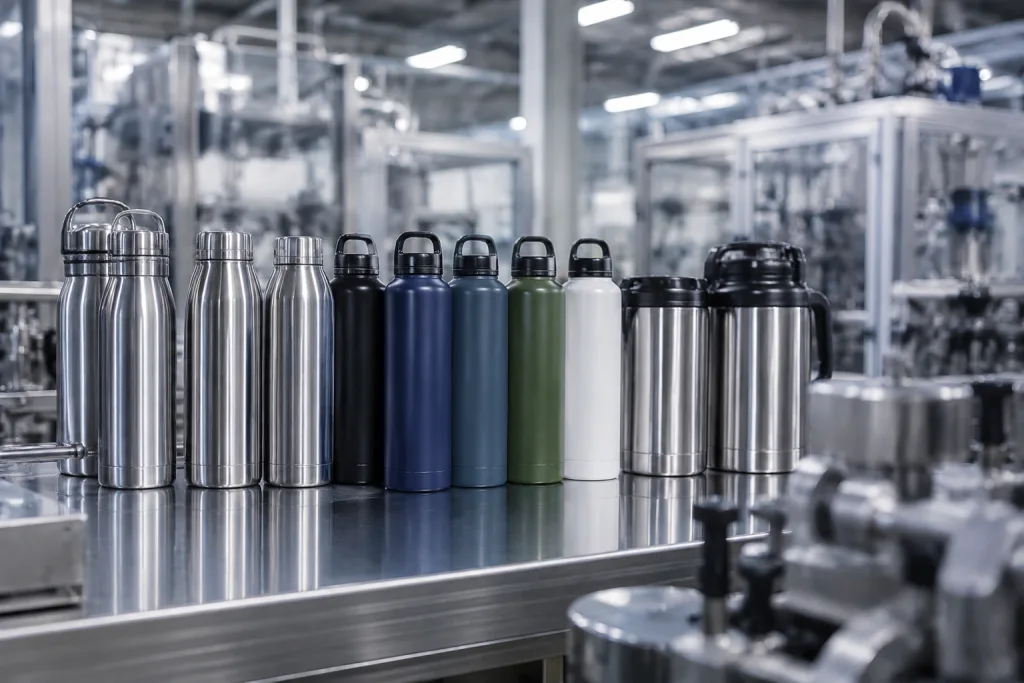
- 500 ml, straight body, screw lid: good for giveaways, lower freight, lower FOB.
- 600-750 ml, cup lid or handle lid: fits outdoor retail and premium promotional thermos campaigns.
- 1,000 ml and up: works for field crews, but it is heavier, the carton cost climbs, and sell-through slows.
For a manufacturer thermos program, ask for salt spray results on painted models, drop test data from 1.0 m, and whether the finish is powder coat, UV print, or laser. QC pulled the sample on one run because the cap torque missed target by 0.3 N·m, and that is the kind of miss that gets flagged in procurement. In China, a lot of suppliers will quote fast; fewer will hand over data that survives review. The better factories in Zhejiang do both.
Side-by-side use case fit
If you want the right custom thermos, do not start with decoration. Start with the job on the floor. A hiking retail buyer cares about grip, balance, and a lid that opens with cold hands. A promo buyer cares about a clean print panel, carton count, and whether the color holds up under screen print or laser marking. Different jobs. Same bottle category.
Here is the practical fit comparison:
| Use case | Best build | Why it wins |
|---|---|---|
| Outdoor retail | 600-750 ml, powder coat, carry loop | Better shelf pull and a stronger perceived value |
| Trade show promotion | 500 ml, lighter body, one-color logo | Lower freight, simpler packing, tighter budget control |
| Corporate gifting | 750 ml, gift box, laser logo | Premium feel and less logo wear risk |
| Field staff kit | 1,000 ml, cup lid, robust base | 12 hours on hand, fewer refills, fewer complaints on site |
That table matters because distributor thermos orders go sideways when the product choice ignores the channel. QC pulled a 500 ml sample last week and the buyer flagged the carton count before the logo was even checked. A bottle that looks good in a catalog can still miss the mark for a seasonal campaign. The best promotional insulated water bottle is the one your customer carries twice a day, not once for the photo.
Decoration changes the margin
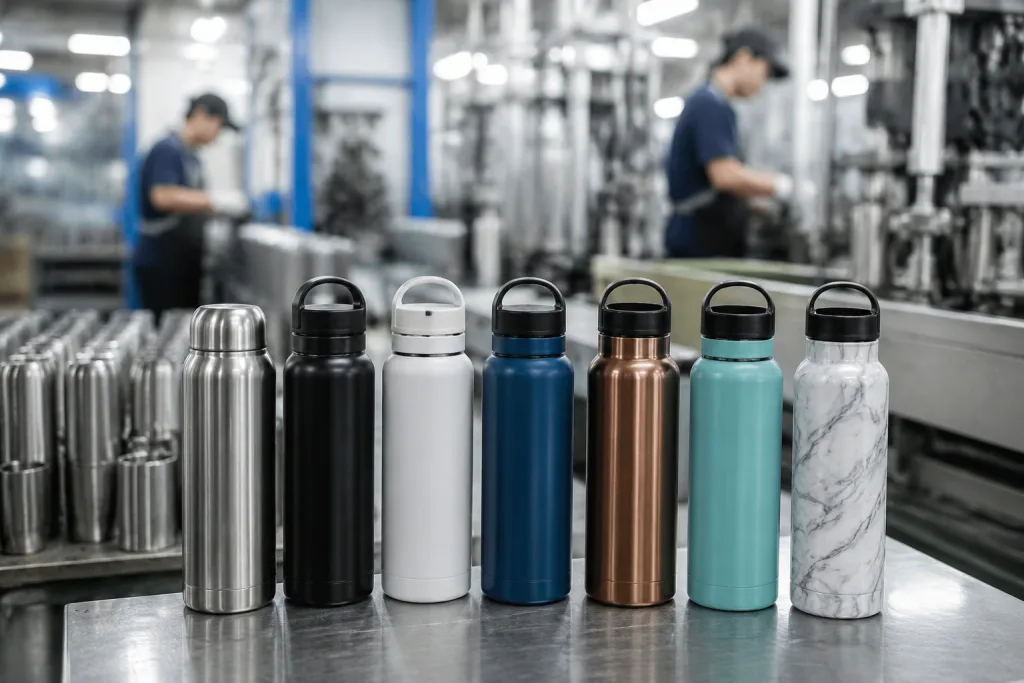
The decoration choice changes more than the look. It shifts yield, setup time, and the margin you keep on a thermos bulk order. Screen print is still the cheapest route for one or two colors. The screen frame on the line is straightforward, and on a 5,000 pcs run we can keep waste low if the logo stays simple. Laser engraving takes tighter setup control, but it stays clean on premium custom thermos runs and does not peel. UV print gives stronger branding choices, yet we check adhesion on matte powder coats and confirm the ink passes abrasion testing.
For buyers comparing thermos customizable options, the cost ladder is usually clear:
- Silkscreen: lowest cost, best for simple promotional thermos runs.
- Laser: mid-cost, best for long-life branding and outdoor retail.
- Full-color UV: higher cost, best when the artwork matters more than the unit price.
A one-color logo on a custom thermos with a standard kraft box may land around USD 3.20-4.50 FOB China in larger volumes. A customized thermos with laser marking, an upgraded lid, and a printed box can move into the USD 5.50-7.80 range fast. We’ve seen buyers push back on the box upgrade, then the math breaks once they compare landed cost against their selling price. If your channel cannot carry that, you are paying for decoration the end customer never asked for. A good thermos supplier should say that straight.
What separates a factory thermos
China has plenty of thermos makers, but only a few keep coating, vacuum, and lid assembly steady over a full run. That is the factory question. Not the sample question. We run the line with in-house drawing, automatic leak testing, and AQL 2.5 for major defects plus 4.0 for minor defects; if a supplier cannot walk you through that QC flow, they are outsourcing too much.
A solid thermos factory in Zhejiang should handle 200,000 to 400,000 units per month, depending on size and finish. We have seen buyers push for 12,000 pieces on paper, then the PO typo says 120,000, and the math breaks on day one. The real test is control of three failure points: vacuum loss, lid mismatch, and coating chipping. For Europe, the better programs ship REACH and food-contact files, and they can match ASTM or ISO tests when the buyer flags it. That is where the factory relationship starts paying back.
“If the supplier talks only about sample photos and not about AQL, coating thickness, or lead time, you are not dealing with a serious thermos vendor.”
For brands and distributors, the question is not whether the factory can make a bottle. It is whether we can ship 50,000 identical bottles without color shift or packaging drift. QC pulled the sample on a 0.3 mm coating check last week; that is the level that keeps a promo order from going sideways.
Channel math for distributors
Outdoor retailers and distributors run a different math model than direct-to-consumer brands. Landed cost has to cover freight, duty, warehousing, breakage, and margin. We check carton density, master carton count, and pack size before we check the cup wall. A 500ml double-wall bottle can look cheap at factory terms and turn expensive once the ocean freight bill lands.
For a thermos distributor or thermos supplier relationship, line up these numbers before you send the PO:
- MOQ: usually 3,000 pieces for one color and one logo, more if you mix lids.
- Lead time: 30-45 days after sample approval and deposit.
- Packing efficiency: 24-50 pcs per carton, depending on size and insert style.
- FOB spread: often USD 1.20-2.50 wider when you move from simple print to premium decoration.
If you sell through channels, a thermos distributor needs margin stability more than novelty. A bulk thermos with freight you can predict and a carton that survives two handlings is easier to move than a prettier bottle that dents in transit. QC pulled the sample on a 38mm neck ring, and that is the kind of detail that saves a shipment. This is why a steady thermos manufacturer in China, especially in Zhejiang, beats a cheap quote from an unknown thermos supplier.
Compliance keeps the order alive
Good buyers do not wait for shipment day to talk compliance. For a promotional thermos going to Europe, we line up REACH, food-contact declarations, and material traceability before the PO is released. For North America, ask for migration test records and carton labels that match the channel, especially if the bottle goes into retail or Amazon-style fulfillment. One buyer once flagged a lid code typo on the packing list, and the whole carton mark set had to be reprinted at the line.
For custom bottles, the compliance checklist should include:
- Material: 18/8 stainless steel, BPA-free lid components.
- Testing: leakage, thermal retention, and coating adhesion.
- Documentation: REACH, food-contact, and production traceability.
- Packaging: barcode, carton marks, and FNSKU-ready labeling when required.
Brands often ask whether a supplier thermos can pass audits after the design is frozen. That is the wrong question. Bring the thermos factory in early so the lid, gasket, and decoration method match the target market from day one; we’ve seen this go sideways when a 0.8 mm print-safe area was ignored and the logo washed out after 20 cycles. In Zhejiang, that usually saves a second sampling round.
Request your custom thermos quote today
Send your target size, logo method, and annual volume. We will match the right stainless thermos spec, price, and packing for your channel.
Frequently asked questions
What is the best size for a promotional stainless thermos?
For most outdoor retailers and brand promotions, 500 ml to 750 ml is the sweet spot. A 500 ml bottle keeps freight low and is easier for mass giveaways. A 750 ml model feels more premium and usually sells better in retail. If you need one SKU for both promotion and shelf sale, 600-650 ml is the safest compromise. In bulk thermos buying, that size also tends to fit common cartons and keeps landed cost stable.
How much should a custom thermos cost FOB China?
For a simple stainless custom thermos with one-color print and standard packaging, expect roughly USD 3.20-4.50 FOB China at larger volume. Add laser engraving, premium powder coat, or gift box packaging, and the range can move to USD 5.50-7.80. Final price depends on size, lid style, carton count, and whether your thermos manufacturer is using in-house or outsourced decoration. Zhejiang factories with stable volume usually quote more consistently.
What MOQ do thermos manufacturers usually ask for?
A common MOQ is 3,000 pieces per color or per design, sometimes 5,000 if you want mixed finishes or custom lids. Some manufacturers thermos programs can start lower for stock molds, but once you add custom box printing or new tooling, the minimum climbs quickly. If a thermos supplier offers a very low MOQ, check whether the pricing includes full test reports, packaging, and inspection. Low MOQ often means higher unit cost.
Which logo method lasts longest on promotional thermos bottles?
Laser engraving usually lasts the longest because it removes the surface layer instead of sitting on top of it. It is ideal for a promotional thermos used outdoors or washed often. Silkscreen is cheaper and good for short-term campaigns, but it can wear faster if the bottle gets heavy abrasion. UV print offers strong color but needs the right coating match. For distributors thermos projects, laser is often the best balance of durability and brand presentation.
Can one thermos factory handle Europe and North America orders?
Yes, if the thermos factory understands both compliance paths and packaging requirements. For Europe, ask for REACH and food-contact support. For North America, ask for migration-related documentation and retail-ready packaging, especially if FNSKU labeling is needed. A serious thermos factory in China, especially in Zhejiang, can support both markets with the same core product if the spec is set correctly from the start. The key is to verify documentation before mass production, not after.