Key Takeaways
- A 350-450 ml borosilicate glass bottle bulk order usually starts at 1,000-3,000 pcs, with FOB China pricing often USD 1.20-3.80 depending on lid and decoration.
- For promotional use, 1.8-2.2 mm wall thickness is the practical range: thinner saves cost, thicker improves breakage resistance and perceived value.
- Most Zhejiang factories need 20-35 days for standard borosilicate glass bottle wholesale runs and 35-50 days for full custom molds or special closures.
- Ask for REACH, LFGB, and food-contact documentation before approving any custom glass water bottle, especially if you sell into Europe or North America.
If you are buying the best promotional borosilicate glass bottle for a wellness brand or sustainable retail program, the hard part is not finding a pretty sample. It is choosing a bottle that survives freight, prints cleanly, clears compliance, and still leaves margin you can live with. A 500 ml bottle can look sharp on a sample table and turn costly once you add a bamboo lid, one-color screen print, gift box, and a 3% breakage allowance.
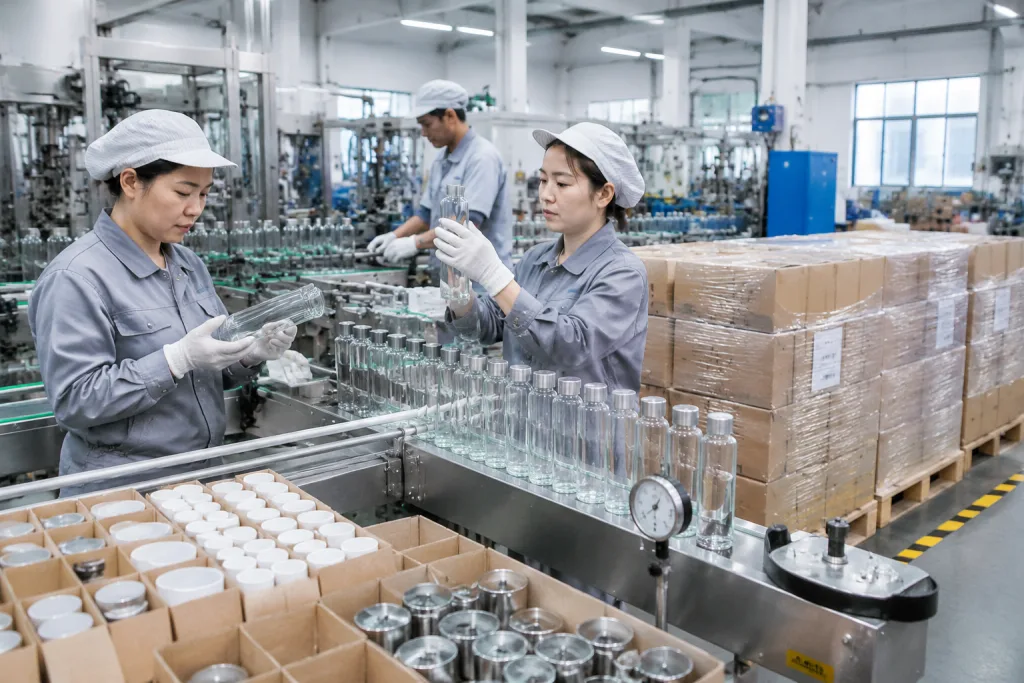
From a borosilicate glass bottle factory in Zhejiang, we see the same problem week after week: buyers compare appearance first, then get caught by 1.8 mm wall thickness, lid fit, MOQ, and a 35-day lead time. QC pulled the sample on the line, and the cap torque was off by 2 N·m. If you are sourcing from China, read the spec line by line. That is how you separate a real borosilicate glass bottle manufacturer from a trading layer, and how you avoid paying for a “custom” bottle that is only custom in the print file.
Start with the use case
The first spec is not the glass. It is the job the bottle has to do. A best promotional borosilicate glass bottle for a wellness campaign is not the same as a retail-ready hydration bottle for a chain store. If we are shipping handout volume for events, the math is cost, breakage rate, and one-color print. If we are building a premium shelf item, cap feel, clarity, and pack-out become the real fight.
Write the use case in numbers. Pick the target capacity first: 250 ml, 350 ml, 500 ml, or 750 ml. Then lock the drink type: cold only, hot and cold, or fridge-to-desk commuting. Borosilicate handles thermal shock better than soda-lime, but the line still needs a wall spec that matches the job. A custom borosilicate glass bottle for hot-fill use usually needs a thicker wall and a lid that can take heat without warping. For a distributor borosilicate glass bottle program, the use case also decides whether you run one SKU or a family with three lids and two capacities. QC pulled the sample at 1.8 mm wall thickness and the buyer flagged the lid swell at 85°C; that is how MOQ, carton count, and inventory risk get decided, not by guesswork.
- Promotional event: low decoration cost, fast turnaround, 500-1,000 pcs test run.
- Retail program: better finish, stronger packaging, stricter QC, 2,000+ pcs.
- Distributor sale: repeat supply, standardized carton, stable SKU code.
Read the glass spec carefully
Buyers often say “borosilicate” as if it were one fixed material. It is not. The spec that matters is how the bottle holds up under heat shock, impact, and daily handling on the line. We ask for wall thickness, base thickness, and the annealing control used in production. For a bulk glass water bottle, 1.8-2.2 mm is common for promotional work. Drop below 1.6 mm and the bottle looks clean, but it gets less forgiving in transit and when the warehouse crew is stacking cartons.
The base matters more than most first-time buyers think. A heavier base feels premium and sits better on the shelf, but it adds grams and freight cost. We ran a 400 ml sample last month; the buyer flagged a PO typo on the target weight, then QC pulled the sample and found a 28 g swing between lots. That is the kind of spread that changes carton loading and breakage risk. If you are sourcing borosilicate glass bottle wholesale for North America or Europe, ask whether the factory measures by sample or by production tolerance. Good borosilicate glass bottle suppliers give you a range, not a promise with no numbers behind it.
Ask for the actual glass composition and the test notes, not just “high borosilicate.” If the supplier cannot explain the material grade, that is a warning sign.
Choose the closure first
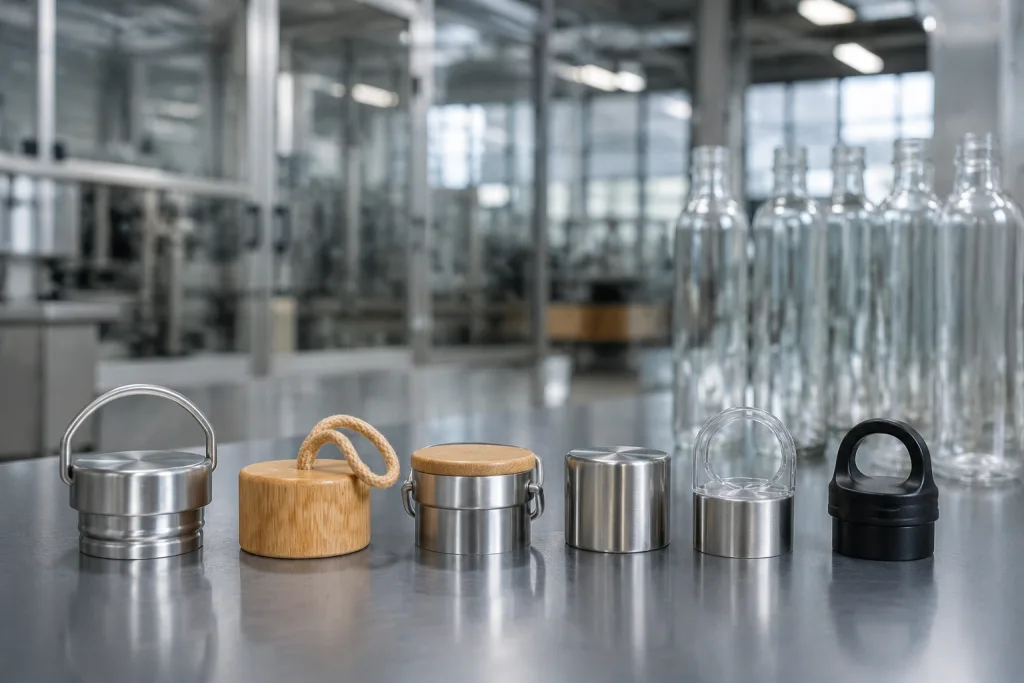
The lid is where a lot of projects go off track. Buyers spend time on the bottle shape, then the cap turns into the leak claim, the user complaint, and the margin leak. For a custom glass water bottle, pick the closure before you lock the neck finish. We’ve seen a bamboo lid look great in photos and fail once the liner gets hot water; that turns into a warranty problem fast. A stainless cap is tougher, but it changes the look and can add USD 0.20-0.60 per set to the landed cost.
For promotional borosilicate glass bottle programs, the closures we ship most are PP screw caps, bamboo-composite caps, and stainless caps with silicone seals. Ask for food-grade silicone and check whether the cap holds up through 60-80°C cleaning cycles. One buyer once flagged a PO typo on the seal spec, and QC pulled the sample because the liner was wrong by 0.3 mm. If you sell into wellness, the first question is reuse and safety. If you sell into retail, the cap still has to open and close cleanly 3,000-5,000 times in real use. That is the wrong question to ask last; torque testing and leak testing belong before mass order release.
- PP cap: lower cost, good for high-volume promotion, easy to run on a 24 mm neck.
- Bamboo-look cap: stronger shelf appeal, but the liner and press fit need a close check.
- Stainless cap: better durability, heavier freight, and a tighter cost target.
Decoration is not just branding
Decoration decides whether the bottle feels like retail stock or a throwaway sample. Screen print stays the default for a borosilicate glass bottle promotional order because it holds on curved walls and keeps cost in check; we run 1-color logos all day on the line. Laser engraving reads cleaner on metal lids than on clear glass, while acid etching gives a premium look but adds setup and fixture cost. For a wellness launch, the decoration has to match the brand story, not just the Pantone card.
Do not let a vendor sell you “full customization” without a proof structure. That claim is too loose. You need print position, print size, Pantone reference, and cure method in writing, or the buyer will flag it later when the sample misses the PO. A one-color logo on glass may land at USD 0.08-0.20 per piece at volume, but multi-color art, frosted finishing, or wrap decoration pushes the math up fast. We’ve seen a typo on a PO turn into a 3-day back-and-forth over the wrong logo diameter. In Zhejiang, a basic print can move fast, while complex decoration often adds 7-12 days to lead time. If the ship date is fixed, that delay beats the unit price by a mile.
What to lock before approval
- Logo size and exact placement.
- Glass clarity, frost level, or tint.
- Print method, color count, and curing standard.
- Artwork file type and proof acceptance rule.
MOQ and price reality
If you want a realistic buying decision, talk MOQ and price first, not after three rounds of samples. For a standard custom borosilicate glass bottle, most factories in China quote 1,000-3,000 pcs per design. Go lower only if you accept stock models or simpler decoration. A typical FOB Zhejiang price for a 350-500 ml bottle with a basic lid sits around USD 1.20-2.40, while premium closures, thicker glass, or special packaging can push it above USD 3.00.
When a borosilicate glass bottle supplier gives you a low unit price, check what is left out. Carton inserts, shrink wrap, drop test packaging, custom color lids, and extra QC all cost money. We once saw a PO typo on carton spec turn a 6-layer shipper into a 5-layer one, and the buyer flagged it only after the first drop test. If you are buying borosilicate glass bottle bulk for a distributor channel, the right number is the repeatable landed cost after breakage allowance. The math does not work any other way. In our line, 1-3% breakage is normal in long-haul shipping if packaging is weak, and less than 1% is reachable when the carton spec is proper and the pallet pattern is controlled.
China is still the most practical sourcing base for this category because the work sits close together: glass forming, lid tooling, printing, and export packing. Zhejiang has strong export coordination, so you spend less time chasing five vendors for one SKU. We run that every week. That is a real cost saving, not a brochure claim.
Test like a buyer, not a dreamer
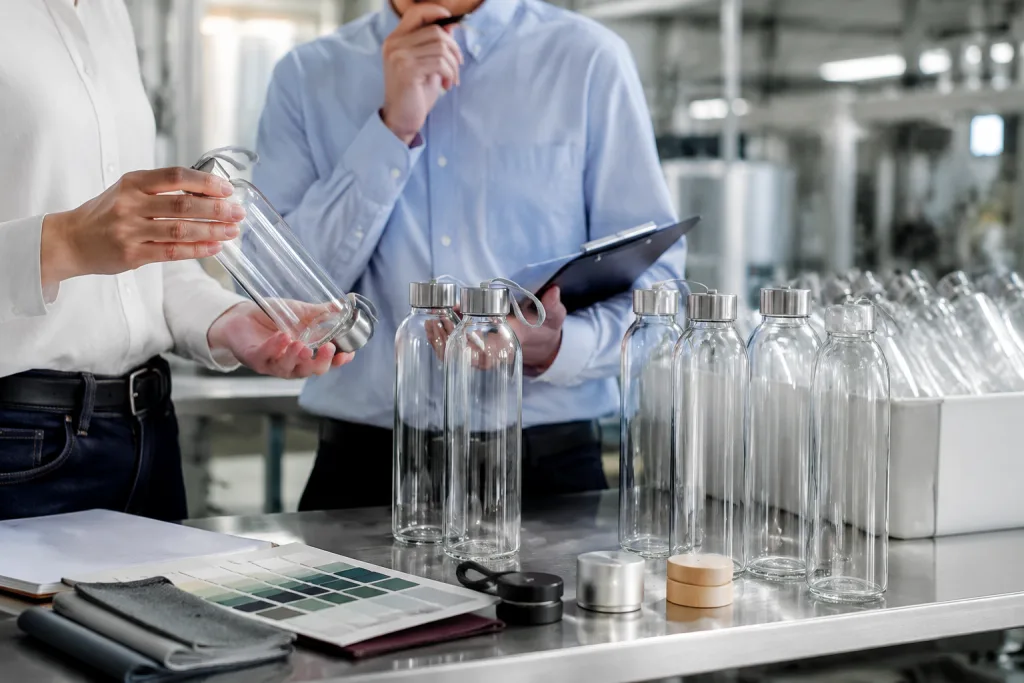
Samples only matter when you test them the way your buyer will use them. We run the same checks here on the line: visual inspection, leak test, lid torque, and a basic thermal handling check. If the bottle is meant for both hot and cold fill, ask for thermal shock data and pin down the real range, not a brochure number. For a promotional water bottle, the failures we see most are lid seepage, print scuffing, and chipped rims after packing.
Keep the inspection simple and strict. Use AQL 2.5 for major defects and AQL 4.0 for minor defects on a normal pre-shipment check, unless your program has tighter limits. If the mold has 4 cavities, ask for one production sample from each cavity. For Europe or North America, request REACH or LFGB paperwork where it applies and file it with the spec sheet. A borosilicate glass bottle distributor that skips test records usually pays for it later in claims and return freight; that math does not work.
Good factories in China do not flinch at disciplined questions. Weak factories get stuck when you ask about leak rate, print adhesion, and carton drop test results.
Build the order for logistics
The last spec is packaging. This is where export buyers keep or lose margin. A custom glass water bottle can pass every visual check and still reach the warehouse broken if the inner pack is weak. We ask for individual wrap, carton compression resistance, and pallet stacking assumptions. For a 350-500 ml bottle, a master carton often holds 24 or 36 pcs, but the right count depends on bottle height, lid protrusion, and the air gap left in the pack. QC pulled the sample, and the carton test showed one corner crushing at 12 kg—this is the wrong place to guess.
Freight changes the math. A lighter bottle may look cheaper on paper, but if the wall is too thin, breakage wipes out the saving. If you sell through Amazon or retail distribution, check whether the outer carton can take FNSKU labels, barcode placement, and retail-ready packing. A borosilicate glass bottle wholesale program looks simple until pallet height limits, moisture protection, and warehouse scanning requirements hit the line. We ship this kind of order every week, and the buyer flagged a 3 mm carton overrun that would have pushed the pallet past the warehouse cap.
For repeat orders, lock the spec sheet, carton drawing, and approved sample code into one file. Once production starts, changing one dimension can ripple into lid fit, carton size, and freight pricing. A disciplined borosilicate glass bottle vendor will tell you that before the PO goes out. A weak one waits until the problem shows up. We saw a PO typo on a 36 pcs carton count turn into a freight re-rate, and the math did not work.
Request a factory quote with your spec sheet
Send capacity, lid style, decoration, and target MOQ. We’ll quote the right borosilicate glass bottle custom option, not a vague sample price.
Frequently asked questions
What is a realistic MOQ for a custom borosilicate glass bottle?
For most Zhejiang factories, a realistic MOQ is 1,000-3,000 pcs per design and color set. If you want a unique mold, special lid, or full-surface decoration, expect the lower end to move up. Some borosilicate glass bottle manufacturers can do smaller runs on stock shapes, but unit price usually rises by 15-35%. For a wellness launch, I would plan 2,000 pcs if you need a clean production run and usable margin.
How much does a promotional borosilicate glass bottle cost FOB China?
For a 350-500 ml bottle, basic FOB China pricing often lands around USD 1.20-2.40 per piece with a standard cap and one-color print. If you add thicker glass, bamboo-style closures, frost finish, or premium packaging, the price can move to USD 2.80-3.80 or higher. Always confirm what is included: lid, gasket, print, carton insert, and export carton can change the final number by 20-40%.
What wall thickness should I ask for?
For a promotional or retail-ready borosilicate glass bottle, 1.8-2.2 mm wall thickness is the practical range. Below 1.6 mm, the bottle may look light and elegant, but breakage risk rises during packing and transit. Above 2.2 mm, you get a heavier feel and better durability, but freight cost increases. Ask the borosilicate glass bottle factory to provide sample weight and tolerance, not just nominal thickness.
Which compliance documents matter for Europe and North America?
At minimum, ask for food-contact confirmation, REACH where relevant, and LFGB if you sell into Germany or broadly into the EU channel that expects it. If the cap includes silicone or plastic parts, confirm those materials too. For North America, buyers often want supplier declarations and basic testing aligned to food-contact expectations. Keep the reports linked to the exact SKU, because a custom borosilicate glass bottle customized for one market is not automatically approved for another.
How do I vet a borosilicate glass bottle supplier or distributor?
Start with factory capability: monthly output, lead time, QC process, and whether they handle glass forming, printing, and packing in one place or through subcontractors. A solid borosilicate glass bottle supplier should give you a sample policy, production photos, AQL standard, and a clear FOB quotation. If a borosilicate glass bottle distributor cannot explain who actually makes the bottle, or they avoid discussing breakage and carton design, treat that as a risk signal.