Key Takeaways
- The cheapest bottle often fails at the lid fit stage, not the bottle body; set a ±0.3 mm tolerance on critical sealing parts.
- For FDA/REACH-facing markets, ask for full material declarations, BPA-free resin, and migration testing tied to your SKU.
- Decoration failures are common above 55°C wash water; specify print method, curing, and abrasion criteria before approval.
- A serious canteen manufacturer should quote MOQ, lead time, and AQL 2.5 inspection terms in writing, not verbally.
Buying the best custom plastic water bottle is easy if price is the only filter. The problem starts when the first 2,000 units land with warped lids, weak print, or a plastic smell your customer catches before the logo. That is where most B2B buyers lose margin. Not on the quote. On the failure mode nobody wrote into the spec sheet.
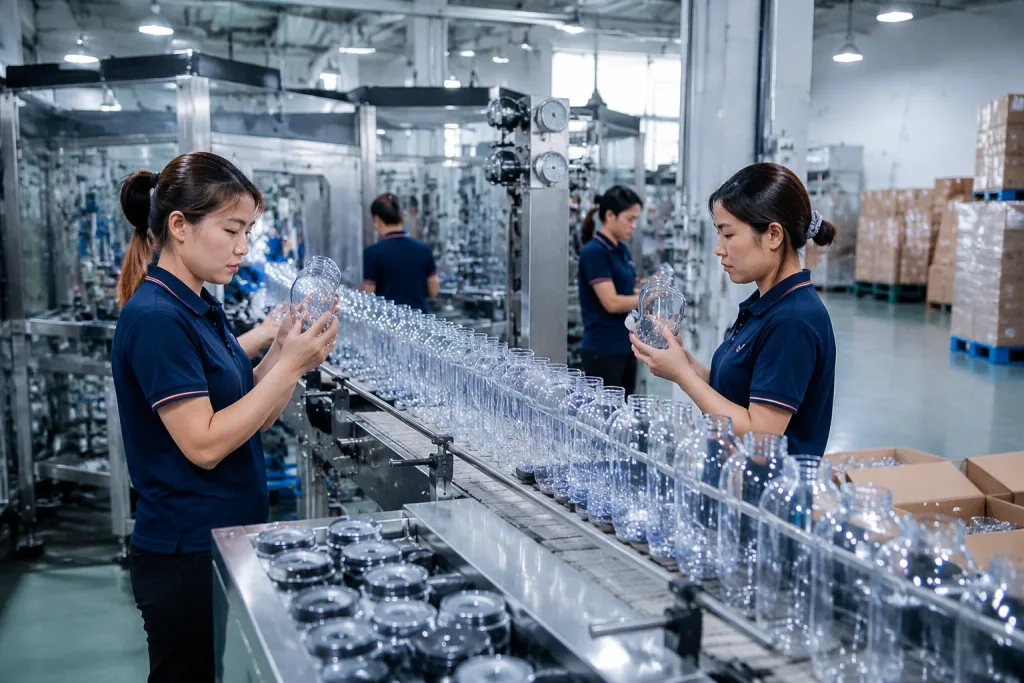
If you source custom drinkware for retail, promotions, or distribution, think like a canteen factory, not a catalog buyer. We run the line in Zhejiang with resin grade checks, molding shrinkage control, and decoration adhesion tests in the workflow; one buyer once sent a PO with a typo on the cap color code, and QC pulled the sample before the run started. BottleForge in Hangzhou runs 300,000 units per month with a 45-day standard lead time for decorated orders, and the same logic applies whether you buy a custom canteen, customizable canteen, or custom growler shape: define the failure before it reaches your warehouse.
Where cheap bottles usually fail
The first failure shows up in dimensions, not on the print. A bottle can look fine on the sample table and still miss in mass production because the cap thread pitch drifts, the neck goes oval, or the gasket lands unevenly after cooling. On a 750 ml custom plastic water bottle, a 0.4 mm thread mismatch is enough to give you a leak that only appears after the cartons hit transit. We run into this on the line more than people expect. Ask for the drawing first; a sample alone is not enough.
Most canteen distributors ask about capacity and color, then stop. That is the wrong question to ask. Put shrinkage rate, wall thickness, and the measurement plan on the PO, and make the factory show the gauge points. For PP or Tritan-style bodies, 1.8 mm to 2.2 mm is a normal wall range for a lot of promo jobs, but the real issue is cavity-to-cavity consistency. If the wall swings by more than 0.15 mm, QC pulled the sample and the bottle can warp after hot filling or dishwasher use. We ship enough of these to know the math does not work any other way. For a canteen supplier or distributor drinkware program, write the failure line in plain terms: no leakage after 20 cap cycles, no visible deformation at 60°C, and no thread cross-fit in random checks.
Do not approve a bottle because it “looks sturdy.” Approve it because the neck, seal, and cap passed the test plan.
Material mistakes that come back later
I’m rewriting the section in place, keeping the HTML intact and tightening the sales-engineer tone. Next I’ll return the cleaned prose only, with the same tag structure.Material choice is where a lot of custom canteen jobs go sideways. Buyers hear “food grade” and stop there. That is the wrong question to ask. For the best custom plastic water bottle, you need the resin family, the additive package, and the test standard on paper. We’ve seen a bottle pass a cold-fill promo run and still fail odor checks after 30 days in a hot carton at 40°C. Another sample cleared strength testing on the line, then picked up flavor because the blend was off.
For Europe and North America, ask for REACH, LFGB where relevant, and a migration test matched to your market. If the buyer flags BPA sensitivity, put it in the PO; do not assume the canteen manufacturer will swap resin correctly without written direction. A customizable canteen for gyms or corporate gifting may call for Tritan, copolyester, or PP, depending on price and clarity. PP is cheaper and common for canteen promotional programs, but it scratches faster. Copolyester gives a cleaner look for a customized drinkware line, and the cost can rise by 15% to 35% depending on shape and decoration. If you also source custom growler or customizable growler products, the same rule holds: impact resistance is not chemical stability. Ask for the exact resin code, then check it against the incoming report.
- Require resin declaration by SKU.
- Match material to temperature range.
- Request odor and taste testing after aging.
- Reject vague “eco” claims without documentation.
Decoration failure is predictable
Printing failure is usually a process problem, not a design problem. A canteen customized with a clean logo can still ship with ghosting, edge lift, or color shift if the supplier picks the wrong decoration method for the substrate. Screen print is forgiving on flat zones, but it gets weak on curves and tight radii. Laser engraving works on some caps and metal parts, but not on every plastic body. Pad print handles small marks well, while heat transfer can look sharp and still fail abrasion tests after repeated washing.
You should define the decoration spec by use case. For a canteen promotional order handed out at events, one-color screen print with a 95% opacity target and simple placement tolerance is usually enough. For retail, the bar is higher: Pantone reference, approved sample, no edge chipping after 50 rub cycles, and wash resistance at 40°C or higher. Ask the canteen supplier to show the exact curing temperature; under-cured ink is one of the most common hidden defects we see in China export runs. The buyer flagged it on a 20,000-piece PO once: the logo looked fine on day one, then started rubbing off after two washes. Branding is part of the product, not an afterthought.
For high-volume customs, put decoration approval into stages: blank sample, printed pre-production sample, then gold seal sample. That keeps the line moving and stops late disputes after shipment. QC pulled the sample, checked registration within 1 mm, and the whole batch stayed on track.
Lid systems fail under abuse
Most leakage complaints start with the closure, not the bottle body. Flip tops crack at the hinge, sports caps lose spring tension, and threaded caps deform if the mold steel is weak or the gasket is undersized. If you want the best custom plastic water bottle, the lid has to match the real use pattern. A school bottle gets opened 20 times a day. A gym bottle may get tossed into a bag with keys and a laptop. A retail canteen customizable product may move through warehouses, trucks, and hot containers before anyone uses it.
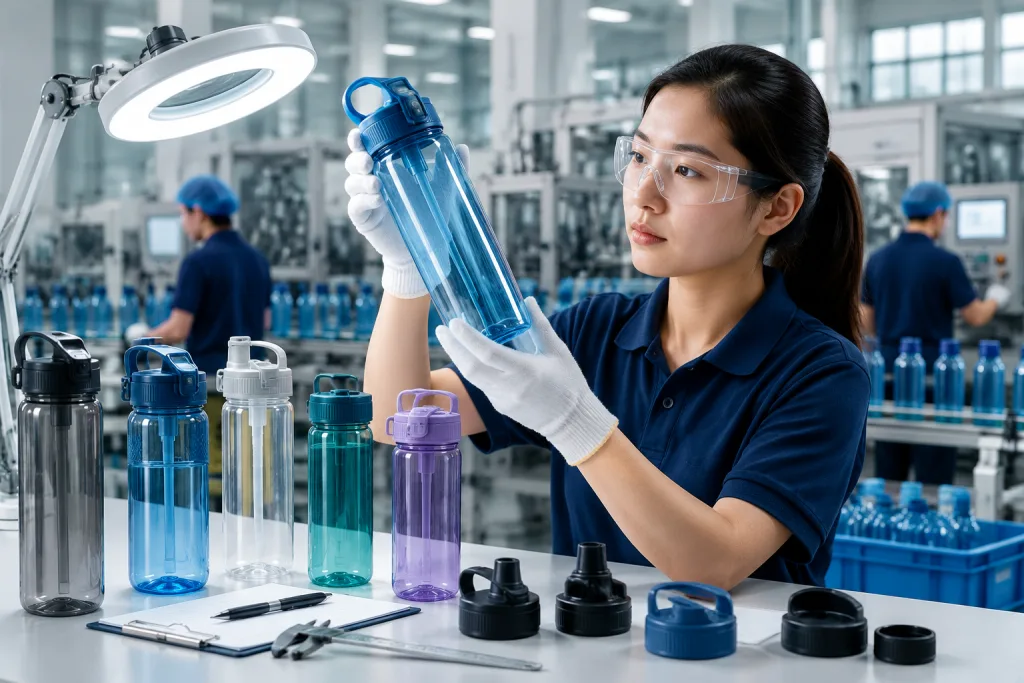
Spec the closure like a component, not an accessory. You want material type, gasket material, opening torque, and drop-test performance. Ask the canteen manufacturer whether the seal is silicone or TPE, then require a retention test after thermal cycling. We’ve seen a lid pass at room temperature and fail after four cycles from -10°C to 50°C. If you are buying from a canteen factory in Zhejiang or elsewhere in China, ask for a simple abuse test: 1 meter drop, 6 orientations, no leak, no crack, no cap pop-off. That is the level that cuts returns.
For custom canteen programs sold through canteen distributors, the better move is to simplify the closure. One fewer moving part means fewer complaints and lower warranty exposure.
QC terms that protect your margin
QC is where sourcing stops being a gamble and starts protecting margin. If the purchase order leaves out the sampling plan, you are letting the supplier define acceptable quality after the run is finished. That is the wrong question to ask. For export drinkware, AQL 2.5 for critical defects and 4.0 for major defects is a solid base, but the numbers should match the bottle, the print method, and the sales channel. We have seen a 500 ml bottle pass appearance and still leak at the cap torque test. If the bottle goes to retail, tighten leakage and decoration limits. For a low-cost canteen giveaway, you can relax scuff marks, not a seal failure.
We run three checkpoints: incoming material check, in-process inspection, and final random inspection before carton sealing. On the line, QC pulled the sample with calipers, checked the neck finish at 28 mm, and flagged one cavity that was drifting on wall thickness. A Zhejiang supplier worth using should show batch records, cavity numbers, and defect photos without a fight. Put carton pack-out, inner bag count, and drop test requirements into the spec too. If the buyer flagged barcode labels or FNSKU stickers, say it in the first PO, not after packing. Rework in your own warehouse eats time and labor fast.
Do not skip the paperwork. A good vendor sends test reports, photo evidence, and export carton marks. A weak one sends promises. We have seen a PO typo on carton marks trigger a customs hold, and that is a costly lesson. Ask for the documents before payment, not after the truck leaves.
How to spec the right bottle
If you want a canteen customized correctly, write the order like an engineer and negotiate like a buyer. Start with capacity, material, and closure, then move to decoration, carton pack-out, and compliance documents. You do not need a 20-page spec. You do need enough detail that the factory cannot read it two ways. On the line, we have seen a buyer leave out cap torque and then complain about leaks after 3,000 pieces; the math does not work. The best custom plastic water bottle is usually not the most complex one. It is the one that cuts out avoidable variables.
Use a simple decision path. If the project is promotional, choose a low-risk body shape, one-color branding, and a closure with proven seal performance. If it is retail, pay for a better resin, better print, and tighter QC. If it is a custom growler-style container or customized growler format, headspace, cap torque, and stiffness matter more than the marketing render. QC pulled the sample at 18 days when the wall thickness missed 1.6 mm by a small margin, and the buyer flagged it before shipment. For custom canteen and customizable growler programs, the real value is not a fancy mockup. It is repeatable output from the canteen factory, stable lead time, and a supplier who can tell you what will fail and how they stopped it.
That is the standard you should expect from any serious canteen manufacturer, canteen supplier, or canteen distributors partner in China. We run orders this way every week, and if a PO typo lands on the wrong lid color, it turns into a 12-day delay fast.
Get a bottle spec that survives production
Send your target capacity, artwork, and market. We’ll turn it into a factory-ready custom drinkware spec with the right QC checkpoints.
Frequently asked questions
What makes the best custom plastic water bottle for retail buyers?
The best custom plastic water bottle is the one that survives transport, decoration, and repeated use without leaking or warping. For retail, I would start with a body wall around 1.8 mm to 2.2 mm, a cap tested for at least 20 open-close cycles, and decoration that survives 50 rub cycles. Ask for REACH-aligned documentation, BPA-free resin declarations, and an AQL plan of 2.5 for critical defects. If your brand sells in Europe or North America, do not approve a sample without a migration report and a packed-carton drop test.
How do I compare a canteen factory quote properly?
Compare more than price. A serious canteen factory quote should show material, capacity, decoration method, MOQ, lead time, packing, and test documents. In Zhejiang and other export hubs in China, a practical MOQ for decorated drinkware often starts at 3,000 to 5,000 units, with 25 to 45 days depending on tooling and print complexity. If one quote is 12% lower but omits QC terms or compliance, it is not cheaper. Ask whether the quote includes carton marks, barcode labels, and a pre-production sample.
What failure points should I test before mass production?
Test the neck seal, print adhesion, and lid durability before you approve mass production. A useful pre-production test is 1 meter drop testing in six orientations, plus a leakage check after hot and cold cycling from -10°C to 50°C. For print, run abrasion or wash testing at 40°C and inspect for edge lift, fading, or ghosting. If the bottle is for drinkware distribution, add random measurements for ovality and wall thickness because even a 0.3 mm drift can cause fit problems later.
Can I order a customized canteen with low MOQ?
Yes, but low MOQ usually costs more per unit and limits decoration options. For a simple customized canteen, some suppliers will start at 1,000 to 2,000 units if they already have an existing mold. New molds or special lids usually push the MOQ higher, often 3,000 units or more. If you are a canteen distributor or promotional buyer, ask whether the supplier can combine colors or print runs to reduce setup cost. The tradeoff is longer lead time and less flexibility on packaging.
What documents should I request from canteen manufacturers in China?
At minimum, ask for material declarations, product photos, a test report, and production inspection records. For Europe and North America, I would request REACH or LFGB-related testing where applicable, BPA-free confirmation, and a batch-based QC report tied to your PO number. A good canteen manufacturer in China should also give you carton dimensions, gross/net weight, and export marks. If you plan to sell through Amazon or big-box channels, ask for barcode or FNSKU labeling before the goods leave the factory.