Key Takeaways
- A practical MOQ for a custom double wall bottle is often 1,000 units, with 25-35 days lead time from approved sample.
- 304 stainless steel at 0.5-0.6 mm wall thickness is the standard starting point for durable custom drinkware.
- Laser engraving usually costs USD 0.15-0.40 per unit; full-color print can add USD 0.20-0.60 depending on setup.
- Ask for AQL 2.5/4.0 inspection, REACH documentation, and thermal test data before you confirm FOB pricing.
If you are sourcing the best custom double wall bottle, the hard part is not finding a bottle. It is picking the version that still works when you run the margin sheet, the print spec, and the freight booking. A 500 ml double wall bottle can look the same across suppliers in China, but one leaks at the cap after 200 cycles, while another ships in 15 days and carries a 1,000-unit MOQ that fits a launch plan.
The first check is simple: what insulation level you need, what decoration your artwork can handle, and whether the supplier can hold tolerances across 5,000 or 50,000 units. We run that math in Zhejiang every day. QC pulled the sample, checked the lid gap at 0.3 mm, and found the real issue was not the bottle body; it was the cap seal. If you are comparing canteen manufacturer quotes, canteen factory samples, or a canteen supplier’s promotional set, this is the wrong question to ask: what looks good on paper, or what lands in your warehouse without a headache.
Start With The Use Case
The best custom double wall bottle for a gym chain is not the same bottle you should source for a corporate gift program or an outdoor retailer bundle. Start with the use case, then pin down the failure point. If the bottle is for commute and desk use, weight and lid feel matter more than chasing max insulation. If it is for camping, the cap needs to stay tight, the body needs dent resistance, and the pack-out has to survive a drop in the carton.
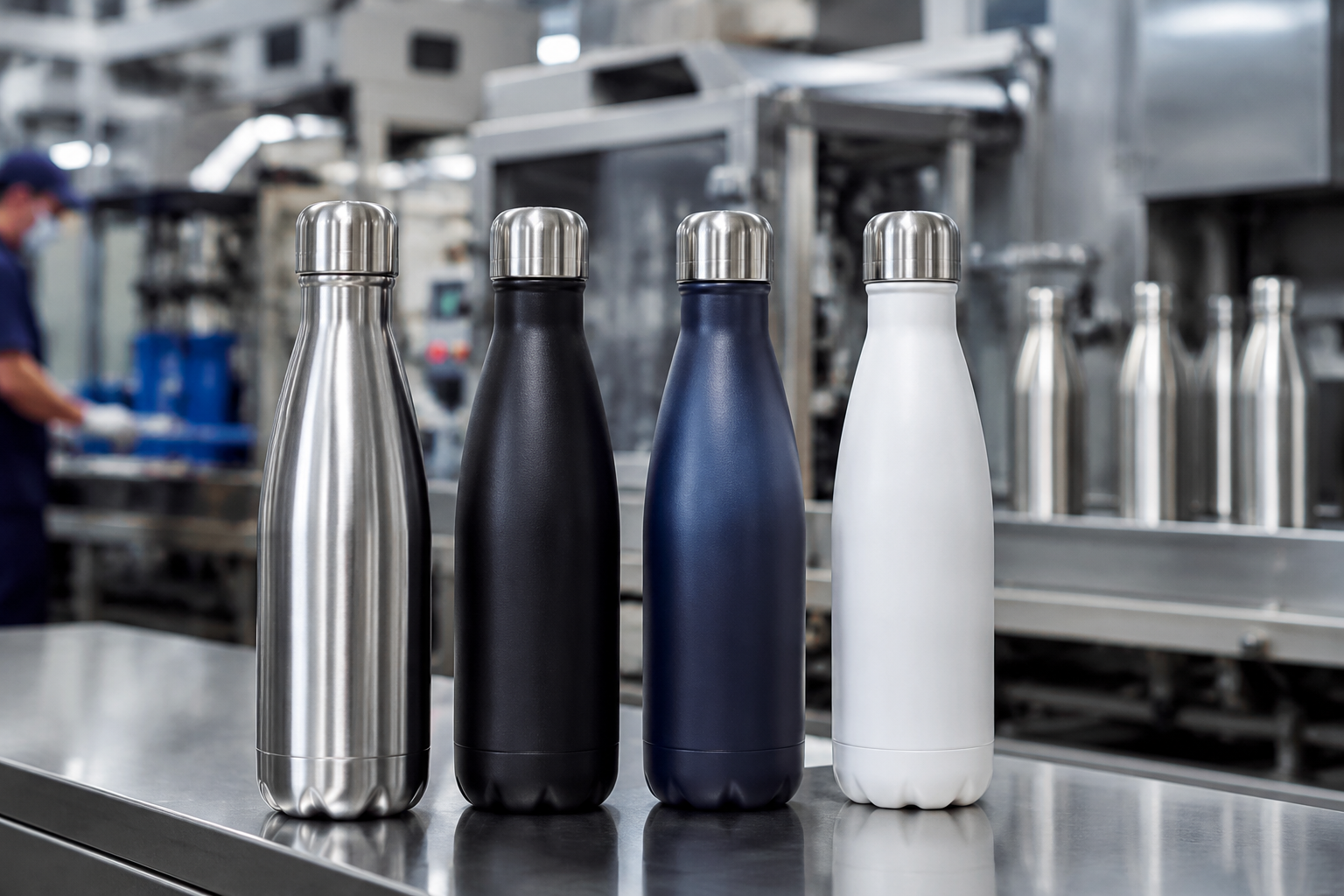
Set the target volume first. The common B2B sizes are 350 ml, 500 ml, 750 ml, and 1,000 ml. A 500 ml double wall bottle usually gives the best balance of price and shelf appeal for custom drinkware. We have seen first-time buyers push for 1,000 ml, then complain when freight lands at $1.20 more per unit and the carton count drops. A 500 ml bottle with 304 stainless steel inner and outer walls, 0.5 mm wall thickness, and vacuum sealing is the safest baseline for a customized drinkware program.
Practical rule: if your customer refills often, choose a lighter bottle with a slimmer profile. If your customer buys on perceived value, choose a heavier bottle with a matte powder coat and more cap options. That is the real trade-off. Not “premium versus basic.”
Pick The Right Steel Build
Material choice decides whether your canteen customized order feels solid or like a cut-rate sample. For most B2B drinkware, 304 stainless steel is the default. We run it every week in Zhejiang, and it is easy to source, stable for beverage contact, and simple to keep on spec. If your market asks for higher corrosion resistance, 316 stainless can be specified, but the unit price usually climbs by about USD 0.35-0.80 per bottle, depending on size and finishing.
Wall thickness matters more than some buyers expect. A common inner wall thickness is 0.4-0.6 mm, and the outer wall is often in the same band. Go too thin and the bottle dents in transit or at retail. Go too thick and you pay for extra weight, more material, and higher freight. For a 500 ml best custom double wall bottle, 0.5 mm is usually the sweet spot. On a premium custom growler or customizable growler, we often move to thicker walls and a larger mouth opening so the bottle feels sturdier and pours cleanly. QC pulled a 0.45 mm sample last month, and the buyer flagged the dent mark after carton drop testing. That was the wrong build for that market.
- 304 stainless: best balance of cost and market acceptance.
- 316 stainless: stronger corrosion resistance, but the math moves up fast.
- Single-wall cost savings: skip it if insulation is the selling point.
- Vacuum integrity: ask for leak and thermal retention test reports, not a promise on chat.
If you are comparing canteen manufacturers, ask for the steel grade certificate, wall thickness drawing, and weld line photos. We had one PO typo last quarter where the buyer wrote 0.8 mm instead of 0.5 mm, and the whole sampling round went sideways. A canteen factory worth your time answers fast and shows the proof.
Choose Branding That Survives Use
Your decoration choice decides whether the bottle keeps selling or turns into dead stock. Laser engraving holds up best on stainless steel, and we usually quote USD 0.15-0.40 per unit based on logo size and setup. Silk screen is cheaper for a clean one-color mark, but we have seen it wear out faster when the buyer wants daily handwashing or a rough retail route. UV print and heat transfer give more color, yet they are a weak fit for a rugged custom canteen or a distributor canteen program.
For a canteen promotional order, the buyer usually pushes for lower decoration cost and a shorter delivery window. For a premium retail canteen customizable launch, powder-coated bodies with a laser logo and a spot color on the lid work better. If you need a customized canteen for a corporate campaign, ask straight away about Pantone matching. That adds extra setup on the line and can stretch lead time by 7-10 days. We usually tell buyers in Zhejiang to pick one main branding method and one backup, not four effects on the same bottle.
Good branding is not the loudest decoration. It is the one that still looks clean after 200 washes and 12 months in the field.
If your customer is an Amazon or retail distributor, keep the logo zone fixed so FNSKU labels and carton artwork do not fight each other. If you are building a canteen distributor program, ask for decoration tolerance samples before mass production; QC pulled the sample last week on a 1.5 mm logo shift, and that saved a rework round.
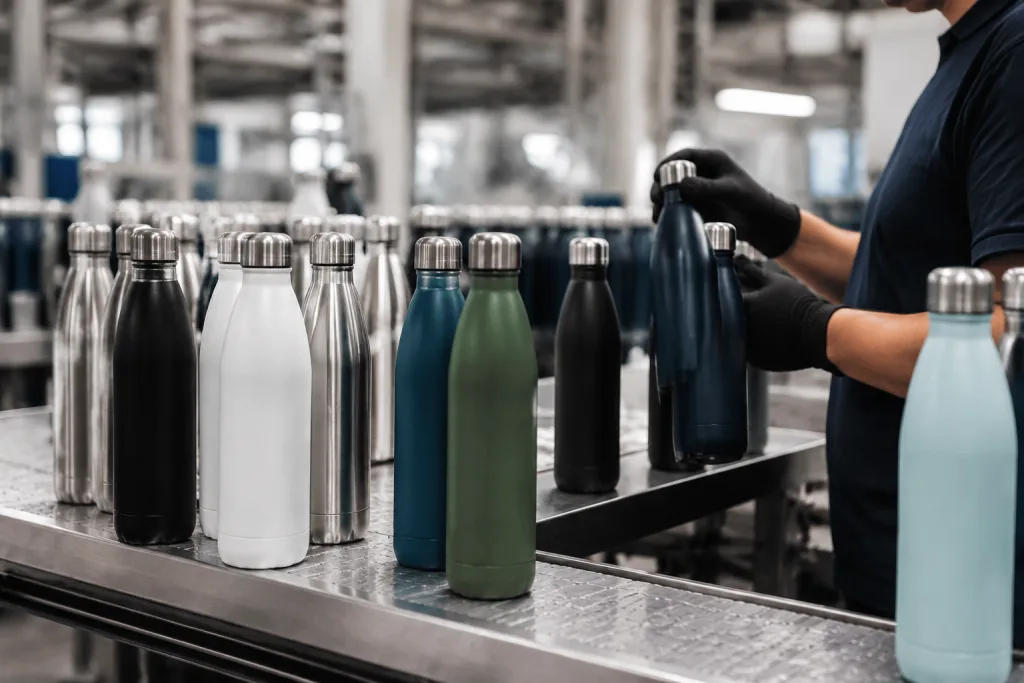
Check Lids, Caps, And Packing
I’m rewriting the section in place, keeping the HTML tags and structure intact while stripping the AI-ish phrasing and adding a few factory-floor details.Know The Real Price Structure
Buyers often ask for FOB too early, then get hit by tooling, sampling, and decoration charges. A clean custom double wall bottle quote should split the bottle body, lid, decoration, packing, and testing. For a 500 ml 304 stainless bottle, FOB usually lands around USD 2.20-4.80, depending on finish, lid type, and order quantity. Laser logo can add USD 0.15-0.40. Color powder coating can add USD 0.20-0.50. Special packaging can add another USD 0.10-0.35. We’ve seen the buyer flag a PO typo on “3040” instead of “304,” and that kind of slip changes the whole cost sheet.
MOQ is part of the price. A canteen vendor may quote 300 units, but the piece price climbs and the color range stays narrow. For stable factory pricing, 1,000 units is the number that usually makes sense. At 3,000 units, decoration and packaging cost less per unit. Our Hangzhou team in Zhejiang runs about 120,000 units per month across bottle lines, so we see the line get cleaner once one color reaches 5,000 pcs and the setup cost gets spread out. This is the wrong question to ask if you only look at the first quote.
Do not ignore landed cost. Freight can add USD 0.30-1.20 per bottle, depending on carton size and port lane. If your margin is thin, a heavier bottle can look fine on paper and fail in landed cost. A 320 g bottle in a 50 pcs carton may beat a 410 g version even when the FOB is higher by only USD 0.18. That is why a canteen distributor should compare unit price, carton count, and carton weight together, not one line alone.
Audit The Factory Before You Order
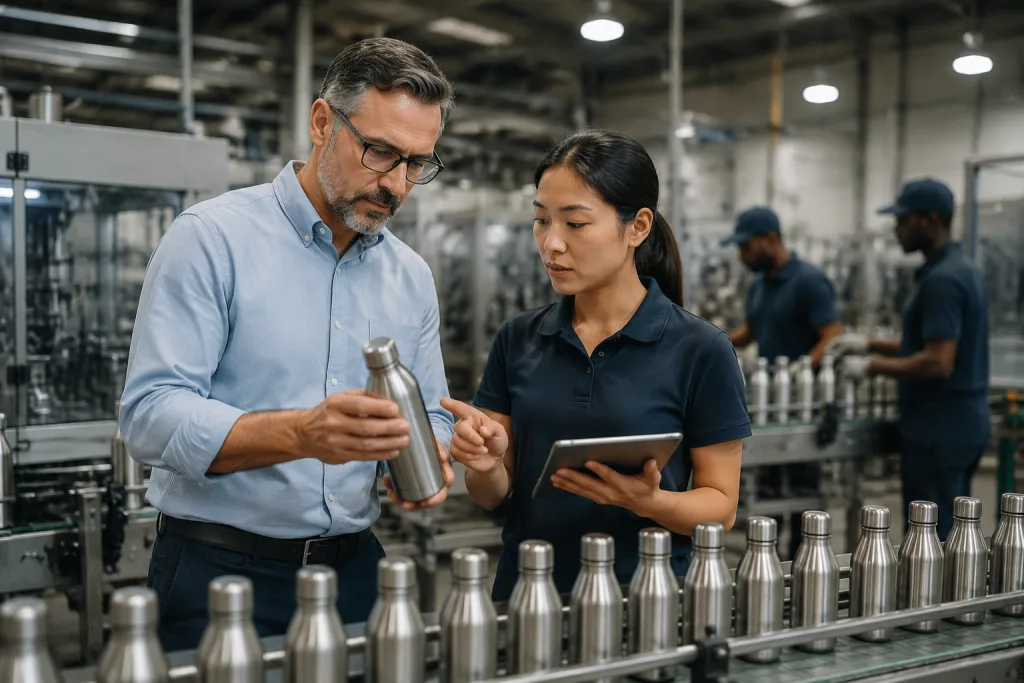
The supplier name matters less than the factory system behind it. A canteen maker that can show vacuum leak testing, salt spray data, and coating adhesion control is a safer bet than a glossy catalog. Ask for BSCI if your retail customer requires social compliance. Ask for REACH declarations if you ship into the EU. For North America, ask for FDA-contact material declarations and the internal QC checklist. If the supplier stalls on documents, walk away.
Use AQL inspection rules before shipment. For a lot of custom drinkware orders, AQL 2.5 major and 4.0 minor is a sensible starting point. We’ve seen buyers push back on cap torque and print alignment, and they were right to do it. For private label or distributor canteen programs, tighten control on cap torque, print alignment, and vacuum performance. Ask how samples are approved: pre-production sample, golden sample, and mass-production reference sample should all be documented. QC pulled the sample on the line before packed cartons cleared final check.
A good canteen factory in China should answer three questions fast: how many units per month, what the current lead time is, and the failure rate on thermal and leak tests. If the factory can produce 120,000 units a month, ship in 25 to 35 days after sample approval, and show the QC checkpoints, you have a buying decision, not a guess. We run this check with a tape measure, a torque wrench, and the leak bench. That is how smart buyers in Zhejiang and beyond keep the program on track.
Match The Bottle To The Channel
Channel strategy changes the spec. A distributor growler program needs different packaging and margin math than a souvenir canteen promotional order. We run both, and the pushback is always the same: the buyer wants one catalog item to fit every channel. It does not work that way. If you sell to corporate procurement, consistent color and logo placement matter more than trendy features. If you sell through e-commerce, you need strong retail images, barcode-ready packaging, and dimensional weight that stays under control. If you sell through wholesale, carton efficiency and low damage rates beat fancy add-ons.
For a custom canteen or customizable canteen line, build one core SKU and one upsell SKU. A 500 ml powder-coated bottle with laser logo can be the base; a 750 ml version with a premium lid can carry the upgrade. That keeps inventory cleaner and makes replenishment easier. We’ve seen this go sideways when a buyer adds a third cap, and the line turns into spare-part chaos. For canteen suppliers handling repeat orders, one lid platform across multiple sizes cuts tooling and spare-part headaches.
If you are a brand owner, do not overload the product with every possible feature. This is the wrong question to ask. The strongest custom drinkware programs usually win because they are simple to reorder, easy to inspect, and priced well enough to scale. QC pulled the sample on a 2 mm lid gap once, and the whole PO got delayed because the spec was too crowded. That matters even more when you work with a canteen distributor or distributor drinkware partner who wants one reliable item, not five unstable variants.
Source your bottle with a factory-first quote
Send your artwork, target volume, and market spec. We’ll quote a practical custom drinkware build from Zhejiang with clear MOQ, lead time, and QC terms.
Frequently asked questions
What is the best custom double wall bottle material for B2B orders?
For most B2B orders, 304 stainless steel is the best default because it balances cost, durability, and market acceptance. If your market or customer spec is stricter, 316 stainless is available, but expect a higher unit cost, usually about USD 0.35-0.80 more per bottle. For a 500 ml model, 0.5 mm wall thickness is a solid starting point. Ask the canteen manufacturer for steel certificates, vacuum test data, and coating specs before you approve samples.
What MOQ should I expect from a canteen factory in China?
A realistic MOQ for a custom double wall bottle is often 1,000 units per design and color. Some canteen suppliers will quote 300-500 units, but the piece price is usually higher and the options are narrower. At 3,000 units, you typically get better pricing on lids, printing, and packaging. A capable Zhejiang factory should also tell you the current monthly output, because production capacity affects your lead time as much as price does.
How long does sampling and mass production take?
A normal sample cycle takes 5-10 days, depending on whether you need logo tooling, Pantone color matching, or custom packaging. After sample approval, mass production for a standard custom canteen order is often 25-35 days. If you need complex decoration or a new lid mold, add time. For rush promotions, canteen promotional orders may move faster, but confirm the actual factory schedule rather than the sales estimate.
Which decoration method is best for a customized canteen?
Laser engraving is usually the safest long-term choice for stainless steel because it holds up to washing and handling. It often adds only USD 0.15-0.40 per unit. Silk screen printing is fine for simple logos and lower budgets, while UV print and heat transfer give more color but may wear faster. If you are buying customized drinkware for retail or corporate gifts, test the logo after wash cycles before you commit to bulk production.
How do I reduce damage in shipping for custom drinkware?
Use the right inner packing and carton count. Individual polybags plus dividers or molded trays usually reduce scuffing and dent risk. Ask the supplier for carton drop-test results and aim for AQL 2.5 major defects on final inspection. For a distributor canteen or distributor growler program, carton efficiency matters, but not at the cost of damaged arrivals. Good packaging usually adds only a few cents and saves much more in claims.