Key Takeaways
- For most alcohol flask customizable orders, 304 stainless steel at 0.4-0.6 mm wall thickness is the practical baseline
- Laser engraving suits 500-2,000 pc premium orders; screen printing is cheaper for larger logo runs
- Custom mold canteen customized projects usually need 30-45 days tooling before mass production
- Use AQL 2.5/4.0 inspection and confirm FDA, LFGB, REACH, or ASTM needs before deposit
An alcohol flask customizable program looks simple until the buyer signs off on the wrong body shape, coating, logo method, or gift box. We’ve seen this go sideways. A 6 oz hip flask with laser engraving and a 300 ml powder-coated canteen promotional item run through different jigs, curing times, drop tests, and carton specs. If you buy custom drinkware for retail, events, or corporate gifting, price is the wrong first question. The real issue is whether the flask fits the sales channel, passes AQL 2.5 inspection, and survives normal handling after QC pulled the sample from the line.
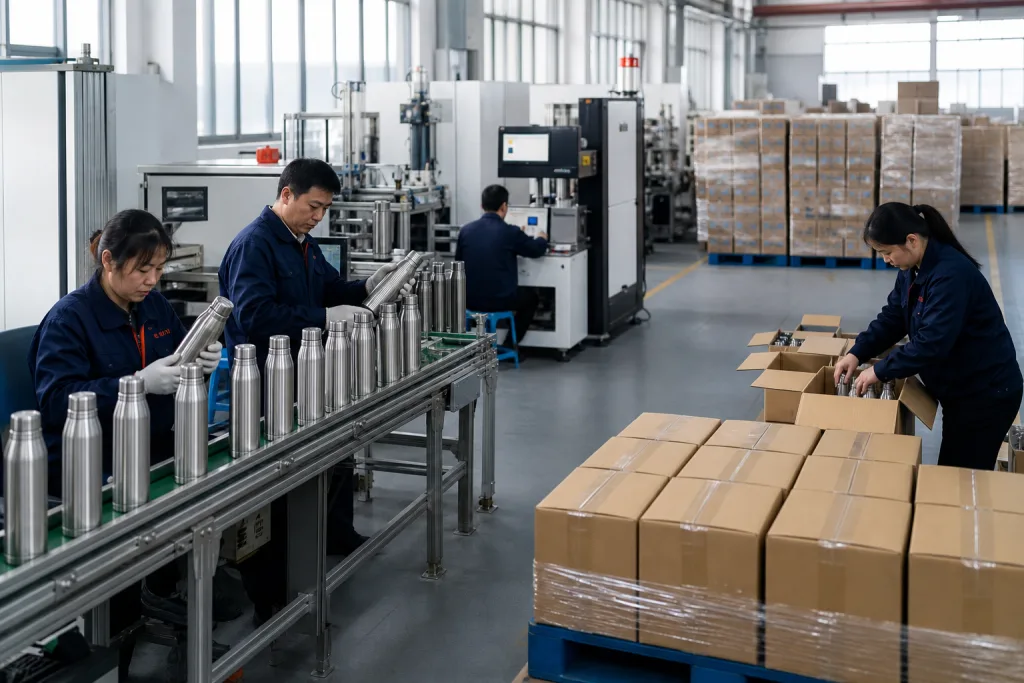
At our Zhejiang factory, we ask buyers to lock four items before we quote: use case, material and construction, branding method, and packing route. BottleForge Industrial in Hangzhou, China runs flask, canteen custom, tumbler, and growler projects with MOQs from 500 to 3,000 pcs depending on tooling and decoration. For one recent PO, the buyer wrote “matte black” but attached a gloss black artwork file; that 1-line typo would have changed the coating process and pushed sampling from 7 days to 12 days. We ship cleaner when those details are fixed before the proforma invoice.
Start With The Selling Channel
The first decision is not shape. It is the selling channel. A flask for liquor-store distributors gets judged differently from a canteen promotional order for a 20,000-person festival, and both are different from a boxed holiday gift sitting on a corporate buyer’s desk. We ask this on the first call because the line setup changes: blister card, white box, EVA insert, or bulk egg-crate packing all pull different labor and QC checks.
If you sell through retail, you need a stable barcode, shelf-ready packaging, clean carton markings, and a finish we can repeat lot after lot. One buyer once flagged a 2 mm rub mark near the cap as “used product” after store returns started. For online fulfillment, especially distributor canteen or distributor growler programs, plan for 80 cm drop test packaging and individual polybag or tissue wrap. For corporate gifting, the buyer often cares more about logo position, box presentation, and perceived weight than saving USD 0.10 on the unit price. The math usually does not work if the box feels cheap.
Alcohol flask customizable projects usually fall into three price bands. A basic 6 oz stainless hip flask with one-color logo may land around FOB China USD 1.20-1.80 at 3,000 pcs, depending on finish and cap. A gift-set flask with funnel and two cups in a paper box often moves into USD 2.20-3.80. A heavier powder-coated or leather-wrapped flask can be higher, especially below 1,000 pcs. On our side, QC pulled samples from a 3,000 pcs run last month and checked logo position with a 150 mm digital caliper because a 4 mm shift is easy to see on a curved flask body.
The same logic applies if you are evaluating a custom canteen or customizable growler. A hiking canteen needs leak testing and strap pull strength, not just a nice product photo. A customized growler needs thread fit, sealing pressure, and carton protection because a 64 oz stainless body dents more easily in transit. We ship these in thicker dividers when the buyer allows the carton CBM increase. Do not approve a quote until the supplier knows the channel, target retail price, packing style, and expected reorder pattern.
Choose Body Type Before Decoration
About 7 out of 10 new buyers ask us for logo pricing first. Wrong question. Body type sets the minimum order quantity, production yield, decoration method, and how many cartons fit in a 20GP. A flat hip flask is simple on the fiber laser; we run the 6 oz body at about 0.03 mm engraving depth without fighting the curve. A curved canteen customizable body needs a screen-print jig, and if the jig is off by 1 mm the logo starts climbing toward the seam. A custom growler gives you more branding space, but QC pulled samples last month with coating bubbles around the shoulder after the second bake.
For flasks, common capacities are 3 oz, 5 oz, 6 oz, 8 oz, and 10 oz. The 6 oz size is the safer pick for promotional and gift orders because it feels useful and still packs tight, usually 100 pcs per export carton at around 13-15 kg depending on funnel and gift box. Standard 304 stainless steel is the normal choice for beverage contact. Some low-cost factories may offer 201 stainless steel. We do not recommend 201 for alcohol-contact export projects because the math does not work after salt-spray complaints, especially if the flask is stored wet or used with acidic mixers. We have seen this go sideways on reorders when the buyer flagged rust spots near the welded neck.
For canteen manufacturer projects, decide single-wall or double-wall construction before talking artwork. Single-wall canteen customized items are lighter and cheaper, so they fit event giveaways where the target landed cost matters more than heat retention. Double-wall vacuum canteens cost more but support a higher retail price and fit durable custom drinkware lines better. For a canteen factory order, a 500 ml single-wall unit may start near FOB USD 2.00-3.00 in volume, while a vacuum insulated canteen can move toward USD 4.50-7.50 depending on cap, coating, and testing. On the line, we check vacuum loss with a 95°C hot-water test, and one weak bottom weld can turn a clean PO into a 12-day delay.
Growlers are a separate buying decision. A customized growler or customizable growler usually targets craft beverage, outdoor, or gift channels, so the user notices leaks fast. Check the lid seal and handle weld first, then confirm inner polishing and mouth size against your filling machine or cleaning brush. We ship samples with a 24-hour inverted leak test; if the silicone ring is 0.5 mm too thin, beer buyers will catch it before your warehouse does. If you are a canteen distributor expanding into growlers, do not copy your flask decoration and packing rules across unchanged. The buyer flagged it once on a PO as “same as flask,” and that note cost 18 days because the growler gift box needed a different insert.
Material, Gauge, And Compliance
Material is where a cheap quote gets expensive fast. For alcohol flask customizable orders, our normal export spec is food-grade 304 stainless steel on the inner contact surface. Wall thickness usually runs 0.4-0.6 mm for the flask body; on the line we check it with a digital thickness gauge before polishing. Go thinner and you save a few cents, but dents and welding pull show up. Go heavier and the flask feels better, while carton weight rises and the promo math can fail.
Ask your canteen supplier or canteen vendors to print the steel grade on the quotation and proforma invoice, not just say “SS” in an email. We have seen a PO come in with “304 outside only” typed by mistake, and QC pulled the sample before tooling because the buyer flagged it. For Europe, you may need LFGB or EU food-contact documentation, plus REACH for coatings, inks, and external materials. For North America, FDA food-contact expectations are common, and children’s drinkware may need ASTM or CPSIA review. An adult flask is not a kids’ bottle, but packaging claims and decorations still matter.
Coating is a practical decision, not a catalog beauty contest. Mirror polish shows fingerprints and small scratches after one pass through a polybag and master carton. Brushed stainless hides handling marks better. Powder coating gives strong color options, but the factory must control pretreatment, curing temperature, and adhesion; we run oven checks around the curing tunnel, not just at the control panel. For a canteen promotional order that will be thrown into backpacks, we usually suggest a matte powder coat with cross-hatch adhesion testing instead of a glossy finish that shows scuffs faster.
At BottleForge in Zhejiang, China, our standard mass-production inspection uses AQL 2.5 for major defects and AQL 4.0 for minor defects unless the buyer specifies otherwise. A typical flask line can output around 300,000-450,000 units per month during normal season, but capacity tightens before Q4 promotional peaks. MOQ pressure is real. If your distributor drinkware order needs certificates, printed claims, and retail packaging, confirm testing before the 30% deposit, not after production starts; we have seen this go sideways when a retail claim was added after cartons were printed.
Logo Methods And Their Trade-Offs
Decoration makes or breaks customized drinkware because the buyer sees the logo before they check the steel grade. For alcohol flask customizable orders, we usually quote laser engraving, silkscreen printing, pad printing, UV printing, embossing, or leather wrap debossing after checking the finish, MOQ, logo line thickness, and where the flask will be used. Small detail matters. Last month QC pulled a 6 oz hip flask sample because a 0.18 mm line in the crest filled in after printing.
Laser engraving is clean and durable. It works well on brushed stainless, powder-coated flasks, and premium canteen customized items. The trade-off is simple: no full-color artwork. Laser exposes the base metal or the contrast layer under the coating, so a red-and-gold brand mark becomes a single-tone mark unless we change the design. For 500-2,000 pcs gift orders, laser is usually worth the setup charge because it looks permanent and removes ink adhesion risk. We run a 20W fiber laser on most flask jobs, and the buyer flagged it once because the engraving looked too subtle on champagne coating.
Silkscreen printing fits simple one- or two-color logos on bigger runs. It is cost-effective for 3,000 pcs and above, but the line needs a proper fixture if the body is curved; tape-and-hand-positioning is how this goes sideways. Pad printing works better on caps or narrow flask bodies, while large logos can stretch near the edge. UV printing can handle full-color artwork, but ask for abrasion and alcohol rub tests if the flask will sit at bars or sampling events. We use 95% alcohol for the rub test, 50 cycles, and a weak UV ink will show scratches before the carton drop test even starts.
For a custom canteen, logo placement is more complicated than it looks. A shoulder curve, strap attachment, or seam line can cut the printable zone by 8-15 mm. For a custom growler, the logo usually needs to sit below the shoulder and above the widest impact zone. Ask the canteen manufacturer for a dieline or a marked photo showing the maximum print area in millimeters. A serious canteen vendor should provide a pre-production sample with the real logo method, not only a digital mockup; this is the wrong question to skip when the PO says “front center” but the seam is sitting right there.
MOQ, Sampling, And Lead Time
MOQ changes with the flask body, color, mold work, and decoration method. For a stock 304 stainless flask, we run laser logo orders from 500 pcs when the blank body is already on the shelf. Custom Pantone powder coating usually starts at 1,000-2,000 pcs because the coating line loses 6-8 kg of powder during gun setup and color change. Below that, the math doesn't work. A fully custom canteen shape normally needs tooling and starts from 3,000-5,000 pcs, with mold charges from USD 800 to several thousand dollars depending on the body curve, cap thread, and welding fixture.
A realistic timeline saves arguments later. For a stock alcohol flask customizable order, allow 5-7 days for digital artwork confirmation, 7-10 days for a logo sample, and 25-35 days for mass production after sample approval and deposit. We have seen buyers lose 4 days because the PO said “matte black” while the artwork file called out Pantone Black 6C. Sea freight to North America or Europe adds 25-40 days port-to-port, then customs and inland trucking. Air freight works for urgent promotional orders, but a 180 g flask in a rigid gift box can make freight cost higher than the product.
For canteen suppliers in China, Q3 and early Q4 get tight because promotional orders and holiday gift programs hit the line at the same time. Need delivery before November? Do not send the first inquiry in late September and expect miracles. A good Zhejiang factory can push, but stainless steel forming, polishing, coating, logo printing, leak testing, and packing still need calendar days. Last October, QC pulled a batch after 32 of 500 caps showed weak silicone gasket compression, and rework took 2 extra days before carton sealing.
Treat sampling as a control step, not a souvenir. Approve the exact finish, logo size, cap type, inner cleaning, box material, carton count, and shipping mark. For distributor canteen and distributor growler programs, keep one signed golden sample at your office and one at the factory. When the production lot is inspected, compare it with that sample, not with memory or a PDF render. We ship against what the buyer signed, so if the sample tag says 70 mm logo width, that is what the line and final inspection will follow.
Packaging And Distributor Logistics
Packaging is not decoration. It controls damage rate, warehouse handling, shelf look, and sometimes compliance. For a bulk canteen promotional order, we usually run 1 pc in a clear polybag, 24 or 48 pcs per export carton, with a 5-layer K=K carton if the buyer wants lower dent claims. A retail flask gift set is a different job: printed paper box, molded paper tray, warning label, barcode, and a carton drop test from 80 cm are all part of the packing discussion. If you sell online, the unit pack must survive parcel delivery, not just pallet freight. QC pulled one sample last year where the flask passed inspection, but the gift box corner split after one drop. The buyer flagged it before launch, and he was right.
For a canteen distributor, carton weight matters. A carton above 18-20 kg gets pushback from warehouse teams and increases handling damage, especially when staff cut straps with a hook knife and drag cartons off a mixed pallet. Ask for carton dimensions early so your freight forwarder can estimate CBM before you issue the PO. A 6 oz flask ships efficiently; we can pack it tight with dividers and still keep the carton easy to lift. A 64 oz custom growler eats carton space because each unit needs separation to avoid dents and coating rub. The math does not work if you quote freight based on product weight only.
If you are shipping to Amazon or another fulfillment network, confirm FNSKU labeling, carton labels, suffocation warning, and master carton limits before production packing begins. Do it before the line seals cartons. Re-labeling in a China warehouse is possible, but it burns 2-3 days and usually adds RMB 0.35-0.80 per label, depending on carton access and sorting work. For retail distributors, check whether you need English, French, German, or Spanish text on the box. Europe also expects tighter control on recycling marks and material declarations. We have seen this go sideways from one small typo on a PO: “FNSK” instead of “FNSKU,” and the warehouse held 312 cartons until the buyer approved relabeling.
One practical rule: do not finalize artwork until you finalize packing. A logo that looks balanced on the flask can clash with the gift box window once the tray position is fixed by the mold. A premium customized canteen feels cheap in thin 250 gsm paperboard, and buyers notice it the second they open the carton. For mid-range retail, we often use 350 gsm or stronger paperboard with an inner tray, then check box compression with a simple stack test in the packing room. The added cost is small compared with the damage claims and shelf perception risk it prevents. This is the wrong place to save three cents.
How To Compare Factory Quotes
Do not start with the unit price line. That is the wrong question. A proper quote for alcohol flask customizable work should show material grade, capacity, wall thickness or weight, finish, logo method, MOQ, sample fee, mold fee if any, packing, carton size, lead time, payment terms, and FOB port. We run a 0.01 mm caliper check on sample shells for a reason. If one supplier is USD 0.30 lower, we ask where the money came from: thinner steel, softer coating, loose packing, or no inspection support.
Ask straight whether you are dealing with a trading company, canteen factory, or a mixed setup. Trading companies can work, but for repeat distributor programs, direct factory contact cuts mistakes on logo placement, wall tolerance, and reorder timing. The buyer flagged a PO typo on one job last month, and that wasted a full day. At BottleForge Industrial in Hangzhou, Zhejiang, we ship FOB Ningbo or Shanghai most often because both ports fit Europe and North America routes.
Check how the supplier writes defect terms. A normal stainless flask order can have small cosmetic variation, but leaking caps, sharp edges, rust spots, wrong logos, and poor coating adhesion are deal breakers. QC pulled the sample off the line when the cap torque missed spec by 1.5 N·m. Put the defect definitions in writing. If the purchase order only says “good quality,” you have no leverage when the claim starts.
For a first order, we push one stable SKU, not five test pieces. Buy 1,000 or 3,000 pcs of a proven flask, custom canteen, or customized growler, then watch sell-through before you open new colors or sizes. A buyer once wanted four sizes and two lid types on day one; the math did not work. That is less exciting than a broad launch, but it protects cash and keeps you away from custom molds or a carton room full of slow-moving stock.
Send Your Flask Specification For A Factory Quote
Share capacity, logo method, quantity, packing, and destination. We will return a practical FOB China quote with lead time and MOQ.
Frequently asked questions
What is the best MOQ for a first alcohol flask customizable order?
For a first order, 1,000 pcs is usually a practical target if you want custom color or retail packing. If you use a stock stainless body and laser engraving, 500 pcs may be possible, but the unit price will be higher. At 3,000 pcs, screen printing, custom gift boxes, and better freight efficiency start to make more sense. If you are testing a distributor drinkware program, avoid over-custom tooling on the first run unless you already have confirmed purchase orders.
Is 304 stainless steel necessary for alcohol flasks and canteens?
For export drinkware, 304 stainless steel is the safer baseline for beverage-contact surfaces. It has better corrosion resistance than 201 stainless steel and is more accepted by buyers in Europe and North America. For an alcohol flask customizable project, we recommend 304 inside and clear documentation on the quotation. If a supplier offers a much lower price, ask whether the steel is 201, whether the wall thickness is below 0.4 mm, and whether food-contact testing is available.
Which logo method lasts longest on a flask or canteen?
Laser engraving is normally the most durable because it removes or marks the surface instead of adding ink. It is ideal for premium flasks, powder-coated canteens, and corporate gifts. Silkscreen printing is cost-effective for 3,000 pcs or more, but ink adhesion depends on surface treatment and curing. For UV full-color printing, request abrasion testing and alcohol rub testing. If the product will be used in bars, festivals, or outdoor events, durability testing is worth the small extra cost.
How long does production take after sample approval?
For stock flask or canteen bodies, mass production usually takes 25-35 days after sample approval and deposit. Add 7-10 days for a physical logo sample before that. Custom mold projects can add 30-45 days for tooling and trial samples. During peak China export season, especially August to October, lead times can stretch. If you need delivery to a U.S. or European warehouse by a fixed event date, count sea freight and customs time separately.
Can one supplier handle flasks, canteens, and growlers together?
Yes, but you should still evaluate each product type separately. A canteen manufacturer may be strong in vacuum bottles but weaker in flat flask polishing or growler lid sealing. Ask for samples of each SKU, not just one hero product. For a mixed order, confirm MOQ per model, shared logo setup, carton labeling, and whether all items can ship together. Combining a custom canteen, alcohol flask, and distributor growler can reduce admin work, but only if the factory controls the full process.