Key Takeaways
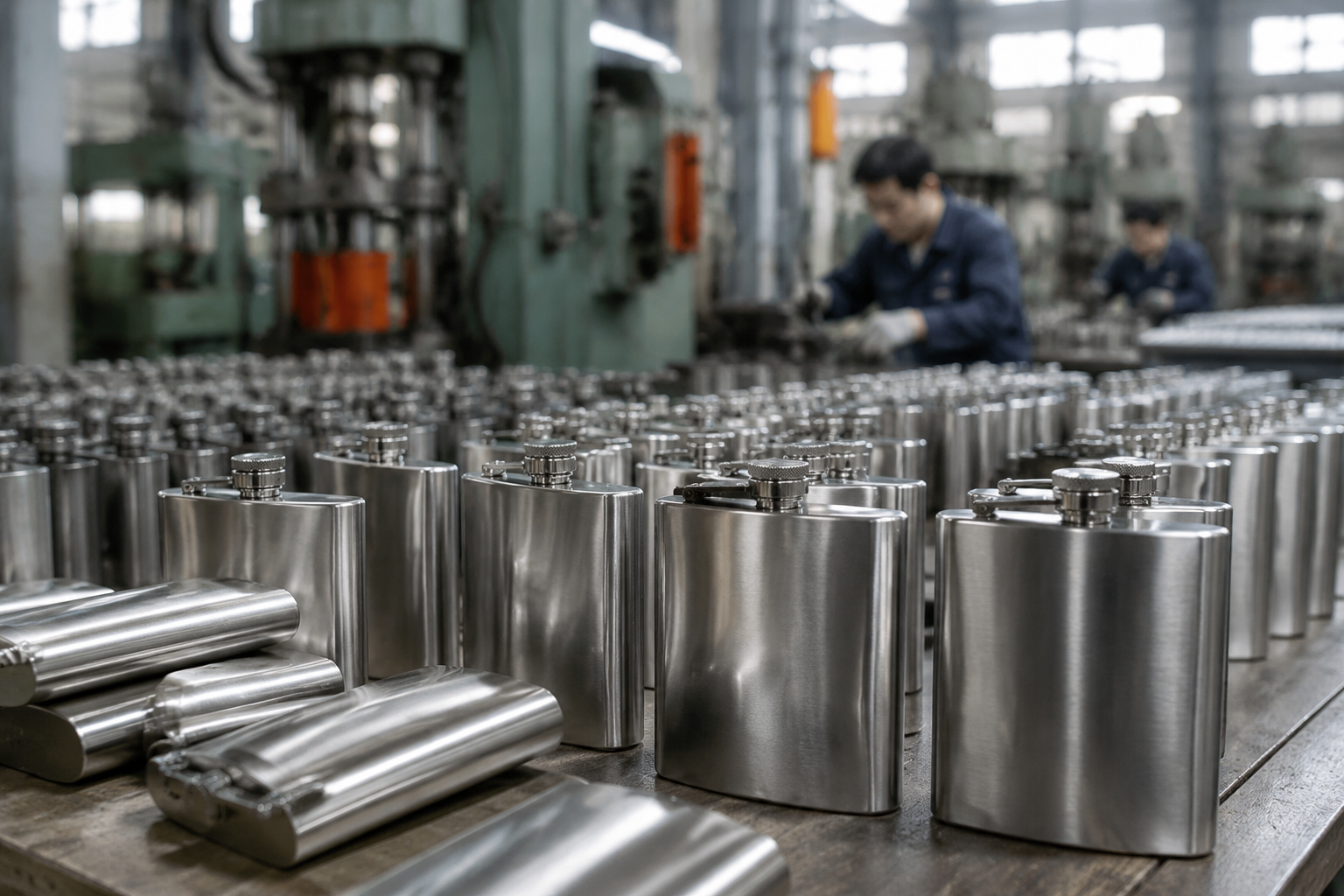
- A realistic alcohol flask wholesale bulk MOQ is often 3,000-5,000 units, with 35-45 days lead time after sample approval.
- 304 stainless at 0.5 mm is the safer default for premium flasks; 201 stainless can save 8-12% but is a weaker long-term play.
- Laser engraving usually adds about USD 0.20-0.45 per unit, while full-color print can be lower on large runs but needs tighter QC.
- For Europe and North America, ask for REACH, food-contact declarations, and AQL 2.5 inspection before you approve production.
If you want to alcohol flask buy in bulk, do not treat it like a simple SKU pick. It is a material call, a decoration call, a compliance call, and a packaging call. We’ve seen a buyer chase the lowest sample price, then discover the line could not hold 304 stainless at 0.5 mm, and the margin disappeared fast.
The cleaner move is to lock four items before you ask for a quote: size and closure, branding method, destination-market compliance, and whether the flask sits inside a wider drinkware program. In Zhejiang, a solid factory can run 80,000 to 120,000 units per month, but only if the spec is tight. If the PO still says “silver color” instead of a Pantone or a finish code, QC will pull the sample, the buyer will flag it, and the schedule slips.
Start with the use case
Before you ask for quotes, lock the use case. A spirits-brand giveaway and a retail flask sold through liquor shops do not carry the same margin, pack-out, or carton count. If the buyer wants alcohol flask in bulk, we need to know whether the end user is carrying a slim pocket flask, a wider hip flask, or a set with a funnel and gift box. That choice sets the mold, cap style, finish, and how much freight you burn per carton.
Size is where people get sloppy. We run 4 oz, 6 oz, 8 oz, and 8 oz with funnel as the common request, and the 6 oz sample usually wins for gift programs because the price sits in a workable zone. For travel retail or promo use, a 4 oz piece cuts carton weight and avoids the overspec packaging mistake we see on the line. The right question is simple: pick the use case first, then request pricing.
- Promotional flask: keep unit cost tight and get branding on fast.
- Retail flask: push finish quality and gift-ready packaging.
- Premium spirits set: pay for polish, leak resistance, and box presentation.
That call also tells you where the flask belongs in the catalog. If it sits beside bulk drinkware, bulk canteen, or other wholesale drinkware lines, we can combine freight, keep decoration consistent, and stop the buyer from splitting orders across three suppliers. QC pulled the sample, checked the 0.4 mm seam, and that is usually where the weak spec shows up.
Choose the right material
The material call is where margin slips away. For alcohol flask wholesale bulk, 304 stainless steel is the safe base case. It is food-contact friendly, holds up better against corrosion, and cuts down odor or taste transfer complaints. We’ve seen a buyer try to save on 201 stainless, then spend the next two months arguing over returns; the math does not work. If the quote gap is 8-12%, ask whether that saving survives freight, claims, and remake cost. For Europe and North America, 304 is the default unless the target retail is razor thin.
Wall thickness matters just as much as grade. A 0.5 mm flask feels firmer in hand and survives line handling better. Go down to 0.4 mm and you start seeing dents, seam warp, and cap-fit problems after transit. QC pulled a random sample on one line with a caliper, and the buyer flagged a 0.38 mm reading immediately. If you want a cleaner premium finish, ask for a brushed exterior, rolled edges, and a leak test at 30-50 kPa or an equivalent factory standard.
Material checklist
- 304 stainless steel for mainstream wholesale canteen and flask programs.
- 0.5 mm wall thickness for better rigidity and fewer dents.
- Food-contact declarations for the target market.
- Silicone or LDPE gasket only if your compliance file supports it.
In Zhejiang, solid factories send material certificates fast; the weak ones send a generic spec sheet and hope you stop asking. We run into this all the time. Ask for the mill cert, not a pretty PDF, and check the PO spelling against the sample label before production starts. You are not buying one sample. You are buying repeatability.
Branding changes the quote
Decoration is not cosmetic. It changes labor, yield, and lead time. On a 304 stainless flask, laser engraving is the cleanest route: it holds up, resists abrasion, and usually adds about USD 0.20-0.45 per unit, depending on logo size and fill rate. Screen printing can land cheaper on a 5,000 pcs run, but the line needs tighter registration, and we have seen the buyer flag scuffing after carton friction tests. If the client wants a gift item, a single-color print plus a matte box usually sells better than a shiny finish that looks low-grade in hand.
For alcohol flask bulk orders, match the branding method to the sales channel. Shipping to Amazon or DTC? A subtle engraving usually photographs better and cuts return risk. Doing event campaigns? A printed logo is enough, and there is no reason to overbuy decoration. We ship the same core flask to both channels, but we keep one PO note clear: do not mix logo methods on the same SKU unless the margin math is already checked.
Ask the factory to quote the same flask in three versions: blank, engraved, and printed. That usually shows where the margin sits, and it is the right question to ask before you chase a cheaper unit price.
Packaging matters too. A flocked insert, kraft gift box, or molded tray can add USD 0.35-1.20 per set, but it can move the product from commodity to giftable. QC pulled the sample at drop test because the insert was 2 mm too loose, so we tightened the tray spec before mass run. If you sell beer tumbler wholesale bulk or beer growler wholesale bulk alongside flasks, one packaging style across the line cuts artwork changes and keeps the assortment cleaner.
Check compliance before price
Compliance comes before unit price. That is the first filter. For Europe, ask for REACH alignment and a food-contact declaration that matches the actual flask build. For North America, check whether your buyer needs state-level food-contact paperwork or packaging labels for the target channel. If the flask has a coating, a printed logo, or a mixed-material cap, the test list gets longer fast. We’ve seen a simple 304 stainless order turn into four test points because the lid insert changed from PP to silicone.
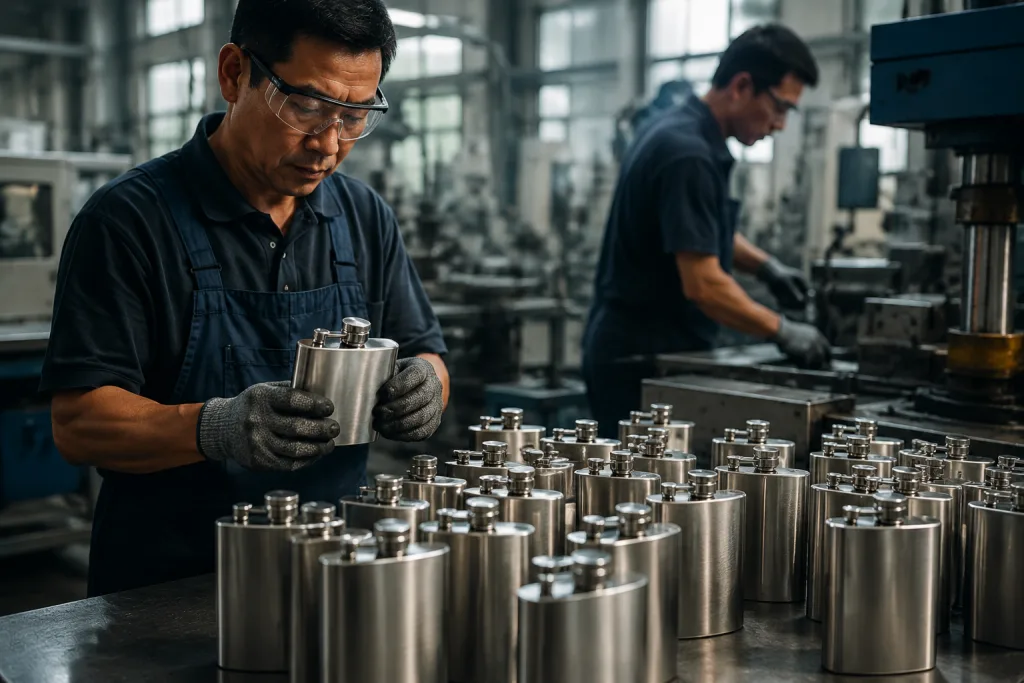
Get the inspection stack on paper before production starts. At minimum, the factory should support AQL 2.5 sampling, carton drop testing, and a leak test with a written record. QC pulled one batch at 50 pcs and found a slow seep at the cap thread; that saved a lot of rework. For private label, keep the file tight: product photo, spec sheet, packing list, declaration, and approved artwork. A typo on the PO can stall customs for a week.
- Europe: REACH, food-contact declaration, and traceability back to the batch.
- North America: label accuracy, packaging compliance, and retailer-ready paperwork.
- Private label: tie sample sign-off to the final production spec.
Factories in China that ship export orders every week already know these asks. The stronger ones in Zhejiang will show test history, batch traceability, and hold-and-release control on the line, not just say “yes.” That is the real divider. A trading desk can pass along documents; a factory can run the lot, stop the line, and fix the issue before the carton seal goes down.
Match MOQ to your channel
MOQ is not a supplier whim. It is a channel decision. A 3,000-unit MOQ works if you are funding a seasonal drop or a retail launch with signed-off distribution. Need mixed colors, mixed finishes, or three logo versions? The number moves fast. One flask body with three decoration files is three jobs on the line, not one order.
Our benchmark is 3,000-5,000 units for custom flask production, with 35-45 days after sample approval. If you want faster shipment, the factory will ask for a price bump or fewer decoration choices. We run this math every week. If you are also buying canteen wholesale or bulk canteen items in the same program, ask whether the factory can place both on one production calendar. That usually helps more than pushing the unit price.
Check repeat order support before you place the first PO. A factory that ships 100,000 pieces once is not automatically a good partner if it misses the color chip or engraving depth on the second run. QC pulled the sample here and found a 0.3 mm drift on the neck finish after reheating. If you expect reorder sell-through, ask for retained samples and a reorder tolerance band of ±5% on key dimensions.
Build the landed-cost model
I’m rewriting the section in place, keeping the HTML intact and tightening the cost math with more factory-floor detail. Next I’ll return only the cleaned HTML.FOB price is only the first line. When you buy alcohol flask wholesale bulk, the landed number also pulls in inner cartons, master cartons, freight, duty, testing, and the scrap rate nobody wants on the PO. A flask quoted at USD 2.10 FOB can land at USD 3.05-3.60 once you add packaging, freight mode, and inspection fees. That gap matters more than squeezing a few cents at the factory gate.
Build the sheet around landed cost per sellable unit. Add 1-2% for damage or rework if the shape is tricky. We once had a buyer push back on a 0.15 mm lid gap; QC pulled the sample, and the rework line ate the savings. If you are sourcing beer growler bulk or beer growler wholesale in the same container, let the mix absorb freight and compliance costs. Same for beer tumbler wholesale bulk and other wholesale drinkware programs: one container, shared testing, fewer surprises.
If you want a practical benchmark from a Zhejiang supplier, ask for:
- FOB unit price at 3,000 and 5,000 pieces.
- Tooling or setup charge, if any.
- Packaging upgrade cost per unit.
- Production lead time and sample lead time separately.
That breakdown tells you more than a polished quote sheet. It also lets you compare alcohol flask bulk against other drinkware bulk programs without mixing the numbers. One typo on the PO can turn a clean margin into a headache fast.
Request a flask quote with real specs
Send your size, material, decoration, and target market. We’ll price the order cleanly and tell you where the hidden costs sit.
Frequently asked questions
What MOQ should I expect for alcohol flask buy in bulk?
For custom alcohol flask buy in bulk orders, a practical MOQ is often 3,000 to 5,000 units per design and decoration method. If you want multiple colors, mixed packaging, or multiple logos, the effective MOQ usually rises. Sample lead time is commonly 7-10 days, and bulk lead time is often 35-45 days after approval. For a factory in Zhejiang or elsewhere in China, ask whether the MOQ is based on one body style or one finished SKU, because that changes your real buying flexibility.
Is 304 stainless always worth the higher price?
In most alcohol flask wholesale bulk programs, yes. 304 stainless usually gives you better corrosion resistance and fewer taste-transfer complaints than 201 stainless. The price gap is often 8-12%, but the quality gap shows up later in returns and retailer complaints. If the flask is for Europe or North America, 304 at 0.5 mm wall thickness is the safer default. Only drop to a lower grade if the buyer accepts the risk and the market is extremely price-driven.
Which decoration method is best for wholesale drinkware flasks?
Laser engraving is the cleanest choice for most wholesale drinkware flasks because it is durable and looks premium. Expect roughly USD 0.20-0.45 per unit depending on logo size and complexity. Printing can be cheaper on large runs, but it is easier to scratch and may need stricter QC. If the flask is part of a gift set or premium spirits program, engraving usually wins. If the order is promotional and price-sensitive, one-color print can make sense.
How do I check quality before shipping?
Ask for a pre-shipment inspection using AQL 2.5 for major defects, plus a leak test and carton drop test. Request retained samples from the approved stage, not just a pretty sample. For alcohol flask in bulk orders, check seam finish, cap fit, gasket seal, logo placement, and packaging compression. If your supplier in China cannot show batch traceability, skip them. Good factories in Zhejiang will provide inspection photos, lot numbers, and a signed packing record.
Can I combine flasks with other drinkware bulk items?
Yes, and it is often smart. If you are also buying bulk canteen, bulk growler, or beer tumbler bulk items, you can combine sourcing, testing, and freight planning to lower your landed cost. The trick is to keep each SKU’s spec separate so the factory does not mix packaging or decoration standards. This works especially well when the same supplier handles canteen wholesale, growler wholesale, and alcohol flask wholesale bulk under one export program.