Key Takeaways
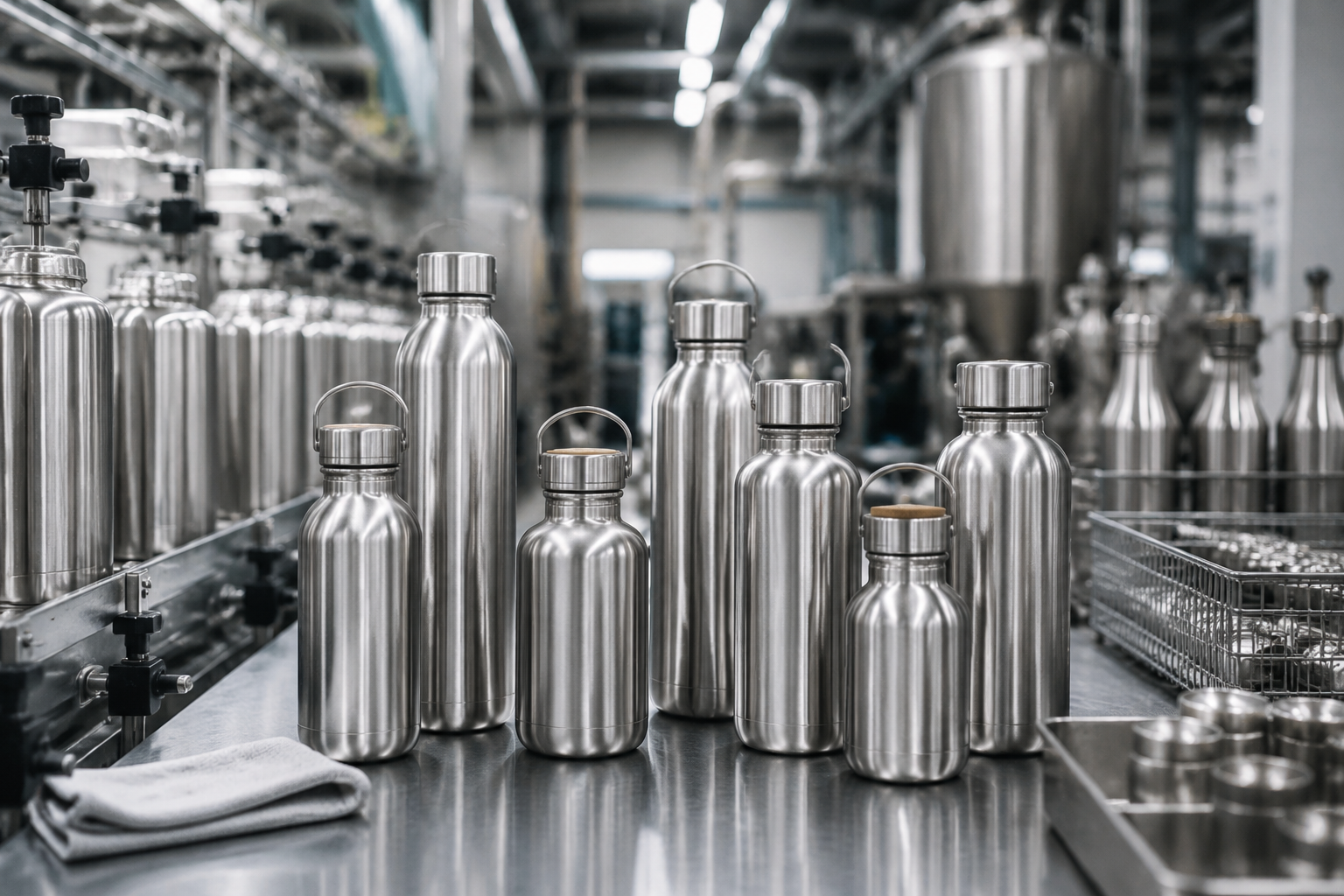
- Typical 316 stainless steel water bottle private label pricing starts around USD 3.20-4.80 FOB for 500 ml at 3,000 pcs, before freight and duties.
- Most canteen custom projects move from 3,000 pcs MOQ to 5,000 pcs once you add a new mold, special lid, or full-color packaging.
- Standard production lead time from confirmed artwork to ready cargo is usually 25-35 days, with 7-10 extra days for complex packaging.
- 316 grade usually adds 10%-25% over 304, but it helps when you need higher corrosion resistance for salty drinks, sports use, or premium retail positioning.
If you are buying a 316 stainless steel water bottle private label program, the real question is not whether the bottle looks premium. The real question is whether the landed cost, MOQ, and lead time fit your channel. In Europe and North America, we keep seeing buyers get caught by vague quotes that skip lids, packaging, certification, and freight. That is where the math breaks.
At our Zhejiang factory, this comes up every week: a buyer sends what looks like a simple custom drinkware request, then finds the price can move 15% to 40% once we lock in finish, capacity, and decoration method. QC pulled a sample with a 0.3 mm lid gap last month, and the buyer flagged it before we shipped. 316 stainless is still straightforward if you break it into the right parts. Once you know the cost drivers, a canteen manufacturer or canteen supplier in China can quote cleanly, and you can see if the margin still works for your private label line.
What Actually Drives Price
I’ll rewrite the section in place, keep the HTML tags untouched, and tighten the sales-engineer voice with concrete factory detail and cleaner pricing logic.The more custom drinkware variables you add, the less useful “factory price” becomes as a comparison tool. Ask for the exact wall thickness, lid material, and finish. A 0.45 mm body and a 0.50 mm body do not behave the same on the deep-draw press, during polishing, or in thermal testing. If a canteen supplier gives you one number without those specs, that is not a quote; it is a placeholder.
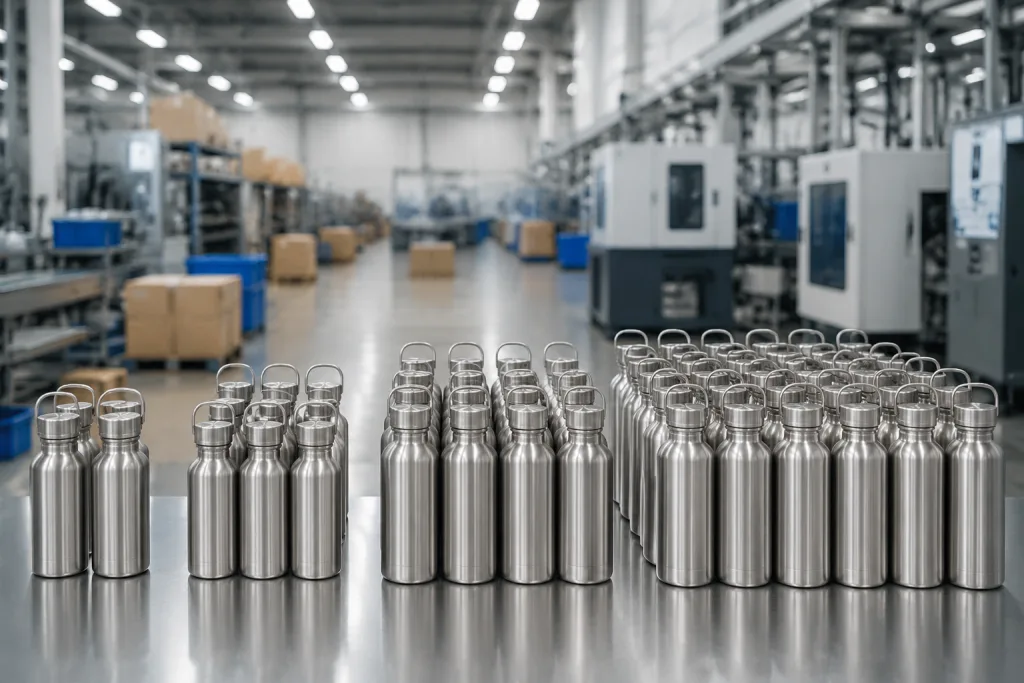
For a serious private label project, compare cost by version, not by headline price. The same canteen in brushed steel, powder coat, and UV print can differ by USD 0.60-1.20 per piece before freight. That spread can wipe out a 3-point gross margin if you sell wholesale. We see this all the time on the line. At our Zhejiang factory, we run more than 200,000 units per month across stainless drinkware, so QC can split prototype pricing from mass-run pricing without guessing.
MOQ Tiers That Make Sense
If you are testing the market, a canteen supplier that supports mixed-color cartons or shared packaging can save you from overbuying. We once had a buyer push for 300 pcs split across four colors, and the carton label got messy on the line. Too much flexibility cuts consistency fast. A real canteen factory will tell you the tolerance limits and where they stop. That honesty beats a low starting price.
Lead Time By Order Size
For urgent runs, ask whether the factory keeps stock shells or neutral lids. We run this every week: a canteen vendor with reserved inventory can cut 5-7 days off the schedule, and on a 3,000-piece order that is the difference between shipping before a promo date or missing it. That is the right question to ask when a distributor canteen channel is waiting on replenishment, or a seasonal launch has already been booked with the buyer.
Build Choices That Change Margin
There is margin logic here. We ran a 316 sample with a 0.6 mm body and a heavier lid, and the buyer accepted the higher shelf price because the bottle looked and felt like the spec matched the claim. A canteen buyer can sell that story, but a cheap-looking custom drinkware piece with premium wording gets flagged fast. QC pulled the sample on our line before packing, and that was the right call.
Testing And Compliance Costs
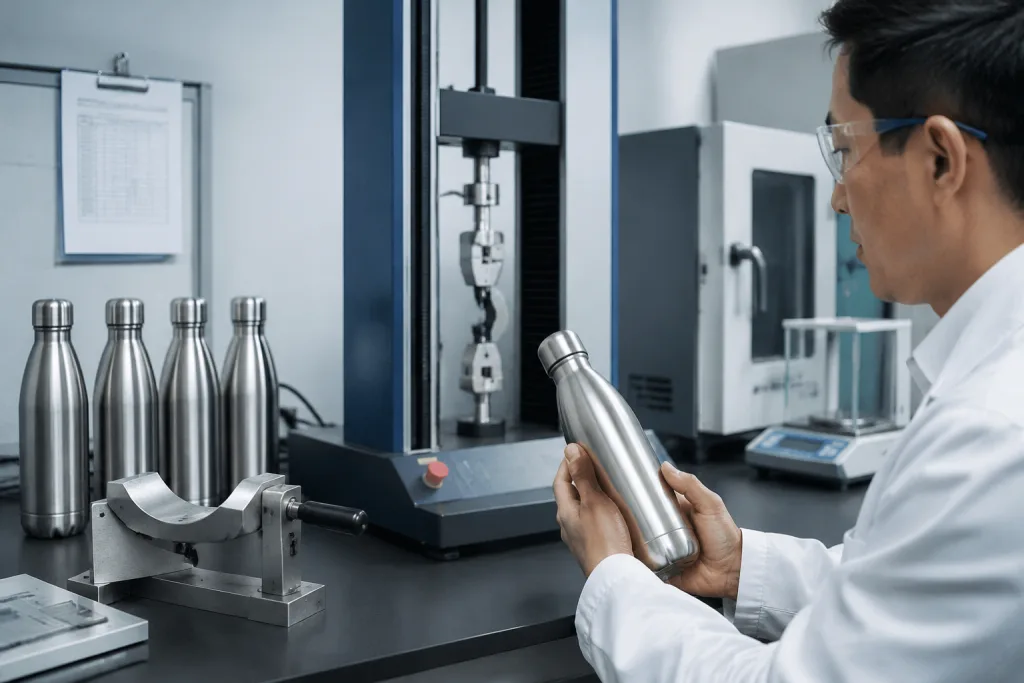
Ask for pre-production samples, final golden samples, and a written defect standard. We run this on every private-label bottle job, because a 2 mm print shift or a loose lid will turn into a buyer complaint on the second PO. It keeps the spec fixed when you reorder, and it saves arguments when QC pulled the sample and the buyer flagged it at the last minute.
How To Quote Like A Buyer
A tight RFQ makes price checks across China usable. We run it that way on the line: if the buyer sends a clean spec, the quote tells you who can hold 316 stainless steel, hit the 15-day ship window, and keep the same print on reorder. Cheap is the wrong question to ask. The real test is whether the supplier can repeat the job without a PO typo turning into a carton problem.
Send your spec for a real quote
We’ll price your bottle by MOQ, finish, and timeline so you can judge margin before you commit to production.
Frequently asked questions
What certifications should I ask for?
For Europe and North America, ask for food-contact compliance documentation, REACH support, and an inspection standard such as AQL 2.5 for major defects. Depending on the market, LFGB, ASTM-related testing, or migration tests may also be needed. If you sell through Amazon, barcodes, carton marks, and FNSKU labels should be confirmed before production. A serious canteen factory in Zhejiang should know which documents apply and should not treat compliance as an afterthought. If they cannot explain the testing path, that is a warning sign.