Key Takeaways
- 316 stainless steel typically costs 8-18% more than 304, but it is worth it for salty, acidic, or high-sweat use cases
- A realistic MOQ for a custom canteen is 1,000-3,000 pcs per design, with 25-35 day lead time after sample approval
- Ask for material certificates, AQL 2.5 inspection terms, and REACH or FDA-relevant test reports before PO
- A reliable canteen manufacturer in Zhejiang should show 300,000+ units/month capacity and clear OEM artwork control
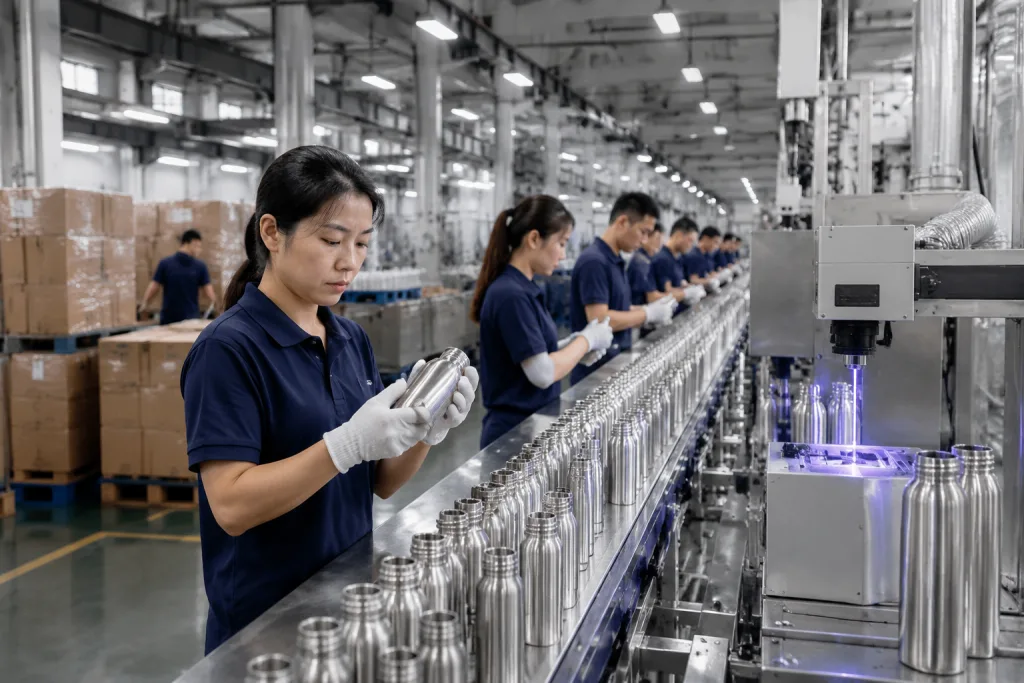
If you are sourcing a 316 stainless steel water bottle manufacturer, you are not buying a “nice bottle.” You are trying to cut refund risk, avoid taste complaints, and keep the same spec across the second and third order. That is the real question: can the factory show alloy traceability, finish control, and export paperwork that holds up when QC pulls the sample at random?
In Zhejiang and across China, plenty of suppliers say they make custom drinkware. On the line, the difference shows up fast: wall thickness drift of 0.2 mm, a cap that sits off by 1.5 mm, or a coating that starts flaking after the salt-spray check. If you buy for a brand, distribution network, or retail program, you need a canteen factory that understands MOQ, FOB pricing, REACH, and repeat order consistency. The buyer flagged a typo on the PO once, and the wrong spec still went into production. That is how a simple custom project turns into rework.
What 316 actually buys you
Buyers often hear 316 stainless steel and think it is just a sales line, but the metallurgy does the work. 316 has molybdenum, which lifts corrosion resistance in chloride-heavy use. If the bottle goes to coastal crews, sports teams using electrolyte drinks, or humid warehouses where caps stay damp for hours, 316 gives more margin than 304. It will still pit if the care is poor. It only reduces the risk when the bottle sees hard use.
That matters in B2B orders because the first complaint is usually not a leak or a cracked shell. We see metallic taste, finish haze, or rust-like spots after 90 days, and the buyer flags it fast. A serious canteen supplier should state the steel grade for the body, lid insert, and any liquid-contact part one by one. Do not accept vague “18/8” wording if the bottle is going into premium retail or corporate gifting. If your end customer drinks citrus water, electrolyte mixes, or coffee, a 316 stainless steel water bottle manufacturer is the safer call.
- Body grade: confirm 316, not just “food grade stainless steel.”
- Lid parts: check whether silicone, PP, or Tritan touches the liquid path.
- Finish: powder coat, polished, or brushed changes scratch behavior and perceived value.
- Use case: salty, acidic, or outdoor use justifies the upgrade.
Can this factory really scale?
I’m rewriting the section to sound like a factory-side sales engineer: sharper numbers, fewer filler phrases, same HTML structure. Next I’ll tighten each paragraph and keep the list intact.Checklist before you place PO
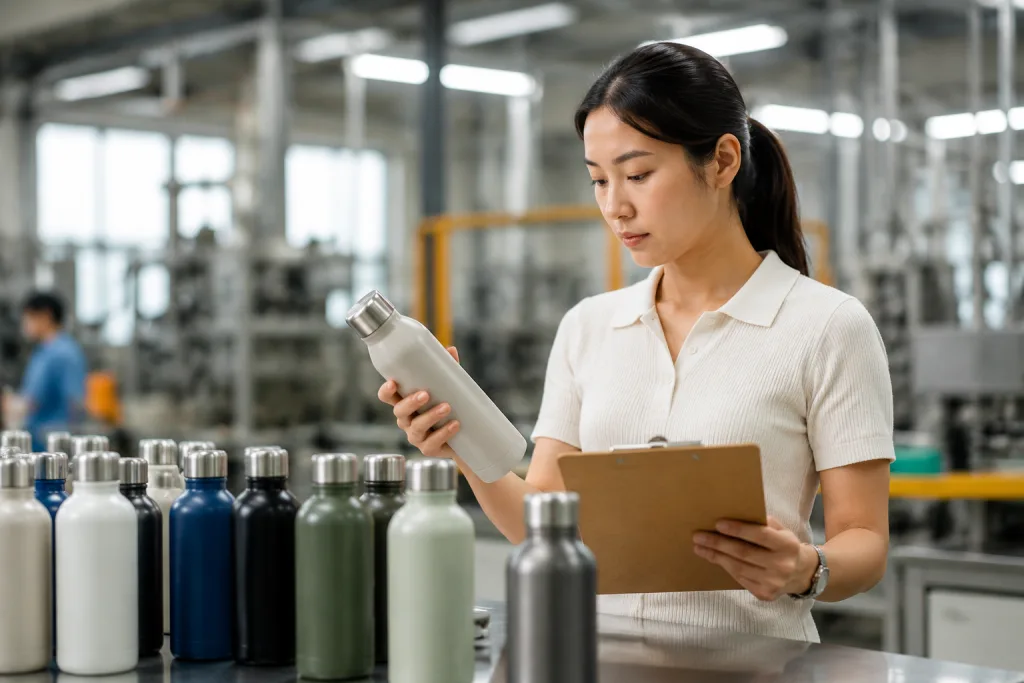
Before you release a purchase order, run a short checklist. A lot of custom drinkware deals are won or lost at this point. You do not need a 20-page audit. You need hard proof that cuts down surprises. Ask for steel certificates, exact capacity, print method choices, and inspection terms in writing. If the factory dodges those questions, that tells you enough.
For custom canteen work, the real test is whether the supplier can keep the sample and bulk order aligned. Check wall thickness, neck finish, and insulation performance if the bottle is vacuum-sealed. We have seen a buyer flag a PO typo on capacity before, and that kind of mistake turns into scrap. Single-wall stainless canteens often sit around 0.4-0.6 mm on the wall, while vacuum structures need to match the drawing, not a salesman's memory. If you are buying canteen promotional stock, confirm carton count, drop-test targets, and whether FNSKU or retail labels are required. A canteen factory that knows the line should also know how to keep decorated surfaces from scuffing in transit.
- Material proof: request mill certs or equivalent traceability.
- Compliance: ask for REACH, LFGB, or FDA-relevant reports where needed.
- Inspection: specify AQL 2.5 for major defects unless your program requires tighter control.
- Packing: verify inner box, master carton, and barcode placement before production.
How custom should your custom be?
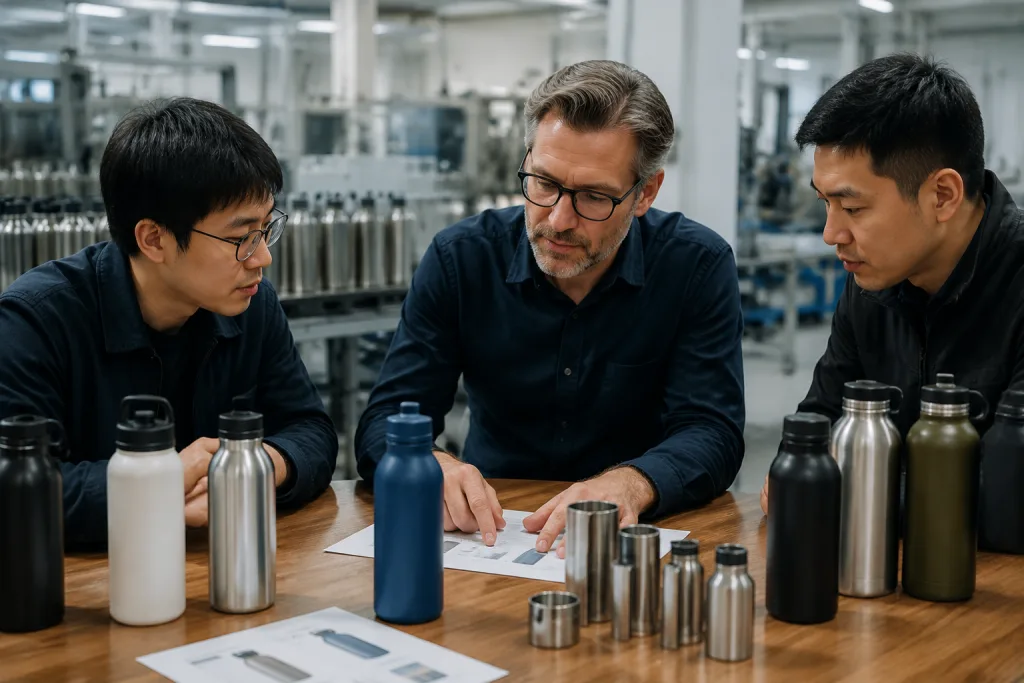
There is a clear gap between a custom canteen and a canteen that is only custom-printed. If you need a logo on a standard body, we ship faster and the unit cost stays sane. If you want a special lid, a new color, or a shaped body, the job turns tooling-led fast. We have seen buyers miss that point by two weeks and one extra mold fee. A canteen can look retail-ready and still fail a distributor program if the decoration area is too small or the cap starts leaking after 200 open-close cycles.
For private label, the better suppliers give you levels, not slogans. Pick from three bottle bodies, then set the finish, logo, and carton spec. That usually beats full mold work on MOQ and keeps the line moving. A custom growler or customizable growler follows the same rule: logo first, structure second, tooling last. In Zhejiang, plenty of canteen vendors can handle silk screen on a 1,000 pcs order; far fewer can keep mold edits clean without turning the PO into a mess. Ask for the drawing before approval, not after. If the sales rep cannot tell you the difference between silk screen, laser engraving, and heat transfer, the buyer already has a problem.
Good customization is controlled variation, not invention for its own sake.
What price should you expect?
Price comes down to steel grade, finish, capacity, and decoration. For a basic vacuum bottle made from 316 stainless steel, FOB China pricing usually starts around USD 4.20-6.50 for simple builds at 1,000-3,000 pcs. A 500 ml body with a standard PP lid sits near the low end; a brushed shell, 18/8 inner, or a tighter AQL 2.5 pack adds cost fast. Add more for a complex lid, double-wall vacuum structure, laser engraving, or premium packaging. We’ve seen buyers push for a USD 3 quote here, and the math does not work unless somebody is cutting on steel grade, insulation, or carton count. A serious canteen vendor should break out bottle cost, lid cost, decoration cost, and box cost separately.
For distributor drinkware programs, compare landed cost, not just FOB. Ocean freight, duties, and carton efficiency can move margin more than a 20-cent factory gap. On one 40HQ job, QC pulled the sample carton at 48 pcs and the buyer saved more on freight than they gained from haggling the bottle by a few cents. A better canteen supplier will help you tighten carton count and pallet loading so freight per unit drops. If you are sourcing canteen manufacturers across China, make sure they quote the same spec sheet. Otherwise you are comparing two different bottles with the same marketing name.
- Simple 316 vacuum bottle: USD 4.20-6.50 FOB at mid-volume.
- Special lid or gift box: add USD 0.40-1.20.
- Laser logo: faster and cleaner for premium sets.
- Full custom tooling: higher upfront cost and a longer validation cycle.
Which buyers need 316 most?
Not every buyer needs 316. If your end users are office staff and the bottle is just a daily water carrier, 304 is usually enough. If you sell to outdoor brands, food-service channels, wellness programs, or coastal markets, 316 is easier to justify in the sales room. It also gives you a cleaner premium story without jumping to glass. We see canteen distributors treat 316 as an upsell line once the customer asks about salt spray, taste retention, or after-sales complaints.
Think by channel, not by slogan. Corporate gifting wants a clean lid fit and low return rates. Amazon sellers care about review damage and carton damage, so we check drop tests and tray packing on the line. Retail distributors care about repeat orders and label accuracy. A canteen distributor planning shelf life should ask whether the factory can keep the same coating sheen and print position across multiple runs; if not, the buyer will flag it the second carton. We shipped one program where the PO typo changed the logo placement by 3 mm, and the math did not work for the repacking cost. That is the real cutoff between a one-time order and a program that keeps moving.
- Best fit: premium outdoor, fitness, travel, and gifting programs.
- Less critical: low-price office giveaways with a 6- to 12-month use cycle.
- Watch-outs: salty drinks, dishwasher cycles, and cap corrosion tests with 24-hour soak checks.
- Channel fit: retail and distributor canteen programs need repeatable decoration and stable MOQ control.
Request a quote from Zhejiang today
Send your spec, target MOQ, and market. We will quote the right grade, decorate it cleanly, and keep the production plan realistic.
Frequently asked questions
What MOQ should I expect from a 316 stainless steel water bottle manufacturer?
For a standard private-label bottle, expect 1,000-3,000 pcs per SKU and color. Some canteen manufacturers in Zhejiang will accept 500 pcs for stock models, but custom tooling, special lids, or unique packaging usually pushes MOQ higher. If you need mixed sizes in one program, ask whether the factory counts each size separately. That detail changes your cash flow fast. A good supplier will also tell you whether the MOQ includes logo setup, carton printing, and inspection cost. Hidden setup fees are common on canteen custom orders, especially when artwork changes after sampling.
How long is the lead time for bulk production?
For a standard 316 stainless steel vacuum bottle, production usually takes 25-35 days after sample approval and deposit. If you add new tooling, multi-color coating, or special packaging, plan for 40-55 days. During peak seasons, Chinese factories may need another week for raw-material allocation and shipping booking. Ask your canteen supplier whether sample approval is done with a pre-production sample or only a decorated blank. That affects the real clock. For distributor drinkware programs, build in buffer time for carton testing and label review before mass production starts.
What documents should I request before ordering?
At minimum, request a product spec sheet, material declaration, test reports for the relevant market, and a packing list with carton size and gross weight. If your brand sells into Europe, ask for REACH-related documentation and, when relevant, LFGB support. For U.S. channels, check whether the supplier can support FDA-relevant material claims. A serious canteen factory should also provide order confirmation with AQL terms, decoration method, and shipment terms such as FOB Ningbo or FOB Shanghai. If they cannot give you these in writing, you are taking on avoidable risk.
Is 316 always better than 304 for custom drinkware?
No. 316 is better in corrosion resistance, but it costs more and does not solve every problem. If your product is a low-price promotional item, the customer may not pay for the upgrade. For a canteen promotional order, 304 may be enough if the use is light and the price target is tight. Choose 316 when the bottle faces salt, acids, repeated washing, or premium positioning. The smart move is to match the alloy to the use case, not the brochure language. Many canteen suppliers oversell 316 when the real issue is cap design or poor coating.
Can one factory handle custom canteen and custom growler projects?
Yes, if the factory has separate forming and finishing control for each SKU family. A capable canteen manufacturer can run both custom canteen and custom growler programs, but you should not assume the same tooling works for both. Ask for drawings, capacity by line, and whether they can support customized growler or customizable drinkware projects with different closure systems. If you are a distributor canteen buyer, also ask about carton strength and pallet stacking. Growlers are heavier, and failure rates rise when packaging is designed like a standard bottle. The right canteen vendor will explain that upfront, not after the first damage claim.