Key Takeaways
- 316 stainless steel bottles often add 10% to 25% over 304, depending on finish and lid.
- Typical MOQ starts at 1,000 to 3,000 units per SKU, with mixed colors raising the floor.
- Standard lead time from a Zhejiang canteen factory is usually 25 to 40 days after sample approval.
- Tooling, decoration, and packaging can swing FOB price by USD 0.35 to USD 1.80 per unit.
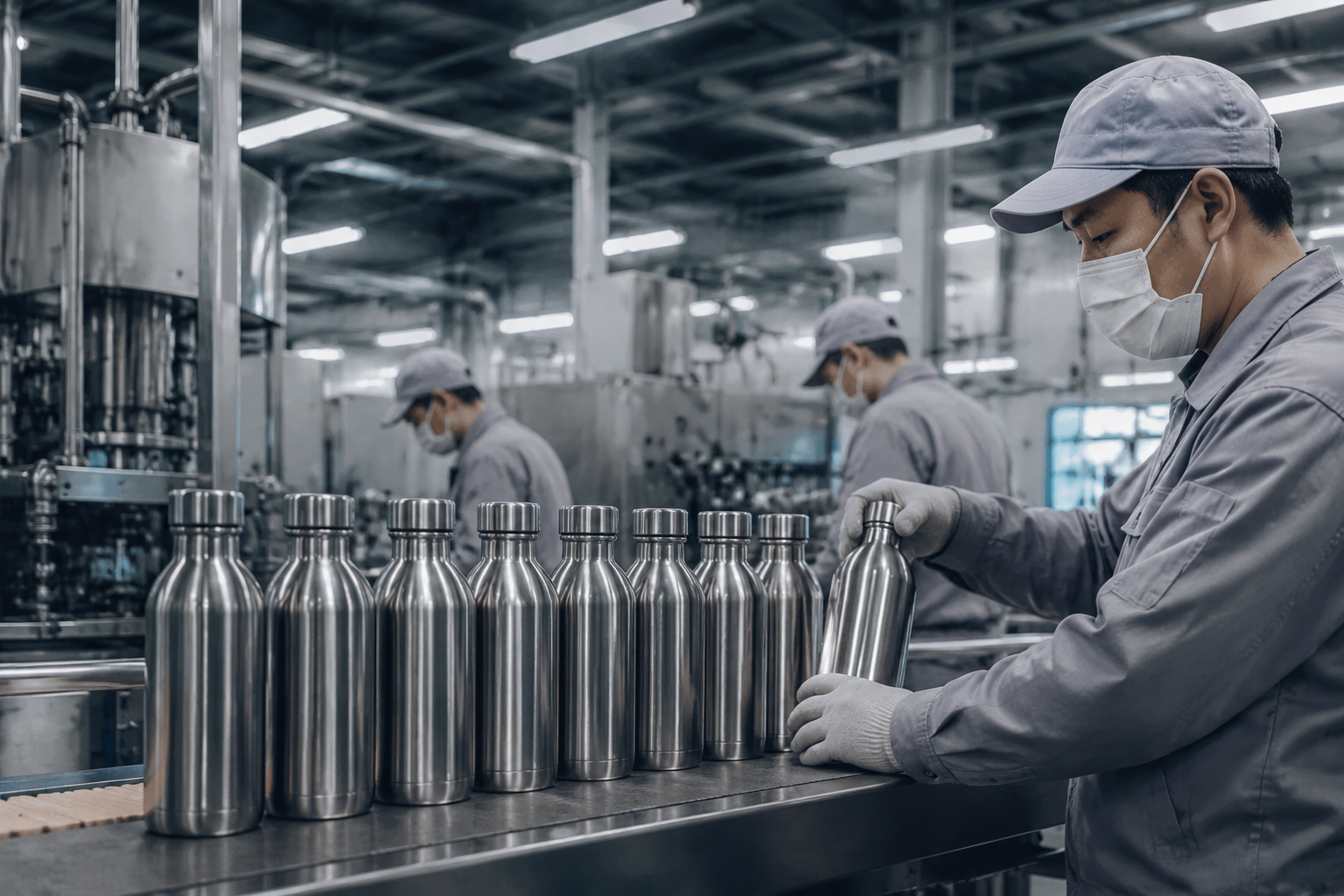
If you are buying from a 316 stainless steel water bottle factory, the real question is not whether 316 is better than 304. It usually is. The question is whether the premium works for your channel, your margin, and your lead time. In Zhejiang and across China, we see factories quote 316 as a feature, but the landed cost still moves with wall thickness, lid type, decoration, and how many SKUs you split across.
That matters because one change on the line can swing the whole offer: a 0.4 mm thinner liner, a food-grade silicone seal, or a laser logo instead of a 2-color silk screen. QC pulled a sample last week at 18 oz and the buyer flagged a typo on the PO, so this is not a theory exercise. If you are a canteen distributor, brand owner, or procurement manager, you need numbers, not brochure talk. This guide breaks down typical factory pricing, MOQ tiers, and realistic production windows so you can buy custom drinkware without getting trapped by vague quotes.
What 316 actually changes
316 stainless steel is not a magic upgrade, but it is a real one. The difference comes from molybdenum in the alloy, and that improves corrosion resistance in salty water, acidic drinks, and chemical-heavy use. If the bottle goes into sports hydration, outdoor retail, marine channels, or premium corporate gifting, that extra resistance protects your brand when a lid rust spot or liner stain would trigger complaints.
On a normal bottle spec, the inner wall is often 0.4 mm to 0.5 mm thick, with 18/8 on the outer shell and 316 on the liner for higher-end SKUs. We run this kind of spec on the line a lot, and the buyer usually asks for a material upgrade first. That is the wrong question to ask. Ask for the test basis, the REACH file, and food-contact declarations, then check whether the factory can trace each heat number back to the coil; if they cannot, the 316 claim is just a sales line, not a controlled spec.
Practical rule: pay for 316 when the bottle is a true premium item or when the use case is corrosive. For office, school, and everyday promotional drinkware, 304 usually does the job and keeps the margin intact.
Factory price drivers you pay for
FOB price is not driven by stainless steel alone. The raw coil is one slice of the bill. On a custom canteen, the real swing comes from lid structure, vacuum draw, finish loss, and print method. A plain powder-coated bottle with a basic screw cap sits in one cost band. Add a folding handle, tea infuser, or dual-lid setup, and the quote jumps fast. We see that on the line all the time.
- Material grade: 316 liner usually adds USD 0.20 to USD 0.60 per unit over 304.
- Lid structure: PP cap, bamboo cap, or leakproof sports lid can differ by USD 0.15 to USD 0.90.
- Decoration: laser engraving often costs less than multi-color print at higher MOQs, but setup still matters.
- Finish: matte powder coat, metallic paint, or gradient spray raises scrap risk and labor time.
- Packaging: plain kraft box versus printed retail carton can add USD 0.12 to USD 0.70.
If you are checking a canteen supplier quote, ask for a cost split by bottle body, lid, print, and carton. That shows where the factory makes money and where you still have room to push back. A good canteen vendor will lay out the structure instead of hiding it in one number. We had a buyer flag a PO typo once and the carton price was off by USD 0.08; small mistake, real money. In Zhejiang, the stronger factories expect that question from professional buyers anyway.
MOQ tiers that actually work
Most buyers ask for a “small trial order,” then find out the factory minimum is not a favor. It comes from line setup, color batching, carton packing, and lid assembly. On a 316 stainless steel water bottle line, MOQ changes with how far you move from the standard spec.
Typical tiers look like this:
- 1,000 to 2,000 units: standard shape, one color, one logo method, usually for repeat buyers or simple canteen custom jobs.
- 2,000 to 3,000 units: multi-color finish, custom lid, or retail box, common for canteen promotional programs.
- 3,000 to 5,000 units: full OEM build with special tooling, deep-draw body changes, or a customized growler spec.
If you are a canteen distributor testing a new market, do not push three SKUs into one PO unless the factory already keeps shared parts on hand. We have seen 1,500 units split into three colors cost more than one color at 1,500, because setup time and scrap both rise. The buyer flagged it, and the math did not work. A canteen manufacturer in China will often take a lower MOQ if you reuse molds, lids, and cartons, but unit cost will still move up by USD 0.30 to USD 1.00. That is normal.
For distributor drinkware programs, the cleaner play is one core bottle and one logo method, then add colors after the first sell-through. That keeps inventory tight and cash moving. On our side, QC pulled the sample on a 38 mm lid run and the carton label had one typo; the order still shipped, but that kind of miss is why we keep the first batch simple.
Lead time from sample to shipment
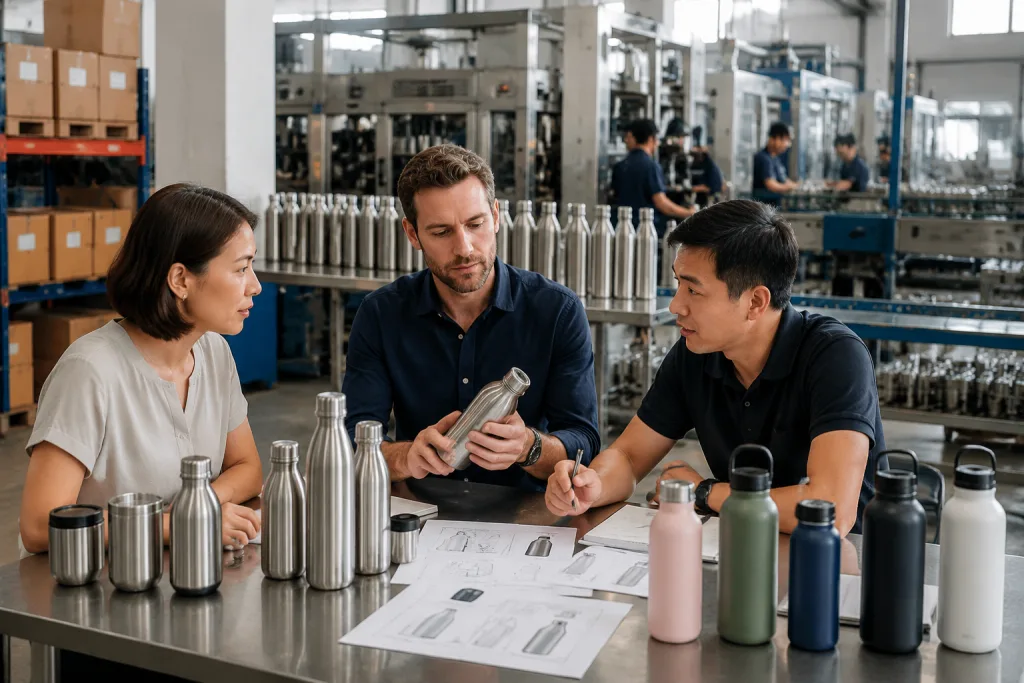
Lead time is where a lot of importers lose margin. We’ve watched a nice unit price turn ugly because the finish batch missed the target, the lid color came in 2 mm off, or the insert got reprinted after the buyer flagged a typo on the PO. A Zhejiang factory with real line control gives you a tighter path.
Typical timing for a custom drinkware order:
- Sample development: 5 to 10 days for stock-based samples, 10 to 15 days for new artwork or lid changes.
- Sample approval to production: 3 to 7 days after you confirm specs, artwork, and carton text.
- Mass production: 18 to 30 days for standard 316 bottles, 30 to 45 days if tooling or special coating is involved.
- Inspection and loading: 2 to 5 days for AQL inspection, carton drop testing, and export booking.
For a canteen factory with steady capacity, monthly output can run 300,000 to 500,000 units across multiple bottle lines, but your order still sits behind other confirmed jobs. Ask if your slot is locked or just “planned.” That one word matters. If you need a faster ship, take existing bottle shapes, existing cap molds, and a single-color logo. We’ve seen that cut 7 to 12 days from the schedule.
Ask for the ship date in writing, not just the production date. This is the wrong question to ask if you ignore freight. Ocean freight from Ningbo or Shanghai still adds 18 to 35 days to North America or Europe, depending on the route.
Decoration choices and hidden costs
Your logo choice changes more than appearance. It changes setup, scrap risk, and whether the order makes sense on the line. For custom drinkware, the cheapest quote can turn into the most expensive finished order when the decoration does not match the bottle surface or the buyer pushes for a finish the factory cannot hold.
Common decoration options on a canteen custom program include:
- Laser engraving: durable, clean, and a good fit for a brushed steel finish; works best for small logos under 40 mm.
- Silk screen: better for simple one- or two-color branding; QC will check curing, and the buyer often asks about scratch resistance.
- Heat transfer: suitable for full-wrap artwork, but the surface prep has to stay tight from the first sample to mass run.
- Embossed or debossed mark: looks strong on a custom canteen, but it can mean tooling and a higher MOQ.
The hidden costs usually sit in artwork prep, jig setup, and rework. We have seen a full-wrap print need color proofing, a test run, and a second proof after the customer changed one Pantone callout; that can add USD 80 to USD 200 before unit pricing even starts. If the PO has a typo or the logo file is wrong after approval, you pay again. That is factory policy, not a penalty.
For distributor canteen programs, pick one decoration method across the line if you want stable replenishment. Mixing laser, print, and embossing in the same order slows QC and creates packaging mistakes; we have seen a pallet lose a day because one carton label matched the wrong finish. If the goal is faster turnover, keep the branding system simple. Simple sells.
How to compare factory quotes
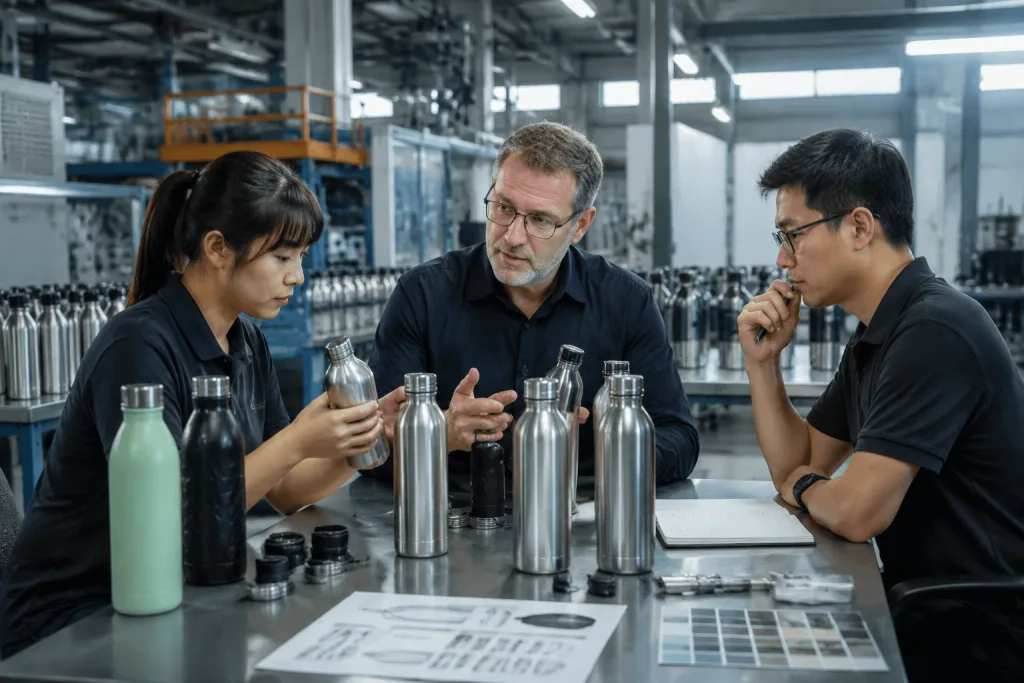
I’m rewriting the section in place and keeping the HTML exactly as-is. I’ll tighten the sales-engineer tone, add a few concrete factory-floor details, and strip the AI-style filler.Do not compare quotes line by line unless the spec is exactly the same. One cup maker may price a 0.4 mm liner, another a 0.5 mm liner. One quote includes a leak test and export carton; another leaves both out. That is how a buyer thinks they saved USD 0.18 and then eats USD 1.20 in defects and rework.
Use a simple buying checklist:
- Confirm material grade: 316 inner wall, 304 outer shell, and ask for the mill certificate, not a verbal promise.
- Confirm testing: vacuum retention, leak test, drop test, and food-contact compliance such as REACH or ASTM-related requirements if your market asks for them.
- Confirm quality standard: AQL 2.5 is common for major retail orders, but some buyers push tighter limits on logo alignment and cap torque.
- Confirm trade terms: FOB, not just factory gate, so the landed math is real.
- Confirm packaging: master carton count, inner box, barcode, and whether FNSKU labeling is needed for Amazon or warehouse programs.
If you need a canteen distributor program or distributor drinkware rollout, ask the factory to quote three versions: value, standard, and premium. That gives you a clean margin map. On our line, we can show the delta fast: a 0.8 mm cap ring, a basic sleeve, or a printed gift box changes the quote more than most buyers expect. If the offer still hides gasket material, logo method, or carton count, this is the wrong question to ask. You are not getting a clean offer. You are getting a sales pitch.
For higher-volume buyers, the strongest negotiation point is repeat order potential. A factory will often shave the first order by USD 0.10 to USD 0.25 if it sees a clear quarterly forecast. We’ve seen this go sideways when the PO typo cuts the re-order schedule in half, and then the buyer loses the ship date instead of winning a lower unit price.
When to use custom growlers
I’m rewriting the section in-place, keeping the HTML structure and tightening the sales-engineer tone. I’ll preserve the topic and add a few factory-floor specifics without changing the tags.A lot of buyers search for custom growler or customizable growler when they actually need a premium steel container with a stronger retail feel. That’s fine. The real question is channel fit. A growler-style bottle works for craft beer promotions, outdoor shops, hospitality gifting, and premium sports programs.
For a customized growler, the price climbs because the mouth opening, cap system, and wall geometry are heavier than a standard bottle. We usually see FOB from USD 3.20 to USD 6.80, depending on size, handle, finish, and packaging. Add 316 steel, laser logo, and a retail-grade box, and the order moves into premium territory fast. QC pulled the sample on a 76 mm mouth model last week, and the buyer flagged the lid feel before we packed the carton.
Use this product type when your buyers care about presentation and repeat use. If you need disposable promotional volume, this is the wrong shape. If you need a custom drinkware line for retail shelves, a growler can create strong perceived value. Keep the spec disciplined: one body size, one handle style, one lid family. That keeps spare parts simple and cuts after-sales headaches. We’ve seen this go sideways when a PO typo split the cap code into two versions, and the line had to stop for rework. In China, the factories that handle this well are usually the ones that already run both canteen manufacturers and broader custom drinkware programs for export.
If you want to test the market, start with 1,000 to 1,500 units and one decoration method. A small clean launch beats a large messy one every time.
Request a factory quote with real specs
Send your size, lid, logo, and target MOQ. We’ll price the bottle honestly and map the lead time before you commit.
Frequently asked questions
What is the FOB price for a 316 stainless steel water bottle factory order?
For a standard 500 ml or 750 ml bottle, FOB pricing usually lands around USD 2.10 to USD 4.80 per unit at 1,000 to 3,000 pieces. The exact number depends on lid type, finish, and logo method. A simple powder-coated body with one-color print sits near the low end. Add a premium lid, laser engraving, or gift box, and the price can rise by USD 0.40 to USD 1.20. If you ask for 316 liner material plus custom packaging, build in another small premium. The real comparison is not just unit cost; it is defect rate, lead time, and whether the factory can hold the same spec on repeat orders.
What MOQ should I expect for canteen custom orders?
For most canteen custom jobs, expect 1,000 to 3,000 units per SKU. If you use an existing body shape and standard decoration, some factories in Zhejiang will accept 500 to 1,000 units, but the per-unit price usually rises. If you need a customizable canteen with special color coating, custom lid, or branded box, 2,000 pieces is a more realistic starting point. For true OEM tooling, 3,000 to 5,000 units is common. Buyers who split orders into too many colors often spend more than they planned because each setup adds cost and time.
How long does production take in China?
A typical China factory timeline is 25 to 40 days after sample approval for a standard 316 stainless bottle order. If the project needs new tooling, special coating, or a unique cap, allow 30 to 45 days. Sample development adds another 5 to 15 days depending on complexity. Freight is separate: ocean shipping to Europe or North America often adds 18 to 35 days. If you need a tighter schedule, choose a stock body, stock lid, and one decoration method. That is the fastest way to protect lead time without forcing the factory into unstable scheduling.
Is 316 worth it for a canteen distributor program?
Yes, if your channel supports premium pricing. 316 adds corrosion resistance and gives you a cleaner story for outdoor, marine, and premium gift segments. It is usually not worth it for mass promotional drinkware where price sensitivity is high. For distributor canteen programs, the premium is often 10% to 25% over 304, depending on wall thickness and decoration. If your retail price can absorb that increase, 316 can improve perceived quality and reduce complaints. If your buyers are chasing the lowest landed cost, 304 is often the better commercial choice.
What quality checks should I request before shipment?
Ask for material certificates, vacuum testing, leak testing, and an AQL inspection report. AQL 2.5 is common for general retail orders, while tighter controls may be used for premium customized drinkware. Also confirm food-contact compliance requirements such as REACH for Europe and any ASTM-related test requests from your market. For Amazon-bound goods, verify carton labels, barcode placement, and FNSKU application before sealing. A good factory will also show packaging photos and loading quantities. If the supplier cannot document these basics, you are taking avoidable risk on a product that will ship across borders and then sit in inventory.