Key Takeaways
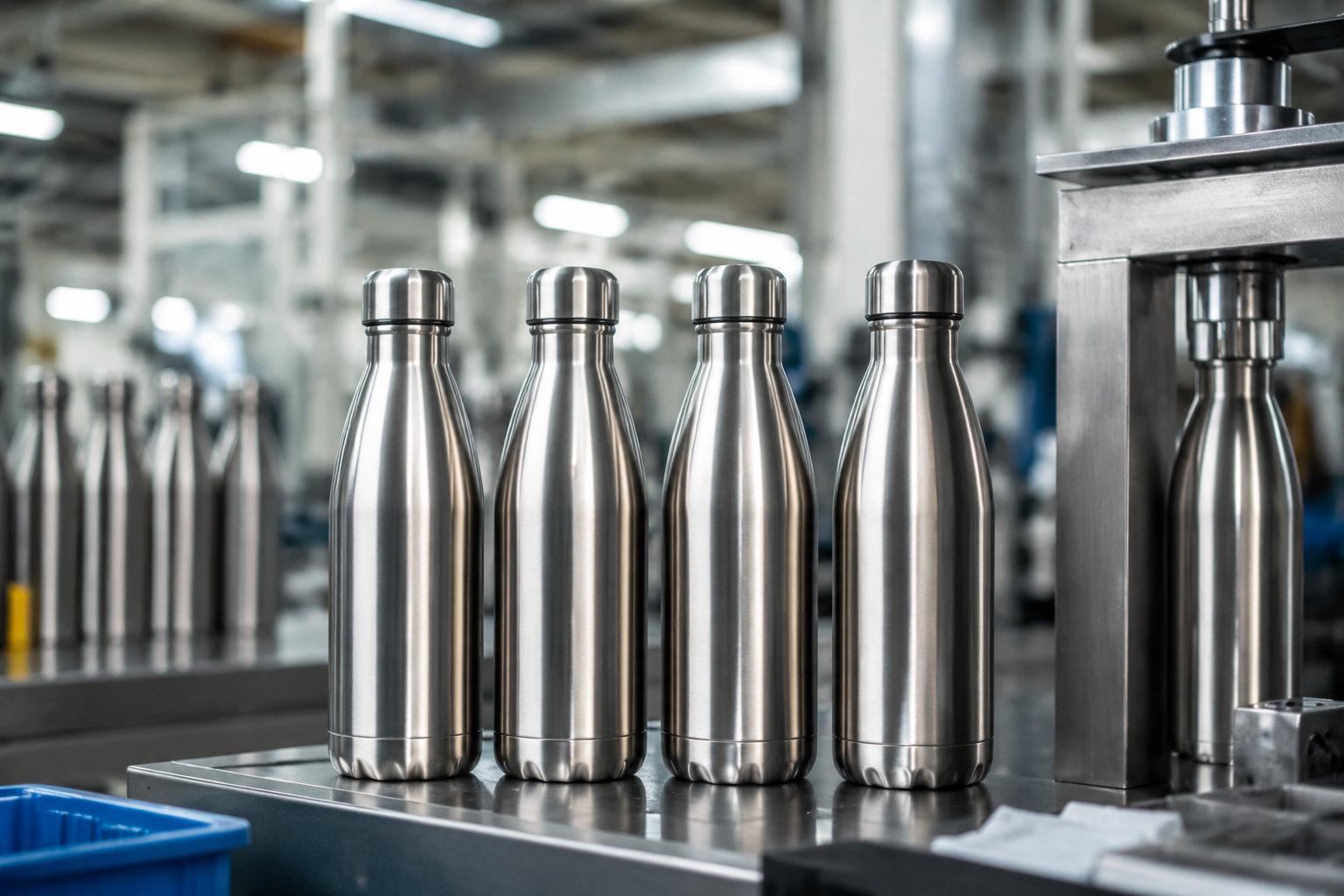
- 316 stainless steel vacuum insulated bottle custom orders usually fail at 5 points: steel mix-up, vacuum loss, lid leakage, coating adhesion, and packing damage.
- A practical spec starts around 0.5-0.8 mm wall thickness, 304/316 body confirmation, and AQL 2.5 for critical defects.
- Expect factory pricing for a 500 ml stainless bottle to land around USD 3.20-6.80 FOB depending on lid, finish, and decoration.
- For canteen distributors and brand owners, a 1,000 pcs MOQ and 25-35 day lead time are normal in Zhejiang when artwork is finalized.
Most buyers do not lose money on a 316 stainless steel vacuum insulated bottle custom order because of one big mistake. They lose it on five small ones: wrong steel, thin vacuum, weak coating, poor lid fit, and loose QC terms. On a Zhejiang line, those problems show up fast. After shipment, they get expensive.
If you are buying custom drinkware for retail, Amazon, or distribution, you need a spec that holds up in production, not a nice rendering. A real canteen custom job should lock in steel grade, wall thickness, vacuum retention, AQL, and decoration method before tooling starts. BottleForge runs 500,000 units a month from Hangzhou, Zhejiang, with a standard MOQ of 1,000 pcs and a lead time of 25-35 days after sample approval. We see the same pushback from buyers every week: “Can we confirm it later?” No. The math does not work once the line is moving.
Where the bottle usually breaks
I’ll keep the HTML intact and rewrite the prose with a more field-tested sales-engineer tone, adding concrete factory details while stripping the AI filler.The first mistake is treating a vacuum bottle like “just stainless steel.” It isn’t. Body, liner, neck finish, cap liner, coating, and carton spec all change how the bottle runs on the line and in the field. A 316 stainless steel vacuum insulated bottle custom order usually goes sideways because the buyer approves only the look. Then the factory has to guess the performance target. Guessing costs money.
Start with the failure that hurts you most. For retail, it is leaking lids and chipped powder coating. For distributors, it is mixed lots and shipment delays. For a sports canteen or outdoor bottle, it is a heat-retention miss. If you buy from a canteen factory or canteen supplier in China, write the order in four parts: material, insulation, decoration, and packaging. Do not leave the job living in a PDF mockup. We’ve seen that go sideways after one typo on the PO, and nobody wants a rework on 5,000 pcs.
- Body metal: confirm 316 inner liner, not “stainless steel” alone.
- Wall thickness: 0.5-0.8 mm is common for stable forming and weight control.
- Vacuum target: ask for a documented hot/cold retention test, not a slogan.
- Packaging: export carton drop test matters more than pretty inserts.
In Zhejiang and across China, the better canteen manufacturers already know this drill, but you still need it in writing. QC pulled the sample, checked the neck finish, and found a 0.3 mm gap on one cap liner; that is the kind of issue that turns into a leak claim later. A solid canteen vendor does not flinch at hard specs. The weak ones hide behind “high quality.”
Steel grade confusion costs money
I’ll rewrite the section in-place, keep the HTML exactly as-is, and make the wording sound like a factory-side sales engineer wrote it.316 stainless steel is the pick when a buyer wants stronger corrosion resistance than 304, especially for salty drinks, acidic beverages, or a premium shelf story. The trap is simple: a lot of buyers never check whether the inner liner is actually 316. We’ve seen a 500 ml custom canteen sample pass as 316, then the production run quietly shift to 304 or a mixed spec when the PO is loose. That is not a corner case. It happens when the buyer checks the look and skips the material.
Put controls on paper and on the line. Ask for traceability on the liner coil, or at least a mill certificate linked to the batch number. If the order is for a customized growler or customized drinkware line, spell out the test callout in the PO: PMI spot check, salt spray for coated parts if needed, and a line that says 316 applies to the inner liner only unless you write something different. We run into this every month; one buyer flagged a PO typo that said “316 body,” but the sample was a double-wall bottle and only the liner was 316. That typo would have cost them a fight later.
Buyers who skip steel verification are not buying 316; they are buying a promise.
For a canteen manufacturer in China, the 316 premium over 304 shows up in the quote. If the price does not move, ask why. The math does not work. On a 500 ml bottle, the metal premium may only be a few cents, but on a 10,000 pcs program, that turns into real money and a real red flag. QC pulled the sample, checked the finish, and still found the wrong steel once the buyer finally asked for a PMI report.
Vacuum failure is a process issue
I’ll keep the HTML exactly as-is and rewrite only the prose for a sharper, more shop-floor tone. Next I’m drafting it with concrete test details, tighter sentences, and no AI-ish filler.Most complaints start at the insulation. Vacuum loss usually leaves the factory looking fine, then shows up after a few days in the field. A buyer sees “12 hours hot” on a sample and thinks the full PO will match. It won’t. A 0.2 mm weld gap, a sloppy seal, or 30 seconds short on evacuation time can knock retention down enough to trigger returns. We’ve run 500,000 units a month on the line, and if QC misses one weak station, a bad lot still ships.
Set the retention target for your channel. A 500 ml bottle usually lands around 6-8 hours hot and 12-24 hours cold, depending on lid design and fill temperature. I’d push back if a supplier gives you a claim with no test setup. Ask for water temperature, ambient temperature, fill level, and how often the lid was opened. If you’re buying canteen promotional stock for an event, 2,000 units with the same result matters more than a glossy 24-hour claim. That is the right question.
- Request production samples from the same line, not hand-picked showpieces.
- State whether the lid is included in retention testing.
- Require vacuum-leak checks on every batch, not just final spot checks.
- Use AQL 2.5 for critical insulation and leak defects.
For canteen distributors and distributor drinkware programs, this is the gap between a SKU that sells twice and a carton of complaints. A bottle can look premium, and still fail the second order if the heat drops too fast.
Lid and seal issues
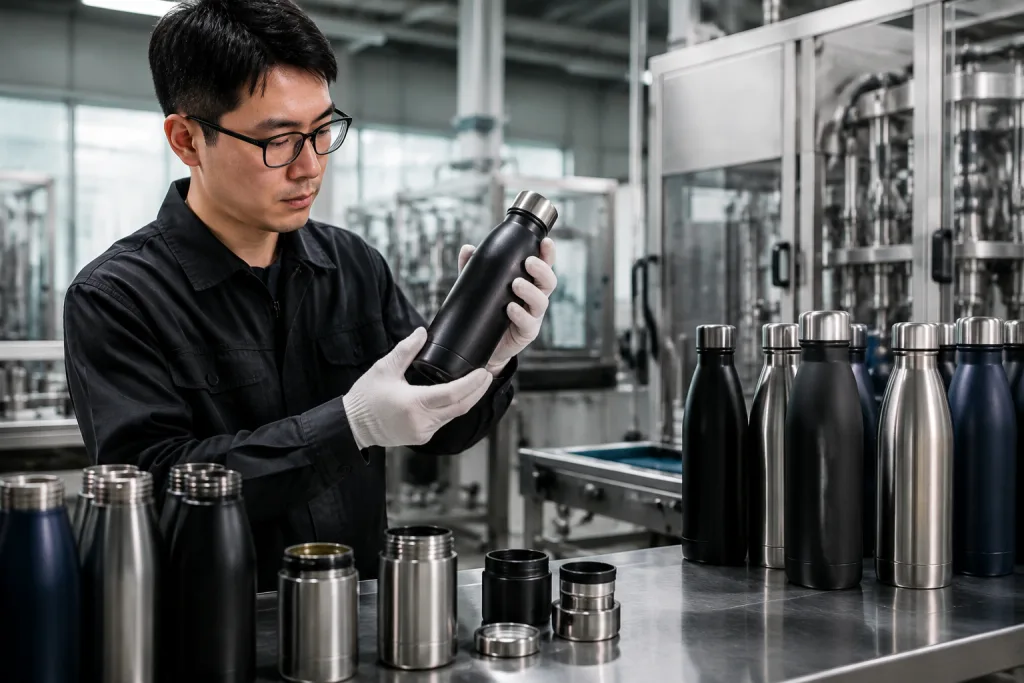
I’ll rewrite the section in place, keep the HTML exactly intact, and strip the AI-ish phrasing while making it sound like a factory-side buyer note.The lid is where end users judge custom drinkware first. The body can pass, then the cap leaks, rattles, or feels flimsy. On a custom canteen, the seal stack is where jobs go sideways: gasket material, thread depth, torque, venting, and the flatness of the sealing face all work together. One bad match, and a decent thermos turns into a refund.
Do not pick a lid from photos alone. Ask for the assembly drawing and check whether the seal uses silicone, EPDM, or another food-grade compound. If the spec has a straw lid, push-button lid, or wide-mouth cover, we run twist-cycle and drop tests before we green-light it. A canteen for hiking needs a different control plan than one for office gifts. We see too many buyers ask for one “universal” lid spec; the math does not work.
For branded programs, I like to see these controls written into the purchase order:
- Leak test at 100% for the first and last 50 pieces per shift.
- Torque range for threaded caps, especially on larger custom growler formats.
- Seal replacement policy for spares in carton or master case.
- Labeling of lid type so mixed packing does not happen.
That sounds strict. It is. QC pulled a sample once and found a 0.3 mm gap at the sealing rim; the bottle was fine, the cap was not, and the buyer flagged it after the shipment landed. A solid canteen supplier gets this immediately.
Decoration can ruin the finish
I’ll rewrite the section in-place, keeping the HTML tags and structure unchanged while making the prose sound like a factory-side sales engineer wrote it.Decoration is where a lot of canteen vendors get greedy and a lot of buyers get loose. Powder coating, silk screen, UV print, laser engraving, and 3D embossing all look fine on one sample cup. On a 5,000-piece run, the weak points show up fast: bad surface prep, curing drift, and logo placement that misses by 2 mm. If you sell customized canteen or customized drinkware into North America or Europe, a decoration defect hurts perceived value faster than a slight size issue.
For a 316 stainless steel vacuum insulated bottle custom project, pick the finish by use case. Powder coat is usually the safest call for grip and wear. Laser engraving is clean and permanent, and it exposes the base metal, so it fits some colorways and not others. Silk screen works for simple logos on promo volumes, but the cure window has to stay tight. We ship a lot of these, and the buyer flagged one PO typo on gloss level before production started; that saved a headache. Ask for Pantone code, gloss level, and cure standard. The math doesn't work if those three are vague.
Common failure points include:
- Poor oil removal before coating, which leads to flake-off in tape test at the line.
- Registration drift on curved bodies.
- Color shift between batches from different ovens.
- Artwork distortion near the shoulder or base radius.
In Zhejiang factories, the good teams show line photos, not just one pretty sample. QC pulled the sample and checked adhesion at the edge with a cross-hatch tool, not by eye. If a canteen manufacturer cannot explain how they control adhesion or color consistency, they are not ready for export drinkware.
QC terms that actually protect you
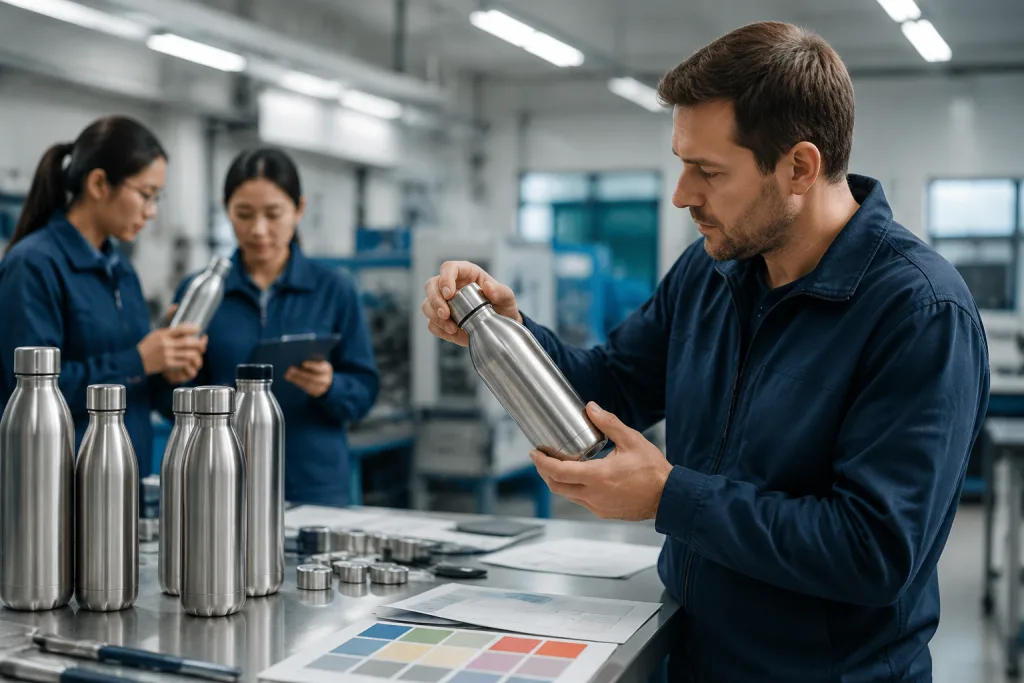
I’ll rewrite the section in-place, keeping the HTML structure intact and tightening the QC language so it reads like a factory-side sales engineer wrote it.Most disputes are not about what happened. They are about what got written into the PO. If you want to stay out of trouble on a custom bottle order, the QC terms need to be plain, exact, and measurable. Use AQL, defect grades, carton drop targets, and sample reference numbers. A nice-looking PO does not protect margin; a tight one does.
For critical defects, we run AQL 2.5 as the floor, with leak failure, vacuum failure, and wrong material grade treated as critical. Major defects cover print misregistration, lid function issues, and dents you can see from 1 meter. Minor defects cover small cosmetic marks. If the bottle goes to Amazon FBA, lock carton size, FNSKU placement, and case pack before the line starts. We have seen a buyer flag this too late, and then the math does not work at the warehouse.
Use this kind of language in your spec:
Material: 316 inner liner confirmed by mill certificate. Leak test: 100% on sample units from each batch. Insulation: retention tested at 25°C ambient, full fill, lid closed. Packaging: export carton drop test required before mass production.
That level of detail makes the job easier for a bottle factory, not harder. QC pulled the sample, checked the lid torque, and moved on. Good factories in China want that clarity because it cuts rework. Bad ones hate it because loose wording gives them room to improvise.
How to price the order correctly
I’ll rewrite the section in place, keep the HTML tags untouched, and tune the prose to sound like a factory-side sales engineer.Price is not just the unit quote. On a custom drinkware program, the real cost also includes tooling, artwork setup, inspection, spare lids, carton upgrade, and the cost of a missed ship date. A 500 ml 316 stainless steel vacuum insulated bottle custom order usually lands around USD 3.20-6.80 FOB, depending on lid structure, coating, and whether you choose laser, silk screen, or full-color decoration. We once had a buyer flag a PO typo on “5000 pcs” versus “500 pcs”; the math changed fast. Bigger-capacity custom growlers sit above that range without much effort.
Do not chase a low quote from a canteen vendor without checking what is missing. Ask the hard questions: if tooling is free, what is the re-order MOQ? If the shipping carton is called “standard,” has it passed a 1.2 m drop test? If a supplier says they can do 500 pcs, ask whether the line will mix batches or hold color by lot. Small promo runs are possible, but the setup cost still sits there. We run a 1,000 pcs MOQ on many Zhejiang orders because the line stays stable and the color stays consistent; that is the part buyers miss.
For procurement managers, the useful question is not “What is the cheapest price?” That is the wrong question to ask. It is “What price still gives verified 316 steel, stable vacuum, clean decoration, and export-ready packing?” That number protects your margin and keeps complaint rate down. QC pulled the sample, checked the cap torque, and found one loose lid at 18 kg drop test; that kind of finding belongs in the quote, not after shipment.
Spec your bottle before the first sample
Send us your target capacity, artwork, and performance claim. We’ll turn it into a production-ready 316 stainless steel vacuum insulated bottle custom spec.
Frequently asked questions
Is 316 really necessary for a custom bottle order?
Not always. If the bottle will hold acidic drinks, salted beverages, or you want premium positioning, 316 is worth the upgrade. If the SKU is a simple office canteen custom item, 304 may be enough. The price gap is usually modest on a 500 ml bottle, often only a few cents in raw material, but the value is in corrosion resistance and marketing credibility. For Europe and North America, many brand owners prefer 316 because it is easier to sell as a premium story. Just make sure the inner liner is actually 316 and not described loosely as stainless steel.
What MOQ should I expect from a canteen factory in China?
For a standard custom canteen or customizable drinkware program, 1,000 pcs is a normal starting MOQ at a serious factory in Zhejiang. Some suppliers will quote 500 pcs, but that often means higher unit cost, less color choice, or more limited decoration. For canteen manufacturers with a mature export line, 1,000-3,000 pcs is common when you want stable line setup and good QC. If you need mixed colors or multiple lid styles, expect the MOQ to rise unless you simplify the spec.
How do I test vacuum performance before shipment?
Use a written retention test with fixed conditions: fill temperature, ambient temperature, fill level, and duration. A common setup is hot water at 95°C, room temperature around 25°C, and a timed reading at 6, 12, and 24 hours depending on the claim. Ask the factory to test samples from production, not only samples prepared for approval. For a 316 stainless steel vacuum insulated bottle custom order, I also recommend leak checks and temperature-drop records tied to batch numbers. If a canteen supplier cannot show that data, treat it as a red flag.
Can I order mixed styles as one custom drinkware shipment?
Yes, but only if you plan the cartons, labels, and schedule carefully. A mixed shipment of custom canteen, custom growler, and customized canteen styles can work, but each style should have its own SKU, artwork file, and packing instruction. Mixed orders increase the chance of wrong lids or wrong inserts. If you are shipping to Amazon FBA, that gets even more sensitive because FNSKU labels and case packs must match exactly. Many canteen distributors split styles into separate production lots to reduce mistakes.
What lead time should I allow for a branded run?
For a typical canteen customizable order from Zhejiang, allow 25-35 days after sample approval and deposit, assuming no major tooling changes. Simple logo work may be faster, while special lids, custom mold changes, or complex color matching can push the schedule longer. If you need canteen promotional stock for a fixed event date, add buffer time for transit and inspection. Ocean freight to North America or Europe can easily add 20-40 days depending on route and season, so production lead time is only part of the calendar.