Key Takeaways
- A 316 stainless steel vacuum insulated bottle bulk order usually starts at MOQ 1,000 pcs per SKU, with 25-35 day lead time after sample sign-off.
- For corrosive or salty use cases, 316 inner walls usually cost USD 0.35-0.90 more than 304, but they reduce complaint risk in harsh markets.
- A practical QC plan uses AQL 2.5 for major defects and 4.0 for minor defects, plus 5,000-cycle lid testing and 24-hour leak checks.
- FOB Ningbo or Shanghai is the cleanest quote basis for many buyers in Zhejiang and China; confirm carton count, FNSKU labeling, and pallet height before booking.
You are not buying a bottle; you are buying a repeatable order. When a procurement manager asks for a 316 stainless steel vacuum insulated bottle bulk quote, the real questions are plain: will it pass REACH, will the lids hold after 5,000 open-close cycles, and can the cartons reach port without crushed corners or a pallet mix-up?
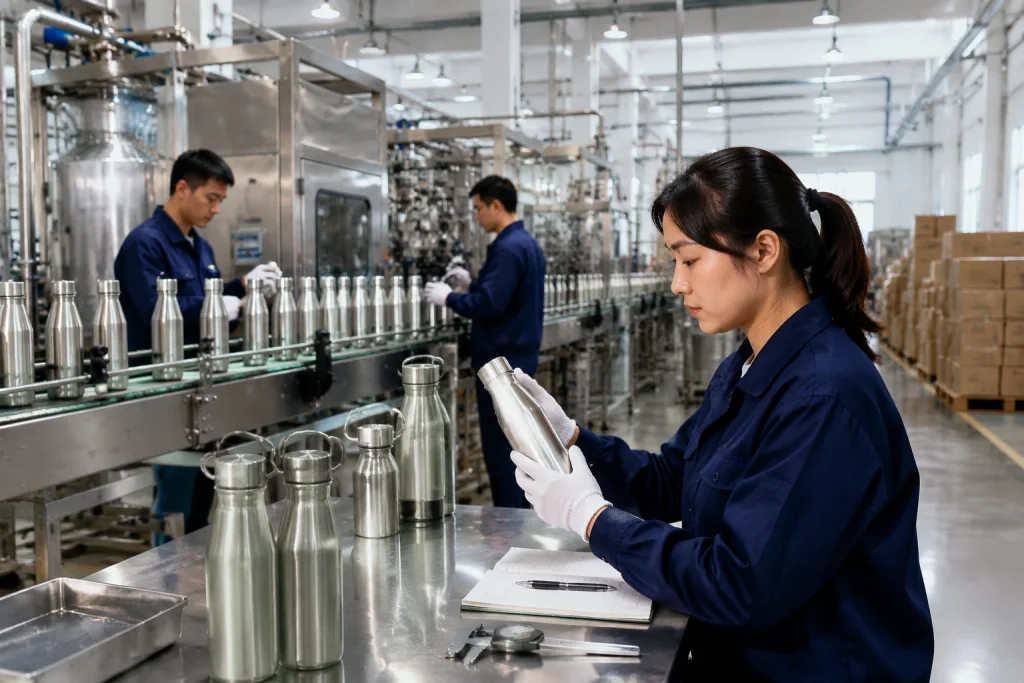
That is the right mindset. In Zhejiang, the factories that stay open are the ones that hold tolerance, file AQL reports, and keep monthly output steady. At BottleForge Industrial in Hangzhou, we run up to 180,000 units per month, with MOQ starting at 1,000 pieces per SKU and a normal lead time of 25 to 35 days after sample approval. QC pulled the sample last week with a 0.3 mm cap-ring check; that is the kind of detail that keeps a retail chain order from going sideways. If you are sourcing drinkware wholesale for a brand launch, a retail chain, or a private label Amazon program, this order logic saves money later.
Start with the buyer’s use case
I’ll rewrite this section in place, keep the HTML intact, and tighten the sales-engineer tone with specific sourcing details.Use a real buying case first. You may need one insulated bottle program for a sports brand, a second colorway for corporate gifting, and a small retail run after that. The wrong first question is “what is the best wholesale drink bottle?” We run into this all the time. Start with the use case: hot coffee for commuters, cold water for gym users, or salty sports drinks that sit in the bottle for hours.
For a 316 stainless steel vacuum insulated bottle bulk order, 316 matters when the drink is acidic, salty, or rough on the metal. Electrolyte mix, citrus water, and coastal storage are the usual triggers. On one 500 ml sample, QC pulled the bottle after a 48-hour salt-spray check because the buyer flagged a faint aftertaste on the first rinse. If you sell into North America or Europe, write the target down: 12 hours hot, 24 hours cold, no condensation on the shell, and no metallic smell after a neutral wash. That beats a vague “premium” request every time.
Practical brief: lock capacity, retention target, cap style, finish, and market standard before you ask for a sample. If you cannot state the use case in one paragraph, the factory will guess, and we’ve seen that go sideways on PO typos like “matte balck” or a wrong 32 oz callout. Give us the job, and we can run the line to it.
Lock the spec before pricing
I’ll rewrite the section in-place, keep the HTML exactly as-is, and make the copy sound like a factory-side sales engineer wrote it.Price only makes sense after the spec is locked. For 316 stainless steel vacuum insulated bottle bulk sourcing, the build points are the inner wall material, outer shell gauge, vacuum level, coating system, and lid structure. A workable setup is 0.4 mm inner 316 stainless steel, 0.5 mm outer 304 stainless steel, double-wall vacuum, and a PP or Tritan lid with a silicone gasket. If a supplier cannot state those numbers, you are not comparing real offers. QC pulled a sample at 0.38 mm once; that quote looked cheap until the buyer flagged it.
On a 500 ml bottle, China pricing can swing from USD 0.60 to USD 1.80 based on laser logo, powder coating, copper plating, or a folded handle lid. A basic bulk canteen style bottle will not price the same as a polished beer growler wholesale build with a wide mouth and carry loop. The cap system moves the cost more than most buyers expect, and that is where the math breaks if the drawing is vague. We run into this on the line all the time.
- Capacity: 350 ml, 500 ml, 750 ml, or 1,000 ml
- Wall thickness: 0.4 mm inner / 0.5 mm outer is a practical baseline
- Finish: matte powder coat, brushed steel, or silicone sleeve
- Testing: 24-hour leak test, 5,000-cycle lid fatigue test, and drop test from 1.2 m
If you are comparing bulk canteen, growler bulk, or drinkware bulk pricing, use the same drawing number, same carton pack, and same inner material. The same PO typo can change a 500 ml spec into 550 ml, and then the quote is useless. That is the only clean way to compare supplier numbers.
Ask for samples like a buyer
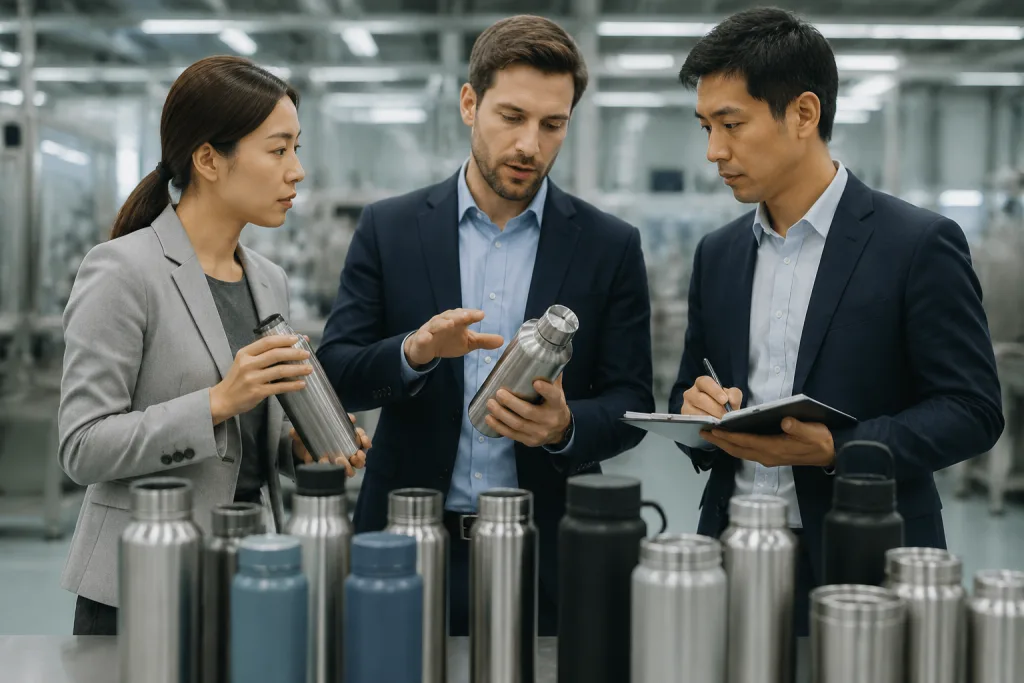
I’ll rewrite the prose to sound like a buyer-facing sales engineer, keep the HTML exactly as-is, and add concrete shop-floor detail without changing the heading structure.Sample approval is where an order gets protected or gets messy. Don’t sign off on a random pre-production piece and call it done. Ask for three sample types: appearance sample, function sample, and packed sample. The appearance sample checks logo位置 and coating color; the function sample checks vacuum hold and leak resistance; the packed sample checks carton fit, drop safety, and label placement. On our line, QC pulled the sample with a 0.2 mm logo shift once, and the buyer caught it before we ran 5,000 units.
For a 316 stainless steel vacuum insulated bottle bulk launch, ask for the exact lid, straw, and gasket set that will go into production. If you plan to sell on Amazon, tell us the FNSKU label position before tooling is locked, not after mass production starts. If you sell wholesale drinkware to distributors, request one extra blank master carton so their warehouse team can test pallet flow and case pack. The math does not work if the sample uses a different cap torque or a looser gasket.
Do not approve a sample until you have held it at 95°C water for 30 minutes and checked for seal deformation, odor, and finish change.
Compare factory samples under the same light source too. A brushed steel body can read darker under warehouse LEDs and lighter in daylight, and we’ve seen buyers flag that mismatch on a PO even when the print spec was right. For a full wholesale drinkware line, that color call matters more than people think. We run the sample table under 6500K light for that reason.
QC the order before mass production
I’ll rewrite the section in-place, keep the HTML structure intact, and tighten the language so it reads like a factory-side sales engineer.Once the sample gets approved, the work is not done. We run the order on a production checklist with hard gates. In a Zhejiang line, that means incoming material inspection, in-process vacuum checks, lid torque checks at 0.8 N·m, and final AQL sampling before packing. For a normal retail run, AQL 2.5 for major defects and 4.0 for minor defects is a fair starting point, but the PO should lock the acceptance rules. We’ve seen buyers skip that line and then argue later. The math does not work.
For stainless insulated bottles, the usual trouble spots are vacuum loss, lid leakage, coating scratches, and logo offset. Ask the factory to keep coil material certificates on file, especially if you need food-contact compliance for Europe or North America. REACH, LFGB, FDA food-contact expectations, and dishwasher claims need to match one tested build, not four loose promises. QC pulled the sample on a 2 mm cap gap once, and the buyer flagged it the same day. A factory can say yes fast; the claim only counts when the same configuration passed.
- Incoming check: verify stainless grade and gasket hardness
- In-process check: vacuum shell integrity and weld quality
- Final check: leak test, print check, and carton count
- Retain samples: keep one unit per lot for 12 months
If you are ordering alcohol flask bulk, alcohol flask wholesale, or alcohol flask wholesale bulk alongside your bottle line, do not reuse the same QC sheet blindly. Flask closures and bottle lids fail differently, and we’ve watched a 1 mm cap tolerance pass on one item and fail on the other. Use a separate inspection sheet for each SKU.
Understand MOQ and price breaks
I’ll keep the tags intact and rewrite the prose to sound like a factory-side sales engineer, with harder numbers and a few shop-floor details.Most buyers push for a lower price too early. That is the wrong question to ask. Ask what changes at 3,000 pieces, 5,000 pieces, and 10,000 pieces instead. On our line in Zhejiang, tooling, printing, and carton packing get split differently at each tier. For a standard 500 ml 316 vacuum bottle, 1,000 pieces can sit around USD 4.20 to USD 7.80 FOB depending on finish, while 5,000 pieces usually cuts unit cost by 8% to 18%. We once had a buyer flag a PO typo on the lid code, and that one line changed the whole quote.
That is why a bulk drinkware buyer should ask for stepped pricing, not one flat number. The same goes for beer growler bulk or beer tumbler bulk programs. Wide-mouth parts use thicker stainless and larger lids, so the base metal cost goes up fast. A beer growler wholesale spec can add USD 0.80 to USD 2.20 over a slim commuter bottle, especially if you want powder coat or matte UV print. QC pulled the sample at 1.2 mm wall thickness, and that is where the real math starts.
Rule of thumb: if the quote looks far below market, the factory has trimmed wall thickness, simplified the lid, or buried packaging cost. We’ve seen this go sideways more than once. In China, the cheap number is often hidden in the spec sheet, not the unit price.
Ship it without surprises
I’ll rewrite the section in place, keep every tag intact, and tighten the sales-engineering tone while preserving the shipping logic and numbers.Packaging and shipping are where a solid bottle turns into a bad landed-cost story. Lock carton size, inner divider, and pallet pattern before the line starts. A 500 ml bottle usually runs 24 pcs per carton or 36 pcs per carton, depending on neck shape and lid height; a growler wholesale build often needs fewer units because width and gross weight push the carton limit. We test cartons for a 1.5 m drop and compression if the load is headed to a U.S. fulfillment center. QC pulled one carton off the stack last month and the bottom seam split at the third drop. That’s the kind of miss that costs money fast.
If you sell on Amazon, plan FNSKU labels, carton marks, and case pack rules before we pack the first sample. If you sell through distributors, ask for master cartons, retail-ready cartons, or mixed-SKU pallets in writing. FOB Ningbo or Shanghai is still the cleanest export term for most buyers, but EXW works when you already have a forwarder on the move. The cheap EXW quote looks nice on paper; then pickup, export docs, and port fees in China show up and the math stops working. We’ve seen a buyer flag a PO typo on the carton count and the whole shipment had to be rebooked.
For larger programs, a 20-foot container often beats LCL once you pass about 9,000 to 12,000 units, depending on bottle size and outer carton design. A factory in Hangzhou or another Zhejiang shop should give you cube count, gross weight, and loading plan before you release the final PO. Ask for the actual loading sketch, not a guess. We ship by pallet height, not hope. One extra centimeter per carton can change the whole container plan.
Match the bottle to the channel
I’ll rewrite the section in-place, keep the HTML untouched, and tune the prose so it sounds like a factory-side sales engineer wrote it.Not every 316 stainless steel vacuum insulated bottle bulk order should ship the same way. Retail wants shelf pull. Corporate gifting wants the logo to read clean at 1 meter. Distributor programs need reorders that don’t drift. For canteen wholesale, we usually keep the body plain, add a laser logo, and pair it with a color lid; that is easier to restock than a heavy print job. On the outdoor side, buyers keep asking for a handle lid and an abrasion-resistant coating, and they are right to push for it.
If your channel covers cold beer or craft beverages, the spec often shifts into beer growler wholesale bulk or beer tumbler wholesale bulk territory. Those builds need a wider mouth, a tighter cap, and more room for branding. We ran a 58 mm mouth on one line last quarter, and QC pulled the sample because the cap torque wandered. The buyer flagged it fast. A brand owner should decide if the bottle is going out as drinkware wholesale, promotional stock, or a reusable premium container, because the carton spec and margin target change with each lane.
Commercial reality: one SKU can fit one channel well. Trying to force it into four channels is the wrong question to ask. The math does not work. We’ve seen it go sideways on lid feel, coating wear, and carton size. Start with one build that has already cleared 5,000 pieces with no complaint from the line, then spin the second SKU after that.
Send your spec, get a real quote
Share capacity, lid style, target market, and artwork. We will quote the exact build, not a guess.
Frequently asked questions
What is the usual MOQ for a 316 stainless steel vacuum insulated bottle bulk order?
A common MOQ is 1,000 pieces per SKU for a standard bottle with a stable lid and existing tooling. If you need a new mold, a custom handle, or special printing, the MOQ can move to 3,000 pieces. For repeat orders, many factories in Zhejiang will accept 500 to 800 pieces if the spec is unchanged. The important part is to keep the drawing, carton pack, and logo position fixed so the factory can hold the unit cost. For a first order, 1,000 pieces is a realistic entry point for drinkware bulk sourcing.
How much more does 316 cost than 304 in vacuum insulated bottles?
For most bottle sizes, 316 inner steel adds about USD 0.35 to USD 0.90 per unit versus 304, depending on capacity and total order volume. In some wide-mouth or premium powder-coated builds, the premium can reach USD 1.20. That extra cost is usually justified when the product will contact acidic drinks, salt-heavy beverages, or humid coastal environments. If your customer only uses plain water or coffee, 304 may be enough. If you are selling a premium line or need better corrosion resistance, 316 is the safer choice for wholesale drinkware programs.
What QC documents should I request from the factory?
Ask for a material specification sheet, vacuum leak test record, final inspection report, carton count sheet, and at least one photo set from production. If your market requires it, request REACH, LFGB, or FDA-related documentation for the tested configuration. For a proper AQL check, many buyers use AQL 2.5 for major defects and 4.0 for minor defects. If you are ordering in China, ask the supplier to retain one golden sample and one production sample for each lot so any complaint can be traced back quickly.
Can I order bottle and growler styles in one shipment?
Yes, but only if the carton sizes, color finishes, and lid parts are organized properly. A mixed container of drinkware wholesale products is normal, especially when you want bottle SKUs plus growler bulk or beer tumbler bulk items. The key is to keep each SKU’s label and carton spec separate. If you mix too many variants, warehouse errors rise and picking slows down. A smart first order might combine a 500 ml bottle, a 750 ml growler, and a small alcohol flask wholesale line only if the total volume justifies the freight cost.
What lead time should I plan for a custom order from Zhejiang?
For a standard custom bottle with existing tooling, plan 25 to 35 days after sample approval and deposit. If you need new tooling, additional printing steps, or special packaging, add 7 to 15 days. Peak season in China can stretch that schedule, especially before major trade fairs and the Q4 export rush. A factory with monthly output around 180,000 units can usually support a steady reorder program, but you still need to confirm raw material stock, lid availability, and the final packing plan before you issue the PO.